Showing posts with label Foundation. Show all posts

03/11/25

Robert Smithson. Casting a Glance: Dancing With Smithson @ Marian Goodman Gallery, Los Angeles - Exhibition Curated by Lisa Le Feuvre

Robert Smithson 
Casting a Glance: Dancing With Smithson
Curated by Lisa Le Feuvre
Marian Goodman Gallery, Los Angeles
8 November 2025 – 24 January 2026

In 1968 Robert Smithson declared: “A great artist can make art by simply casting a glance.” This exhibition takes him at his word. Casting a Glance: Dancing with Smithson invites eighteen artists to join him on the floor as partners who resist, improvise, and extend the rhythm of his thinking.

Robert Smithson with Leonor Antunes, Nairy Baghramian, Daniel Boyd, Tony Cragg, Tacita Dean, Pierre Huyghe, An-My Lê, Steve McQueen, Julie Mehretu, Ana Mendieta, Delcy Morelos, Bruce Nauman, Gabriel Orozco, Giuseppe Penone, Tavares Strachan, Álvaro Urbano, Adrián Villar Rojas, and James Welling.

Casting a Glance tracks Smithson’s trajectory from his early 1960s drawings that confront the crumbling ideals of European Modernism with a queer sensibility to his searing critiques of industrial capitalism and attention to geological timescales, positioning him as both provocateur and visionary. Robert Smithson called for artists to infiltrate corporations, championed the agency of all earth-beings, choosing the exhausted edges of suburbia over charismatic metropolitan centers. His innovative conception of the site/Nonsite dialectic, his redefinition of what sculpture could be, and his conviction that art is a philosophical encounter with the Earth’s surface converge in this vibrant dance among the artists on view.

Rarely seen works by Robert Smithson — chosen in dialogue with the participating artists — capture his restless energy. His drawings of landmark earthworks, pseudo-minimalist sculptures, references to the occult and the erotic, sit alongside renderings of imagined islands and material experiments. Smithson asked urgent questions about place, decay, and the fictions of permanence. Mirror Displacement Indoors (1969), colloquially known as “Dead Tree,” anchors the exhibition. It is comprised of an uprooted tree, with leaves and root ball intact, and double-sided mirrors inserted into the tangle of roots and branches. Over time the tree dries, the leaves fall, the earth falls from the roots, while the fixed structure of the mirrors remain stable. Decay and entropy are key concepts for Smithson, and are threads running through the exhibition.

The eighteen artists gathered here both challenge and align with Smithson’s art and ideas. Tony Cragg’s In No Time (2018) joins works by Leonor Antunes and Álvaro Urbano in a knot of arboreal forms, extending Smithson’s fascination with trees and their mirrored lives. Delcy Morelos’s grounded forms quietly speak to An-My Lê’s charged landscape, which, in turn, suggests a kinship to Smithson’s imagined islands. James Welling’s Barbizon (2025) channels Smithson’s dismissive obsession with constructed landscapes, while Giuseppe Penone’s Geometria nelle mani – ovale (2005) stands in dialogue with Smithson’s reclining, decaying tree. Ana Mendieta’s earthworks resonate with Smithson’s Hypothetical Continents, with both artists employing the photographic image to make their temporal sculptures immutable.

Smithson’s speculative crystal universes are echoed in Pierre Huyghe’s evocation of half-million-year-old selenite, while Tavares Strachan’s redefinition of polar exploration rub against Smithson’s mapping of New Jersey as a different kind of elsewhere. A rarely seen mirror table sculpture from Smithson’s studio supports three hand scaled sculptures by Gabriel Orozco, reflecting the continuity of these mirrored surfaces into the present.

Nairy Baghramian’s Jupon Suspendu (2017) folds her sculptural lexicon into the conversation, gently interrupting Smithson’s hand-built Minimalism. Daniel Boyd’s collages double back on Hercules, pushing against Smithson’s conflation of camp bodies with classical statuary, while two scores by Bruce Nauman ask for a hired dancer to clear a room and telephone the artist. Adrián Villar Rojas’s Return the World X (2012) shares time with Smithson’s Partially Buried Woodshed (1970). Julie Mehretu’s Six Bardos: Luminous Appearance (2018) which meditates on time, memory, and transcendence, is placed in dialogue with the atmospheric veils of color in Smithson’s 1963 painting Tear.

Steve McQueen’s Broken Column (2014) speaks directly to Smithson’s acute attention to materiality and material history, while Tacita Dean’s Salt (A Collection) (2013–14) from the Great Salt Lake slips beside Smithson’s own drawings of Spiral Jetty (1970); both charting the eponymous film. Three moving image works complement the exhibition. East/Coast West Coast, made with Nancy Holt in 1969, is an improvised a dialogue in which Holt and Smithson perform the stereotypical positions of American East Coast and West Coast artists of the late 1960s. Robert Smithson described the thirty-five-minute film Spiral Jetty (1970) as “a set of disconnections, a bramble of stabilized fragments taken from things obscure and fluid, ingredients trapped in a succession of frames, a stream of viscosities both still and moving” – a phrase that reverberates across and through Casting A Glance. Swamp, from 1971, also made with Nancy Holt, is shot in the swamplands of New Jersey, Smithson’s home state, a location he frequently returned to in his work.

Curator Lisa Le Feuvre

Lisa Le Feuvre is a curator, writer, and editor. In 2018 she became inaugural Executive Director of Holt/Smithson Foundation, the artist foundation dedicated to the legacies of artists Nancy Holt (1938-2014) and Robert Smithson (1938-1973).

Lisa Le Feuvre has curated more than seventy-five exhibitions as an institutional and independent curator, edited over thirty books and journals, spoken at 150 museums and universities across the world, and has published more than 125 essays and interviews with artists. Her recent curated exhibitions include For What It’s Worth: Value Systems in Art since 1960 at The Warehouse, Dallas, (2024, curated with Thomas Feulmer); Robert Smithson / Teresita Fernández at SITE SANTA FE, New Mexico (2024, curated with Fernández); at the Wexner Center for the Arts, Ohio Nancy Holt: Power Systems and Maria Hupfield: The Endless Return of Fabulous Panther (Biimskojiwan) (2025); and, on display through next year at the Farnsworth Art Museum, Joan Jonas: An Island Departure (with Jaime DeSimone). Le Feuvre’s recent publications include the introduction to the compendium Great Women Sculptors (Phaidon Press) and texts on the artists Henry Moore, Kapwani Kiwanga, Delcy Morelos, Charlotte Moth, Lucia Pizzani, Robert Rauschenberg and Medardo Rosso.

About Holt/Smithson Foundation

Nancy Holt (1938-2014) and Robert Smithson (1938-1973) transformed the world of art and ideas. Holt/Smithson Foundation develops their distinctive creative legacies and is the hub of all things Holt and Smithson. Holt and Smithson recalibrated the limits of art, changing what art can be and where art can be found. Their art, writings, and ideas built the ground from which contemporary art has grown. Collaborating with artists, writers, thinkers, and institutions the Foundation realizes exhibitions, publishes books, initiates artist commissions, programs educational events, encourage research, and develops collections globally from its headquarters in New Mexico.

MARIAN GOODMAN GALLERY
1120 Seward Street, Los Angeles, California 90038

25/09/25

Andy Warhol: Vanitas @ The Andy Warhol Museum, Pittsburgh

Andy Warhol: Vanitas 
The Andy Warhol Museum, Pittsburgh 
October 10, 2025 – March 9, 2026 

Andy Warhol Self-Portrait
Andy Warhol
, Self-Portrait, 1986 
© The Andy Warhol Foundation for the Visual Arts, Inc.

Andy Warhol, Sleep
Andy Warhol
, Sleep, 1963 
© The Andy Warhol Museum

The Andy Warhol Museum presents Andy Warhol: Vanitas, an exhibition which explores the ephemeral nature of life as seen through the eyes of one of the most iconic artists of the 20th century. Andy Warhol, a pivotal figure in the Pop Art movement, was strongly influenced by his Byzantine Catholic upbringing and the religious iconography that pervaded his early life. This spiritual undercurrent appears throughout his oeuvre, where themes of mortality, vanity and the passage of time are recurrent motifs.

Andy Warhol  - Details of Renaissance Paintings - Leonardo da Vinci The Annunciation
Andy Warhol 
Details of Renaissance Paintings 
(Leonardo da Vinci The Annunciation 1472), 1984 
© The Andy Warhol Foundation for the Visual Arts, Inc.

This exhibition examines Warhol’s contemplation of life’s transient nature through the lens of three themes: Mortality, Vanitas and Temporality. Each theme offers a lens through which his fascination with death, the fleeting nature of beauty and the passage of time can be understood. Warhol explored these themes in his work with seriousness, and he infused them with irony and humor, showcasing his unique, often philosophical and contemplative, perspective.
“Museum audiences have increasingly taken an interest in exploring other aspects of Warhol’s career beyond his well-known Pop Art masterpieces,” said Amber Morgan, director of collections and exhibitions. “Andy Warhol: Vanitas, while perhaps seeming a bit dark in theme, speaks to Warhol’s willingness to confront universal big questions and explore multiple paths in his search for answers.”
Andy Warhol, Skull - Drawing
Andy Warhol
, Skull, 1976 
© The Andy Warhol Foundation for the Visual Arts, Inc.

Andy Warhol, Skull
Andy Warhol
, Skull, 1976 
© The Andy Warhol Foundation for the Visual Arts, Inc.

Andy Warhol, Self-Portrait with Skull
Andy Warhol
, Self-Portrait with Skull, 1978
© The Andy Warhol Foundation for the Visual Arts, Inc.

Vanitas, derived from the Latin word for “vanity”, refers to a genre of still-life painting that thrived in the 17th century, amongst others in The Netherlands and Flanders. It typically features collections of symbolic objects representing the transience of life, the emptiness of worldly pleasure and the inevitability of death. These works are designed to remind viewers of their mortality and the insignificance of worldly goods and pleasures. Rich in symbolic imagery, vanitas prints often depict skulls, extinguished candles, wilting flowers, soap bubbles and timepieces, all serving as memento mori (Latin for “remember that you must die”). The Vanitas theme was a constant subject for Warhol in works featuring skulls, disasters and tragic beauty. The exhibition includes a small selection of vanitas Dutch artworks on loan from the Rijksmuseum in Amsterdam
“The SCHUNCK Museum is grateful to collaborate with The Warhol on this exhibition, inspired by the 17th-century Dutch and Flemish Vanitas tradition in painting,” said Fabian de Kloe, artistic director at the SCHUNCK museum. “Vanitas invites reflection on themes such as faith, identity and mortality—echoing not only the Catholic heritage of the Southern Netherlands but also the personal and spiritual explorations in Andy Warhol’s work. Rooted in two post-industrial cities, Pittsburgh and Heerlen, this partnership creates space to reflect on our shared histories and how these timeless questions continue to shape our lives today.”
Andy Warhol: Vanitas is curated by Patrick Moore, former director of The Warhol, in collaboration with the SCHUNCK museum.

THE ANDY WARHOL MUSEUM
117 Sandusky Street, Pittsburgh, PA 15212

24/04/25

Robert Rauschenberg: Sympathy for Abandoned Objects @ Gladstone Gallery, New York - Survey exhibition of Rauschenberg sculptural practice

Robert Rauschenberg 
Sympathy for Abandoned Objects 
Gladstone Gallery, New York 
May 1 - June 14, 2025 

Presented in collaboration with the Robert Rauschenberg Foundation on the occasion of the artist’s Centennial, Gladstone presents the first survey of Rauschenberg’s sculptural practice in thirty years, spanning his production from the 1950s through the late 1990s.

Examining Rauschenberg’s sculptures through the lens of scale, the exhibition showcases over 30 sculptures that relate in size to the human body, whether floor-, pedestal-, or wall-based. Drawing from myriad media and disrupting the distinction between abstraction and empirical representation, Rauschenberg's sculptures are rooted in his career-long dedication to artistic experimentation.

Robert Rauschenberg is renowned for blurring the line between artistic genres, painterly gesture, and three-dimensionality. The artist maintained a robust sculptural practice throughout his long and prodigious career. Underscoring the artist’s remarkable use of found and readymade materials, the works on view are assembled from industrial detritus, everyday objects, decorative items, and organic forms. They are the result of improvisatory gestures—gathering, twisting, combining, adhering, tying—that Rauschenberg described as responses to items found in his environment, “treasures” that he would bring back to his studio, seeing in them a potential for new form. Claiming a “sympathy for abandoned objects,” he created a body of strictly sculptural work that is rarely presented as such.

For this exhibition, Gladstone presents key works from various series, including the Scatole Personali (1952–53), Elemental Sculptures (1953/59), Combines (1954-64), Kabal American Zephyrs (1981– 83/1985/1987–88), Gluts (1986–89/1991–94), and the Rauschenberg Overseas Culture Interchange (ROCI; 1984–91) in an installation designed by Selldorf Architects to reveal the continuity of his unique vocabulary within an expansive set of sculptural positions. Given Rauschenberg’s protean imagination, this exhibition also features a number of his sculptures that were not aligned with specific series and exist on their own formal terms. Key loans from institutional and private collections augment the selection of work from the Robert Rauschenberg Foundation to further argue for the artist’s keen sculptural sensibility, even if he resisted aligning himself with one medium. This exhibition traces the trajectory of Rauschenberg’s creative output as a whole, with the three-dimensional objects serving as key touchpoints in an expansive and almost uncategorizable oeuvre. The last survey of Rauschenberg’s purely sculptural output prior to this show was in 1995 at the Modern Art Museum of Fort Worth.

This exhibition is accompanied by a fully illustrated catalogue designed by Chris Svensson with an essay by sculpture expert, Lisa Le Feuvre, Executive Director of the Holt/Smithson Foundation, entries on each of the individual sculptural series represented, and detailed exhibition histories.

In 2025, the Robert Rauschenberg Foundation commemorates Robert Rauschenberg’s 100th birthday with an international celebration of the artist’s expansive creativity, spirit of curiosity, and commitment to change.

ROBERT RAUSCHENBERG

Born on October 22, 1925 in Port Arthur, Texas, Robert Rauschenberg worked in what he called the gap between art and life. Over the course of his sixty-year career, Rauschenberg’s art embodied a spirit of experimentation with new materials and techniques. Dubbed an enfant terrible for his assemblages of urban detritus (the Combines of 1954-64), Robert Rauschenberg continued exploring many different mediums and technological advancements in the years following his 1970 decampment to Captiva Island in the Gulf of Mexico, off the Florida coast.

Although he demurred from affiliations with any particular movement, he has been called a forerunner of essentially every postwar artistic development since Abstract Expressionism.

In addition to his own artmaking practice, Robert Rauschenberg became an advocate for artists and the creative community at large. In September 1970, he founded Change, Inc., a non-profit organization that helped artists with emergency expenses. From 1984-91, he personally funded the Rauschenberg Overseas Culture Interchange (ROCI), traveling to ten countries outside of the United States to spark cross-cultural dialogue through art.

Robert Rauschenberg died on May 12, 2008 in his Captiva studio. His artistic legacy and his lifelong commitment to collaboration with artists, performers, writers, artisans, and engineers worldwide was recognized long before his death. His expansive artistic philosophy lives on through his highly innovative and influential work to the present day.

About the Robert Rauschenberg Foundation
The Robert Rauschenberg Foundation builds on the legacy of artist Robert Rauschenberg, emphasizing his belief that artists can drive social change. Robert Rauschenberg sought to act in the “gap” between art and life, valuing chance and collaboration across disciplines. As such, the Foundation celebrates new and even untested ways of thinking.

GLADSTONE GALLERY
530 West 21st Street, New York City

08/11/22

Mike Kelley @ Hauser & Wirth Hong Kong - Subharmonic Tangerine Abyss

Mike Kelley. Subharmonic Tangerine Abyss
Hauser & Wirth Hong Kong
27 October 2022 – 25 February 2023

Mike Kelley
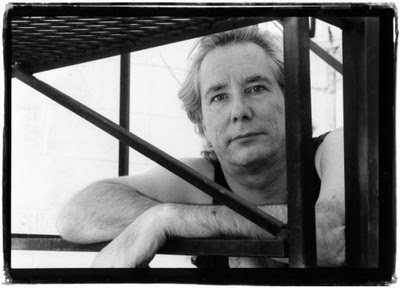
Mike Kelley in his backyard, Los Angeles, 2000
Photo: © Gerard Malanga
Courtesy the Mike Kelley Foundation for the Arts and Hauser & Wirth

Widely considered one of the most ambitious and influential artists of our time, Mike Kelley drew from a wide spectrum of high and low culture, mining the banal objects of everyday life to question and dismantle Western conceptions of contemporary art and culture. Hauser & Wirth Hong Kong presents the late Los Angeles-based artist’s first solo exhibition in the Greater China: ‘Mike Kelley: Subharmonic Tangerine Abyss.’ Organized in collaboration with the Mike Kelley Foundation for the Arts, the exhibition includes works from one of Kelley‘s most significant later series, Kandors, including three distinct kinds of videos that Kelley included in his original Kandors show at Jablonka Gallery in 2007 – videos documenting crystal growth, animations, and a bottle projection. 

Mike Kelley began his Kandors series in 1999, in preparation for a show at the Kunstmuseum Bonn that sought to emphasize and portray ‘new media of the past’—retrospective images of an idealized future. In response to the exhibit, Kelley chose to focus on the fictional city of Kandor: the hometown of the popular Superman comics’ eponymous hero. According to the books, Superman was sent to Earth as an infant from Kandor, the capital of his home planet Krypton, which was under attack and risked total destruction. Although sentenced to a future of displacement, loneliness, and longing on Earth, Superman uses his alien powers for the good and salvation of mankind on his adopted planet. He later discovers that Kandor still exists, though in miniature form: stolen by an intergalactic archvillain Braniac prior to Krypton’s demise, the city was shrunk to a toy-sized metropolis and preserved inside of a glass bottle. Superman ultimately wrestles Kandor from Braniac and keeps the city in his Fortress of Solitude, sustaining its citizens with tanks of Kryptonic atmosphere. As Mike Kelley once explained, Kandor functions for Superman as ‘a perpetual reminder of his inability to escape the past, and his alienated relationship to his present world.’

In researching the project, Mike Kelley discovered that Kandor lacks a standardized, consistent depiction across the comics—an oversight that fascinated the artist. ‘It was impossible to reconstruct Kandor,’ Kelley wrote about the project. ‘Various partial and contradictory city views would have to be randomly patched together to create a composite version.’ The conflicting illustrations challenged the artist and further probed his interest in the porous nature of spatial memory. ‘The problem I set for myself was to translate the two-dimensional comic-book renderings into three-dimensional sculptures,’ Kelley explained. ‘I wanted them to be sculpturally complex, taking into consideration how they would be viewed in the round yet maintaining the sense of the original comics’ flatness.’

Kandor served as Mike Kelley‘s inspiration for a twelve-year long project that explores themes of cultural memory, the perils of utopianism and the comforting pain of nostalgia. These visually opulent, technically ambitious sculptures—along with videos and large-scale installations—rework the imagery and mythology of the popularly revered American comic book and also reflect the loneliness inherent to modernity’s technological progress.

Visitors enter the exhibition from the upper floor of the gallery and encounter a large-scale video projection alongside a group of vitreous sculptures glowing in a dimly lit room. The video projection depicts ‘Bottle 4’ with an array of swirling, atmospheric light effects inside it, accompanied by an otherworldly soundtrack composed by Mike Kelley. Visitors continue through the space to find a number of miniature metropolises representing the city of Kandor, creating an optically dazzling spectacle of refracted colors. Cities stand on plinths, illuminated from beneath, while their towering architectural skylines are bathed in tones of green, blue, red, black and white.

Towards the far end of the first room, ‘The Lugubrious Pastel Joys of the Candy-Froth Dolphin Portal’ shows a time-lapse video documenting crystals as they grow inside of a rounded jar—a classic American childhood science experiment. This video, along with the other crystallization videos in the exhibition, features quotidian household glassware and is accompanied by a soundtrack of ‘New Age’ music composed by Mike Kelley. The videos are screened on small monitors which sit atop sculptural platforms or shelves. The compact nature of the works’ size mimics the shrunken nature of Kandor and creates a sense of intimacy with the viewer as they approach the piece, marveling at the fantasy landscapes expanding and contracting across the screen.

The exhibition continues on the gallery’s lower level with additional time-lapse videos, Lenticulars, animations and sculpture. In ‘Topo Gigio Topographical Model,’ instead of a city, Kelley placed a series of cartoon figures underneath a glass dome, mounted on a pedestal of black bedrock. Like the bottled Kandor, the three toys in ‘Topo Gigio Topographical Model’ become an ageless memento of a past that can never be revisited, isolated beneath a bell jar that Mike Kelley found and abandoned on an otherworldly mountain of volcanic mass. The work evokes Mike Kelley’s preoccupation with psychology, nostalgia and repressed childhood memories that runs through the artist’s practice as a whole. The lenticular lightboxes feature images of Kandor as it appears in the Superman comics, blown up to a larger size. The lenticulars manipulate the two-dimensional drawings and the illustrations’ colors in order to give the image an illusionistic sense of movement and dimension. ‘My goal,’ wrote Mike Kelley, ‘was to highlight the differences between the graphic qualities of the comic-book illustrations and the dimensionalized versions of them represented in the sculptures.’ In ‘Animation 2’ and ‘Animation 20,’ Kelley animated the images of the bottles in the style of popular cartoons. ‘Each bottle performs a single emotional sound or body movement: screaming, breathing, cooing, giggling,’ wrote Kelley. The animated videos are displayed on flatscreen monitors that hang on the wall like paintings. 

Mingling the banal and the absurd, the innocent and the perverse, the comic and the tragic, Mike Kelley’s art launches an assault on the purity of aesthetic convention, spearheaded by the artist’s dark humor.

MIKE KELLEY
Over the course of a career spanning four decades, Mike Kelley (1954-2012) produced a provocative and rich oeuvre that included drawing, painting and sculpture, video and photography, performance, music, and a formidable body of critical writing. Born in Detroit, the artist studied at the University of Michigan, Ann Arbor from 1973, before relocating to Los Angeles in 1976 to enroll in an MFA program at the California Institute of the Arts. Mike Kelley’s art conflates the highest and lowest forms of popular culture in a relentless critical examination of social relations, cultural identity, and systems of belief. Engaging themes as varied as adolescence, educational structures, sexuality, religion, post-punk politics, pop psychology and repressed memory, Mike Kelley worked through the turbulent conditions of the American vernacular to reveal unexpected connections and expose the defaults, tensions, and contradictions that make it up.

Mike Kelley Foundation for the Arts 
The Mike Kelley Foundation for the Arts advances the artist’s spirit of critical thinking, risk taking, and provocation in the arts. Established by Mike Kelley in 2007, the Foundation seeks to further Kelley’s philanthropic work through grants to arts organizations and artists for innovative projects that reflect his multifaceted artistic practice. The Foundation also preserves the artist’s legacy more broadly and fosters the understanding of his life and creative achievements through educational initiatives including exhibitions, educational events, publications and the preservation and care of the Foundation’s art collections and archives.

HAUSER & WIRTH HONG KONG
15-16/F, H Queens, 80 Queen's Road Central, Central, Hong Kong

25/04/04

Auguste Rodin, Albright-Knox Art Gallery, Buffalo, NY - Rodin: A Magnificent Obsession, Sculpture from the Iris and B. Gerald Cantor Foundation

Rodin: A Magnificent Obsession, 
Sculpture from the Iris and B. Gerald Cantor Foundation
Albright-Knox Art Gallery, Buffalo, NY
April 20 - July 3, 2004

The Albright-Knox is presentis the exhibition Rodin: A Magnificent Obsession, Sculpture from the Iris and B. Gerald Cantor Foundation. This fascinating exhibition features approximately 60 bronze sculptures from throughout the artist’s career, including many of his best-known and most-loved works: The Thinker, The Kiss, The Cathedral, Monumental Head of Pierre de Wiessant, Monumental Head of Balzac, and The Three Shades.

"Rodin is considered to be 'The Father of Modern Sculpture' because he revolutionized sculpture in the late 19th century," said Ken Wayne, the Gallery's Curator of Modern Art and organizer of the exhibition for its presentation in Buffalo. "He took sculpture in entirely new directions from what he believed it had become – somewhat stale, lifeless, and boring. Instead, Rodin injected passion, feeling and life into sculpture."

The exhibition also features works on paper by Auguste Rodin and a photograph of Rodin by legendary photographer Edward Steichen, plus large-scale documentary photo blow-ups for background. A special educational component will be a three-dimensional display explaining the lost-wax casting process by which bronze sculptures have been produced for centuries.

All of this material will be further supplemented by two Rodin sculptures from the Albright-Knox Art Gallery’s own collection, Eve and the Age of Bronze, allowing regular gallery visitors an opportunity to see familiar works from the museum’s permanent collection in a fresh, new context.

Auguste Rodin is recognized as the most important sculptor of the modern period. He expanded the range of subjects for sculpture, not limiting it to historical and religious figures or scenes. He consciously sought to reinvigorate the sculpture medium by injecting passion and emotion. Rodin avoided the literalness of academic sculpture by introducing the modernist qualities of ambiguity and open-ended meaning whereby a sculpture could have several meanings instead of just one. An excellent example is his famous work The Thinker. What is he thinking? Who is he? Why is he naked?

Another major contribution to modern sculpture was the fragment or partial figure, which Rodin felt held great power and mystery. He got the idea for making partial figures from the many ancient fragments that were surfacing on the Paris art market in the late 19th century following archaeological digs. Rodin reasoned that if we can admire and revere the many broken and partial ancient figures, such as the Venus de Milo, why can we not make such figures? Indeed, he saw himself as the true heir to Phidias, the ancient sculptor. He wanted to return sculpture to its rightful path after it had lost its way because of academic sculptors. Like the ancients, he wanted to create sculpture that embodied his time.

Born in 1840 to a modest French family, Auguste Rodin in his teens attended the government school for craft and design. Here he learned by drawing plaster casts of ancient sculpture and by modeling in clay, modeling being the basis of sculpture in his day. Although he sought admission to the École des Beaux Arts (the very prestigious government school for fine art), he was rejected three times. Rodin's struggle for recognition dominated his early career. For years he earned a living by producing, as an anonymous member of a workshop, ornamental sculpture for Carrier-Belleuse, a successful decorative sculptor of the period. While his work as a craftsman provided a steady income, Rodin yearned to exhibit his own work under his own name. In the 1860s he submitted his sculpture to the annual juried Paris Salon exhibitions – the most important shows of their day – but suffered a series of rejections. (His work was finally admitted in 1877.)

During Auguste Rodin’s lifetime, the most highly regarded sculptures were projects done for public places because they were thought to have universal rather than personal meaning. These projects were usually commissioned by committees specifically formed to oversee the creation of these works. Rodin received his first public commission in 1880; it was to create a sculptural entrance for a (never-built) museum of decorative arts in Paris. He chose to design the door as a showpiece for Dante’s The Divine Comedy, an epic poem written about 1308, which was very popular in France in the 19th century. The work Rodin created is called The Gates of Hell.

In the years that followed, Rodin was commissioned to create other monuments, including The Burghers of Calais (1884-88), the Monument to Honoré de Balzac (about 1897), and the Monument to Victor Hugo (about 1897-1900). In 1900 Rodin stood at the pinnacle of success: an entire pavilion at the Paris World Exposition was devoted to a retrospective exhibition of his work. In 1908 he moved to the Hôtel Biron, a large home where he lived and worked until he died in 1917. A year before he died, Rodin donated this estate and his studio and its contents to the French government, in exchange for France’s agreement to establish a museum there. Today the Hôtel Biron is home to the Musée Rodin.

B. Gerald Cantor (1916-1996) and his wife, Iris Cantor, built the largest private collection of Rodin works in the world: approximately 750 large- and small-scale sculptures, drawings, prints, photographs, and memorabilia. The Cantors have generously shared their collection with others through exhibitions and donations. They have given more than 450 works to more than 70 museums, including the Metropolitan Museum of Art, the Brooklyn Museum of Art, and the Los Angeles County Museum of Art. The Stanford University Museum of Art received 187 of those works.

The Cantors’ support of the arts was recognized in 1995 by President and Mrs. Clinton, who bestowed upon them the National Medal of Arts. The current exhibition has been organized and circulated by the Iris and B. Gerald Cantor Foundation, which was established to promote and encourage excellence through the support!of art exhibitions, scholarship, and the endowment of galleries and sculpture gardens at major museums. Since being established in 1978, the Foundation has circulated various Rodin exhibitions to more than 150 venues in the United States, Japan, Australia, Canada, and Singapore, attracting a total audience of more than 5 million people. 

ALBRIGHT-KNOX ART GALLERY
1285 Elmwood Avenue, Buffalo, New York 14222
www.albrightknox.org