Showing posts with label fine art. Show all posts

07/09/25

Visual Language: The Art of Irving Penn - Auction @ Phillips, New York

Visual Language: The Art of Irving Penn
Phillips, New York
Auction viewing: 30 September – 7 October 2025
Auction: 8 October 2025

Irving Penn
Irving Penn
Mouth (For L’Oréal) (A), New York, 1986
© The Irving Penn Foundation, © Condé Nast
Estimate: $200,000 – 300,000

Irving Penn
Irving Penn
Harlequin Dress (Lisa Fonssagrives-Penn), New York, 1950
© The Irving Penn Foundation, © Condé Nast
Estimate: $200,000 – 300,000

Irving Penn
Irving Penn
Ginkgo Leaves, New York, 1990
© The Irving Penn Foundation, © Condé Nast
Estimate: $200,000 – 300,000

Phillips will host Visual Language: The Art of Irving Penn, a landmark auction of photographs and artworks from The Irving Penn Foundation. This standalone sale, featuring photographic prints and paintings that Penn made during his seven decades-long career, marks the first time that the foundation has offered the artist's work through auction. This historic event will celebrate Penn’s remarkable talents, highlighting his unique vision and masterful craftsmanship across a variety of photographic print processes. The 70-lot sale will take place on 8 October 2025 ahead of Phillips' seasonal Photographs sale on 9 October.
Tom Penn, Executive Director of The Irving Penn Foundation, said, “As stewards of Irving Penn's artistic legacy since 2010, this auction is a pivotal moment for The Irving Penn Foundation as we aspire to expand our charitable and educational program. My father would say to me, ‘whatever you do in life, do it with complete passion.’ It was with passion that he sought excellence in everything he did, and each object included in this sale reflects the innovation and exactitude that defined Penn’s practice. The artworks selected for the auction span the range of mediums and subjects Penn explored across his career, presenting rarely seen images alongside his most well-known photographs that provide a new perspective on the diversity of his production. Through this carefully considered sale, we demonstrate Irving Penn's mastery and enduring influence in the field of photography.”
Irving Penn
Irving Penn
Black and White Hat, New York, 1950
© The Irving Penn Foundation, © Condé Nast
Estimate: $25,000 – 35,000

Irving Penn
Irving Penn
Untitled, circa 1987
© The Irving Penn Foundation, © Condé Nast
Estimate: $30,000 – 50,000

Irving Penn
Irving Penn
Miles Davis Hand on Trumpet,
New York, 1986
© The Irving Penn Foundation, © Condé Nast
Estimate: $70,000 – 90,000

Irving Penn
Irving Penn
Télégraphiste, Paris, 1950
© The Irving Penn Foundation, © Condé Nast
Estimate: $30,000 – 50,000

Irving Penn was one of the 20th century’s most significant photographers, known for his arresting images, technical mastery, and quiet intensity. Though he gained widespread acclaim as a leading Vogue photographer for over sixty years, Penn remained a private figure devoted to his craft. Trained under legendary art director Alexey Brodovitch in Philadelphia, he began his career assisting at Harper’s Bazaar before joining Vogue in 1943, where editor and artist Alexander Liberman recognized Penn’s distinctive eye and encouraged him to pursue photography. Penn’s incomparably elegant fashion studies reset the standard for the magazine world, and his portraits, still lifes, and nude studies broke new ground. His 1960 book Moments Preserved redefined the photographic monograph with its dynamic layout and high-quality reproductions. In 1964, Penn began printing in platinum and palladium, reviving this 19th-century process to serve his own distinct vision. He was one of the first photographers to benefit from the burgeoning fine art photography market of the 1970s, and he earned a growing following of collectors and curators leading to major exhibitions at The Museum of Modern Art, The Metropolitan Museum of Art, Moderna Museet, Stockholm, Art Institute of Chicago, and National Portrait Gallery, London, among many other institutions.

Irving Penn
Irving Penn
Irving Penn in a Cracked Mirror (Self-Portrait) (A), 
New York, 1986
© The Irving Penn Foundation, © Condé Nast
Estimate: $25,000 – 35,000

Irving Penn
Irving Penn
Mud Glove, New York, 1975
© The Irving Penn Foundation, © Condé Nast
Estimate: $50,000 – 70,000

Irving Penn
Irving Penn
Three Tulips ‘Red Shine’, ‘Black Parrot’, ‘Gudoshnik’, 
New York, 1967
© The Irving Penn Foundation, © Condé Nast
Estimate: $70,000 – 90,000

Irving Penn
Irving Penn
Marriageable Young Woman of Imilchil, Morocco, 1971
© The Irving Penn Foundation, © Condé Nast
Estimate: $20,000 – 30,000

An innovator in every sense, Penn’s approach to photography was bold. Few photographers of his generation experimented as widely with both conventional and historic print processes, and none achieved Penn’s level of excellence in all. Phillips’ auction will feature work in a variety of photographic media, including Penn’s bravura gelatin silver prints, such as Coffee Pot, nuanced platinum-palladium prints like Harlequin Dress (Lisa Fonssagrives-Penn), and rare dye-transfer prints, led by the iconic Ginkgo Leaves.
Vanessa Hallett, Phillips’ Deputy Chairwoman and Worldwide Head of Photographs, said, “Irving Penn was one of the foremost photographers of our time, standing alongside the great contemporary artists who have come to define the 20th-century art historical canon. Today, Penn’s vision and skill remain unequaled. Phillips is honored to work with the foundation in its 20th-anniversary year, shining a spotlight on Penn’s technical genius, creative process, and extraordinary output while presenting this groundbreaking work to a new audience. These works were preserved for decades by the artist and his foundation, hence their incredible provenance and condition. We are thrilled to provide a platform that educates the next generation of collectors on Penn’s impact, while assisting the foundation further its mission of preserving and advancing Penn’s legacy for years to come.”
Irving Penn
Irving Penn
Cracked Egg, New York, 1958
© The Irving Penn Foundation, © Condé Nast
Estimate: $30,000 – 50,000

Irving Penn
Irving Penn
Cigarette No. 37, New York, 1972
© The Irving Penn Foundation, © Condé Nast
Estimate: $150,000 – 250,000

Irving Penn
Irving Penn
Coffee Pot, New York, 2007
© The Irving Penn Foundation, © Condé Nast
Estimate: $20,000 – 30,000

Heralding an exceptional opportunity for collectors, many of the works selected from the foundation's archives have never before appeared at auction; this includes several examples from Penn's influential 1950 Black and White series for Vogue, and the large-scale four-panel platinum-palladium print of Mud Glove with typography advertising his 1977 Street Material exhibition at The Met. In addition to his work as a photographer, Irving Penn was also an accomplished painter and draftsman. For the first time at auction, Phillips will also showcase his work in these mediums, taking the opportunity to set forth the full range of this remarkable artist's creative output.

The Irving Penn Foundation was established in 2005 to promote knowledge and understanding of Irving Penn’s artistic legacy, including the diversity of techniques, mediums, and subject matters the artist explored. It is the largest repository of Irving Penn's work.

PHILLIPS NEW YORK 
432 Park Avenue, New York, NY 10022
Click here for more information: 

27/07/25

James Bidgood: Dreamlands @ CLAMP, New York + 2025 Monograph from Salzgeber + 1971 film "Pink Narcissus"
James Bidgood | Dreamlands 
CLAMP, New York
Through August 29, 2025

James Bidgood
James Bidgood
“Richie Backstage, Sleeping Portrait,”
 mid-1960s/printed later
Digital C-print 
© Estate of James Bidgood
Courtesy of CLAMP, New York

James Bidgood, Dreamlands, Salzgeber, 2025
Book Cover Courtesy of Salzgeber
160 p., 24 × 32 cm - English / Deutsch
ISBN 978-3-95985-718-5

CLAMP presents “James Bidgood | Dreamlands,” an exhibition of photographs marking the launch of the monograph of the same title from Salzgeber, in addition to recent screenings of the artist’s cult classic film, “Pink Narcissus,” at theaters across the United States and Europe.

The book combines iconic motifs from the artist’s oeuvre with many previously unpublished images. The exhibition at CLAMP includes twelve of these new photographs selected from the estate archives, along with a large-scale print of “Pan”—the monograph’s cover image.

“Pink Narcissus,” James Bidgood’s film from 1971, described as a “kaleidoscopic fever dream of queer desire,” was recently restored by the UCLA Film & Television Archive, and has been playing at theaters since late 2024, including MoMA (New York), Hammer Museum (Los Angeles), BAM (New York), Metrograph (New York), and other screens in London, Bologna, San Francisco, Seattle, Provincetown, Tucson, St. Louis, etc.

James Bidgood passed away in 2022 at the age of 88. A New Yorker for over 70 years, he was adored and admired by generations of artists and cinephiles alike.

When James Bidgood first came to New York from Wisconsin in the 1950s, he worked as a drag performer and occasional set and costume designer at Club 82 in the East Village. After studying at Parsons School of Design from 1957 to 1960, James Bidgood found jobs as a window dresser and costume designer.

He then went on to work as a photographer for men’s physique publications and began creating his own personal photographs and films that greatly benefited from his talents in theater design and costume construction. It was during this period in the early 1960s that James Bidgood began working on his masterpiece—the 8mm opus “Pink Narcissus.”

In his tiny apartment in Hell’s Kitchen, he handcrafted sets using humble materials to create a theatrical dreamland in which artifice became transcendent. With hand-tailored clothing, saturated lighting, and lots of glitter, James Bidgood built a cosmos of queer belonging, populated with angelic figures of male beauty—including Cupid, Pan, and other mythological gods, along with harlequins, soldiers, firemen, hustlers, drag queens, altar boys, and more.

Bidgood’s confined domestic production speaks to both necessity and liberation—”a queer creative spirit refusing to be constrained by material limitations.” In fact, the artist and his models would eat, sleep, and frolic within the sets until it was time to tear them down and begin building the next scene.

Within this space, and in front of his lens, the homosexuals that were ostracized by larger society could be beautiful, glamorous, complex, silly, or simply themselves.

CLAMP 
247 West 29th Street, New York, NY 10001

James Bidgood | Dreamlands
CLAMP, New York, July 10 – August 29, 2025

17/07/25

Gunnel Wåhlstrand @ Turku Art Museum, Finland

Gunnel Wåhlstrand 
Turku Art Museum 
Through 14 September 2025 

Gunnel Wahlstrand Artist Portrait Photograph
GUNNEL WÅHLSTRAND 
Photographer: Mikael Olsson 

Gunnel Wahlstrand Art
GUNNEL WÅHLSTRAND 
Rose, 2020 
Ink-wash on paper, 125 x 154 cm
Private Collection
Photograph: Jean-Baptiste Béranger

Gunnel Wahlstrand Art
GUNNEL WÅHLSTRAND
Wave, 2015
Ink-wash on paper, 245 x 160 cm
Private Collection
Photograph: Per-Erik Adamsson

Gunnel Wahlstrand Art
GUNNEL WÅHLSTRAND
The Last Island, 2012 
Ink-wash on paper, 157 x 218 cm
Magasin III Museum for Contemporary Art, Stockholm 
Photograph: Jean-Baptiste Béranger

Gunnel Wåhlstrand, one of Sweden’s most prominent contemporary artists, is known for her large-scale ink-wash paintings that depict memories, people, and landscapes with photographic precision and poetic sensitivity. Her works are rooted in her own personal history and explore memory, the connections between past and present, and the quiet depths of human existence.

Painting with ink on large paper is a slow, meditative process that demands the utmost precision. Gunnel Wåhlstrand does not paint the darkest darks right away; instead, the lights, shadows, and subtle tones in between emerge from the interplay between the saturation of the ink, the many transparent layers, and the light-bearing space of the paper. The irreversible method allows no room for error, and being aware of these risks helps the artist maintain focus. Through patient repetition, Gunnel Wåhlstrand creates mesmerizingly beautiful worlds that convey a sense of intense presence. Gunnel Wåhlstrand can spend up to six months committed to each painting, and her production is purposefully sparse—54 works in the past 23 years. 

Gunnel Wahlstrand Art
GUNNEL WÅHLSTRAND
Mother Profile, 2009
Ink-wash on paper, 188,5  x 137,5 cm
Magasin III Museum for Contemporary Art, Stockholm 
Photograph: Björn Larsson

Gunnel Wahlstrand Art
GUNNEL WÅHLSTRAND
White Peacock, 2007-2009
Ink-wash on paper, 109 x 160 cm 
Private Collection
Photograph: Björn Larsson

Gunnel Wåhlstrand bases her work on her personal history, photographs from her family album, and, more recently, her own snapshots of places saturated with memory. For over a decade, her art has sought to bridge the distance to her father, who took his own life when she was just one year old. His death was not talked about in the family, and even as a child, Gunnel Wåhlstrand turned to old family photographs in an attempt to understand him. The large scale of the paintings and the painstaking working method evolved from the artist’s deep need to linger in the process and immerse herself in the world of these images. Transcending time and space, her paintings interweave the gazes of different generations—gazes shaped by absence and distance. In her more recent works, the artist’s own experiences and memories of the photographed places merge with the intimate, inner world of the painted landscapes. The linear passage of time seems to shift, as if opening toward eternity.


Gunnel Wahlstrand Art
GUNNEL WÅHLSTRAND
Långedrag, 2004
Ink-wash on paper, 209 x 157 cm / 192 x 140 cm 
Magasin III Museum for Contemporary Art, Stockholm 
Photograph: Björn Larsson

Gunnel Wahlstrand Art
GUNNEL WÅHLSTRAND
The Desk, 2004 
Ink-wash on paper, 206 x 157  cm
Maria Bonnier Dahlin Foundation 
Maria Bonnier Dahlins Stiftelse 

Gunnel Wahlstrand Art
GUNNEL WÅHLSTRAND
By the Window, 2003
Ink-wash on paper, 151 x 198 cm
Collection Michael Storåkers 
Photograph: Björn Larsson

The artist’s first solo exhibition in Finland presents works spanning her entire career from 2002 to 2023. The works are on loan from private and public collections, including Andréhn-Schiptjenko Gallery, the Maria Bonnier Dahlin Foundation, Magasin III Museum of Contemporary Art, Malmö Art Museum, the Nordic Watercolour Museum, and the Sten A. Olsson Foundation. The exhibition is produced in collaboration with Prince Eugen’s Waldemarsudde and curated by Selina Kiiskinen and Kari Immonen from Turku Art Museum.

Gunnel Wåhlstrand (b. 1974, Uppsala) lives and works in Stockholm. She made her breakthrough immediately after graduating from the Royal Academy of Fine Arts in Stockholm in 2003. Her recent solo exhibitions have been held at Prince Eugen’s Waldemarsudde (2024), Gothenburg Art Museum (2019), Boijmans Van Beuningen Museum in Rotterdam (2017), and Magasin III in Stockholm (2017).

TURKU ART MUSEUM
Aurakatu 26, 20100 Turku

Gunnel Wahlstrand
Turku Art Museum , 6 June –14 September 2025

08/07/25

Kate Montgomery @ Long & Ryle, London - "Nuits Blanches" Exhibition of Paintings

Kate Montgomery: Nuits Blanches
Long & Ryle, London
25 June –  25 July 2025 
Extended until 31 August*

Kate Montgomery Art
KATE MONTGOMERY
Night Painter, 2025
© Kate Montgomery, courtesy of Long & Ryle
Night Painter celebrates the reflective nature of painting at night and the creative working reality of being an artist-mother.
Kate Montgomery Art
KATE MONTGOMERY
Asleep in the Ocean, 2024
© Kate Montgomery, courtesy of Long & Ryle

Kate Montgomery Art
KATE MONTGOMERY
Night Gate, 2025
© Kate Montgomery, courtesy of Long & Ryle
Night Gate can be interpreted as women and children readying for an all-night city festival, a Nuit Blanche or Les Allumées preluded by a fiery sunset.
Long & Ryle presents a solo exhibition by KATE MONTGOMERY Nuits Blanches. This is Kate Montgomery’s third solo exhibition with Long and Ryle. 
Nuits Blanches (Sleepless Nights) connects Montgomery’s nighttime paintings with the imagery of domestic life. Her atmospheric paintings convey the fading light of the day, or the magic of starlit parks and gardens. Figures, mainly women are set in tableaux against the patterns Montgomery includes as theatricals backdrops. A stage or perhaps a room become the settings, nature competes so the viewer is uncertain if the scene is set outside or within an interior. The suggestion of interior spaces is associated with female responsibility, creativity and desire set by Kate Montgomery in silent houses. 

Kate Montgomery’s interest in textiles, and her studies in pattern, whether inspired by Victorian wallpapers or Islamic tiles, form the texture and aesthetic of her painting, where patterns and textiles are very much part of the story. She uses geometric principles and Victorian designs to weave through her works, which are small and intensely painted in casein on board. Pattern Book, the title of Kate’s last exhibition with Long and Ryle in 2023 referred to the well-thumbed collection of pattern design books piled up on her studio floor.  From Owen Jones' Grammar of Ornament, Eugene Grasset's La Plante et Ses Applications Ornementales to early modern designers Enid Marx and Margaret Calkin James. Versions of these patterned worlds of stylised plant forms and codified people find their way into her paintings through gardens, textiles and wallpapers. The visual pleasure of colour and pattern is employed to balance the narratives and human drama in Kate Montgomery’s jewel like paintings. Kate’s imagery is developed through compulsive sketchbook drawing on trains, in stations, and within the landscapes and gardens of Kent and Sussex.

Montgomery's paintings are a look behind the curtains, private moments and domestic quiet. The narrative can be solitary, dreamlike or thoughtful, the subject is often an exploration of personal narratives or inspired by the lives of Kate's own daughters. Although as exquisitely rendered as a Flemish Book of Hours, Montgomery’s figures have a newfound monumentality and convey a profound sense of longing. Kate Montgomery is an important artist, her works may be as exquisitely rendered as a Flemish Book of Hours but stepping in the footsteps of Paula Reno, Louise Bourgeois and Shane Rhys James, she quietly conveys the longings and desires of women.

ARTIST KATE MONTGOMERY

Kate Montgomery studied at The Ruskin School of Drawing & Fine Art, University of Oxford (1985 -88) and at The Royal College of Art, London (1990 – 1992) under Professor Keith Critchlow. Kate Montgomery has been a lecturer at Central St Martins. She is now a tutor at The Royal Drawing School. She was artist in residence at Glynebourne Opera House in 2008. Her work is regularly selected for the RA Summer Show and The Discerning Eye.  

Her work is in the collections of Vivien Duffield, Elizabeth Esteve-Coll, HRH King Charles, The Cromwell Hospital London, St John’s College Oxford, New Hall Women’s Art Collection and Murray Edwards College, Cambridge.

* The gallery will be closed from the 11th - 17th of August.

LONG & RYLE
4 John Islip Street, London SW1P 4PX

19/04/25

Cataclysm: The 1972 Diane Arbus Retrospective Revisited - Exhibition Organized by David Zwirner and Fraenkel Gallery @ David Zwirner, Los Angeles

Cataclysm: The 1972 Diane Arbus Retrospective Revisited
Organized by David Zwirner and Fraenkel Gallery
David Zwirner, Los Angeles
April 24 – June 21, 2025

Diane Arbus
DIANE ARBUS
A very young baby, N.Y.C. [Anderson Hays Cooper] 1968
Image © The Estate of Diane Arbus

David Zwirner and Fraenkel Gallery present Cataclysm: The 1972 Diane Arbus Retrospective Revisited, on view at David Zwirner’s 606 N Western Avenue location in Los Angeles. Organized by both galleries, the exhibition debuted at David Zwirner New York in September 2022 to commemorate the fiftieth anniversary of the artist’s momentous 1972 posthumous retrospective at The Museum of Modern Art, New York. Cataclysm re-creates that iconic exhibition’s checklist of 113 photographs, underscoring the subversive poignancy of Arbus’s work even today while highlighting the popular and critical upheaval the original exhibition precipitated. This will be the first major survey of the artist’s work in Los Angeles since Diane Arbus: Revelations, which was presented at the Los Angeles County Museum of Art over twenty years ago.

In the fall of 1971, in the aftermath of Arbus’s death in July, her friend, colleague, and fellow artist Marvin Israel approached John Szarkowski, the legendary director of photography at The Museum of Modern Art, about the prospect of a retrospective exhibition of her work. Szarkowski, who had begun championing Arbus’s photographs in the late 1960s, quickly agreed to do the show. Though widely admired and respected by other photographers and artists, Diane Arbus was not well known at the time of her death. When the exhibition opened, on November 7, 1972, no one, not even Arbus’s most fervent supporters, could have predicted its profound impact on museum visitors, nor the impassioned—at times vitriolic—critical response the exhibition would generate among writers and thinkers. It was the most highly attended one-person exhibition in the museum’s history, with lines down the block to see it. Szarkowski later recalled, “People went through that exhibition as though they were in line for communion.” [1]

Even at the time, the retrospective was recognized for almost single-handedly helping to elevate photography to the status of fine art, paving the way for museums, collectors, and the public to embrace a previously unrecognized innate authority and power within the medium. As New York Times critic Hilton Kramer wrote of the exhibition, “What Diane Arbus brought to photography was an ambition to deal with the kind of experience that had long been the province of the fictional arts—the novel, painting, poetry and films—but had traditionally been ‘off limits’ to the nonfiction documentary art of the still camera.” [2] John Perreault, writing in The Village Voice, noted, “I don’t usually write about photography … but just this once I can’t resist. Diane Arbus was such a great photographer that her work breaks out of all categories. Her retrospective at the Museum of Modern Art should be of interest even to those who are not usually at all interested in photography.” [3]

Such praise from some critics was countered with derision and ridicule by others. Susan Sontag disparaged the exhibition in the pages of The New York Review of Books: “Arbus’s work shows people who are pathetic, pitiable, as well as horrible, repulsive, but it does not arouse any compassionate feelings.” [4] Jane Allen, writing for the Chicago Tribune, attacked the show: “[Arbus] shows us people, so locked into their physical and mental limitations, that their movements are meaningless charades. They are losers almost to a man.” [5] What seems to have enthralled some and enraged others about Arbus’s work was how she unflinchingly captured the singularity of her subjects, which—paradoxically—linked them to one another and by extension to the viewer. “This is what I love,” wrote Arbus at the age of sixteen, “the differentness, the uniqueness of all things and the importance of life.… I see the divineness in ordinary things.” [6]

The exhibition’s title, Cataclysm, alludes to the immensity of the uproar spawned by the retrospective and the ferocity of the critical discourse around the artist that emerged then and continues to the present day.

Cataclysm coincides with Diane Arbus: Constellation, a major exhibition of more than 450 of Arbus’s images—the largest and most complete presentation of her work to date—which debuted at LUMA Arles in May 2023 and travels to the Park Avenue Armory, New York, from June 5–August 17, 2025. This unique presentation features an immersive installation that “allows viewers to find their own path to discover what lies between the pictures, what connects them to each other, and the imperceptible architecture underlying all creations: chance, chaos, and exploration.” [7]

Diane Arbus Documents
David Zwirner Books/Fraenkel Gallery
Hardcover, with exposed spine
8.5 × 11 in | 21.6 × 27.9 cm
496 pages, 69 texts in facsimile
ISBN 978-1-64423-065-7
$95 | $125 CAN | £75
Published September 2022
Texts by 55 authors, including Hilton Als, A. D. Coleman, Holland Cotter, Jacob Deschin, Germaine Greer, Hilton Kramer, Arthur Lubow, Janet Malcolm, Francine Prose, Sukhdev Sandhu, Peter Schjeldahl, Adrian Searle, Susan Sontag, Lynne Tillman, and Colm Tóibín
Foreword by Jeffrey Fraenkel and Lucas Zwirner
Edited by Max Rosenberg
The 2022 debut of Cataclysm: The 1972 Diane Arbus Retrospective Revisited coincided with the release of Diane Arbus Documents. Through an assemblage of articles, criticism, and essays from 1967 to the present, this groundbreaking publication charts the reception of the photographer’s work and offers comprehensive insight into the critical conversations, as well as misconceptions, around this highly influential artist.

Best known for her penetrating images exploring what it means to be human, Diane Arbus is a pivotal and singular figure in American postwar photography. Arbus’s black-and-white photographs demolish aesthetic conventions and upend all certainties. Both lauded and criticized for her photographs of people deemed “outsiders,” Diane Arbus continues to be a lightning rod for a wide range of opinions surrounding her subject matter and approach. Critics and writers have described her work as “sinister” and “appalling” as well as “revelatory,” “sincere,” and “compassionate.”

Illuminating more than five decades in the evolution of art criticism, Documents provides a new template for understanding the work of any formidable artist. Organized in eleven sections that focus on major exhibitions and significant events emerging from Arbus’s work, as well as on her methods and intentions, the sixty-nine facsimiles of previously published articles and essays––an archive by any measure––trace the discourse on Diane Arbus, contextualizing her inimitable oeuvre. Supplemented by an annotated bibliography of more than six hundred entries and a comprehensive exhibition history, Documents serves as an important resource for photographers, researchers, art historians, and art critics, in addition to students of art criticism and the interested reader alike.

________________
[1] Quoted in Who Is Marvin Israel?, directed by Neil Selkirk and Doon Arbus (2005; www.neilselkirk.com/films).
[2] Hilton Kramer, “From Fashion to Freaks,” The New York Times Magazine, November 5, 1972, p. 38.
[3] John Perreault, “Art,” The Village Voice, November 23, 1972, p. 40.
[4] Susan Sontag, “Freak Show,” The New York Review of Books, November 15, 1973, p. 14.
[5] Jane Allen, “Charade of Losers in the Arbus World,” Chicago Tribune, April 8, 1973, p. 8
[6] Diane Arbus, high school essay on Plato, 1939. Quoted in Diane Arbus Revelations (New York: Random House, 2003), p. 70.
[7] Press release for Diane Arbus: Constellations, June 5–August 17, 2025, Park Avenue Armory, accessed online.

DAVID ZWIRNER
606 N Western Avenue, Los Angeles

09/04/25

TETAF NY 2025 - First Look - Artworks, Artists, Galleries

TETAF NEW YORK 2025
Park Avenue Armory, NYC
MAY 9 — 13, 2025

TETAF New York 2025
COURTESY OF TETAF
The European Fine Art Foundation - TEFAF - unveiled a preview of select works that will be featured at TEFAF New York 2025, taking place from May 9 – 13 (May 8 VIP day by invitation only). This "First Look" offers a glimpse of the exceptional range and caliber of artworks to be showcased at the Park Avenue Armory this year.

At TETAF New York 2025, 91 of the finest dealers and galleries from 13 countries and 4 continents will bring the best in Modern and Contemporary Art, Jewelry, Antiquities and Design to the vibrant art community of New York City. Besides the exhibitor stands in the Wade Thompson Drill Hall, TEFAF New York 2025 will also showcase exclusive curated spaces in the Armory's 16 period rooms. 

EMMA REYES 
PRESENTED BY LEON TOVAR GALLERY 
(STAND 366)

Emma Reyes
EMMA REYES
White Poppy, 1979
Work on paper
41 x 28 inches (104.14 x 71.12 cm)
PHOTO COURTESY OF LEON TOVAR GALLERY
White Poppy (1979) by Emma Reyes, depicts a fully bloomed white poppy alongside five buds in the shadows. This piece exemplifies Reyes’ signature style of vibrant compositions and close-up floral portrayals, which transform flowers into living beings, almost like portraits. Her work often seeks to restore humanity’s connection with nature, a theme central to White Poppy. The white poppy symbolizes a commitment to peace, an everpresent motif in Reyes' oeuvre.

ALBERTO GIACOMETTI 
PRESENTED BY GALERIE MARCILHAC 
(STAND 340)

Alberto Giacometti
ALBERTO GIACOMETTI
Masque coiffure, c. 1933
Plaster sculpture with gilding traces
9.4 x 6.1 x 6.4 inches (24 x 15.5 x 16.5 cm)
PHOTO CECIL MATHIEU
COURTESY OF GALERIE MARCILHAC
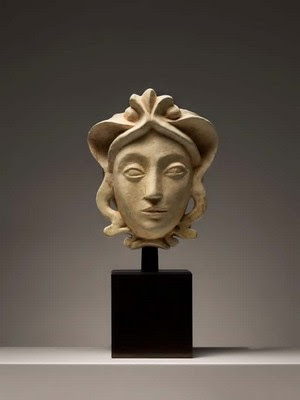
Alberto Giacometti is considered one of the most famous figures of the French avant-garde of the 20th century. Giacometti, a genius sculptor, also showed his talent in the field of decorative arts as he modeled little objects of various shapes early on. Jean-Michel Frank was the first to detect the innovation potential of such an aesthetic applied to movable creations; in 1928, he commissioned his first objects to the sculptor.

This piece, a "Mask" or "Hairdressing mask" plaster sculpture with gilding traces, was designed by Alberto Giacometti in 1933 for Frank. The pieces for Frank reveal a mastering of the space and a stylistic purification – whether it manifest itself through geometrical of figurative shapes, which were rarely reached by the contemporaries of the artist; they can be lightened to real independent works of art, more than simple daily objects.
 
MANTUA NANGALA 
PRESENTED BY SALON 94 
(STAND 320)

Mantua Nangala
MANTUA NANGALA
Untitled, 2024
Acrylic on linen
96 x 72 inches (243.84 x 182.88 cm)
PHOTO COURTESY OF SALON 94
Mantua Nangala's Untitled (2024) visualizes her ancestral homeland in the Gibson Desert of Western Australia through intricate dots in varying shades of cream and white. This work embodies the stories passed down through generations of her family, particularly the Kanaputa women's creation narratives that shaped this desert landscape. Nangala’s painting transforms these inherited stories into rhythmic patterns that map both physical and spiritual geography. Mantua Nangala has long been associated with Papunya Tula, an arts collective that has helped revolutionize contemporary Aboriginal art. By adopting acrylic paints and canvas, they have moved their artists' traditions into the future while preserving their cultural legacy.


LINE VAUTRIN
PRESENTED BY GALERIE CHASTEL-MARÉCHAL 
(STAND 318)

Line Vautrin
LINE VAUTRIN
Mirror, c. 1960
Mirror and talosel
10.6 inches (27 cm)
PHOTO BY MARINA GUSINA
Born in Paris in 1913, Line Vautrin was an artist, designer and creator of jewelry and decorative objects. A unique and fiercely independent artist, she worked in post-war Paris to create pieces renowned for their intensity and poetry.

The round structure, embossed with honeycomb motifs, alternates openwork parts encircled with blue talosel and gilded mirror cabochons. The inner part features a crown of inlaid oval gilded and parma mirrors. The back of the mirror is dotted and presents the two talosel colors.

MARIE LAURENCIN
PRESENTED BY ALMINE RECH 
(STAND 322)

Marie Laurencin
MARIE LAURENCIN
Jeune Fille au bouquet, c. 1935
Oil on canvas
Unframed: 18.13 x 14.75 inches (45.9 x 37.5 cm)
Framed: 30.75 x 27.63 x 3.38 inches (78.1 x 70.2 x 8.6 cm)
© THE ESTATE OF MARIE LAURENCIN 
COURTESY OF THE ESTATE AND ALMINE RECH
PHOTO: DAN BRADICA
Marie Laurencin was never one to shy away from the title of "woman artist," embracing all things girlish with little hesitation or apology. Throughout her long and storied career, she not only elevated female sitters—rarely choosing to represent men—but also cultivated a deliberately dainty aesthetic. She favored pastel tones, naïve storybook figuration, and airy brushstrokes. Her pretty pictures of pretty girls were more than just an ode to the power and allure of the feminine. They also functioned as visual expressions of Laurencin’s fluid sexual identity, which caused her pursue love affairs with both men and women. As a recent retrospective at the Barnes Foundation contended, the artist possessed a singular queer aesthetic that "subtly but radically challenges existing narratives of modern European art."
 
PARK SEO-BO
PRESENTED BY TINA KIM GALLERY 
(STAND 358)

Park Seo-Bo
PARK SEO-BO
Ecriture No. 31-75, 1975
Pencil and oil on canvas
51.13 x 76.13 inches (129.87 x 193.37 cm)
PHOTO COURTESY OF THE PARKSEOBO FOUNDATION
This work belongs to Park Seo-Bo’s hallmark Ecriture series, which he first began developing in 1967. Ecriture began as a series of monochromes in which Park covered his canvas with a single color and then manipulated the still-wet surface with repetitive carving gestures—actions that resemble the writing of a script and draw from Eastern calligraphic traditions. In this earlier phase of the series, he used a pencil to create these repetitive marks, imbuing the canvas with intricate, rhythmic lines that evoke both the texture of handwriting and the process of meticulous craftsmanship. In the mid-1980s, he introduced hanji paper into the series, layering and scraping the pulp on the wet surface to create a new sequence of sculptural lines that seem to float above the canvas.

GURO MASK
PRESENTED BY GALERIE LUCAS RATTON 
(STAND 351)

Guro Mask
Guro Mask
1929
Wood and pigments
12.38 inches (31.5 cm)
PHOTO BY VINCENT GIRIER DUFOURNIER 
COURTESY OF GALERIE LUCAS RATTON 
This Guru mask from Côte d’Ivoire comes from the former collection of the renowned painter Maurice de Vlaminck (1876-1958). Used in the "Gu" cult, it represents a protective female figure, whose elevated status is expressed through the finesse and power of its features. The elongated shape of the face is sculpted with great precision, emphasizing the elegant curve of the prominent forehead, which subtly extends to the tip of the nose, perfectly balanced by the groove of the mouth. The slit eyes are topped with a pronounced brow ridge, enhancing the mask’s mysterious and charismatic expression. Every detail of this face, carved with remarkable delicacy, evokes both harmony and grace. The meticulous attention given to the representation of the female figure, combined with the incomparable patina, grants this masterpiece a sense of balance, delicacy, and majesty.

ROBERT COTTINGHAM
PRESENTED BY 
GALERIE GEORGES-PHILIPPE & NATHALIE VALLOIS 
(STAND 363)

Robert Cottingham
ROBERT COTTINGHAM
Meat Counter, 1966
Oil on canvas
40 x 60 inches (101.5 x 152.5 cm)
PHOTO COURTESY OF GALERIE GP & N VALLOIS
Meat Counter is one of Robert Cottingham's earliest paintings, and an extremely rare example of his work from the 1960s. It reveals the influence of his original career in advertising while also showcasing the early signs of his skill as a photorealist. Cottingham's attention to detail draws him towards reflections or marbling while keeping the painterly aspect of brushstrokes and swathes of color.

GUIDETTE CARBONELL
PRESENTED BY LEBRETON GALLERY 
(STAND 315)

Guidette Carbonell
GUIDETTE CARBONELL
Cocotte qui Freine, c. 1949
Ceramic, wrought iron
21 x 11 x 19 inches (53.34 x 27.94 x 48.26 cm)
PHOTO COURTESY OF LEBRETON GALLERY
Born in 1910 to a Catalan father and an Armenian-born mother who was a painter, Guidette Carbonell attended several painting workshops, before dedicating herself fully to ceramics. She made her debut at the Salon d'Automne in 1928. With her white enamels speckled with bright colors, she decidedly distanced herself from the austere and meticulous approaches of her predecessors. Close to the abstract painters of the School of Paris, she sought to simplify her forms, notably through a series of stylized luminous birds that she presented at the Jeanne Bûcher Gallery in 1949. She also explored materials by combining earth with pebbles or shards of glass to create decorative plates inspired by the imagination of Bernard Palissy.

JEAN PROUVÉ
PRESENTED BY GALERIE PATRICK SEGUIN 
(STAND 331)

Jean Prouve
JEAN PROUVÉ
Croismare school, 1948
Steel, wood and glass
1259.88 x 315 inches (32 x 8 m)
PHOTO COURTESY OF GALERIE PATRICK SEGUIN
The size of the building, the quality of its architectural treatment and the skills of the Atelier Jean Prouvé captured visitors’ attention as soon as it opened. The 255m² (2.744 sq ft) construction numbers seven central portal frames, over 9 feet high, and two external walkways that derive their elegance from the slenderness of the tubular portal frames. The facade panels, solid or glazed, give rhythm and contrast.

The monumental entrance canopy in folded sheet steel is an autonomous module supported by two struts, key elements in Jean Prouvé’s work. Two axial portal frames and the ridge beam of the Croismare school will be specially reassembled for TEFAF New York 2025. A model will also be presented, illustrating the scale of this demountable architecture, the largest ever designed by Jean Prouvé.

THE BLANCHARD OSIRIS
PRESENTED BY DAVID AARON LTD 
(STAND 212)

Osiris
The Blanchard Osiris
Circa 664-332 B.C.
Bronze
21.7 inches (55 cm)
PHOTO COURTESY OF DAVID AARON LTD
A bronze statuette of mummiform Osiris on a wooden base. The god wears the White Crown of Upper Egypt, with a central uraeus and chin strap, which would have originally attached to a false beard (now missing). The facial features are cast in fine detail, with slender eyebrows over recessed almond-shaped eyes with prominent cosmetic lines. The hands are crossed over the chest, and the lower ends of the crook and flail remain below the fists – originally these implements would have extended upwards towards the shoulders. Statuettes such as this were made in a range of sizes, and this is a notably large example. One of similar size is now in The Metropolitan Museum, New York (61.45).

HEMMERLE MUNICH
PRESENTED BY HEMMERLE 
(STAND 339)

Hemmerle Munich
HEMMERLE MUNICH
Hemmerle bangle, 2025
Spessartine garnets, knitted almandine, 
stainless steel, bronze, white gold
1.65 inches (42 mm) diameter
PHOTO COURTESY OF HEMMERLE
A unique creation showcasing artistry and innovation, this Hemmerle bangle seamlessly weaves history and craftsmanship into an exquisite contemporary jewel. Crafted using a revived 19th-century Austrian knitting technique, delicate almandine garnet beads are meticulously handknitted with silk threads to form an intricate, flexible structure that embraces the wrist with effortless elegance. The ends of the bangle are adorned with spessartine garnets, set in a striking combination of bronze and white gold on the reverse, creating a warm, harmonious tonality that highlights Hemmerle’s signature fusion materials. This one-of-a-kind creation is a testament to Hemmerle’s dedication to reviving historical techniques while pushing the boundaries of contemporary jewelry design.

ALEXANDER CALDER
PRESENTED BY GALERIE MIGNONI 
(STAND 302)

Alexander Calder
ALEXANDER CALDER
Voiles, 1973
Work on paper
30.69 x 22.44 inches (78 x 57 cm)
PHOTO COURTESY OF GALERIE MIGNONI

Alexander Calder initially began his artistic journey as a painter but didn’t explore gouache as a medium until a yearlong stay in Aix-en-Provence, France, in 1953, when he was in his mid-sixties. From that point forward, he continued to create works on paper alongside his sculptural practice. This more immediate medium allowed Calder to effortlessly translate the bold, vivid language of his sculptures into two dimensions. Working with speed and spontaneity, he employed dynamic lines and planes of his signature primary colors to convey geometric patterns, natural motifs, and metaphysical themes that inspired him.

ANNE IMHOF
PRESENTED BY SPRÜTH MAGERS 
(STAND 306)

Anne Imhof
ANNE IMHOF
Untitled (Silas), 2024
Bronze cast
50.88 x 46 x 9.63 inches (129 x 117 x 24.3 cm)
Edition of 3 + 1 AP
© ANNE IMHOF, KUNSTHAUS BREGENZ
COURTESY OF THE ARTIST AND SPRÜTH MAGERS
PHOTO: MARKUS TRETTER
Imhof ’s most recent works transform ongoing drawing practice into sculptural, patinated bronze reliefs in the tradition of artists from antiquity to the Italian Renaissance through August Rodin. In Untitled (Silas) (2024), Imhof ’s lines and shading are translated into three dimensions, the figures becoming literally embodied, with seductively smooth, bronzed skin. The scene depicts androgynous characters with limbs entwined, flanked by a dog and dolphins. This peaceful view is counteracted by the image of a mushroom cloud bursting on the horizon, which renders the protective embrace of the humans and animals especially poignant and mysterious. Expanding on themes of melancholy and allegory present throughout Imhof ’s oeuvre, the works on view at TEFAF New York 2025 exhibit the artist’s compelling synthesis of symbolic figural representations, imagined narratives, art and cultural history.

LOUIS COMFORT TIFFANY
PRESENTED BY DELORENZO GALLERY 
(STAND 354)

Louis Comfort Tiffany
LOUIS COMFORT TIFFANY
Tiffany Studios Wisteria Table Lamp, 1905
Leaded stained glass shade on a bronze base
Height: 27 inches (68.6 cm) Shade : 18 inches (45.7 cm)
PHOTO BY CHRISTIES
The Wisteria lamp was the first Tiffany lamp to feature an irregular bottom border. Each piece of glass is individually selected and cut, with over two thousand pieces required to create a single lamp. Considered a luxury item, Tiffany Wisteria lamps have always commanded some of the highest prices, both historically and today.

Its tree-like base was inspired by the Bella Sombra trees of Gibraltar. During a company retreat to Gibraltar, Tiffany and his collaborators—lamp designers Clara Driscoll and Agnes Northrup—were drawn to the tree’s strength and functionality.

The Wisteria lamp has been exhibited in major museums, including the Metropolitan Museum of Art, the Virginia Museum of Fine Arts, and the New-York Historical Society.

ZAHA HADID
PRESENTED BY DAVID GILL GALLERY 
(STAND 204)

Zaha Hadid
ZAHA HADID
Coffee Table Liquid Glacial, 2012
Color acrylic
15.7 x 106.3 x 35.4 inches (40 x 270 x 90 cm)
PHOTO COURTESY OF DAVID GILL GALLERY
Zaha Hadid’s coffee table Liquid Glacial, with its subtle rippling surface, recalls the motion of water captured in glistening acrylic. It embodies the soft transition of forms that is signature to Hadid’s architecture. The collection embraces cutting-edge 3D technology to defy its materiality and create works that remain atemporal. Since their debut collaboration with the Dune formations at the Venice Biennale in 2007, Hadid and Gill have strived to create furniture collections that push the boundaries of contemporary design, debuting Liquid Glacial in 2012 and Stellarluna and Ultrastellar in 2016, shortly before the architect’s passing.

TAHER ASAD-BAKHTIARI
PRESENTED BY HOSTLER BURROWS 
(STAND 203)

Taher Assad-Bakhtiriari
TAHER ASAD-BAKHTIARI
Tribal Weave, 2024
Gabbeh woven wool with exposed warp
118 x 98.5 inches (299.72 x 250.19 cm)
PHOTO COURTESY OF THE ARTIST AND HOSTLER BURROWS
Taher Asad-Bakhtiari (b. 1982, Tehran, Iran) offers a striking, contemporary take on hand-woven textiles and furnishings, mapping out a bold style of open-work tapestries which retool the kilim flatweaves and denselyknotted gabbeh rugs that have long defined his region’s cultural traditions. Asad-Bakhtiari’s fabric constructions feature large-scale triangular patterns, intersected by striated bars and lines. These minimalist forms override the logic of warp and weft, evoking landforms and the iconography of ancient civilizations. They also reference the repeated geometries of mid-century avant-garde design and the craft movement, such as those seen at Black Mountain College. Woven from hand-spun and naturally-dyed wool with the occasional inclusion of contemporary materials, these lace-like works seek to spur new creative wrinkles within a craft tradition dating back centuries.

WALDEMAR CORDEIRO
PRESENTED BY THE MAYOR GALLERY 
(STAND 310)

Waldemar Cordeiro
WALDEMAR CORDEIRO
Untitled, 1952
Enamel on plywood
9.25 x 12 inches (23.5 x 30.5 cm)
PHOTO COURTESY OF ESTATE OF THE ARTIST, 
THE MAYOR GALLERY AND LUCIANO BRITO
Waldemar Cordeiro, one of Brazil's greatest concrete art exponents of the 1950s, was a visionary artist and theorist, merging theory and practice in an impressive body of work. His significance is increasingly recognized globally, featured at the 2024 Venice Biennale, his centenary is being celebrated at the ZKM Karlsruhe, Germany in a retrospective. Born in 1925 in Rome, Waldemar Cordeiro moved to São Paulo after WWII and co-founded the "Ruptura" movement in 1952, challenging figuration in art. His works, including Untitled (1952), showcase a blend of sensory interplay and technological distancing. Later, Waldemar Cordeiro pioneered computer-based art, with notable pieces like The Woman Who is not B.B. (1971).

JOSEF FRANK
PRESENTED BY MODERNITY STOCKHOLM 
(STAND 370)

Josef Frank
JOSEF FRANK
Chest of drawers 'Flora,' model 1050, 1960
Mahogany, hand printed paper 'Nordens flora' 
by C.A. Lindman & brass handles.
29.9 x 52.36 x 17.3 inches (76 x 133 x 44 cm)
PHOTO COURTESY OF MODERNITY

This sophisticated chest of drawers, titled the 'Flora,' model 1050, is a classic creation by the celebrated Josef Frank for Svenskt Tenn in the 1930s. Renowned as one of Sweden's most influential designers, Josef Frank masterfully combined functionality with artistic design in this timeless piece. Crafted from premium mahogany, the chest is adorned with hand-printed paper from 'Nordens flora' by C.A. Lindman and complemented by elegant brass handles. The intricate botanical motifs honor the harmony between nature and design, creating a visually stunning and meaningful aesthetic.

ROMAN HEAD OF A BEARDED GOD
PRESENTED BY CHARLES EDE 
(STAND 356)

Roman head of a bearded god
c. 2nd century AD
Marble
7.9 inches (20 cm)
PHOTO COURTESY OF CHARLES EDE / JARON JAMES
This sculpture captures the head of a bearded male, possibly Zeus or Poseidon, but most likely Asclepius, god of medicine, carved from marble with added use of a hand drill. His luxuriant mane of hair is arranged in thick, flame-like locks which sweep upwards and off his forehead in layers from a centre parting, and fall around his face in voluted waves. His heavily lidded eyes gaze straight forwards and have incised irises and drilled crescentic pupils. There is a deep crease on his forehead, his nose is straight, and his full, slightly parted lips, are framed by a centrally divided beard of overlapping curls. Broken diagonally across the face with some restoration to the lips, the upper right side of the anastole-like hair restored.
 
LUCIO FONTANA
PRESENTED BY TORNABUONI ART 
(STAND 353

Lucio Fontana
LUCIO FONTANA
Concetto spaziale, Attesa, 1965
Water-based paint on canvas
25.9 x 20.9 inches (66 x 53 cm)
PHOTO COURTESY OF TORNABUONI ART
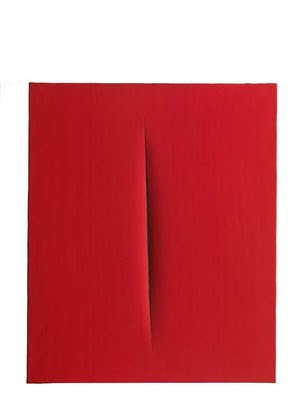
Lucio Fontana combined the highly saturated monochromatic purity of Klein’s canvases with Pollock’s violently physical action. Fontana’s gesture annihilated Pollock's proclivity toward additive mark-making and replaced it with a vandalistic destructiveness. Drawing attention to the materiality of the picture-plane, Fontana’s cuts question classical interpretations of a ‘figure-ground’ relationship; rather than striving toward an illusion of perspectival depth, Fontana’s punctures create forms within the canvas that embody a real third dimension of space. Moreover, the painting’s chromatic radiance amplifies the profound darkness of the plunging black recesses that aptly signify Fontana’s quest for ''the Infinite, the inconceivable chaos, the end of figuration, nothingness.'' (Lucio Fontana cited in Lucio Fontana, exhibition catalogue, London 1999).

SHIRLEY JAFFE
PRESENTED BY GALERIE NATHALIE OBADIA 
(STAND 364)

Shirley Jaffe
SHIRLEY JAFFE
Untitled, c. 1967
Oil on canvas
51.13 x 34.63 inches (130 x 88 cm)
PHOTO © GALERIE NATHALIE OBADIA
Based on the idea of a movement as the starting point, Jaffe assembles signs within the frame of the canvas, tempering their individual energies and adjusting her palette in order to achieve the overall formal and sensorial equilibrium of the composition. Never overloading the canvas with material so as not to muddy its communication with the viewer, Shirley Jaffe makes works that are states of play, freeze-frames of a flux, immortalizing fugacity, the frantic effervescence of mixed urban forms, isolating and adjusting them precisely on the canvas. The effect of disorientation is pronounced, yet the paintings continue to find their balance in this imbalance. The language of Jaffe’s architectures truly becomes the expression of a shared visual memory.

DANIEL RICHTER
PRESENTED BY GALERIE THADDAEUS ROPAC 
(STAND 345)
At TETAF New York 2025 Galerie Thaddaeus Ropac will present a painting by Daniel Richter titled Triumpf des Höhnischen, 1924 (Oil on canvas, 91.73 x 68.11 x 2.55 inches / 233 x 173 x 6.5 cm).
Daniel Richter’s most recent series of paintings shows anthropomorphic creatures against chromatic backgrounds. Rendered in a spectrum of bright, prismatic colors, the works oscillate between geometric rigidity and organic fluidity. The German artist first came to prominence in the 1990s when he transitioned into fine art from the world of music, where he began his career designing posters and record sleeves for punk bands. Daniel Richter combines motifs from art history, mass media and pop culture to create idiosyncratic, surreal worlds. Ever the innovator, his recent paintings tread a path between figuration and abstraction, typified by the chaotic entanglements of fragmented bodies. Evoking a sense of rebellious energy and electric vibrancy, making the figures both playful and defiant.
 
TETAF NEW YORK 2025