Showing posts with label Londres. Show all posts

25/04/25

Marie Harnett: Were you dreaming? @ Cristea Roberts Gallery, London

Marie Harnett: Were you dreaming?
Cristea Roberts Gallery, London
2 May – 8 June 2025

Marie Harnett
MARIE HARNETT
Half agony, half hope, 2024
Graphite on drafting film
Paper: 23 x 30.6 cm / Image: 5.2 x 16.6 cm
© Marie Harnett, courtesy Cristea Roberts Gallery
“What could she say, but that too well he lov’d?”
Ovid, Orpheus, Metamorphoses
Cristea Roberts Gallery presents an exhibition of new drawings by MARIE HARNETT (b.1983). Were you dreaming?, the artist’s fourth solo show with the gallery, brings together twenty-five intricate works on paper depicting tender, decadent and dream-like scenes inspired by contemporary film, Greek mythology and Old Master paintings.

Best-known for pencil drawings that are hyper realistic in style, the artist’s practice always begins with film stills sourced from a diverse range of trailers. Films are a conduit for the artist, who sifts through hundreds of trailers, intuitively selecting certain frames that encapsulate a particular atmosphere.

Through this process, Marie Harnett establishes a series of fragmented scenes that allude to classical myth and tragedy; the artist was particularly inspired by the Greek myth of Orpheus and Eurydice, lovers separated by death. Although Orpheus persuades Hades, God of the Dead, to allow him to take Eurydice back to the world of the living, he inevitably breaks the terms of their agreement, stealing a final, forbidden glance at Eurydice, causing her to return to the underworld forever.

Harnett’s tableaux of drawings collectively inhabit the same world, forming part of a new narrative, a realm that is not quite our own; a woman is framed in a window, a coin held between her fingers; a man holds the head of a broken statue in his hands; the façade of a building is concealed by thick foliage.

The artist commits these unexpected scenes to paper, imbuing her drawings with drama and suspense. As a result, visitors to the exhibition, become active protagonists, joining into the act of observing and being observed.

Marie Harnett pairs the ancient with the modern, creating what she describes as an “other world, an underworld, a mirror world, that is frozen in time.”

Harnett’s use of graphite collaging in her drawings produces images that are surreal and uncanny; characters from period films are blended and recontextualised with backgrounds sourced from mythological paintings. In for you alone, 2024, a man in modern dress is transposed into the landscape of Orpheus, 1628, by Roelandt Savery.

Drawing inspiration from Baroque and Renaissance sculptors, such as Bernini and Michelangelo, several of the artist’s works, including Half agony, half hope, 2024, depict marble statues that appear in film. Interested by how stone sculptures depict subjects that are seemingly suspended in time, Harnett experiments with the medium of pencil to create the same illusion.

Marie Harnett also presents several drawings that take the form of photographs; in Love has an earlier death, and You’ve cast a spell, 2024, a jelly-like trifle is shown in both positive and negative versions. In these drawings, Harnett experiments with transformation; a film still of a particular object is turned into a photographic negative which, in turn, is made into a drawing. Through this method, Marie Harnett intends to highlight the sculptural quality of drawing, to establish distorted parallels in shades of light and dark.

Harnett’s titles are selected from the audio of the trailers she watches. Through this pairing of image and word Marie Harnett creates a new staging and cast of characters, all connected to pervading themes of loss, love, yearning and grief.

The exhibition is accompanied by a publication featuring an interview with the artist.

Marie Harnett: Were you dreaming? takes place during the 2025 edition of London Gallery Weekend (5 - 8 June 2025), when the artist will be giving a public talk and the show will be open for extended hours.

MARIE HARNETT

Marie Harnett was born in 1983 in Hertfordshire, England. She studied drawing and painting at Edinburgh College of Art, graduating in 2006.

Marie Harnett makes highly detailed, meticulous drawings derived from film stills which capture fleeting moments of drama, beauty and suspense. By removing the stills from their context and reworking them as intricate pencil studies, Harnett focuses on every aspect of pose, light and texture. Harnett also explores these themes in her printmaking, which include large scale linocut prints of images built up from black and white curving lines, which can take up to one month to carve, and a series of mezzotints, which are housed in the permanent collection of the British Museum, London.

Recent solo and group exhibitions include The British Museum, London; Arti et Amicitiae, Amsterdam (2023); Scottish National Gallery of Modern Art, Edinburgh (2022); Cristea Roberts Gallery, London (2021, 2017); BcmA, Berlin (2020); Städtische Galerie, Bietigheim-Bissingen; Haugesund Museum of Fine Art, Haugesund (2019); Yale Center for British Art, Connecticut (2017); Theodore: Art, New York, USA (2017); Royal Academy of Arts, London (2023, 2018, 2016); Galerie Rudolfinum, Prague (2016); Bremen Kunsthalle, Bremen (2015) and Galleria Bonomo, Rome (2014). In 2019 Marie Harnett completed a residency at The Josef and Anni Albers Foundation, Connecticut.

Harnett’s works are held in international public and private collections including British Museum, London; National Galleries Scotland, Edinburgh; Government Art Collection, London; Edinburgh College of Art, Edinburgh; Städtische Galerie Bietigheim-Bissingen; Yale Centre for British Art, Connecticut; Wadsworth Atheneum Museum of Art, Connecticut; and Museum of Modern Art, New York.

Marie Harnett lives and works in London.

CRISTEA ROBERTS GALLERY
43 Pall Mall, London SW1Y 5JG

21/04/23

Shen Wei Exhibition @ Flowers Gallery, London - A Season Particular

Shen Wei: A Season Particular
Flowers Gallery, London
5 May - 3 June 2023

Shen Wei
SHEN WEI 
Untitled, 2020 
Chromogenic print 
© Shen Wei, courtesy of Flowers Gallery 

Shen Wei
SHEN WEI 
Celosie 9909, 2021 
Chromogenic print 
© Shen Wei, courtesy of Flowers Gallery 

Flowers Gallery presents A Season Particular, a solo exhibition by New York-based Chinese-American artist SHEN WEI. This exhibition of sensuous photographs explores notions of gender, form and desire, reflecting a practice which Shen Wei describes as “finding the spiritual and abstract similarities between our bodies and nature and emphasising the harmony, fragility, and interconnectedness of both.” In this exhibition, closely cropped figurative forms are interspersed with images of plants and blossoms, evoking a dreamlike sense of contemplation and calm.

According to Shen Wei: 
“The unique beauty and interplay between the human body and nature aim to elicit a sense of awe, wonder, and appreciation for the world around us, as well as a way to explore more profound spiritual and philosophical questions about the nature of existence and the purpose of life."
SHEN WEI

Born in 1977 and raised in Shanghai, Shen Wei is based in New York City. He is known for his intimate portraits of himself and others, as well as his poetic landscapes and still-life photography. His work has been exhibited internationally, with venues including the Museum of the City of New York, the Philadelphia Museum of Art, the Power Station of Art in Shanghai, China, the Hasselblad Foundation in Göteborg, Sweden, the North Carolina Museum of Art, and the Museum of Contemporary Photography in Chicago. His work has been featured in The New York Times, The Guardian, The New Yorker, CNN, Aperture, ARTnews, Paris Review, Financial Times, Le Figaro, and American Photo. Shen Wei’s work is included in the permanent collection of the Museum of Modern Art (MoMA), the Philadelphia Museum of Art, the J. Paul Getty Museum, the Museum of Contemporary Photography, the Library of Congress, the Carnegie Museum of Art, the Museum of Chinese in America, CAFA Art Museum, and the Ringling Museum of Art, among others. Shen Wei is a recipient of the Rockefeller Foundation Bellagio Center Arts Residency, the Asian Cultural Council Arts & Religion Fellowship, the New York Foundation for the Arts Fellowship, and the Lower Manhattan Cultural Council Arts Grant. He holds an MFA in photography, video, and related media from the School of Visual Arts, New York, and a BFA in photography from Minneapolis College of Art and Design.

Related post on Wanafoto: Shen Wei: Self @ Flowers Gallery, Hong Kong, 2021

FLOWERS GALLERY 
82 Kingsland Road, London E2 8DP 

10/04/23

Nathalie Du Pasquier @ Pace Gallery, London - LE CORBEAU ET LE RENARD

Nathalie Du Pasquier 
LE CORBEAU ET LE RENARD 
Pace Gallery, London 
April 28 – May 25, 2023 

Nathalie Du Pasquier
NATHALIE DU PASQUIER
Untitled, 2022
Oil on Canvas, 100 x 100 cm 
© Nathalie Du Pasquier

Pace Gallery presents LE CORBEAU ET LE RENARD, a solo exhibition of Milan-based artist, NATHALIE DU PASQUIER. Taking over one of the Hanover Square gallery spaces in her idiosyncratic style, this exhibition marks the artist’s first show in the UK for more than five years. Nathalie Du Pasquier presents a suite of new paintings and constructions in her signature visual lexicon of vivid colours and modular forms.

Expanding the language of her paintings onto the walls and into the centre of the gallery space, Nathalie Du Pasquier’s distinctive approach to art making is immersive and deeply stimulating. At the core of the artist’s practice is an exploration of form, colour, and space through subversive and unexpected means. Firmly centred in the practice of painting, her work draws inspiration from a myriad of visual sources that range from the Italian Metaphysical painters, to modernist architecture, furniture, and functional objects. Nathalie Du Pasquier conceives her exhibitions as a total work of art, painting the walls with a bespoke design that activates the gallery space and constructs a visual rhythm through which dynamic dialogues between painting and object are formed. This all-encompassing conception of an exhibition speaks not only to the relationships between objects, but also the viewer’s place within the space.

Displayed in the centre of the gallery, Nathalie Du Pasquier’s wooden constructions represent a very recent development in her practice, bringing her paintings into three-dimensions to be seen from multiple vantage points. Akin to the renowned architectural installations displayed in recent major exhibitions at the Le Corbusier designed Villa Savoye in Poissy, France, the Palais de Tokyo in Paris, France, and the MACRO in Rome, Italy, these painted wooden works appear to leap from the gallery wall and enter the viewer’s physical space.

Replete with spatial tension, Nathalie Du Pasquier’s visual lexicon is rooted in juxtaposition. Newly conceived, her constructions contain soft curves of painted wooden forms set against incisive, rectangular edges. Likewise, earth-toned hues of blue, green, beige, and brown contrast brilliant reds and yellows. The result is a vibrant and expressive energy that draws viewers into Nathalie Du Pasquier’s unique vision. Her use of unmodulated colour obfuscates traditional perceptions of depth, confounding expectations to provoke engagement with the forms themselves, as well as the qualities inherent to canvas or wood. Instead, some works use colour to suggest a sense of perspective; grey or black forms may recall a sharp shadow in the vein of artists such as Giorgio Morandi and Giorgio de Chirico, whose mysterious, unsettling compositions hold significant inspiration for Du Pasquier.

Borrowing its title from a well-known French moral fable by Jean de La Fontaine, LE CORBEAU ET LE RENARD is a lesson in complacency, warning against egos inflated by flattery. While the works in this playful exhibition do not make direct reference to the poem, in titling the exhibition after this children’s tale, Nathalie Du Pasquier is inviting viewers to engage with artworks and gallery spaces with fresh eyes.

NATHALIE DU PASQUIER (b. 1957, Bordeaux, France) is recognized for her painting practice and her design work, which she developed as a member of Memphis, the Milan-based group founded in 1981 by Ettore Sottsass. Before moving to Milan in 1979, Du Pasquier spent a year in Africa, living and traveling in Gabon, Mali, and Niger, where she was exposed to textiles and graphics. Self-taught, she used drawing as a starting point for her own designs, which were applied to textiles and used as the surface patterns for furniture. In 1987, Du Pasquier shifted away from the design of graphic elements and dedicated herself principally to painting. Through her work, she explores various modes of representation, driven by her observation of the world and her interest in perception. She often works from models, painting still lifes that are not depictions of reality but increasingly abstract transformations of shapes and the relationships between various elements. Her models are constructions that she builds with painted geometric forms; since 2001, these have come to constitute a three-dimensional element of her practice that exist as autonomous artworks.

PACE GALLERY
5 Hanover Square, London

08/04/23

William Wegman: Drawing by Artist @ Huxley-Parlour, London

William Wegman: Drawing by Artist 
Huxley-Parlour, London 
10 March - 22 April 2023 

William Wegman
WILLIAM WEGMAN
Plywood Sandwich, 1983
Watercolour on paper, 14 x 17 inches
© William Wegman, courtesy of Huxley-Parlour

Huxley-Parlour present an exhibition of drawings by renowned artist, William Wegman. Relying on puns, homonyms, and visual symmetries, Wegman’s drawings operate in close dialogue with his conceptual photography and video work of the 1970s. Described by critic Joan Simon as making ‘words pursue images’, Wegman’s drawings use linguistic rules against themselves, to create irreverent, quiet, and surreal works.

William Wegman is best known for his conceptual photography involving the weimaraner Man Ray, and the family of weimaraners who followed. He has also worked fluidly across a number of mediums throughout his artistic career: from photography and short video, to painting and drawings. Described as ‘sketches of ideas’, Wegman’s drawings are informal and humorous, yet they are also overwhelmingly conceptual in nature, prefacing strength of concept over aesthetic prowess.

Having moved to Los Angeles in 1970, William Wegman’s conceptual practice emerged as part of a milieu of artists similarly motivated by order, absurdism, and popular culture, canonised as the West Coast Conceptual Art movement. His contemporaries included artists such as John Baldessari, Ed Ruscha, and Al Ruppersberg, all of whose practice engaged in the core tenets of the conceptual art movement - a prefacing of theoretical premise over form - whilst satirising the sober, academicism of their counterparts in New York. 

William Wegman’s drawings, upbeat and irreverent, highlight a fundamental equivalence between conceptual art and humour: a fundamental, semiotic component, capitalising on rules, written and PLYWOOD SANDWICH (1983) WILLIAM WEGMAN visual symmetries, and linguistic anomalies to create quietly arresting and amusing works. William Wegman’s enduring self-awareness, ambitious and surreal approach to conceptual ideas, and his relentless reconciliation of the banal and the surreal coalesce in these works. 

WILLIAM WEGMAN was born in Holyoke, Massachusetts in 1943. He received a BFA from the Massachusetts College of Art, Boston and an MFA in painting from the University of Illinois, Urbana-Champain in 1967. Wegman has been the recipient of two Guggenheim Fellowships and two National Endowment for the Arts grants and his work has been exhibited in museums and galleries across the world. These have included the seminal exhibitions When Attitudes Become Form and Documenta V, as well as a retrospective organised by the Kunstmuseum Lucerne in 1990, which travelled to museums including the Centre Pompidou, Paris and The Whitney Museum of American Art, New York. Recent exhibitions include William Wegman and California Conceptualism, at the Metropolitan Museum of Art in 2018, and Being Human, which recently concluded an international four year tour. His most recent publication ‘William Wegman: Writing by Artist’, edited by Andrew Lampert and published by Primary Information in 2022, included many of the drawings in this exhibition.

HUXLEY-PARLOUR
45 Maddox Street, London W1S 2PE

Photography Exhibition: Civilization @ Saatchi Gallery, London - Civilization: The Way We Live Now

Civilization: The Way We Live Now 
Saatchi Gallery, London 
2 June - 17 September 2023 

Sheng-Wen Lo
Sheng-Wen Lo
Diergaarde Blijdorp Rotterdam, The Netherlands 
from the series White Bear, 2016 
© Sheng-Wen Lo

Alejandro Cartagena
Alejandro Cartagena
Mother at the Mexico – USA border wall, 
from the series Without Walls, 2017 
© Alejandro Cartagena

Lauren Greenfield
Lauren Greenfield
High school seniors (from left) 
Lili, 17, Nicole, 18, Lauren, 18, Luna, 18, and Sam, 17, 
put on their makeup in front of a two-way mirror for Lauren Greenfield's 
Beauty CULTure documentary, Los Angeles, 2011, 
from the "GENERATION WEALTH" project 
© Lauren Greenfield

Saatchi Gallery presents Civilization: The Way We Live Now, an international exhibition offering an unprecedented look at 150 contemporary photographers tracking the visual threads of humankind’s ever-changing, extraordinarily complex life across the globe.

Featuring many previously unseen images, this landmark exhibition acknowledges the diverse material and spiritual cultures that make up global “civilization” today. Exploring a wide range of subjects, from our great collective achievements to our ruinous collective failings, Civilization: The Way We Live Now highlights the complexity and contradictions of contemporary civilization.

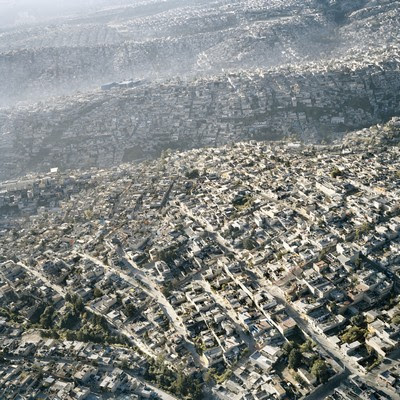
Participating photographers practising across all five continents; from Reiner Riedler’s families cavorting at leisure parks, through Raimond Wouda’s high school subculture, Wang Qingsong’s parody of insane work habits, to Lauren Greenfield’s displays of ostentatious wealth, Edward Burtynsky’s study of fragile water resources, Pablo Lopez Luz’s views on a sprawling contemporary megapolis, Thomas Struth’s vision of past civilizational glories and Xing Danwen’s electronic wastelands, Civilization draws together powerful imagery into a new, unique and challenging discourse.

A collaboration between Saatchi Gallery and the Foundation for the Exhibition of Photography, with curators William A. Ewing and Holly Roussell, the highly-anticipated exhibition has toured in major museums across Korea, China, Australia, New Zealand, France and Italy and includes a new selection of works curated especially for this London edition at Saatchi Gallery. In addition to the photographers with decades of experience, Civilization features the work of many in mid-career, as well as emerging talents.

Pablo López Luz
Pablo López Luz 
Vista Aerea de la Ciudad de Mexico, XIII, 
from the series Terrazo, 2006 
© Pablo López Luz

Cyril Porchet
Cyril Porchet
Untitled from the series Crowd, 2014 
© Cyril Porchet

Jeffrey Milstein
Jeffrey Milstein
Newark 8 Terminal B, Newark, NJ, 
from the series Airports, 2016 
© Jeffrey Milstein

As curator William A. Ewing explains:
“Photographers are at work everywhere, photographing everything, using their eyes and their minds to seize telling moments in the rapid flux with sharp, vivid images. Photographers are our civilization’s eyes... Ironically, it may be that many of these photographs will last longer than the monuments and artefacts that they depict. London has always been a great centre for the celebration of photography from all corners of the globe, filled with collections, archives, museums and galleries deeply committed to the promotion of this vital art form. We curators have been privileged to benefit from many loans from these sources, and welcome Saatchi Gallery’s invitation to share the fruits of our research with a London audience.”
The exhibition is conceived as a journey through key aspects of civilization, via eight thematic chapters: HIVE, which features photographs dealing with the concept of the urban environment, a prerequisite of all civilizations; ALONE TOGETHER which looks at social relationships; FLOW, which takes its subject to the movement of peoples, good and ideas; PERSUASION, which looks at the strategies that politicians and merchandisers employ to influence our behaviour; CONTROL, which has to do with authority and power; RUPTURE, which looks at societal breakdown and conflict; ESCAPE, which shows people searching for release from the mundane; and NEXT? which hints at the new world taking shape in the 21st Century.

Wang Qingsong
Wang Qingsong 
Work, Work, Work, 2012 
© Wang Qingsong

Reiner Riedler
Reiner Riedler
Wild River, Florida, 
from the series Fake Holidays, 2005 
© Reiner Riedler

Olaf Otto Becker
Olaf Otto Becker
Point 660, 2, 08/2008 67°09’04’’N, 50°01’58’’W, Altitude 360M, 
from the series Above Zero, 2008 
© Olaf Otto Becker

The Concept in Detail

Civilization: The Way We Live Now focuses on our emerging global civilization, as it has taken shape over the early years of the 21st Century, and focuses specifically on collective behaviour and achievement, so often disguised in our time by the celebration of individuality. Civilization neither denies individualism, nor the reality of distinct cultures, rich in their own right and which may even oppose homogenizing global forces. However, our focus remains on what is shared collectively by large numbers of people, either directly as participants, or indirectly as consumers or passive observers.

This fast-emerging global civilization has made use of and absorbed the discoveries and inventions of many previous civilizations while adding a profusion of its own innovations. Our burgeoning sciences and new technologies have given us the capacity to extend human life (and destroy countless other forms) and engineer new life forms (and create huge risks, even to the possible destruction of our own species). It has the capacity to create utopias and dystopias—even, paradoxically, simultaneously. It is now projecting itself into deep space with the idea of eventually finding another home for our species.

A Portrait through Photography

Photography may also be seen in the light of a collective civilizational endeavour. Together, photographers are creating a multifaceted portrait of our time. They are busy everywhere on the surface of the globe, in every country and in every city, observing, recording, interpreting, questioning—not to mention fixing for posterity—the way we live now: where we live and how we live; how we work and how we play; how we move our bodies, our goods, and our ideas; how we collaborate and how we compete; how we make love and how we make war. We find photographers at work in banks, chambers of government, prisons, schools, and places of work of every description, each capturing some thread which goes to weave the rich texture of our civilization. The exhibition can therefore be seen as a show about civilization—or about photography—and ideally through these two lenses simultaneously.

Vincent Fournier
Vincent Fournier 
Ergol #1, S1B clean room, Arianespace, 
Guiana Space Center [CGS], Kourou, French Guiana, 2011 
© Vincent Fournier

Michael Najjar
Michael Najjar 
orbital ascent, 2016 
from the series outer space 
© Michael Najjar

Exhibiting Photographers

Max Aguilera-Hellweg, Andreia Alves de Oliveira, Evan Baden, Murray Ballard, Olivo Barbieri, Mandy Barker, Lisa Barnard, Olaf Otto Becker, Valérie Belin, Daniel Berehulak, Mathieu Bernard-Reymond, Peter Bialobrzeski, Florian Böhm, Michele Borzoni, Priscilla Briggs, Paul Bulteel, Edward Burtynsky, Alejandro Cartagena, Philippe Chancel, Che Onejoon, Olivier Christinat, Lynne Cohen, Lois Conner, Raphaël Dallaporta, Sian Davey, Susan Derges, Gerco de Ruijter, Richard de Tscharner, Sergey Dolzhenko, Natan Dvir, Roger Eberhard, Mitch Epstein, Andrew Esiebo, Adam Ferguson, Vincent Fournier, Andy Freeberg, Matthieu Gafsou, Andreas Gefeller, George Georgiou, Christoph Gielen, Ashley Gilbertson, Katy Grannan, Samuel Gratacap, Lauren Greenfield, Han Sungpil, Nick Hannes, Sean Hemmerle, Mishka Henner, South Ho Siu Nam, Candida Höfer, Dan Holdsworth, Hong Hao, Aimée Hoving, Pieter Hugo, Leila Jeffreys, Jo Choonman, Chris Jordan, Yeondoo Jung, Nadav Kander, KDK, Mike Kelley, Kim Taedong, Alfred Ko, Irene Kung, Benny Lam, Sonia Lenzi, Gjorgji Lichovski, Michael Light, Mauricio Lima, Sheng-Wen Lo, Pablo López Luz, Christian Lünig, Alex MacLean, David Maisel, Ann Mandelbaum, Edgar Martins, Jeffrey Milstein, Mintio, Richard Misrach, Andrew Moore, David Moore, Richard Mosse, Michael Najjar, Walter Niedermayr, Jason Sangik Noh, Noh Suntag, Simon Norfolk, Trent Parke, Cara Phillips, Robert Polidori, Sergey Ponomarev, Cyril Porchet, Mark Power, Giles Price, Yan Wang Preston, Reiner Riedler, Simon Roberts, Andrew Rowat, Victoria Sambunaris, Sato Shintaro, Dona Schwartz, Paul Shambroom, Chen Shaoxiong, Toshio Shibata, Corinne Silva, Alec Soth, Henrik Spohler, Will Steacy, Thomas Struth, Larry Sultan, Shigeru Takato, Eric Thayer, Danila Tkachenko, Eason Tsang Ka Wai, Andreas Tschersich, Amalia Ulman, Brian Ulrich, Penelope Umbrico, Johanna Urschel, Carlo Valsecchi, Reginald Van de Velde, Cássio Vasconcellos, Massimo Vitali, Robert Walker, Dougie Wallace, Richard Wallbank, Wang Qingsong, Patrick Weidmann, Thomas Weinberger, Damon Winter, Michael Wolf, Paolo Woods and Gabriele Galimberti, Raimond Wouda, Xing Danwen, Ahmad Zamroni, Luca Zanier, Zhang Xiao, Robert Zhao Renhui, Francesco Zizola.

CIVILIZATION: The Way We Live Now has been co-produced by the Foundation for the Exhibition of Photography, Minneapolis/Paris/Lausanne, and the National Museum of Modern and Contemporary Art of Korea, in collaboration with the Saatchi Gallery, London. Previous venues of the exhibition include the National Museum of Modern and Contemporary Art in Seoul, South Korea; UCCA Centre for Contemporary Art, Beijing, China; the National Gallery of Victoria, Melbourne, Australia; the Auckland Art Gallery, Auckland, New Zealand; the Museum of Civilisation (Mucem), Marseille, France and the Museo San Domenico, Forlì, Italy.

The exhibition is curated by William A. Ewing and Holly Roussell, assisted by Justine Chapalay. William A. Ewing is an author, lecturer, and curator of photography, and former director of the Musée de l’Elysée in Lausanne. Over the years his exhibitions have been seen in London at the Serpentine, Whitechapel, and Barbican Galleries, the Photographer’s Gallery, the Welcome Institute and Somerset House. Holly Roussell is a curator and museologist specialising in photography and contemporary art from East Asia. Currently, she is curator for the UCCA Center for Contemporary Art, Beijing. The project is directed by Todd Brandow, Executive Director, Foundation for the Exhibition of Photography, Minneapolis / Lausanne and Bartomeu Mari, Director, Museum of Modern and Contemporary Art, Seoul, Korea.

Exhibition Catalogue - The official Civilization book is published by Thames & Hudson and FEP Editions. In parallel with the exhibition, a major publication has been produced in a number of editions: British, American, Italian, French, German, Korean and Chinese. Hardbound and 500+ images.

SAATCHI GALLERY
Duke of York's HQ, King's Road, London, SW3 4RY

15/09/16

Giuseppe Penone @ Galerie Marian Goodman, Paris et Londres

Giuseppe Penone
Galerie Marian Goodman, Paris et Londres
Jusqu'au 22 octobre 2016


« La perception tactile nous rapproche du présent. » Giuseppe Penone

La Galerie Marian Goodman présente actuellement deux expositions simultanées de Giuseppe Penone à Paris et à Londres. Ces nouvelles expositions rassemblent une sélection d’oeuvres ayant pour thème le sens du toucher, et dont les formes émanent de gestes spécifiques accomplis par la main de l’artiste. Comme l’observe Laurent Busine: « Rien n’est plus intensément le geste de Giuseppe Penone que la poignée ; c’est-à-dire, la quantité de choses que la main peut contenir, soit que la main presse ou écrase, que la main tienne et garde ou encore que la main glisse et caresse. » Les oeuvres présentées dans les deux expositions (dont le titre fait référence, au passé, au futur et au présent) révèlent que gestes et perceptions tactiles sont, aux yeux de Giuseppe Penone, liés à l’individualité et au temps: “Une forme sans le geste d’un homme est un présent collectif ; avec le geste d’un homme, c’est un présent individuel.”

Giuseppe Penone : Ebbi, Avrò, Non Ho (J’eus, J’aurai, Je n’ai), Galerie Marian Goodman, Paris

La galerie de Paris présente un ensemble d’oeuvres dans lesquelles l’artiste, grâce à l’empreinte de sa main dans la matière, rend palpable la relation entre le geste et le matériau, entre le corps et l’univers. La feuille d’or de Spoglia d’oro (2001) façonnée par lui, arbore les lignes et sillons de sa paume. Dans Germinazione (2005), une série de six sculptures murales, le volume de ses doigts se superpose aux moulages d’arbres et de branches en résine acrylique. Au rez-dechaussée, le groupe d’oeuvres intitulées Avvolgere la terra (Envelopper la terre) (2014) conjugue la terre cuite avec différents matériaux, tels que l’engobe de silice colorée, la résine, le cuir et l’aluminium. D’un simple geste, « l’action d’envelopper la terre avec les mains, la contenir », l’artiste met en évidence la connexion intime, complexe entre les hommes et la nature. « Il s’agit de la forme qu’imprime, dans la matière, le mouvement fluide de l’univers. Une simple poignée d’argile contient la synthèse d’une forme universelle. »

Giuseppe Penone poursuit son exploration des limites du voir et du toucher avec Terre (2015) et Pugno di grafite - palpebra (2012). Les deux oeuvres représentent une paupière fermée, qui selon l’artiste donne « la définition exacte des frontières et de l’espace de la pensée » et « reflète le fait que notre corps est présent dans l’espace ». Cette présence est matérialisée par la poignée, respectivement en terre cuite et en graphite.

Jouant sur la relation entre le contenant et le contenu, les sculptures Il vuoto del vaso (2005), exposées au niveau inférieur, associent de larges vases en terre cuite et des images radiographiques. Tandis que les vases témoignent de la pression exercée sur l’argile, les radios qui les accompagnent révèlent les mains de l’artiste, rendant ici visible un processus fugace et imperceptible. Geometria nelle mani – 4 aprile (2004), une série de photographies noir et blanc en négatif, montre les mains de Giuseppe Penone tenant de petites formes géométriques en bois ; écho au geste accompli en 1979 pour réaliser Cocci. Le vide entre ses mains et l’objet, lumineux sur chaque image, devient l’espace potentiel d’une sculpture à venir.

Giuseppe Penone : Fui, Sarò, Non Sono (I was, I will be, I am not), Marian Goodman Gallery, London

La galerie de Londres présente également des oeuvres emblématiques de l’intérêt de Giuseppe Penone pour la relation métaphysique entre son corps et l’écosystème vivant. L’un des meilleurs exemples en est fourni par l’oeuvre exposée dans la galerie inférieure, Trattenere 6, 8, 12 anni di crescita (Continuerà a crescere tranne che in quel punto), (2004-2016). En 1968, Penone fixa un moulage en bronze de sa main sur le tronc d’un jeune arbre. Six ans plus tard, il réalisa un moulage de cet arbre in situ, puis deux autres, respectivement huit et douze ans après le premier, capturant la symbiose croissante de sa main avec l’arbre qui l’enveloppe. Trattenere 6, 8, 12 anni di crescita (Continuerà a crescere tranne che in quel punto) comprend ces trois moulages réalisés au cours de ces douze dernières années. La main de l’artiste entravant la croissance naturelle, l’arbre s’adapte à l’emprise du métal, enveloppant la main qu’il absorbe peu à peu. Ici, le corps humain et l’arbre se métamorphosent ensemble pour devenir une seule et même entité. Son identité sculpturale continue d’évoluer de manière organique, liant son passé, son présent et son futur.

Respirare l’ombra (2008), une installation de cages métalliques contenant des feuilles de laurier, couvrira l’un des murs principaux de la galerie inférieure, tout en embaumant l’espace. Tandis que le sens du toucher est déterminant dans la pratique de Giuseppe Penone, celui de l’odorat favorise la transformation de notre rapport au monde. Une forêt de branches entrelacées surmontées d’empreintes en terre cuite (Terra su terra, 2014/2015), et un autre ensemble de sculptures d’arbres en bronze et marbre seront présentées sur les deux niveaux de la galerie. Comme Respirare l’ombra, ces oeuvres recréent un environnement semblable aux forêts de Garessio, en Italie, dans l’intimité desquelles vécut Penone durant ses années de formation. Ce qui, dans ces oeuvres, est fait de main d’homme - les cages dans Respirare l’ombra et le marbre encaissant les racines dans Indistinti confini – semble contredire, à première vue, l’évolution naturelle telle qu’on peut l’observer dans une forêt, mais c’est finalement la force organique qui l’emporte, tendue vers une unité harmonieuse, à laquelle une transfiguration paisible permet d’accéder.

Dans la galerie inférieure, Giuseppe Penone boucle le thème du “toucher” avec Corteccia (1986), une série de portraits en terre cuite représentant sa fille Caterina. Certaines zones des portraits sont recouvertes d’une glaçure qui met l’accent sur le toucher de l’artiste et qui, loin d’être un simple outil, fait partie intégrante de la sculpture. Pour reprendre les mots de Gianfranco Maraniello, dans son essai intitulé Giuseppe Penone: the Possibility of Sculpture: “La main elle-même est le moule initial de toute forme, transférant son empreinte au matériau qui sera façonné et initiant, de ce fait, une dialectique négative, constitutive de l’oeuvre. »

De nouvelles et emblématiques sculptures de Giuseppe Penone sont actuellement visibles dans les jardins du Rijksmuseum, à Amsterdam (jusqu’au 2 octobre 2016) tandis que le Musée d’Art Contemporain de Trente et Rovereto (MART) vient de présenter une grande rétrospective. Récemment, des oeuvres de Giuseppe Penone ont aussi été exposées au Nasher Sculpture Center, à Dallas (2015) ; au Musée Cantonal des Beaux-Arts, à Lausanne (2015) ; au Beirut Art Center (2014) ; au Musée de Grenoble (2014) ; au Kunstmuseum Winterthur (2013) ; à la Whitechapel Gallery, à Londres (2013). Giuseppe Penone a présenté des sculptures monumentales dans de nombreux jardins prestigieux, tels que les jardins du château de Versailles (2013); le Madison Square Park, à New York (2013); le Giardino di Boboli, Forte di Belvedere, à Florence (2014); la Venaria Reale, près de Turin (2015). Giuseppe Penone est né en 1947 dans la petite ville piémontaise de Garessio, en Italie. Il a fait ses études à l’Accademia di Belle Arte à Turin, où il vit et travaille. En 2014, il a été, en tant que sculpteur, lauréat du prestigieux Praemium Imperiale, décerné à des artistes internationaux. En 2007, il a représenté l’Italie à la 52ème biennale de Venise.

Galerie Marian Goodman Paris
, 79 rue du Temple, 75003 Paris
Marian Goodman Gallery London, 5-8 Lower John Street, London W1F 9DY
www.mariangoodman.com

02/05/13

FESPA 2013 Londres : Jet Set Conference - Programme et intervenants


La « Jet Set Conference » fera escale au salon FESPA 2013 à Londres fin juin 2013


C'est la première fois que la JET SET CONFERENCE aura lieu à la FESPA 2013 qui aura lieu à Londres du 25 au 29 juin 2013 (voir le post principal dédié à ce salon - à venir). Les intervenants et les thèmes abordés ont été confirmés par les organisateurs. Le terme de conference au singulier ne doit pas tromper puisqu'il s'agit de conférences, au pluriel.

Explore Conference lors de la dernière FESPA Digital 2012

La JET SET CONFERENCE consiste en un ensemble de séminaires, de conférences débats, proposés lors des cinq journées que dure le salon international de l'imprimerie numérique et de la sérigraphie. Au cours de ces séminaires, la FESPA propose aux prestataires de services d’impression (PSP) une variété de présentations pour les aider à explorer les vastes opportunités d’impression et à développer leurs activités. Les sessions, gratuites, aborderont des thèmes clés qui ne manqueront pas d’intéresser les PSP, dont : l’impression numérique en général, l’impression numérique sur textile, l'amélioration des compétences, la sérigraphie numérique et le développement durable en lien avec les activités d'impression. D'autres conférences sont bien entendu proposées au cours du salon. Nous avons déjà présenté dans un précédent post les conférences débats organisées dans le cadre du « Creatice Corner » (texte en anglais).

Le « briefing de vol de la FESPA », qui a lieu le premier jour, marque le début de l’événement. Au cours de ce prologue, Chris Smith, responsable du salon, dévoilera le programme « Profit for Purpose » de la FESPA et abordera le ré-engagement de la FESPA envers la communauté mondiale de l'industrie de l’impression. Les visiteurs pourront également écouter les associations FESPA Slovaquie, Turquie et Royaume-Uni lors de la présentation « Association Showcase » consacrée à leur travail (lequel est rendu possible grâce au financement de projets de la FESPA).

La conférence Sustainability dédiée au développement durable appliqué aux métiers de l'impression numérique débutera à 14h00 le premier jour, et couvrira des thèmes tels que la mise en conformité, les calculateurs de l’empreinte carbone et les alternatives à la disposition des entreprises pour devenir éco-efficaces. Les principaux séminaires confirmés incluent l’intervention de Rachel Butler, conseillère technique indépendante, qui se penchera sur les nouvelles réglementations et les moyens accessibles de mise en oeuvre, par le biais notamment d’études de cas présentées en exemple. Une autre session expliquera comment le développement durable peut aller de pair avec la croissance de l'activité de l’entreprise. Au cours de cette présentation, Paul Noble, Responsable des opérations chez Banner Box, fera part de son expérience, dévoilant comment sa société a réussi à intégrer des pratiques durables tout en continuant à se développer et à investir. En bref, il s'agit de souligner en quoi la question écologique ne doit pas seulement être appréhendée en terme de coût pour l'entreprise.

L’impression numérique sur textile sera le point d’orgue de la deuxième journée de la Jet Set Conference. Les séminaires consacrés à ce thème s’intéresseront aux opportunités de ce marché, aux techniques de la sublimation vs impression directe ou encore à l’impression pour le monde de la mode. Les visiteurs auront également droit à une analyse prospective, un aperçu de l’industrie de l’impression numérique sur textile de demain. Cette session s’adresse tout particulièrement à celles et ceux qui sont désireux d’ajouter l’impression numérique sur textile à leur offre de services.

Tim Greene, Directeur d’édition Grand Format chez InfoTrends lancera la troisième journée de la Jet Set conference aux couleurs de l’impression numérique. Il commentera les résultats de l’enquête World Wide Survey de la FESPA et dévoilera les tendances clés de l’impression numérique. Après le déjeuner, Andrew Hodson, Directeur ventes et marketing chez Icon-world, expliquera comment sa société gère l’approvisionnement, le contrôle qualité et la logistique pour répondre aux attentes de plusieurs des événements les plus importants au monde, en s’appuyant sur l’expérience des Jeux Olympiques de Londres qui se sont déroulés durant l’été 2012.

La cérémonie FESPA Awards investira la salle de conférence à partir de 15h30 et annoncera les lauréats des catégories de la sérigraphie, de l’impression numérique sur textile et de l’impression industrielle. Financés par le programme de réinvestissement « Profit for Purpose » de la FESPA, les prix décernés récompensent les initiatives innovantes et le travail « exceptionnel » d’imprimeurs du monde entier. Si le concours n’est ouvert qu’aux membres des associations FESPA, la catégorie relative à l’impression industrielle accepte aussi des membres extérieurs à la FESPA. Les imprimeurs peuvent soumettre leur candidature jusqu’au 20 mai 2013.

La conférence Business Building Skills consacrée à l’amélioration des compétences aura lieu le quatrième jour, et débutera par l’intervention de Jacky Hobson, Directeur du marketing chez Up Marketing, qui s’intéressera au marketing cross-média et à l’importance pour les imprimeurs de comprendre et d’utiliser les médias sociaux dans le cadre de leur activité. Nick Devine, Fondateur de The PrintCoach, prendra également la parole afin d’énoncer les moyens à la disposition des imprimeurs pour obtenir le meilleur de leurs équipes de vente afin d'avoir davantage de nouvelles opportunités commerciales. Nick Devine passera également en revue les procédés les plus efficaces pour attirer les commerciaux talentueux, et expliquera comment appliquer une matrice des résultats pour développer de nouvelles stratégies commerciales.

Le dernier jour du salon, des leaders de la communauté de la sérigraphie se réuniront. Présidés par Peter Buttiens, CEO d’ESMA, les intervenants aborderont divers sujets, comme l’électronique imprimée ou l’impression sur le verre et le plastique. Tim Claypole, Professeur et Directeur du centre WCPC, de l’Université Swansea, entamera la journée avec le secteur de l’impression industrielle et les opportunités que ce marché offre. David Parker, MacDermid Autotype, se consacrera quant à lui à l’impression industrielle pour le plastique.

Duncan MacOwan, Responsable média et événements pour la FESPA, commente : « La notoriété de nos conférenciers et des thèmes abordés augmente d’année en année, tendant à positionner la FESPA comme un salon international pour les marques. La Jet Set Conference s’inspire du thème « Destination » véhiculé par la FESPA de Londres, et vise à délivrer des informations permettant [aux participants] d’explorer les vastes opportunités offertes par l’impression. Nous nous centrons en particulier sur les PME, leur apportant de nouvelles idées et leur prodiguant des encouragements afin de les aider à développer leur activité. La conférence couvre des thèmes clés liés à l’industrie, et propose aux délégués du contenu riche, stimulant et suscitant la réflexion, qu’ils pourront appliquer à leurs futures décisions commerciales. »

Pour plus d’informations sur la Jet Set Conference ou la FESPA 2013, rendez-vous sur le site :
www.fespa.com/london

01/05/13

Montre Gucci Interlocking Edition special pour soutenir le UK Music Fund - Fonds musical anglais - lancé par Gucci Montres & Joaillerie


Gucci Montres & Joaillerie a tenu en avril 2013 une conférence de presse à l'hotel Soho de Londres afin de marquer le lancement de son UK Music Fund (Fonds Musical du Royaume-Uni), suite à la création en 2012 du Fonds musical Gucci Montres et Joaillerie. En parallèle, Gucci a lancé une édition spéciale de sa montre Interlocking. L'objectif du Fonds musical Gucci Montres & Joaillerie est de découvrir et de promouvoir de jeunes musiciens talentueux à travers le monde. A l'origine, le Fonds a d'abord été créé en Chine afin de soutenir de jeunes musiciens en Asie, à travers la China Soong Ching Ling Foundation (CSCLF). 

La chanteuse Emeli Sandé et la DJ Jo Whiley
Emeli Sandé et Jo Whiley portent l'édition spéciale de la montre Gucci Interlocking (Music Fund Special Edition) lors du  lancement du Fonds musical anglais créé par Gucci Montres & Joaillerie, au Soho Hotel, le 10 avril 2013, à Londres, UK. Photo : Samir Hussein / Gucci Montres & Joaillerie (c) 2013 Getty Images Europe

Emeli Sandé a participé à la conférence de presse, animée par la célèbre animatrice et DJ radio, Jo Whiley. La chanteuse britannique Emeli Sandé, marraine du UK Music Fund, a récemment remporté les titres de meilleure artiste féminine de l'année et meilleure artiste britannique de l'année au cours des Brit Awards 2013. Jo Whiley est l'une des premières femmes DJ de Grande-Bretagne. Elle est surtout connue pour son engagement en faveur des musiques nouvelles et pour ses prestations scéniques. Neil Portnow, Président/CEO de la Recording Academy, était également présent afin d'apporter son soutien à cette initiative. 

Le Fonds musical Gucci Montres et Joaillerie soutiendra la World Heart Beat Music Academy de Londres. La World Heart Beat Music Academy a ce pouvoir magique d'ouvrir des portes à de jeunes gens de tous âges et origines qui n'ont pu bénéficier d'une formation musicale. Les programmes novateurs de la World Heart Beat Music Academy incitent les jeunes à explorer tout un monde de possibilités à travers leur amour pour la musique.

Grâce au partenariat entre Gucci Montres & Joaillerie et la Recording Academy (en charge de l'organisation des GRAMMY Awards), les enfants de la World Heart Beat Music Academy auront une chance de participer au GRAMMY Camp à Los Angeles, financé par le Fonds. Dix élèves issus de l'école de musique seront sélectionnés et deux d'entre eux seront envoyés au GRAMMY Camp au cours de l'été 2013. 

Sahana Gero, Fondatrice et Directrice Artistique de la World Heart Beat Music Academy, a commenté les nouvelles opportunités offertes par l'alliance avec Gucci Montres et Joaillerie en ces termes : 
« Je suis ravie que Gucci Montres et Joaillerie ait choisi de soutenir la World Heart Beat Music Academy pour leur premier UK Music Fund. Nous considérons que la musique est le pouls même de l'humanité et qu'elle a le pouvoir de transformer la vie de jeunes gens. Nous nous appuierons sur cette opportunité unique offerte par notre partenariat avec la Recording Academy pour continuer à explorer de nouveaux horizons, de sorte que nos étudiants parviennent à réaliser leurs rêves et à concrétiser leurs aspirations grâce au pouvoir de la musique. Avec de l'espoir, des convictions et des investissements, de grandes choses peuvent être accomplies. » 
Emeli Sandé, qui contribuera à la promotion du UK Music Fund, a souligné que : 
« Il est essentiel que les jeunes aient aujourd'hui la chance de s'exprimer à travers la musique et qu'on leur donne la possibilité de le faire. Des projets tels que ceux-ci rendent la musique accessible à tous ; les jeunes les moins favorisés en particulier seront en mesure de raconter leur histoire et de faire entendre leurs voix. Ce sont des questions qui me tiennent à cœur, aussi je suis très fière d'être associée à ce projet. »
En élargissant la portée de son Fonds Musical, Gucci Montres et Joaillerie enrichit ses alliances musicales avec ses partenaires dans le monde de la musique et des arts. Les relations de longue date qui unissent Gucci Montres & Joaillerie et la Recording Academy ont une importance particulière pour ce nouveau projet, comme le souligne Neil Portnow, Président/CEO de la Recording Academy : « En s'associant avec Gucci Montres et Joaillerie, la Recording Academy a la possibilité de poursuivre et d'étendre son objectif à l'échelle mondiale, en proposant de nouvelles opportunités aux jeunes musiciens. Le Royaume-Uni a produit des légendes musicales de renommée internationale et nous sommes donc impatients d'accueillir des étudiants de Londres au GRAMMY Camp et de leur offrir cette expérience et cette occasion uniques d'approfondir leurs connaissances. »

Montre Gucci Interlocking

Afin de soutenir les programmes du Fonds Musical, Gucci Montres et Joaillerie lance une édition spéciale de sa montre Interlocking, qui se distingue par un bracelet en acier et un cadran noir. Disponible en taille 29 mm, cette montre pour homme et femme porte le logo iconique aux deux G entrelacés autour de la lunette, représentant les initiales du fondateur de la maison, Guccio Gucci. Ce modèle se caractérise par son style audacieux et simple : le cadran occupe tout l'espace central et son impressionnante surface perlée circulaire rappelle les sillons d'un disque vinyle. L'inscription « Gucci Music Fund » est gravée sur le fond de boîte.

L'engagement de Gucci Montres et Joaillerie en faveur des arts et de la musique en particulier n'est pas nouveau. La création du UK Music Fund est parfaitement en accord avec les valeurs profondes de la marque. Michele Sofisti, CEO de la société, précise : 
« Les valeurs de Gucci Montres et Joaillerie sont étroitement liées à la musique. La musique est essentielle à notre culture collective non seulement parce qu'elle relie les individus entre eux, mais également parce qu'elle façonne et influence d'autres tendances, notamment dans la mode et le design. La création du UK Music Fund et le soutien à la vibrante World Heart Beat Music Academy sont la preuve de notre engagement en faveur d'une génération de musiciens et de notre soutien au développement des arts. »
Pour de plus d'informations sur Gucci Montres & Joaillerie et ses initiatives, visitez les sites :
www.gucciwatches.com et www.timeismusic.com

08/12/11

Art First gallery, London, Projects: Compendium


Art First Projects: Compendium
Art First, London
Through 4 February, 2012

A Survey of small, significant works by artists from the gallery exhibition programme during it's first year in Eastcastle Street new gallery in London

Joni Brenner
Eileen Cooper
Helena Goldwater
Alex Knell
Rasha Kahil
Kevin Laycock
Liane Lang
Simon Lewty
Will Maclean
Jack Milroy
Simon Morley
Karel Nel
Rebecca Partridge
David Price
Joe Watling
Jenny Wiener

Art First will also be exhibiting on stand 4 at the London Art Fair, 18 January - 22 January 2012

ART FIRST
21 Eastcastle Street
LONDON W1W 8DD
www.artfirst.co.uk

17/07/11

This is Design in London Design Museum upcoming exhibition

THIS IS DESIGN 
Design Museum, London 
24 August 2011 - 22 January 2012 

Résumé en Français : voir plus bas :)

MOULTON BIKE, circa 1960 
Photo Courtesy Design Museum, London

This is Design is a celebration of the London Design Museum’s Collection, which examines the impact of design on the modern world, whilst also exploring the consequences of design and how it shapes our lives and contemporary culture. 

The Collection has been in storage for over five years and during this period it has been catalogued, conserved and documented. The Collection contains pieces ranging from early items of mass manufacture through to cutting edge contemporary design and includes furniture, fashion, transport, products, ceramics and graphics. 

CANDLESTICK TELEPHONE, circa 1920 
Photo Courtesy Design Museum, London

Design can help us absorb and adapt to change and make positive use of a modern world which could otherwise be confusing. By using themes such as Identity, Manufacturing Innovations, the Digital Revolution and Lifecycle the exhibition will look at how design provides a visual language to help use the objects around us.

Prototypes, drawings, couture samples, models, first editions and finished industrial objects will be on display demonstrating the design process and subsequent influence of design on the contemporary culture. The exhibition will also explore ‘quiet’ design, demonstrating how design surrounds us and how whether accidental or subtle, design plays a role in shaping the way we live and enables us to understand the world around us.

ANGELPOISE LAMP TYPE 1927
DESIGNED IN 1934 
Photo courtesy Design Museum, London

Highlights from the collection including the Anglepoise lamp, the original Mini and the Moulton bicycle will be displayed alongside large scale architectural models to include Sir Norman Foster’s HSBC Bank headquarters in Hong Kong, couture garments and street furniture, UK road signs and traffic lights will also be on display. 

Supplemented by loans and gifts, and celebrating new acquisitions to the collection, the exhibition also looks at the changing role of collecting design and future developments of the Design Museum Collection as it prepares to move to a new home at the former Commonwealth Institute. The new museum will provide dedicated gallery space to display the collection and celebrate the importance of design through a permanent display.

Curator: Alex Newson 

MARGARET CALVERT & JOCK KINNEAR 
ROAD SIGNAGE, 1965 
Photo courtesy Design Museum, London

Résumé en français : This is Design au Musée du Design à Londres est une exposition à venir qui débutera à la fin de l'été, le 24 août 2011 et sera visible jusqu'au 22 janvier 2012. Cette exposition présente une importante sélection du design anglais, d'hier à aujourd'hui, avec un large panel des différents types de pièces conservées. Cela inclut des objets décoratifs, des dessins ou croquis de designers, des vêtements typiques de la mode anglaise, des objets plus simples de la vie quotidienne, issus de la production de masse, aussi bien pour la maison ou le bureau que des équipements urbains ou des maquettes d'architectures. Bref, un très large éventail et en même temps un condensé du style britannique au travers de son design ancien, vintage, au design le plus contemporain. L'exposition a lieu alors que le Musée du Design de Londres va déménager dans l'ancien Institut du Commonwealth. Les pièces de la collection exposées sont présentées autour d'une problématique logiquement assez large étant donné leur diversité. Une problématique qui grosso modo tourne autour de la question du lien, de l'interaction, entre design, culture et mode de vie. Est ainsi à la fois abordé d'une part  l'impact du design sur le style de vie et d'autre part, en quoi le design est sous influence des évolutions culturelles mais aussi de l'économie et de l'évolution des outils de production. Une présentation thématique aussi, avec, par exemple les thèmes de l'identité, la spécificité culturelle, l'innovation dans le processus de production, la révolution numérique, le cycle de vie d'un produit... Alex Newson est le commissaire de cette exposition.

DESIGN MUSEUM, SHAD THAMES, LONDON SE1 2YD
Website: www.designmuseum.org

20/09/10

Heather James Exhibition at Art Work Space Gallery in London

Heather James, Dreamland
Art Work Space, London

Through 1st October 2010

On view at Art Work Space gallery in London ‘Dreamland’, an exhibition of new work by British painter HEATHER JAMES. Made up of a series of large-scale oil paintings, the exhibition sees the artist continue to focus on her chosen subject of flowers. Inspired by traditional still life and its original themes, she contemporizes and personalizes them by drawing on her own experiences and observations.

James began an exploration of these themes whilst at college, where she found herself updating or inverting the Dutch Still Life and Northern Renaissance visual symbolic language. Similarly to the ubiquitous skull that is so often found in, generally masculine, contemporary art - and which is directly drawn from this earlier period - flowers provided the artist with a suitably feminine symbol through which to continue to explore these. Painted in the photo-realistic style, the works move beyond exact representations of individual blooms and become examinations of love and lost love, life and decay, beauty, youth and age.

Of the work James says, “I have been working almost exclusively with flower imagery, drawing on the dark significance of their art historical symbolic meanings, to explore issues relating to and arising from contemporary culture. The feminine associations and connotations of the imagery are relevant to me with the current problematic attitude towards beauty and how that mutates our attitude towards love and loving in the modern day, consumerist society and celebrity obsessed culture.

James’ work also suggests a preoccupation with a visual uncertainty, the questioning of what is real and true, “In struggling with these issues my paintings become an exercise in the nature of mimesis, an exploration of symbolic materiality, a depiction of surface as insecure, changing, ageing, altered, manipulated, and to varying degrees artificial”.

Upcoming exhibitions at the ART WORK SPACE

A solo exhibition of work by SUNGFEEL YUN, Apollonian/Dionysian (exhibition organized in collaboration with Summarra Lunn) from 8th October to 7th November 2010.

ART WORK SPACE
The Hempel, 31-35 Craven Hill Gardens, London W2 3EA 

16/09/10

Sunday Art Fair London 2010 P3 Ambika

For the first time this October SUNDAY art fair will be held in London at the P3 Ambika space on Marylebone Road. Taking place from 14th to 16th October, SUNDAY is an international, gallery-led art fair showing a selection of 20 young galleries, exhibiting work by over 60 international artists at the fore of emerging talent.

Sunday Art Fair
SUNDAY Art Fair London
P3 AMBIKA

14-16 October 2010

20 Galleries – 60 International Artists


SUNDAY’s first outing was in Berlin during the 2009 Gallery Weekend where it was so well received the organisers decided to bring it to London during this year’s October art week. Housed in the P3 Ambika, a 14,000 square foot, triple height subterranean space, the fair aims to provide an easy going and accessible temporary platform for young galleries to exhibit their artists’ work.


Among the artists on show will be: Jesse Ash, Edwina Ashton, Francesco Barocco, Michael Bauer, Luca Bertolo, Armin Boehm, Wolfgang Breuer, Sophie Bueno-Boutellier, Liudvikas Buklys, Nicolas Ceccaldi, Kit Craig, Gintaras Didžiapetris, Chris Evans, John Finneran, Zipora Fried, Aurélien Froment, Simon Fujiwara, Ryan Gander, Dagmar Heppner, Andy Holden, Judith Hopf, Takaaki Izumi, Jessica Jackson Hutchins, Thomas Kratz, Deborah Ligorio, Anissa Mack, David Mackintosh, Chris Martin, Joseph Montgomery, Rosalind Nashashibi, Dominique Petitgand, Riccardo Previdi, Ruth Proctor, Mandla Reuter, Tina Schulz, Matthew Smith, Michael E Smith, Jack Strange, The Hut Project, Richard Wilson, Richard Woods and Katarina Zdjelar.

Independent contemporary bookshop and publisher Aye Aye Books (Glasgow) and publishing house Archive Books (Berlin) will also be at SUNDAY with a selection of journals and publications available to purchase. Raising funds for their Interaction programme, the Zabludowicz Collection will present a selection from their limited edition sculptures, photographs and prints.

SUNDAY is organised by three of the participating galleries: Limoncello - London , Croy Neilsen - Berlin and Tulips and Roses – Brussels and sponsored by the Zabludowicz Collection.

Exhibiting galleries: Arcade (London), BolteLang (Zurich), Circus (Berlin), Croy Nielsen (Berlin), Freymond-Guth (Zurich), gb agency (Paris), Laurel Gitlen (New York), KOW (Berlin), Tanya Leighton (Berlin), Limoncello (London), Lüttgenmeijer (Berlin), Motive Gallery (Amsterdam), Norma Mangione Gallery (Turin), Francesca Minini (Milan), TARO NASU (Tokyo), Neue Alte Brucke (Frankfurt), On Stellar Rays (New York), Galerie Schleicher + Lange (Paris), Tulips & Roses (Brussels) and Works Projects (Bristol).

Entry to SUNDAY is free and open to all, with a bar and café providing refreshments. Artist mixed cocktails from artists including Fiona Banner, Liam Gillick, Christian Jankowski and Bob and Roberta Smith will be available to purchase at Ryan’s Bar at allotted times throughout the fair.

Ryan's Bar is a project by Ryan Gander and Europa. Five artists have been asked to design a cocktail for bar and they will be mixing, shaking and serving them for customers at allotted times. The bar/café will also provide a variety of other refreshments during the fair.


A visitor drinking a Fiona Banner cocktail at SUNDAY art  fair
Photo © Joseph Popper

Chritian Jankowski serving cocktails at SUNDAY art  fair
Photo © Joseph Popper


Fiona Banner serving drinks at SUNDAY art  fair
Photo (c) Joseph Popper

SUNDAY art fair Day 1

SUNDAY opened its doors at 12 noon with 2,000 people visiting the fair on its first day.
 
Anita Zabludowicz working at her stand at SUNDAY art  fair - Photo
© Joseph Popper

SUNDAY ART FAIR LONDON 2010
Photo © Andy Keate
 
SUNDAY ART FAIR LONDON 2010
Photo © Andy Keate
 
Sales have got off to a very confident start with SUNDAY welcoming through its doors collectors including: David Roberts, Nini Bonavoglia, Jill Bernstein, Bernard Soens, Anita Zabludowicz, Mimi Dusselier, Susan and Michael Hort, Vicky Hughes, Peter & Jill Kraus, Don and Mera Rubell, Louise Clark, Eliana & Marinella Guglmi.
 
And among the curators: Clarrie Wallis - Tate, Katherine Stout - Tate, Andrew Wilson - Tate, Carmen Julia - Tate, Ann Deemester - de Appel, Amsterdam, Helen Legg - Spike Island, Bristol, Johan Holten - Kunstverein, Heidelberg, David Gryn - Art Projx, London, Mryjam Vanadinis - Kunsthaus, Zurich, Benjamin Godsall - New Museum, Matthew Higgs – White Columns, New York, Lorenzo Benedetti - De Vleeshal, Middleburg, Jacob Proctor - University of Michigan Museum of Art, Vincent Honore - David Roberts Foundation, London
 
Ambika P3
(entrance via red metal gates opposite Baker Sreet tube station)
University of Westminster
35 Marylebone Road
London NW1 5LS

SUNDAY art fair web site: www.sunday-fair.com

FREE ENTRANCE
Opening times: Thursday 14th October: 12pm – 8pm / Friday 15th October: 12pm – 8pm / Saturday 16th October: 12pm – 6pm
 
Related Posts