Showing posts with label Los Angeles County Museum of Art. Show all posts

02/10/25

Now Showing: Youssef Nabil's I Saved My Belly Dancer LACMA, Los Angeles - Los Angeles County Museum of Art

Now Showing: Youssef Nabil’s I Saved My Belly Dancer 
LACMA, Los Angeles
Through January 11, 2026

Youssef Nabil I Saved My Belly Dancer
Youssef Nabil
I Saved My Belly Dancer #XXIV, 2015
Courtesy of the artist
© Youssef Nabil

Youssef Nabil I Saved My Belly Dancer
Youssef Nabil
I Saved My Belly Dancer #II, 2015
Courtesy of the artist
© Youssef Nabil

Youssef Nabil I Saved My Belly Dancer
Youssef Nabil
I Saved My Belly Dancer #XXV, 2015
Courtesy of the artist
© Youssef Nabil

The Los Angeles County Museum of Art (LACMA) presents Now Showing: Youssef Nabil’s I Saved My Belly Dancer, the first public presentation of the film since it entered the museum’s collection in 2025. The exhibition is centered around Nabil’s film, I Saved My Belly Dancer (2015), which marks its 10th anniversary this year. Tahar Rahim, who resembles Nabil, embodies the artist’s alter ego, while Salma Hayek stars as the titular belly dancer. For Youssef Nabil, the dancer represents both a remembered and an imagined memory of Cairo. He states, “I wanted to talk about belly dancing as an art form that is probably unique to us [Egypt]. It’s our dance. I’ve always loved it. So, I wanted to talk about saving the idea of belly dancing in my memory, more than anything.” 

The installation of Now Showing intends to evoke the type of mid-20th-century movie theater, including retro seats, contemporaneous with the Egyptian films that inspired the works in the exhibition. The space contains a photographic portrait of the director, hand-colored by Nabil’s mentor, Van Leo, and vintage movie posters. Additionally, the exhibition features photographs, based on the film, created by Nabil’s signature practice of hand-painting on silver gelatin prints rendered dreamlike by the unearthly intensity and tonality of the color palette. This is a revival of a mid-20th century technique associated with such Cairo-based photographers as Van Leo (Levon Alexander Boyadjian (1921–2002)).

This presentation continues LACMA’s history of exploring how film and popular culture interrelate with traditional areas of art from all periods and cultures. Over the past 30 years, the museum has acquired time-based media objects in nearly every curatorial department, including Nam June Paik’s Video Flag Z (1986), Matthew Barney’s REPRESSIA (decline) (1991), Bill Viola’s Slowly Turning Narrative (1992), and Mariko Mori’s Miko no Inori (1996), as well as works by Tacita Dean, Stan Douglas, Pierre Huyghe, Christian Marclay, Steve McQueen, Bruce Nauman, and Diana Thater.

Artist Youssef Nabil

Born in Cairo in 1972, Youssef Nabil began his career as a photographer in 1992, shooting his friends and creating scripts for them to perform, inspired by films from Egypt, Europe, and Hollywood. He developed a distinctive style by hand-painting gelatin silver prints reminiscent of glamorous celebrity portraits from the 1940s and ’50s, a technique he mastered through his friendship with renowned studio photographer Van Leo (Levon Alexander Boyadjian (1921–2002)). In 2003, Youssef Nabil left Cairo for an art residency in Paris, where he began taking self-portraits, addressing more personal issues of identity and displacement. Nabil continued his artistic practice in New York, where he lived from 2006 to 2018. His artistic practice addresses universal themes of absence, nostalgia, and cultural identity, while maintaining strong connections to his Egyptian heritage. Youssef Nabil has continued to draw inspiration from cinema, making portraits of contemporary film stars and artists, such as Catherine Deneuve, Omar Sharif, and Marina Abramovic. He also makes video works, collaborating frequently with actor Tahar Rahim. Currently, he is working on his first feature film, which will be multilingual and partially filmed in Egypt. Today Youssef Nabil resides between Paris and New York.

This exhibition was organized by the Los Angeles County Museum of Art and is curated by Linda Komaroff, Curator and Department Head, Art of the Middle East, LACMA.

LACMA - LOS ANGELES COUNTY MUSEUM OF ART 
5905 Wilshire Boulevard, Los Angeles, CA, 90036 

Now Showing: Youssef Nabil’s I Saved My Belly Dancer 
LACMA - Los Angeles County Museum of Art 
August 24, 2025 – January 11, 2026

01/10/25

Line, Form, Qi: Calligraphic Art from the Fondation INK Collection @ LACMA, Los Angeles + Catalogue

Line, Form, Qi: Calligraphic Art from the Fondation INK Collection
LACMA, Los Angeles
Through October 19, 2025

Gu Gan Art
Gu Gan 
Spring Rain, 2000 
Los Angeles County Museum of Art,
promised gift of the Fondation INK 
© Gu Gan Estate, photo by Maurice Aeschimann, Geneva,
courtesy of the Fondation INK

Joey Leung Ka-yin
Joey Leung Ka-yin
Daisy Asks, 2012 
Los Angeles County Museum of Art, 
promised gift of the Fondation INK 
© Joey Leung Ka-yin, photo by Maurice Aeschimann, Geneva, 
courtesy of the Fondation INK

Fung Ming Chip
Fung Ming Chip 
Buddhist Heort Sutra, ref 14, 2006 
Los Angeles County Museum of Art, promised gill of the Fondation INK 
© Fung Ming Chip, photo by Maurice Aeschimann, Geneva, 
courtesy of the Fondation INK

The Los Angeles County Museum of Art (LACMA) presents Line, Form, Qi: Calligraphic Art from the Fondation INK Collection. The exhibition examines experimental works by 34 modern and contemporary calligraphic artists including Fung Ming Chip, Gu Gan, Inoue Yūichi, Lee In, Henri Michaux, Nguyễn Quang Thắng, Qiu Zhijie, Tong Yang-Tze, Wang Dongling, Wei Ligang, and Xu Bing, among others. This is the second in a series of exhibitions of works from LACMA’s Fondation INK Collection, a 400-piece collection of contemporary art in the spirit of ink.

Regional groups of avant-garde modem and contemporary calligraphers have developed across East Asia from the mid-20th century to the present, many of whose works engage with or respond to Chinese characters. Spanning ink on paper, Works on canvas, wood board pieces, and ceramics, the exhibition illuminates how their practices have influenced and informed one another, as well as connections between East Asian calligraphy and Western abstract art. Line, Form, Qi is curated by Susanna Ferrell, Wynn Resorts Associate Curator of Chinese Art, and Wan Kong, The Mozhai Foundation Assistant Curator of Chinese Art, at LACMA.
"While East Asian calligraphy is anchored in tradition, it remains an extremely lively and experimental practice," said Susanna Ferrell. "I am thrilled to introduce to our visitors— many, for the first time—work by artists and art groups with limited exposure in the U.S., such as the Vietnamese Zenei Group of Five."

"As an art historian trained mostly in traditional Chinese art, I find it incredibly exciting to see how artists continue to reveal infinite possibilities for integrating deeply rooted traditions with contemporary concepts and materials," added Wan Kong.

"Line, Form, Qi makes critical connections between artistic practices from mainland China, Hong Kong, Taiwan, and Singapore, as weil as Korea, Japan, Vietnam, and France," said LACMA CEO and Wallis Annenberg Director Michael Govan. "With the unparalleled support of Fondation INK Collection founders, Gérard and Dora Cognié, LACMA is advancing its mission to reflect Los Angeles's diverse, interlocking cultures across our collection, exhibitions, and scholarship."
Une, Form, Qi presents more than 60 works across four thematic sections:

The evolution of Chinese characters from oracle bane inscriptions to standard script has been a process of abstraction: from painting pictorial images to writing standardized symbols. The exhibition's first section, Pictograph, spotlights experimentation with the interplay of writing and painting. Here, artists explore and deconstruct the origin of Chinese script. This includes Gu Gan's merging of Chinese tradition and Western abstraction in Spring Rain (2000), which simultaneously recalls and defies historical references. In Landscript (2022), Xu Bing situates written characters within his landscape to retether contemporary characters to the natural elements that once inspired their design.

Message probes relationships between content and form in Chinese writing. The artists featured in this section are conscious of bath the linguistic and visual expression of characters, and incorporate these dual aspects into their works. One of the earliest works included in the exhibition, A (1961), shows lnoue Yiiichi's return to single, inked characters on paper after years of breaking boundaries between abstract painting and calligraphy. Moving through ti me, Joey Leung Ka-yin's Daisy Asks (2012) contemporizes the gongbi (fineline) painting technique by instilling it with imagined narratives grounded in the daily life and culture of Hong Kong. Leung's Cantonese text merges satiricallanguage with classical poetic structure, reading like a single-panel comic strip with an inscription that mimies Fangsong, an imitation Song-dynasty typeface.

Calligraphers in East Asia have traditionally learned by referencing and copying specifie scripts established by their predecessors. Re-Form, however, explores how artists have come to create new forms of characters through persona!, cultural, and existential experiences. In Buddhist Heart Sutra, ref 16 (2006), Fung Ming Chip's calligraphy appears to be relatively standard, but on closer inspection, the center of each character is punctuated by slightly more saturated ink. Buddhist Heart Sutra, ref 14 (2006) juxtaposes the composition with white triangles surrounded by faint impressions of the same text.

ln the final section, Abstraction, artists distill components of calligraphie art, such as a single black ink brushstroke or the shape of a black of text. Departing from tradition, these calligraphy-inspired works must be experienced rather than read. Irene Chou cultivated a language of li nes in her abstract paintings, inspired by script found carved into a series of Sth-century boulders in north-central China. Her featured work, The Universe is My Mind, combines elements of her one-stroke painting technique with the shape of a circle-an evolution of a sphere motif that had previously emerged in her work as a symbol for love and her inner mind.

Line, Form, Qi - Catalogue
Line, Form, Qi: Calligraphic Art 
from the Fondation INK Collection
Published 2025 | ISBN: 9781636811581
Image courtesy of DelMonico Books
Publication: The exhibition's accompanying catalogue explores significant trends and innovations in contemporary calligraphic art, including abstraction of the character, performance and phenomenological practice, and experimentation with alternative or nontraditional materials and calligraphy methods such as incense burn drawing and lithography. This publication also addresses different through lines from premodern calligraphy to contemporary practice, reflecting the evolution of the Chinese language from pictograph to ideograph and beyond. Line, Form, Qi: Calligraphie Art from the Fondation INK Collection is edited with text by Susanna Ferrell and Wan Kong. Foreword by Michael Govan. Text by Rika Hiro, Stephen Little, Virginia Moon, and Li Wei Ng. Co-published by LACMA and Del Monica Books/D.A.P.
Line, Form, Qi was organized by the Los Angeles Counly Museum of Art and curated by Susanna Ferrell, Wynn Resorts Associate Curator of Chinese Art, and Wan Kong, The Mozhai Foundation Assistant Curator of Chinese Art, at LACMA.

LACMA - Los Angeles County Museum of Art
5905 Wilshire Boulevard, Los Angeles, CA, 90036

Line, Form, Qi: Calligraphic Art from the Fondation INK Collection
LACMA, Los Angeles
April 6 - October 19, 2025

29/09/25

Realms of the Dharma: Buddhist Art Across Asia @ LACMA, Los Angeles

Realms of the Dharma: Buddhist Art Across Asia
LACMA, Los Angeles
May 11, 2025 – July 12, 2026 

The Los Angeles County Museum of Art (LACMA) presents Realms of the Dharma: Buddhist Art Across Asia. International in scope, this exhibition examines key concepts of Buddhist thought and practice through sculptures, paintings, textiles, and ritual objects. Incorporating 180 masterpieces of pan-Asian Buddhist art, Realms of the Dharma begins with the religion’s origins in India in the 5th century BCE and follows its spread through Southeast Asia, the Himalayas, and East Asia. Drawn from LACMA’s permanent collection, with several significant loans from private collections, the exhibition explores the life of the Buddha, the role of the bodhisattva or Buddhist savior, Buddhist cosmology, and such key concepts as dharma, karma, nirvana, mantra, mudra, and mandala. The show will focus on art associated with such key phases of Buddhism as Theravada (early monastic Buddhism), Mahayana (the “Great Vehicle”), Vajrayana (the “Diamond Vehicle”—tantric or esoteric Buddhism), and Chan (Zen).
Realms of the Dharma presents an exciting opportunity for visitors to learn about the Buddhist religion, cosmology, and practice through works of art,” said Stephen Little, Florence & Harry Sloan Curator and Department Head of Chinese & Korean and South & Southeast Asian Art. “The exhibition explores the key concepts underlying this religion’s historical development and the reasons for its widespread popularity across Asia.”
Michael Govan, LACMA CEO and Wallis Annenberg Director said, "Following our recent exhibition Mapping the Infinite, which looked at cosmologies across cultures, Realms of the Dharma continues LACMA's commitment to presenting stories, perspectives, and ancestries that are deeply connected to the people of L.A. County. We've made that a cornerstone of the museum's approach to studying and sharing the collection with our vast public.” 
Realms of the Dharma: Buddhist Art Across Asia is divided into two sections. The first section tells the story of Buddhism’s birth and growth in and around the Indian subcontinent. The second section follows Buddhism as it travels beyond India to Sri Lanka, Myanmar [Burma], Thailand, Cambodia, Vietnam, Indonesia, Kashmir, Nepal, Tibet, China, Korea, and Japan.

Realms of the Dharma: Buddhist Art Across Asia - Highlights

Buddha Shakyamuni
Buddha Shakyamuni 
India Uttar Pradesh, late 6th century 
Los Angeles County Museum of Art, 
gift of the Michael J. Connell Foundation
Photo © Museum Associates/LACMA

From the late 6th century, the north Indian image of the historical Buddha Shakyamuni, with its serene countenance, embodies the style of the late Gupta dynasty (320–600), a balance of elegant form and inner spirituality. Although the Gupta rulers were Hindu, they actively patronized Buddhism. This Buddha embodies two ideals basic to Buddhism, the perfect yogi and the universal ruler. He possesses the yogi's supple body and contemplative gaze, and the ruler's strong shoulders, firm body, and webbed hands and feet. Time-honored traditions of portrayal connect the Buddha's human form with nature; his long eyes are shaped like fish, his curls like snail shells, and the profile of his left shoulder and arm like the trunk of an elephant. Following the invasion of northern India by Islamic rulers from Afghanistan in the 12th century, this sculpture was long preserved in a Tibetan monastery.

The Bodhisattva Maitreya
 
India, Bihar, Gaya District, 11th century 
Los Angeles County Museum of Art, 
from the Nasli and Alice Heeramaneck Collection, 
Museum Associates Purchase 
Photo © Museum Associates/LACMA

In Buddhism, Maitreya first appears as a bodhisattva—a fully enlightened being who was prophesied to become the Buddha of the next cosmic eon, or kalpa, after the end of the current universe. Until that time it is thought that Maitreya exists as a bodhisattva, but will eventually descend to earth from the heaven where he currently resides, undergo his final rebirth, and become a Buddha. In the 11th century schist The Bodhisattva Maitreya, the figure can be identified as Maitreya by the presence of a miniature stupa (reliquary) in his headdress. Maitreya's name means “The Benevolent One."

The Cosmic Buddha Vairochana
The Cosmic Buddha Vairochana 
China, c. 1600 
Los Angeles County Museum of Art, 
gift of Richard and Ruth Dickes 
Photo © Museum Associates/LACMA

The Cosmic Buddha Vairochana is a rare painting from China of the primordial Buddha Vairochana, a central figure of the Five Cosmic Buddhas of the Mahayana and Vajrayana pantheons. The veneration of Vairochana first flourished in China during the Tang dynasty (618–906), and worship of this Cosmic Buddha soon spread to Korea and Japan. The historical Buddha Shakyamuni was believed to be a manifestation of Vairochana, who exists beyond time and space. Perhaps the most remarkable aspect of this work—in addition to its remarkable state of preservation—are the large numbers of smaller Buddhist and Daoist figures, among which are the guardians of the four cardinal directions and Dizang (Kshitigarbha or Earth Matrix), Bodhisattva of the Underworld.

The Buddhist Deities Chakrasamvara and Vajravarahi
 
Tibet, c. 15th century 
Los Angeles County Museum of Art, 
from the Nasli and Alice Heeramaneck Collection, 
Museum Associates Purchase
Photo © Museum Associates/LACMA

The vibrant The Buddhist Deities Chakrasamvara and Vajravarahi depicts the embrace of the deities Chakrasamvara and Vajravarahi, symbolizing the two essential elements of Buddhist belief and practice: compassion (male) and wisdom (female). Chakrasamvara is the central deity of the Chakrasamvara Tantra, a text composed in the late 8th or early 9th century in India, the main purpose of which is to provide a path to spiritual awakening and enlightenment through the meditation on the deity Heruka Chakrasamvara in union with Vajravarahi. The tantra outlines rituals, philosophies, and practices designed to cultivate enlightened states of mind by uniting the principles of bliss (right method) and emptiness (wisdom).

As part of the museum’s effort to share its permanent collection with audiences around the globe, a version of this exhibition was on view at the Museo Nacional de Antropología in Mexico City, in 2018, Las Huellas de Buda (The Footsteps of the Buddha)

Realms of the Dharma: Buddhist Art Across Asia was organized by the Los Angeles County Museum of Art.

The exhibition is curated by Stephen Little, Florence & Harry Sloan Curator and Department Head of Chinese & Korean and South & Southeast Asian Art, and is accompanied by an illustrated catalogue with essays by Stephen Little and Tushara Bindu Gude, LACMA’s former Associate Curator of South and Southeast Asian Art.

Realms of the Dharma: Buddhist Art Across Asia
Edited with text by Stephen Little, Tushara Bindu Gude 
Foreword by Michael Govan
Published by the Los Angeles County Museum of Art / D.A.P.
Hardcover, 288 pages, 9 x 11 in., 254 color illustrations
ISBN: 9781942884781 -  Published 2025

LACMA - LOS ANGELES COUNTY MUSEUM OF ART 
5905 Wilshire Boulevard, Los Angeles, CA, 90036 

24/02/25

Ritual Expressions: African Adornment from the Permanent Collection @ LACMA - Los Angeles County Museum of Art

Ritual Expressions: African Adornment from the Permanent Collection
Los Angeles County Museum of Art - LACMA
February 23 – July 6, 2025

Man’s Royal Ceremonial Robe, Africa, Nigeria, Yoruba people,
early 20th century 
Los Angeles County Museum of Art, 
Marcel and Zaira Mis Collection, 
purchased with funds from the LACMA 50th Anniversary Gala
Photo © Museum Associates/LACMA

Detail of Man’s Royal Ceremonial Robe, Africa, Nigeria, 
Yoruba people, early 20th century 
Los Angeles County Museum of Art, 
Marcel and Zaira Mis Collection, 
purchased with funds from the LACMA 50th Anniversary Gala
Photo © Museum Associates/LACMA

Man’s Headdress
, Gishu or Acholi people, mid-20th century
Los Angeles County Museum of Art, 
Marcel and Zaira Mis Collection, 
purchased with funds from the LACMA 50th Anniversary Gala
Photo © Museum Associates/LACMA

Robe
, Africa, Cameroon, Grasslands Bamum people, 
mid-20th century 
Los Angeles County Museum of Art, 
Marcel and Zaira Mis Collection, 
purchased with funds from the LACMA 50th Anniversary Gala
Photo © Museum Associates/LACMA

The Los Angeles County Museum of Art (LACMA) presents Ritual Expressions: African Adornment from the Permanent Collection. Bodily adornments, such as ritual textiles, clothing, and headwear, are created by the many cultures throughout the African continent. The exhibition explores how adornments are constructed to express societal conventions, and reveals their critical role in establishing and transmitting the wearer’s identity and rank. Ritual Expressions is a focused presentation that brings together more than 30 examples of a rich diversity of textiles, clothing, and headwear representing more than 20 cultures from Africa, all drawn from LACMA’s permanent collection.

The exhibition explores how adornments are constructed to express societal conventions, and reveals their critical role in establishing and transmitting the wearer’s identity and rank. For example, a striking 28-foot-long raffia palmfiber textile is wrapped around the body to transform into a dimensional ceremonial skirt, enlarging the wearer’s figure while indicating status and wealth within the community. Dramatic headdresses sculpted with diverse natural materials, such as gourds, raffia palms, bast fibers, and cotton, are embellished with distinctive elements, such as pigments, feathers, fur, shells, or glass beads. A person’s individuality, intelligence, and spirit are acknowledged by crowning the head with structures imbued with cultural traditions, which encircle and rise above the head, magnifying the subject’s stature and status. African adornments such as these are testaments to the meticulous craftsmanship of their creators, physically and symbolically linking the present with past legacies.

LACMA has developed and presented a number of exhibitions of African Art, including Shaping Power: Luba Masterworks from the Royal Museum for Central Africa (2013), African Cosmos (2014), and The Inner Eye: Vision and Transcendence in African Arts (2017), all curated by the late Dr. Mary (Polly) Nooter Roberts, consulting curator of African Art. Many of these exhibitions featured significant works from the permanent collection. Additionally, LACMA will be working with artists and creative leaders in West Africa on future collaborations and programs that will augment the museum’s exhibition programming.

This exhibition was organized by the Los Angeles County Museum of Art

Ritual Expressions is curated by Sharon S. Takeda, Senior Curator and Department Head of Costume and Textiles.

LOS ANGELES COUNTY MUSEUM OF ART - LACMA
5905 Wilshire Boulevard, Los Angeles, CA, 90036 

15/10/24

Digital Witness: Revolutions in Design, Photography, and Film @ LACMA - Los Angeles County Museum of Art

Digital Witness  
Revolutions in Design, Photography, and Film
LACMA - Los Angeles County Museum of Art
November 24, 2024 - July 13, 2025

Melanie Willhide 
With the Exception of Blue, 2013, 
Los Angeles County Museum of Art, 
purchased with funds provided by LENS: Photography Council 
© Melanie Willhide, digital image courtesy of the artist 
and Von Lintel Gallery, Los Angeles 

April Greiman
 
Pacific Wave, 1987 
Los Angeles County Museum of Art, 
Decorative Arts and Design Council Acquisition Fund 
and Ralph M. Parsons Fund 
© April Greiman, digital image © Museum Associates/LACMA 

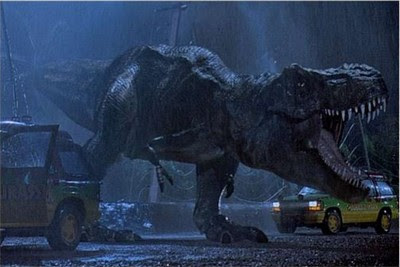
Steven Spielberg
(director), 
Dennis Muren (visual effects superviser), 
Industrial Light & Magic (production studio), 
Universal Pictures (studio), 
Still from Jurassic Park, 1993 
© 1993 Universal City Studios, Inc. 
and Amblin Entertainment, Inc., 
courtesy of Universal Studios Licensing LLC

The Los Angeles County Museum of Art (LACMA) presents Digital Witness: Revolutions in Design, Photography, and Film, which examines the impact of digital image manipulation tools from the 1980s to the present through the works of nearly 200 artists, designers, and makers. Assessing, for the first time, simultaneous developments and debates in the fields of photography, graphic design, and visual effects, the exhibition illuminates today's visual culture where digital editing tools are more accessible than ever before.

Over the last four decades, image-editing software has radically transformed our visual world. This relatively compressed period has taken us from the rise of early paint programs, to the development of both commercially packaged softwares and open-source alternatives, and now the ascension of Al image generators. The increasing ease with which images and text can be digitally generated and altered has enabled new forms of creative experimentation, while also introducing aesthetic and ethical issues across mass media, politics, and advertising. Digital Witness traces these developments with more than 150 photographs, posters, publications, videos, moving image files, film clips, and interactive software experiences. The exhibition charts the emergence of distinctive digital aesthetic strategies, examining how they have altered the patterns, flow, and stakes of visual communication.

Digital Witness: Exhibition Highlights

Organized in three thematic sections, Digital Witness raises questions such as: Where have artists advanced, exploited, or disrupted available means of digital creation and transmission? In what ways can software lead artists, and in what ways can artists shape software? As we are now several decades into the software revolution, can the historical context of "the digital" help us understand its future manifestations?

The exhibition's first section, Blur and Sharpen: Digital Realism, traces artists' efforts to emulate the three-dimensional world and hide evidence of digital interventions. Groundbreaking films from Jurassic Park (1993) to The Lord of the Rings: The Two Towers (2002) and beyond integrated computer graphics with live action and motion capture, embedding fantastical scenarios within otherwise familiar settings or building internally coherent worlds in 3D digital space. Meanwhile, amid initial resistance from traditional darkroom practitioners, photographers including Andreas Gursky and Loretta Lux explored the realm between fact and fiction, seamlessly refining or distorting reality in ways that tested viewers' perceptions and comfort.

Morph and Warp: Computer Aesthetics looks at creators who embraced the rough textures of technology, from April Greiman and John Maeda to Petra Cortwright and Todd Gray. Their work aestheticized glitches such as jagged edges and jerky movements, positing the digital world as its own entity rathert han an imitation of analog life. In some cases, this took a surrealistic form, with distorted shapes and colors that foregrounded technological possibilities and explored the extremes allowed by the new medium. In particular, motion graphics such as title sequences, kinetic typography, music videos, and advertisements were sites of experimentation.

The final section, Cut and Paste: Digital Collage, highlights artists like Keith Piper, Lucas Blalock, and Casey Kauffmann, who found creative potential in editing advances, taking analog art forms—collage in particular, with its potential for surreal juxtapositions—to digitally enabled extremes. In contrast, examples throughout the exhibition demonstrate how artists have resisted dominant commercial softwares, developing open-source alternatives such as Urs and Jürg Lehni's Scriptographer plug-in.

Publication: The exhibition is accompanied by a substantial, image-packed catalogue, co-published by LACMA and DelMonico Books/D.A.P., featuring Q&As with noted visual artists, filmmakers, and designers David Fincher, Copper Frances Giloth, April Greiman, MANUAL, LaJune McMillian, Rosa Menkman, Sert Monroy, Casey Reas, Thomas Ruff, Kyuha Shim, Raqi Syed, and Cesar Velazquez. The publication is edited with an introduction by Britt Salvesen and Staci Steinberger, and includes scholarly essays by Kim Beil, Hye Jean Chung, Carolyn L. Kane, Briar Levit, Staci Steinberger, and Anuradha Vikram. It was created as part of the PST ART: Art & Science Collide series.

This exhibition was organized by the Los Angeles County Museum of Art.

Digital Witness is presented as part of PST ART: Art & Science Collide, a landmark regional event exploring the intersections of art and science, both past and present. The exhibition is co-curated by Britt Salvesen, Department Head and Curator of the Wallis Annenberg Photography Department and Prints and Drawings, and Staci Steinberger, Curator of Decorative Arts and Design, at LACMA.

LACMA - Los Angeles County Museum of Art
5905 Wilshire Boulevard, Los Angeles, CA, 90036
BCAM, Levels 1 & 2

22/11/15

Robert Mapplethorpe: The Perfect Medium @ LACMA, Getty Museum, Montreal Museum of Fine Arts, Art Gallery of New South Wales, Sydney...

Robert Mapplethorpe: The Perfect Medium 
LACMA - Los Angeles County Museum of Art
March 20 - July 31, 2016
J. Paul Getty Museum, Los Angeles 
March 15 - July 31, 2016 
Montreal Museum of Fine Arts
September 10, 2016 - January 15, 2017 
Art Gallery of New South Wales, Sydney 
October 28, 2017 - February 4, 2018

Robert Mapplethorpe
Robert Mapplethorpe, Lisa Lyon, 1982 
Gelatin silver print
Promised gift of The Robert Mapplethorpe Foundation to The J. Paul Getty Trust 
and the Los Angeles County Museum of Art 
© Robert Mapplethorpe Foundation

The Los Angeles County Museum of Art (LACMA) presents Robert Mapplethorpe: The Perfect Medium, a major retrospective examining the work and career of one of the most influential visual artists of the 20th century. Robert Mapplethorpe: The Perfect Medium is co-organized by LACMA and the J. Paul Getty Museum. In a historic collaboration, the two institutions will trace the artist’s working methods and materials, presenting the improvisational, experimental aspects of his practice alongside the refined perfection of his prints. The works on display provide new context for understanding the key genres that Mapplethorpe pursued: portraiture, the nude, and still life. His personal connections to sitters, his ability to manage a  successful studio, and his ambition to elevate photography to the status of contemporary art will be demonstrated through rarely seen correspondence, books, and other ephemera, including those from the artist’s archive held by the Getty Research Institute. 

Robert Mapplethorpe
Robert Mapplethorpe, Self-Portrait, 1980 
Gelatin silver print
Promised gift of The Robert Mapplethorpe Foundation to The J. Paul Getty Trust 
and the Los Angeles County Museum of Art 
© Robert Mapplethorpe Foundation

LACMA’s presentation (March 20–July 31, 2016) focuses on Mapplethorpe’s working methods, sources, and creative processes—the experimental and performative aspects of his work—while the J. Paul Getty Museum (March 15–July 31, 2016) highlights the artist’s disciplined studio practice, figure studies, and legacy. Between the two museums, more than 300 works by Mapplethorpe will be on view, making this one of the largest-ever presentations of his work. The objects on view in Robert Mapplethorpe: The Perfect Medium are drawn almost entirely from the landmark joint acquisition of art and archival materials made in 2011 by the J. Paul Getty Trust and LACMA from The Robert Mapplethorpe Foundation. 

Robert Mapplethorpe
Robert Mapplethorpe, Patti Smith, 1978 
Gelatin silver print
Promised gift of The Robert Mapplethorpe Foundation to The J. Paul Getty Trust 
and the Los Angeles County Museum of Art 
© Robert Mapplethorpe Foundation

"4 years ago LACMA and the Getty came together to jointly acquire the art and archives of Robert Mapplethorpe," said Michael Govan, LACMA CEO and Wallis Annenberg Director. "It has been an exciting collaboration ever since, as our researchers, conservators, and curators have all spent time with this trove of Mapplethorpe's art. Now, we are glad to present this large-scale joint exhibition to Los Angeles and the world."

“Through this historic collaboration, the LACMA and J. Paul Getty Museum exhibitions offer a new perspective on this influential artist,” said Britt Salvesen, curator and head of the Wallis Annenberg Photography department. “Robert Mapplethorpe: The Perfect Medium reveals the rich resources of the Mapplethorpe archive, which provides a broader context for the iconic images that brought him fame. Mapplethorpe’s refined style challenged viewers to consider his portraits, flowers, and sexually explicit images as equal expressions of a personal vision. His drive to capture the perfect moment is the core of his art.”

Following its Los Angeles debut, Robert Mapplethorpe: The Perfect Medium will travel internationally beginning with the Montreal Museum of Fine Arts in Canada (September 10, 2016–January 15, 2017), the Art Gallery of New South Wales, Sydney, Australia, (October 28, 2017–February 4, 2018), and another international venue. This will be the first major traveling retrospective in North America since the landmark exhibition The Perfect Moment, organized in 1988 by the Institute of Contemporary Art in Philadelphia.

The exhibition is accompanied by a fully illustrated book, Robert Mapplethorpe: The Photographs, co-published by LACMA and the J. Paul Getty Museum. A comprehensive guide to the artist's work and career, this publication will feature an introduction by cocurators Britt Salvesen and Paul Martineau, five scholarly essays, an illustrated chronology, and a selected exhibition history and bibliography. The J. Paul Getty Museum presentation is curated by Paul Martineau, associate curator of photographs.

Exhibition Organization
The LACMA presentation is organized in five thematic sections. The first gallery establishes Mapplethorpe in the milieu of 1970s and 1980s urban gay culture, depicting himself and his models openly declaring their sexuality through clothing, body adornment, and gesture. The second gallery highlights the work Mapplethorpe created in the late 1960s and early 1970s before he took up photography in earnest. As a student of graphic design at the Pratt Institute, he demonstrated an early facility for draftsmanship and a penchant for geometric composition. He designed jewelry and temporary assemblages using items of clothing. Inspired by Andy Warhol, Jasper Johns, and Robert Rauschenberg, he also experimented with collages and constructions, often incorporating Catholic iconography and appropriated imagery from homosexual periodicals.

Robert Mapplethorpe borrowed a Polaroid camera from a friend in 1970 and, over the course of the next year, honed his vision as a photographer. These early unique images, installed in the third gallery, reveal his observational acuity and his ability to be in the moment. Mapplethorpe was one of his own best subjects, as his many self-portraits attest, and he was open about being a participant in the scenarios he depicted. The fourth gallery focuses on Mapplethorpe’s engagement with the leather and bondage community, his appropriation of pornographic source material, and his exploration of the African American male nude. Additionally, this gallery features ephemera relating to Robert Mapplethorpe’s first breakout exhibitions in New York, including a joint exhibition at The Kitchen and Holly Solomon Gallery in 1977. The fifth gallery presents work from the mid-1980s, when Mapplethorpe was running a successful studio and producing many commissioned portraits. Among his favorite subjects were the artists, musicians, and other performers he first encountered in the downtown art scene in the ’70s. He commented that photography was “the perfect medium for the 70s and 80s, when everything was fast. If I were to make something that took two weeks to do, I’d lose my enthusiasm. It would become an act of labor and the love would be gone.” 

Robert Mapplethorpe: The Perfect Medium: Exhibition Highlights

Robert Mapplethorpe, Self-portrait (1980)
Robert Mapplethorpe’s turn to photography in the early 1970s coincided with his embrace of New York’s leather subculture, and, throughout the decade, he explored the potential of both forms of expression simultaneously. His 1980 self-portrait as a surly, smoking leatherman captures the hyper masculine posturing that was concomitant with the choice of leather as a fashion statement and as a sexual fetish. Staring defiantly into the camera, Robert Mapplethorpe declares his participation in the leather community. At the same time, the photograph expresses the playful and performative aspects of his studio practice. An element of dress-up and theater is evident in much of his portraiture. This self-portrait shows the artist posing in the role of an archetypal tough-guy—a greaser complete with popped collar, a lit cigarette dangling from his lip, and hair styled into a pompadour. 

Robert Mapplethorpe, Patti Smith (1978)
Robert Mapplethorpe was studying art at the Pratt Institute, in Brooklyn, when he met Patti Smith in spring 1967. Mapplethorpe and Smith spent the next decade in close proximity, inspiring one another's artistic aspirations. Mapplethorpe chose photography as his medium in the early 1970s, whereas Smith gravitated toward poetry and music, and the two collaborated in a number of portrait sessions. Here, Smith poses in the act of cutting her hair, a gesture of defiance. As she explained in a 1975 interview, she didn't "want to walk around New York looking like a folk-singer. I like rock 'n' roll. So I got hundreds of pictures of Keith Richards, and I hung them up and then just took scissors and chopped away until I had a real Rolling Stones haircut." Mapplethorpe captured Smith's androgynous style, composing the photograph to emphasize contrasts of black and white in Smith's features and wardrobe, in the background, and even in the cat.

Robert Mapplethorpe, Lisa Lyon (1982)
Robert Mapplethorpe met Lisa Lyon at a party in 1979, and he would go on to produce nearly 200 photographs of her over the next several years. The first woman to win the International Federation of Body Builders female competition, Lyon had an androgynous, muscular physique that appealed to Mapplethorpe’s interest in the sculptural body. “I’d never seen anybody that looked like that before,” he said. “Once she took her clothes off it was like seeing something from another planet.” The pinnacle of their collaboration came with the release of the book Lady (1983), a series of portraits of Lyon. In this portrait, Mapplethorpe captures Lyon in her work-out attire, a nod to her role as an early advocate for fitness and weight training, which came to be a defining feature of early and mid-1980s American culture. 

Complementary Exhibition
The LACMA exhibition will also be accompanied by the installation Physical: Sex and the Body in the 1980s, which will feature roughly 30 works from the museum’s permanent collection. Placing Robert Mapplethorpe’s work in dialogue with his contemporaries, the installation examines the cultural and artistic upheavals of a pivotal decade in the history of American art and society. Featured artists include Bruce Weber, Kiki Smith, Sarah Charlesworth, Laura Aguilar, and Marina Abramovic, among others. Physical: Sex and the Body is curated by Ryan Linkof, assistant curator of the Wallis Annenberg Photography department.

Los Angeles County Museum of Art (LACMA)
5905 Wilshire Boulevard, Los Angeles, CA, 90036
www.lacma.org

J. Paul Getty Museum
1200 Getty Center Dr, Los Angeles, CA 90049
www.getty.edu

25/04/15

Ed Moses @ LACMA, Los Angeles

Ed Moses: Drawings from the 1960s and 70s
Los Angeles County Museum of Art (LACMA)

May 10 - August 2, 2015

The Los Angeles County Museum of Art (LACMA) presents Ed Moses: Drawings from the 1960s and 70s, the first museum presentation of the artist’s drawings in nearly 40 years. Ed Moses has been a significant figure in the development and history of art in Los Angeles since his first monographic exhibition at the Ferus Gallery in 1958. His unconventional materials and techniques led him to a unique mode of expression grounded in graphic experimentation, which included large floral graphite drawings from the 1960s to his signature diagonal grids of the 1970s. Moses has continued to draw throughout his career; however, the drawings of the ’60s and ’70s represent a period of intense experimentation and innovation that has sustained his work, in all media, for years after.

Ed Moses comprises over 90 works, more than 40 of which have been promised as gifts to LACMA by the artist. Additional works on view come from the museum’s permanent collection and local lenders. The exhibition is arranged in chronological order beginning with a few examples of the artist’s drawings from the 1950s, then it focuses on works from the ’60s through the mid -’70s.

“Ed Moses has been central to the history of art made in Los Angeles for more than half a century,” said Michael Govan, LACMA CEO and Wallis Annenberg Director. “To fully appreciate his large and diverse body of work, one must look at the pivotal period of the 1960s and ’70s, when Moses was intensely focused on drawing.”

“Moses’s commitment to drawing suggests an assertion of the handmade in the face of pervasive technological growth and development,” said Leslie Jones, curator of Prints and Drawings at LACMA. “He proclaimed drawing’s viability as a medium of exploration and innovation, even at the most unlikely time and place, helping to establish drawing as a medium with a future as well as a past.”

Exhibition Overview

Moses’s work from the late 1950s and early 1960s illustrates his interest in gestural abstraction. Beginning in 1961, he looked even farther back to the origins of abstraction and the work of Piet Mondrian in particular. Chrysanthemum Diptych from 1961 is a direct reference to Mondrian’s drawings and paintings of chrysanthemums and is one of Moses’s first works centered on a floral motif. The artist’s roses, chrysanthemums, and lilies convey ornamentality, and when these drawings are mounted like Japanese screens, as in Rose Screen (1963), connections are drawn to non-Western cultures wherein the decorative arts are highly esteemed and appreciated. Moses’s selection of the flower as a pattern, however, was less about its connotations than its inherent potential for repetition, which provided a template for his mark making.

Beginning in the mid-1960s, Moses preferred grids to floral patterns as a structure for mark making. In comparison to the minimal forms that characterized art of the period, Moses employed the grid as much for its own pattern as for its associations with logic and order. As with the artist’s earlier rose drawings, the grid drawings are filled with tight, obsessive, repetitive scribbles in graphite. Moses’s drawings seem to be perpetually in progress. This unfinished quality also characterizes his approach to displaying artwork. In the 1971 exhibition of Moses’s work at Pomona College, drawings were hung at varying heights, some merely push pinned to the wall, with others leaning, a strategy that created a less formal viewing situation not unlike the changeable environment of an artist’s studio. The LACMA presentation features a selection of grid drawings displayed in a manner reminiscent of the Pomona installation.

Ed Moses’s interest in the geometry of the grid may also relate to his exploration of architecture, which led to the construction of buildings in the mid-1960s, as well as the “deconstruction” of Mizuno Gallery in 1969. In that pioneering installation piece, Moses removed part of the wall and gallery roof, exposing the wood slats so light could make diagonal patterns on the floor and walls. It is represented in the exhibition through projections of rarely seen documentary images.

In the late 1960s, artist Tony Berlant introduced Moses to Navajo blankets. Moses saw a visual connection between the linear patterns of the blankets and Piet Mondrian’s late grid paintings, and he adapted Navajo designs for his drawings of the early 1970s. By associating the modernist Mondrian with the Navajo and incorporating Native American patterns into his own work, Moses blurred distinctions between “high” and “low” and “art” and “craft.” At the same time, Moses began to incorporate new and more diverse materials into his practice, including watercolor, tissue, vellum, powdered pigments, and resin. Completing his first works on canvas in more than 10 years, he chose not to mount them on stretchers; instead, the resin works hang like tapestries or animal hides, creating a hybrid art form in which drawing became more integrated into the body of the work, regardless of medium.

Diagonal grids, signaled in earlier drawings, dominate in Moses’s work beginning in the mid-1970s. The grids, whether ink on paper or acrylic on canvas, were executed with the same tools and methods of chance and repetition that characterized his drawings of the ’60s. Since then, Moses has constantly altered his aesthetic, experimenting with assemblage, installation, and printmaking, and exploring new techniques and materials.

About the artist
ED MOSES was born in Long Beach, California, in 1926. He enlisted in the Navy at 17 and served as a surgical technician during World War II. After the war, Moses studied at Long Beach City College before transferring to the University of California, Los Angeles (UCLA), to train under the expressionist painter Rico Lebrun. In 1958, Moses had his first exhibition of abstract paintings at the Ferus Gallery. The artist currently works and resides in Venice, California.

Catalogue
Ed Moses: Drawings from the 1960s and 70s will be accompanied by a 56-page catalogue with an essay by curator Leslie Jones.

LACMA
www.lacma.org

26/11/00

Women and Modernity: In and Around German Expressionism, LACMA, Los Angeles - Selections from the Robert Gore Rifkind Center for German Expressionist Studies and Los Angeles Public and Private Collections

Women and Modernity: In and Around German ExpressionismSelections from the Robert Gore Rifkind Center for German Expressionist Studies and Los Angeles Public and Private Collections
LACMA, Los Angeles
November 24, 2000 – April 8, 2001

The Los Angeles County Museum of Art (LACMA) presents Women and Modernity: In and Around German Expressionism—Selections from the Robert Gore Rifkind Center for German Expressionist Studies and Los Angeles Public and Private Collections, an exhibition that explores the changing role of women at the turn of the last century through approximately 70 works including painting, sculpture, woodcuts, lithographs, and drawings. This exhibition examines the shift in German Expressionist art as women left the cocoon of private residences, salons, and balls and emerged on the streets of the modern city, where many now held jobs and pursued careers.

The exhibition is divided into four main sections: 

The first focus of the exhibition is The Modern City, which portrays women in the burgeoning new metropolises. This changing role is seen in Two Women (1911–1912 ) by Ernst Ludwig Kirchner (Germany, 1880–1938). The subjects of this painting have angled forms that reflect the jagged shapes of the city around them, lending an unsettling note to a commonplace outing. Women in the city were also portrayed as spectators or performers in the theater, as in Ernst Ludwig Kirchner' s woodcuts Theaterloge (Theater box, 1909) and Tänzerin mit gehobenem Rock (Dancer with lifted skirt, 1910).

The second section, Nudes, demonstrates how nature and women were rendered using new styles and approaches. Representative of the Brücke artists’ collective style is the color woodcut by Ernst Ludwig Kirchner, Bathers Tossing Reeds (1910), as well as works created by Erich Heckel and Max Pechstein between 1910 and 1912. These portrayals of women surrounded by nature feature different poses than those of earlier depictions and stand in sharp contrast to the urban women in section one. Works in this section also show how the artists studied and imitated the nudes of Old Masters, which often emphasized the beauty of the female form. In works such as Untitled (Seated woman) (1914) by Egon Schiele (Austria, 1890–1918), the female body is portrayed as beautiful. This section also includes two erotic etchings of disrobing women by Lene Schneider Kainer, an artist largely forgotten by history.

The third section is Photographic Portraits. Faces in German Expressionist prints are often reduced to minimal features, the face of a nude often delineated only by its contours. Photographic portraits in this section provide the missing features and facial expressions and they further explore the differences between women as subjects and women as artists. For example, Lotte Jacobi’s Self-portrait (c. 1930) is a record of a woman who proudly presents herself as a professional photographer. Her hand holds the camera release; the cable visibly connects her to the tool of her trade.

The last section, Women Portray Women, focuses on the works of three women artists: Gabriele Münter (Germany, 1877–1962), Käthe Kollwitz (Germany, 1867–1945), and Paula Modersohn-Becker (Germany, 1876–1907). Although these artists encountered various degrees of success in their time, each participated in and uniquely inflected the artistic vocabularies of modernity.

This exhibition was organized by the Los Angeles County Museum of Art.

LACMA - Los Angeles County Museum of Art
5905 Wilshire Blvd., Los Angeles, CA 90036
www.lacma.org

22/10/00

Made in California: Art, Image, and Identity, 1900-2000, LACMA, Los Angeles

Made in California: Art, Image, and Identity, 1900-2000
LACMA, Los Angeles
October 22, 2000 – February 25, 2001

Made in California: Art, Image, and Identity, 1900-2000, is a landmark exhibition that addresses the relationship between the arts in California and the state’s evolving image over the past century. Organized by LACMA – The Los Angeles County Museum of Art, the exhibition goes beyond a standard presentation of California art to offer a revisionist view of the state and its cultural legacy. It considers both "booster" images of California and other coexisting and at times competing images, reflecting the wide range of interests and experiences of the state’s diverse constituencies. The core organizers of the exhibition are Stephanie Barron, vice president of education and public programs and senior curator of Modern and Contemporary Art; Sheri Bernstein, exhibition associate; and Ilene Susan Fort, curator of American Art. Made in California is the largest exhibition LACMA has ever organized or hosted, representing an unprecedented collaboration among nine curatorial and programmatic departments.

Made in California: Art, Image, and Identity, 1900-2000 features more than 800 works of art in a wide range of media, including painting, sculpture, photography, graphic art, decorative art, costume, and video, as well as several period rooms. About 20 percent of the art in the exhibition is drawn from LACMA’s permanent collection. Also included are more than 400 cultural documents such as tourist brochures, rock posters, labor pamphlets, and documentary photographs from important public and private collections from across the nation, that convey California’s fascinating history and changing popular image. Installed throughout the exhibition are sixteen specially commissioned film and multimedia stations, two music stations, and three mural reconstructions to further enrich this examination of the fine arts and popular conceptions of the state.
"Because the year 2000 marks the 150th anniversary of California’s statehood as well as the end of the twentieth century, this is the perfect time for LACMA to undertake this expansive and innovative examination of the culture of our state," said Dr. Andrea Rich, president and director of LACMA. "This stimulating and in-depth presentation of California imagery, through both popular and fine art, will appeal to a wide ranging audience and will offer our members and visitors an opportunity to consider California from new perspectives."
"With Made in California, LACMA has pushed the envelope with an exhibition that is unlike anything we have ever done before," said Stephanie Barron, LACMA vice president of education and public programs and senior curator of Modern and Contemporary Art. "What makes the show so important is not its massive size and scope. This exhibition has a methodology – the finished product is a direct result of the cross-fertilization that has occurred among various different departments at the museum during the last five years. It has been exciting to work with the multi-disciplinary team to create something truly wonderful."

"Made in California approaches the past 100 years thematically, presenting works that engage in a meaningful way with the California image. As opposed to a survey exhibition, Made in California moves beyond the established canon of artists and art works to include lesser-known works by celebrated figures as well as a wider range of artists, more in keeping with the diversity of California’s population," said Ilene Susan Fort, curator of American Art and one of the core organizers of the exhibition. "It is the shared conviction of the exhibition organizers that this approach, intended to initiate a broader dialogue on California art rather than establish a new canon, befits this period of transition to the next century."
"The design of the exhibition functions as a whole to facilitate an intelligent and seductive museum experience," said Sheri Bernstein, exhibition associate and one of the core organizers of the exhibition. "The members of the exhibition design team participated in meetings for more than a year at which the exhibition concept was developed and refined. They then devised solutions for communicating the ideas of the exhibition through materials, arrangement, space, and various forms of didactic and visual communications working together."
Made in California: Art, Image, and Identity, 1900–2000 is presented thematically in five chronological sections spanning approximately twenty years each, plus a coda to the exhibition that focuses on the current moment, and occupies more than 45,000 square feet of gallery space within the Hammer and Anderson Buildings and LACMA West. While the sections are most powerful when viewed together, each section is designed to stand alone as a single exhibition. In conjunction with Made in California, LACMA is mounting a kaleidoscope of related activities and events including ongoing film and music programs, live performances, readings, family days, and lecture series.

In each section of the exhibition, diverse examples of art in a variety of media and styles are presented thematically, in tandem with relevant examples of ephemera and multimedia stations featuring film footage, music selections, and California murals.

Section One, located on the plaza level of the Hammer Building and covering the 1900s and 1910s, lays the conceptual groundwork for the exhibition. In this section visitors consider the various facets of the mythologizing of California as a pre-modern paradise, primarily by the state’s boosters, to a largely middle-class, Midwestern constituency escaping the influx of European immigrants. In addition to presenting the land itself as bountiful and unpopulated, boosters romanticized California’s cultural heritage by means of the Mission myth, and exoticized its contemporary Asian population.

Visitors then move to the second floor of the Hammer building for Section Two, which addresses the proliferation of a wider range of conceptions of California in the 1920s and 1930s. This section explores the impact of urbanization, new industries such as the Hollywood movie sector, and changing demographics – the influx of Mexicans in the 20s and the westward migration of North Americans during the Depression – on the image of California. For the first time, critical images of California began to proliferate, many of which were sympathetic to working class labor.

Section Three brings visitors to the third floor of the Anderson Building for California in the 1940s and 1950s. This section considers California’s image during and immediately following World War II, when the state emerged first as a center for war production, and then as a trend setter for the postwar suburban lifestyle. The prevalence of racist and xenophobic attitudes toward ethnic minorities during and after the War will be explored. Also considered will be other, coexisting images of California promoted by its urban subcultures, as well as dystopic views of mainstream culture promulgated by the Beats in San Francisco and the Los Angeles area.

Section Four, covering the 1960s and 1970s, examines how California and particularly the Bay Area became widely associated with non-conformity and anti-authoritarianism. During this period of pervasive protest and struggles for equality along ethnic, class, and gender lines, definitions of California and its populace came to be defined by a more diverse range of figures, who challenged homogeneous, Edenic images of the state. The exhibition will explore the participation of artists in this process of redefinition, as well as their immersion in aspects of popular culture such as beach and car culture.

Section Five of Made in California brings visitors to the plaza level of the Anderson Building to consider the 1980s and 1990s. This section addresses a multiplicity of California images that have existed over the past twenty years, fostered by the increasing diversity of the state’s constituency. Also considered is the impact of globalization, which in some respects has blurred boundaries between California and elsewhere. As visitors leave Section Five, they will enter a transition space that is free of visual images, filled with audio recordings that reflect the wide variety of cultures and languages coexisting in contemporary California. This profusion of the many competing/coexisting voices that define California today sets the stage for Made in California: Now, presented by LACMALab in the Boone Children’s Gallery in LACMA West.

This exhibition was organized by the Los Angeles County Museum of Art.

Exhibition Team: Organized by Stephanie Barron, vice president of education and public programs and senior curator of Modern and Contemporary Art, with Sheri Bernstein, exhibition associate, and Ilene Susan Fort, curator of American Art.

With Ian Birnie, head of Film Programs, Bridget Cooks, assistant museum educator, Carol S. Eliel, curator of Modern and Contemporary Art, Howard Fox, curator of Modern and Contemporary Art, Dale Gluckman, curator of Costumes and Textiles, Sharon Goodman, associate curator of Prints and Drawings, Peter Kirby, adjunct curator, new media (Made in California only), Jo Lauria, assistant curator of Decorative Arts, Kaye Spilker, assistant curator of Costumes and Textiles, Dorrance Stalvey, head of Music Programs, Sharon Takeda, curator of Costumes and Textiles, Tim Wride, associate curator of Photography, and Lynn Zelevansky, curator of Modern and Contemporary Art.

LACMA - Los Angeles County Museum of Art
5905 Wilshire Blvd., Los Angeles, CA 90036
www.lacma.org

05/02/00

Robert Heinecken, Photographist: A Thirty-Five-Year Retrospective at LACMA - Los Angeles County Museum of Art - Organized by the Museum of Contemporary Art, Chicago

Robert Heinecken, Photographist: 
A Thirty-Five-Year Retrospective
LACMA - Los Angeles County Museum of Art
February 13 - April 24, 2000

Robert Heinecken emerged as part of the Southern California art scene in the mid-1960s alongside artists such as John Baldessari, Ed Ruscha, and Wallace Berman. As a photographic innovator, conceptual artist, educator, and theoretician, Robert Heinecken’s work has been consistently marked by his original use of techniques and materials. Rarely does his work consist of images that he actually photographed himself; more often, he uses found images from magazines and discarded negatives. These sources provide the raw material through which he addresses his real subjects: images and the culture that creates them. Perhaps that is why critic Arthur Danto coined the term "photographist" when describing Robert Heinecken and his work. Combining the words "photographer" and "artist," a "photographist" is a photographer who transcends the boundaries of photography, while creating works that examine the nature and meaning of the photograph.

The Los Angeles County Museum of Art – LACMA – presents a major retrospective of the work of Robert Heinecken. Organized by the Museum of Contemporary Art, Chicago, Robert Heinecken, Photographist: a Thirty-Five-Year Retrospective, provides the first comprehensive opportunity to explore Robert Heinecken’s role in the development of contemporary art. Including approximately 100 works, the exhibition provides an in-depth re-examination of Robert Heinecken’s artistic career and its ongoing influence, including work of the 1980s and 1990s, supported by carefully selected historical pieces that demonstrate the roots of the artist’s concerns as well as his formal development.
"Robert Heinecken is an innovator whose contribution both to contemporary photography and to contemporary art in general clearly needs to be seen and understood by a wider audience," said Tim Wride, LACMA associate curator of Photography. "LACMA is delighted to have this exhibition in Los Angeles where Heinecken spent most of his long career as an artist and educator. I hope the show will serve as a reminder of the leadership role Los Angeles has played and continues to play in contemporary art."
Robert Heinecken’s work resists easy categorization because it has no unifying, trademark style. For an artist of Robert Heinecken’s generation, the lack of an easily identifiable style proved somewhat of a drawback. While his working method and cultural interests prefigure that of many younger contemporary artists, Heinecken has remained relatively unrecognized by the general public. Although Robert Heinecken’s artistic style frequently changed, the approach to his subject matter remains consistent—a rigorously analytical and conceptual sensibility leavened by biting wit and humor. The basic tenet of Heinecken’s work is how the intent and function of a photograph cannot be separated from the ways in which it is experienced. Because photographs can function in multiple ways—art, advertisement, propaganda, memory—context is crucial to their understanding and influence.

Since the beginning of his career in the early 1960s, Robert Heinecken has been particularly interested in exploring issues of context using mass media imagery. Because he harbors a keen suspicion of power and those who wield it, the mass media, advertising, and pornography have been consistent targets of his investigations. Featured throughout the exhibition are approximately 12 of Heinecken’s often subtly altered freestanding cut-outs of the mid-1990s. An innovator in the area of "photo-sculpture," these more recent artworks present commercially produced figures that have been subtly altered, such as Barbara Campaign Fund Raising in Middle America, 1992. Former first lady Barbara Bush is presented with the two folksy men who were "Bartles and James" in the ubiquitous wine cooler advertising campaign of the late 1980s. John Wayne and Princess Diana are paired in another. Pamela Lee Anderson, Elvira "Mistress of the Dark" and other celebrities are also utilized in this area of the exhibition.

Another contemporary grouping is of Robert Heinecken’s large-scale relief collages. Created out of magazine advertisements, these dazzling and often humorous interpretations of the god of destruction and regeneration include Shiva Manifesting as a Single Mother, and reflect the artist’s continuing explorations of consumerist images as markers of cultural identity. All four major works in the "Shiva" series will be presented.

The artist’s often-scathing analysis of the news industry forms the basis of a third grouping of the exhibition. This section includes selections from the "Waking Up in News America" series of interrelated works in various media of 1984-86. Journalist and former anchor Bill Kurtis narrates the tale of how network anchors are chosen, in a presentation that blurs the line between reality and fiction. Other works featuring Joan Lunden, Connie Chung, and others document the faces that enter our homes via the news in "videograms" taken directly from the television screen.

Also featured are Robert Heinecken’s work with altered magazines and books. In the 1970s and 80s, he began to alter magazines by cutting, pasting, and inserting imagery from a variety of sources. He would often replace these altered publications back on newsstands for sale to the general (and unsuspecting) public. Heinecken’s goal in juxtaposing graphic sexual material with glossy advertising and editorial imagery in the altered magazines was to lead to an examination of obscenity in a consumerist, media-driven culture in a scathing, confrontational, and often humorous manner. At the same time Robert Heinecken wanted to emphasize the raw power of these images as outlets of expression.

Supporting these four main areas of focus are free-hanging black-and-white transparencies of advertisements from 1963, selections from his Visual Poems of the mid-sixties; various photo sculptures from the mid- to late sixties; the complete Are You Rea series; selections from the T.V. Dinner series; The S.S. Copyright Project "On Photography" from 1978 which constructs two portraits of writer Susan Sontag from a montage of found photographs; selections from the He/She SX-70 and text series, and other important early works.

Catalogue: This retrospective is accompanied by a fully illustrated 149-page catalogue with essays by exhibition organizer Lynne Warren, MCA Curator, A. D. Coleman, David Pagel, Susie Cohen, and Irene Borger. The catalogue is distributed by the University of Chicago Press, and is available at the Museum Shop for $29.95.

This exhibition was organized by the Museum of Contemporary Art, Chicago, and is supported in part by the Jory and Joseph Shapiro Fund, and a grant from the National Endowment for the Arts.

LACMA Coordinating Curator: Tim Wride, associate curator of Photography.

LACMA - Los Angeles County Museum of Art