Showing posts with label video. Show all posts

23/09/25

Sky Hopinka: Fainting Spells @ Guggenheim Museum Bilbao - Video Exhibition Overview + Artist Biography

Sky Hopinka: Fainting Spells 
Guggenheim Museum Bilbao
September 18, 2025 – January 18, 2026

Sky Hopinka - Fainting Spells Video
Sky Hopinka
Fainting Spells, 2018
Three-channel color video, with sound, 9 min., 45 sec.
A.P. 1/2, edition of 3
Solomon R. Guggenheim Museum, New York, 
Purchased with funds contributed by the Photography Council, 2021
© Sky Hopinka

Sky Hopinka - Fainting Spells Video
Sky Hopinka
Fainting Spells, 2018
Three-channel color video, with sound, 9 min., 45 sec.
A.P. 1/2, edition of 3
Solomon R. Guggenheim Museum, New York, 
Purchased with funds contributed by the Photography Council, 2021
© Sky Hopinka

The Guggenheim Museum Bilbao presents Sky Hopinka: Fainting Spells, an exhibition in its Film & Video program.

Fainting Spells (2018), a film by the artist Sky Hopinka (Ferndale, Washington, 1984), explores the creation mythology of Xąwįska, or Indian Pipe Plant, also known as “ghost flower” or “corpse plant.” This medicinal plant is traditionally used by the Ho-Chunk people of Wisconsin to revive those who have fainted. It is also emblematic of Indigenous identity, knowledge, and culture and can be linked to the cycles of life and death and the spiritual world. Despite his extensive research, Hopinka could not unearth an origin myth for the plant and instead created one to engage with and reclaim the practice of mythkeepers and mythmaking in his own Indigenous culture.

This three-channel video begins with a handwritten poem that moves across scenes showing expansive colorful landscapes accompanied by lyrical music. The poem, a printed version of which is also showcased at the exhibition, speaks directly to Xąwįska, who later appears personified as a cloaked figure and leads viewers on a walk through the spirit world in different states of consciousness. Filmed in Washington, Colorado, Wisconsin, Oregon, and New Mexico, the film creates a dreamlike visual narrative by collaging together music, poetry, image, sound, and color, inviting viewers into a unique immersive experience created specifically for the Guggenheim Museum Bilbao’s Film & Video gallery.

Sky Hopinka - Fainting Spells Video
Sky Hopinka
Fainting Spells, 2018
Three-channel color video, with sound, 9 min., 45 sec.
A.P. 1/2, edition of 3
Solomon R. Guggenheim Museum, New York, 
Purchased with funds contributed by the Photography Council, 2021
© Sky Hopinka

Sky Hopinka - Fainting Spells Video
Sky Hopinka
Fainting Spells, 2018
Three-channel color video, with sound, 9 min., 45 sec.
A.P. 1/2, edition of 3
Solomon R. Guggenheim Museum, New York, 
Purchased with funds contributed by the Photography Council, 2021
© Sky Hopinka

Sky Hopinka explores Indigenous culture, history, and traditional beliefs through themes like identity, memory, language, and myth. A member of the Ho-Chunk Nation of Wisconsin and a descendent of the Pechanga Band of Luiseño people (California), the Pacific Northwest holds a special place in his artwork, especially as he delves into investigating notions of homeland, personhood, and landscape. His films reflect on the complexities of contemporary Indigenous life by blending non-narrative filmmaking and abstract imagery with an ethnopoetic approach—a response against the ethnographic gaze that has long objectified Indigenous cultures in moving image.

Ethnopoetic cinema examines themes of cultural identity, displacement, and the everyday experience through a combination of documentary and experimental filmmaking techniques, thereby emphasizing the artistic and performative aspects of cultural expression. At the core of Hopinka’s work is a profound commitment to storytelling through his Indigenous perspective, a narrative that has long been marginalized within the Western canon. He explains, “Part of the desire I had to make films was to tell Indigenous stories that were unique to my own community and my own identity.”

Sky Hopinka - Photo Portrait
Sky Hopinka
(b. 1984, Ferndale, Washington)
Courtesy the artist
© Sky Hopinka

Sky Hopinka - Biography

Sky Hopinka was born and raised in Ferndale, Washington, and spent a number of years in Palm Springs and Riverside, California; Portland, Oregon; and Milwaukee, Wisconsin. In Portland, he studied and taught chinuk wawa, a language indigenous to the Pacific Northwest, and began to take an interest in documentary filmmaking. In Milwaukee, he enrolled in a graduate degree in experimental filmmaking and discovered unconventional ways of documentary filmmaking that enabled him to uniquely express his interest in Indigenous languages and Native American life today. He currently lives in Brooklyn, New York, and is an assistant professor in the Department of Art, Film, and Visual Studies at Harvard University, Cambridge.

Sky Hopinka’s work has played at prestigious festivals including Sundance Film Festival, Utah; Toronto International Film Festival, Ontario; Courtisane Festival, Ghent; Festival Punto de Vista, Pamplona; and the New York Film Festival, New York. His work has also been recognized internationally in numerous solo exhibitions at institutions like the Center for Curatorial Studies–Bard College, Annandale-On-Hudson, New York (2020); Saint Louis Art Museum, St. Louis (2020); The Museum of Modern Art, New York (2021); LUMA, Arles, France (2022); San Francisco Museum of Modern Art (2023); Frye Art Museum, Seattle (2024); and Kunsthalle Friart, Switzerland (2024). Moreover, his work was included in the Whitney Biennial, Whitney Museum of American Art, New York (2017); the Gwangju Biennial, South Korea (2023); and the Göteborg International Biennial, Sweden (2023).

Sky Hopinka’s films, videos, and photographs are in the collections of some of the most important museums in the world. Additionally, Hopinka was a fellow at the Radcliffe Institute for Advanced Study at Harvard University, Cambridge (2018–19); Sundance Art of Nonfiction Fellow, Sundance Institute, Los Angeles (2019); Guggenheim Fellow for Creative Arts (2020); Forge Project Fellow (2021); and a MacArthur Fellow (2022). His multiple awards include the Herb Alpert Award in the Arts, Film, & Video (2020); the Infinity Award in Art from the International Center of Photography (2022); and the Persistence of Vision Award from the San Francisco International Film Festival (2025).

Curator: Geaninne Gutiérrez-Guimarães

Guggenheim Bilbao also presents, from October 16, 2025 through February 22, 2026, the exhibition Maria Helena Vieira da Silva: Anatomy of Space.

GUGGENHEIM MUSEUM BILBAO

07/09/25

Coco Fusco @ El Museo del Barrio, NYC - "Tomorrow, I Will Become an Island" Exhibition

Coco Fusco
Tomorrow, I Will Become an Island
El Museo del Barrio, New York 
September 18, 2025 — January 11, 2026

Coco Fusco
Coco Fusco
Photo by Aurelio Fusco

Coco Fusco
Coco Fusco
Your Eyes Will Be an Empty Word (still), 2021
HD Video, 13:30 mins
Courtesy of the artist and Mendes Wood DM

Coco Fusco
Coco Fusco
A Room of One's Own: Women and Power
in the New America, 2006-2008
Performance documentation
Courtesy the artist and Mendes Wood DM

El Museo del Barrio presents Coco Fusco: Tomorrow, I Will Become an Island, the first U.S. survey of the influential Cuban-American interdisciplinary artist and writer COCO FUSCO (b. 1960, lives in New York). The exhibition is spanning more than three decades of Fusco’s groundbreaking career.

Widely recognized for her incisive explorations of the dynamics of politics and power, Fusco’s interdisciplinary practice spans video, performance, installation, photography, and writing. Tomorrow, I Will Become an Island traces her extensive practice through a selection of more than twenty of her works, created since the 1990s and extending to a new photographic series on view for the first time at El Museo del Barrio.
“Coco Fusco stands among the most provocative voices in contemporary art. Her work challenges conventions, sparks vital conversations, and continues to resonate powerfully at a time of profound social and political reckoning.” —Patrick Charpenel, Executive Director, El Museo del Barrio
Organized thematically, the exhibition explores central concerns that Coco Fusco has addressed across her practice, including immigration, military power and surveillance, post-revolutionary Cuban history, and the lasting legacies of colonialism. The presentation offers an expansive view of her multidisciplinary approach through key bodies of work, including:

• Immigration Narratives: Works addressing the perception of immigrants in the US and Europe, including Everyone Here is a New Yorker (2025), a new photographic suite that extends from Fusco's 2024 public art video animation commission by More Art, Inc.

• Intercultural Misunderstandings: A room dedicated to Fusco’s projects, created in counterpoint to the 500th anniversary of the so-called “discovery” of the Americas, including a reproduction of her iconic Two Undiscovered Amerindians Visit the West (1992/2025), originally performed in collaboration with Guillermo Gómez-Peña.

• Interrogation Tactics: Video, photographs, and performance documentation that consider military tactics, surveillance technologies, and the exploitation of female sexuality in the War on Terror.

• Poetry and Power: A focused selection of video, featuring several works that reflect on the history of artists’ challenges to the Cuban government—a central subject in Fusco’s oeuvre. Together, this selection illuminates the breadth and depth of Fusco’s artistic vision—one that remains acutely relevant in today’s national political and cultural climate.

Coco Fusco
Coco Fusco 
La noche eterna (The Eternal Night), 2023
HD Video, 1:13:45 mins
Courtesy the artist and Mendes Wood DM

Coco Fusco
Coco Fusco 
La plaza vacía (The Empty Plaza), 2012
HD Video, 11:53 mins
Collection of El Museo del Barrio, New York 
Acquisition enabled by VEZA New Media Fund 2022 
and headline supporters South SOUTH and Niio 

Coco Fusco - Paula Heredia
Coco Fusco and Paula Heredia
The Couple in the Cage: A Guatinaui Odyssey, 2003
Video, 31 mins
Collection of El Museo del Barrio, New York
Acquired through "PROARTISTA: Sustaining the Work 
of Living Contemporary Artists," 
a fund from the Jacques and Natasha Gelman Trust 2008.1
“El Museo del Barrio has been a steadfast supporter of Coco Fusco’s groundbreaking practice from early on, recognizing the power and potency of her work. This includes her participation in the groundbreaking 2008 exhibition Arte No es Vida, as well as her presence in recent collection-based shows such as Culture and the People and Something Beautiful. This survey extends that dialogue, offering audiences a deeper understanding of an artist whose voice remains as vital as ever.” —Susanna V. Temkin, Interim Chief Curator, El Museo del Barrio
Tomorrow, I will Become an Island is organized by El Museo del Barrio in collaboration with MACBA Museu d’Art Contemporani de Barcelona.

Borrowing its title from the artist's recent monograph publication, Tomorrow, I will Become an Island is organized at El Museo del Barrio by Susanna V. Temkin, interim chief curator, and Rodrigo Moura, former chief curator, with support from Lee Sessions and Maria Molano Parrado. Exhibition design by Solomonoff Architecture Studio/SAS and graphic design by estúdio gráfico.

ARTIST COCO FUSCO

Coco Fusco is an interdisciplinary artist and writer based in New York. She is a recipient of a 2023 Free Speech Defender Award from the National Coalition Against Censorship, a 2021 American Academy of Arts and Letters Art Award, a 2021 Latinx Artist Fellowship, a 2021 Anonymous Was a Woman award, a 2018 Rabkin Prize for Art Criticism, a 2016 Greenfield Prize, a 2014 Cintas Fellowship, a 2013 Guggenheim Fellowship, a 2013 Absolut Art Writing Award, a 2013 Fulbright Fellowship, a 2012 US Artists Fellowship and a 2003 Herb Alpert Award in the Arts.

Fusco’s performances and videos have been presented at the 56th Venice Biennale, the Sharjah Biennale, Frieze Special Projects, Basel Unlimited, three Whitney Biennials (2022, 2008, and 1993), and several other international exhibitions. Her works are in the permanent collections of the Museum of Modern Art, The Walker Art Center, The Art Institute of Chicago, The Whitney Museum, the Centre Pompidou, and the Museum of Contemporary Art of Barcelona. 

Coco Fusco is the author of numerous books, and she contributes regularly to The New York Review of Books and numerous art publications. Her monograph publication Tomorrow, I will Become an Island was published by Thames & Hudson in 2023.

Coco Fusco received her B.A. in Semiotics from Brown University (1982), her M.A. in Modern Thought and Literature from Stanford University (1985), and her Ph.D. in Art and Visual Culture from Middlesex University (2007). She is a Professor at the Cooper Union School of Art.

EL MUSEO DEL BARRIO, NEW YORK
1230 5th Avenue at 104th Street, New York, NY 10029

26/07/25

Eija-Liisa Ahtila @ Galerie Marian Goodman, Paris - Exposition "On Breathing"

Eija-Liisa Ahtila, On Breathing 
Galerie Marian Goodman, Paris
5 septembre – 4 octobre 2025

Eija-Liisa Ahtila
Eija-Liisa Ahtila
On Breathing, 2024 
Single channel installation. Image 4K UHD 
Audio 2.0. 9 min. 45 sec. en boucle. Crystal Eye 2024 
© Eija-Liisa Ahtila, courtesy Galerie Marian Goodman
Un arbre peut-il être un protagoniste ou un espace ? Comment, à travers l'action, cela affecterait-il les règles de la narration ?—Eija-Liisa Ahtila
La Galerie Marian Goodman présente une nouvelle exposition d’Eija-Liisa Ahtila qui dévoile pour la première fois en France deux grandes œuvres vidéo, On Breathing et APRIL ≈ 61°01’ 24°27’ (2024). Reconnue internationalement pour ses installations cinématographiques, Eija-Liisa Ahtila remet en question la notion de perspective dans l'image en mouvement et construit une expérience où plusieurs temporalités et espaces coexistent. Dans le prolongement de ses recherches menées au cours de la dernière décennie, les œuvres de l'exposition explorent chacune à leur manière des formes de narration et de modes de présentation conçues autour de la nature et du vivant. Abandonnant un point de vue anthropocentrique, Eija-Liisa Ahtila cherche à rendre visible le monde non-humain et en particulier les arbres. Alors que On Breathing dépeint les entrelacs délicats d’un arbre et de la brume matinale, APRIL capture le passage silencieux d'une saison à une autre, à travers des déplacements subtils de l’espace entre les arbres et l’observation attentive de la forêt. 

Au rez-de-chaussée de la galerie, On Breathing (2024), une projection d’une durée de 9 minutes, s’apparente à un poème visuel qui met l'accent sur le mouvement lent et hypnotique de la brume s’évapororant autour d’un chêne. Ce phénomène matinal est typique des conditions automnales et hivernales, lorsque la mer demeure plus chaude que l'air et le sol environnants. Le déplacement de la brume et le son qu'elle produit dans les branchages évoquent poétiquement une respiration végétale. « L'air autour du chêne semble tangible, et l'espace à l'intérieur devient réel, comme si, pour un instant, la respiration de l'arbre devenait perceptible », explique l’artiste.

Eija-Liisa Ahtila, qui recourt fréquemment de plusieurs écrans et split-screens pour révéler simultanément différents aspects d'un même récit, utilise ici des incrustations vidéo afin de superposer des temporalités distinctes. La dérive du brouillard et son interaction avec les feuilles, le rythme et les plans de la caméra ; tout concourt à composer un tableau animé singulier.

Envisageant ses œuvres récentes comme un continuum, l'artiste remarque que chaque processus créatif la conduit naturellement vers le suivant. Depuis 2011, elle a ainsi progressivement remplacé les protagonistes humains par des arbres ou d’autres organismes vivants, donnant naissance à une série d'œuvres qui abordent « le récit écologique de l'image en mouvement ». Cette nouvelle orientation remet en question la relation contemporaine entre nature et humanité, ainsi que la frontière artificielle séparant les êtres humains et le reste du vivant. « J'ai tenté de développer des approches visuelles et des méthodes de narration qui pourraient nous montrer une voie pour sortir de l'anthropocentrisme et permettre la présence d'espèces non humaines dans notre imaginaire », affirme Eija-Liisa Ahtila.

Au niveau inférieur de la galerie, APRIL ≈ 61°01’ 24°27’(2024), exposée pour la première fois au musée Kröller-Müller aux Pays-Bas, immerge les visiteur·euse·s dans la forêt du parc naturel d'Aulanko, en Finlande, à proximité de la ville natale de l’artiste. Connue comme un environnement naturel encore préservé de l'activité humaine, cette forêt a été filmée pendant deux années consécutives, en 2022 et 2023, entre la fin mars et le mois de mai. Si le titre de l'œuvre se réfère au mois d’avril associé à la régénération de la nature, l'installation longue de près de 12 mètres et composée de huit écrans de projection, montre la transition subtile entre la fin de l'hiver et l’arrivée de l’été. Les huit séquences sont agencées de manière chronologique : de gauche à droite, la forêt apparaît d’abord aux premiers moments de la fonte des neiges, jusqu'à l'arrivée prématurée de l'été.

L'échelle et l’horizontalité de l'installation évoquent Horizontal (2011), oeuvre emblématique de l’artiste, née de sa volonté de représenter un sapin géant dans son intégralité. Pour éviter les distorsions liées à l’usage d’un objectif grand angle, Eija-Liisa Ahtila avait choisi de capturer l’arbre en plusieurs sections horizontales, avant de le présenter lui aussi sous la forme horizontale sur une série de six écrans de projection.

Avec APRIL, la forêt envisagée comme un écosystème où les arbres et une multitude d'organismes interagissent en permanence, est pour la première fois au centre de l'attention de l'artiste. La source de l'œuvre est la vie sylvestre, où chaque être singulier est un élément intégré de l'ensemble et où cet ensemble existe en retour dans cet être singulier. Pour créer un langage cinématographique adapté au sujet, les mouvements de caméra dans chacune des huit sections sont fluides et asynchrones, alternant ralentis et arrêts momentanés. « Le thème d'APRIL est la spatialité de l'être, le changement constant et la prise de forme de la forêt, qui est sa qualité fondamentale », explique Eija-Liisa Ahtila.

Eija-Liisa Ahtila est née à Hämeenlinna, en Finlande, en 1959. Elle a reçu de nombreux prix au cours des deux dernières décennies, dont récemment le titre de Commandeur de première classe de l'Ordre de la Rose blanche de Finlande (2020). Elle vit et travaille à Helsinki.

Les oeuvres d'Ahtila sont largement exposées depuis le début des années 1990. L'exposition « The Power of Trees », incluant Horizontal, est visible jusqu'au 14 septembre 2025 à la Shirley Sherwood Gallery of Botanical Art, Kew Gardens, Richmond, près de Londres. Récemment, elle a présenté des expositions personnnelles au Serlachius Manor en Finlande (2024) ; au Kröller-Müller Museum aux Pays-Bas (2024) ; à l'Ulrich Museum of Art à Wichita aux États-Unis (2022) ; à la National Gallery of Art à Vilnius en Lituanie (2021) ; au M Museum à Louvain en Belgique (2018) et au Serlachius Museum Gösta à Mänttä en Finlande (2018). Précedemment son travail a fait l’objet d’expositions monographiques dans de nombreuses institutions telles que l'Australian Centre for the Moving Image à Melbourne (2017) ; Guggenheim Bilbao en Espagne (2016) ; Albright-Knox Gallery à Buffalo aux Etats-Unis (2015) ; Oi Futuro à Rio de Janeiro au Brésil; Kiasma à Helsinki en Finlande (2013) ; Moderna Museet à Stockholm en Suède (2012); le Carré d’Art à Nîmes (2012) ; Museo del Palacio de Bellas Artes à Mexico au Mexique (2012) ; Art Institute of Chicago aux Etats-Unis (2011) ; Parasol Unit à Londres au Royaume-Uni (2010) ou encore le Jeu de Paume à Paris (2008). Eija-Liisa Ahtila a été membre du jury au Festival du film de Venise en 2011 et présidente du jury du FIDMarseille en 2013. 

GALERIE MARIAN GOODMAN 
79 rue du Temple, 75003 Paris

08/07/25

Ohan Breiding: Belly of a Glacier @ MASS MoCA, North Adams

Ohan Breiding: Belly of a Glacier
MASS MoCA, North Adams
Through December 14, 2025

Ohan Breiding: Belly of a Glacier
Ohan Breiding
To dress a wound from the light that 
shines from it (Belly of a Glacier)
111 Giclée Prints on Fine Art Luster Paper
128.55 in x 266.93 in / 326.5 cm x 678 cm

Ohan Breiding: Belly of a Glacier
Ohan Breiding
To dress a wound from the light that 
shines from it (Belly of a Glacier) [detail]
111 Giclée Prints on Fine Art Luster Paper
128.55 in x 266.93 in / 326.5 cm x 678 cm

Ohan Breiding: Belly of a Glacier
Ohan Breiding
To dress a wound from the light that 
shines from it (Belly of a Glacier) [detail]
111 Giclée Prints on Fine Art Luster Paper
128.55 in x 266.93 in / 326.5 cm x 678 cm

MASS MoCA (Massachusetts Museum of Contemporary Art) in North Adams, in collaboration with The Williams College Museum of Art (WCMA), presents the exhibition Ohan Breiding: Belly of a Glacier, a series of photographs and video that ruminates on the imminent loss of the Rhône glacier, amplifying the current state of climate emergency while expressing the intimate entanglement of human and environmental well-being. 

In 2019, Iceland constructed the first memorial to mark the death of its Okjökull glacier. Since then, funerals have been held around the world to mark the melting of glacier bodies. Consisting of an experimental documentary film and a photographic installation, Breiding’s Belly of a Glacier captures the efforts of the residents of Obergoms, Switzerland, to drape the nearby Rhône Glacier with thermal blankets to insulate it from rising temperatures. Despite these hope-filled actions of ecological care, scientists predict the Rhône will have fully melted by 2050.
“Ohan Breiding’s work is a powerful, intimate portrait of a dying glacier,” said Susan Cross, MASS MoCA Senior Curator. “The stunning photographs and video make the loss feel very personal—as it should, given that we are part of the ecosystem being forever transformed by climate change.”
Ohan Breiding: Belly of a Glacier
Ohan Breiding
Belly of a Glacier, 2024
HD video, with sound, 32:55 min.
Courtesy of the artist and OCHI Gallery, Los Angeles

Ohan Breiding: Belly of a Glacier
Ohan Breiding
Belly of a Glacier, 2024
HD video, with sound, 32:55 min.
Courtesy of the artist and OCHI Gallery, Los Angeles

Ohan Breiding: Belly of a Glacier
Ohan Breiding
Belly of a Glacier, 2024
HD video, with sound, 32:55 min.
Courtesy of the artist and OCHI Gallery, Los Angeles

The film documents the community at the National Science Foundation’s Ice Core Facility in Lakewood, Colorado, who are preserving ancient ice cores for future generations. Ice is like a time capsule, storing atmospheric debris, including volcanic ash and greenhouse gasses, that can tell us about major natural disasters as well as resulting human activity over thousands over years. Breiding’s project connects acts of mourning to ongoing practices of care that strive to protect the ice — a material that contains both remnants of the past and the conditions of a future world.
“WCMA and MASS MoCA joining together to present Ohan Breiding’s deeply moving and thought-provoking installation exemplifies the best of what our Berkshire arts ecosystem can provide to our visitors and local community,” said Pamela Franks, WCMA Class of 1956 Director. “We are thrilled to have the opportunity to collaborate across institutions in this way.”
ARTIST OHAN BREIDING

Ohan Breiding is a Swiss-American artist, raised in a Swiss village and living between Brooklyn, N.Y., and Williamstown, MA. They work with photography, photographic and filmic archives, and video in a collaborative practice that reinterprets historical events, putting the past into a meaningful transformative relation with the present. They employ a trans-feminist lens to the discussion of ecological care to amplify the systemic failures and violence of the Anthropocene.

Ohan Breiding has presented their work at numerous museums, galleries, and film festivals including ICA LA, Photo LA, the Armory Center for the Arts, LAMAG, LAXART, Human Resources, Oakland Museum of California, Berkeley Art Museum and Pacific Film Archive, Haus N Athens, Sharjah Art Foundation, IKOB Museum of Contemporary Art, Kunsthaus Zürich, Hallwalls Contemporary Arts Center (Buffalo, N.Y.), Frac des Pays de la Loire and Oceanside Museum (as part of the Getty’s PST Art — Pacific Standard Time).

Ohan Breiding is a 2024 A.I.R. Fellow, a 2024 FIAR resident, a 2024 Triangle Artist Resident, a 2021 TBA (Thyssen-Bornemisza Art Contemporary) Academy Ocean Space Fellow, a 2019 Millay Colony Resident and a 2018 Shandaken: Storm King resident. They are the recipient of the 1945 World Fellowship Award, the Hellman Award, the SIFF (Swiss International Film Festival) Award for The Rebel Body, a short film made with Shoghig Halajian and the participation of Silvia Federici, the Rema Hort Mann Emerging Artist Award, and the DAAD Award. Their practice has been written about in Artforum, Art in America, BOMB, e-flux, Hyperallergic and Whitewall.

Ohan Breiding is an assistant professor in the Art Department at Williams College and is represented by OCHI Gallery in Los Angeles.

MASS MoCA
Massachusetts Museum of Contemporary Art
1040 MASS MoCA Way, North Adams, MA 01247

Ohan Breiding: Belly of a Glacier
MASS MoCA, North Adams, February - December 14, 2025

17/11/24

Rita Mawuena Benissan @ Zeitz MOCAA, Cape Town - "One Must Be Seated" Exhibition

Rita Mawuena Benissan
One Must Be Seated
Zeitz MOCAA, Cape Town
13 November 2024 - 5 October 2025

RITA MAWUENA BENISSAN
Still from One Must Be Seated, 2024 
Film
Image by Michael "Kwame Pocho" Dakwa 
Courtesy of the artist and Gallery 1957

RITA MAWUENA BENISSAN
Still from One Must Be Seated, 2024 
Film
Image by Michael "Kwame Pocho" Dakwa 
Courtesy of the artist and Gallery 1957

RITA MAWUENA BENISSAN
Still from One Must Be Seated, 2024 
Film
Image by Michael "Kwame Pocho" Dakwa 
Courtesy of the artist and Gallery 1957

RITA MAWUENA BENISSAN
Detail of We Process at Sunrise, 2024 
Embroidery on canvas, 250 x 500cm 
Image: Nii Odzenma 
Courtesy of the artist and Gallery 1957

Zeitz Museum of Contemporary Art Africa (Zeitz MOCAA) presents One Must Be Seated, a solo exhibition by Ghanaian-American artist Rita Mawuena Benissan. Deeply rooted within her Ghanaian culture, Benissan’s practice has particular focus on the reimagining of the royal umbrella and stool, symbols of Akan chieftaincy. The exhibition explores the enstoolment of a prospective chief, akin to coronation; a call to take their rightful seat in the stool that has been chosen for them.

Through tapestry, sculpture, photography and video, Benissan’s work highlights and celebrates the rich traditions of Ghanaian culture, with a focus on Asante customs. The royal umbrella has been used since at least the 17th century; it transforms the individual underneath it, attributing significant status. Different sizes, colours, and unique gold totems that crown the umbrella canopy are seen as they move with the court in lively procession. Under the umbrella, the chief and his thoughts are hidden from the heavens above, prohibiting even God from accessing them.

Rita Mawuena Benissan delicately reimagines this cultural object through the use of the archive. As we see in works like The Triumphant King Rules (Ɔhene a wadi Nkonim No Di Tumi) (2023) portraits of past chiefs are embedded within the fabric of the umbrella which is traditionally made with woven Kente cloth and reinterpreted in rich velvet by the artist. Her works are made by the same craftsmen who make the royal umbrellas for the palace in Kumasi, the Asante capital. By intentionally naming these artisans as collaborators, the artist honours the hands that uphold the traditions of the chieftaincy. 
"The exhibition layout simulates the enstoolment tradition with each successive gallery symbolising a stage in the process," explains Beata America, the curator of the exhibition, and Assistant Curator at Zeitz MOCAA. Prompted by the new film, One Must Be Seated (2024), from which the exhibition takes its title, you are invited to be nominated and confronted by the ancestors. "Have you not seen the seat that we made for you? You were made to be seated." Walking through, one passes the palace at dusk, depicted in an intricately woven tapestry, We Process at Sunrise (2024); receives a powerful affirmation of growth and renewal in the green shades of We Give Power to You (2024), another umbrella work; and is ultimately led to the final golden throne. America adds: "It will embrace its chosen, sealing the bond between leader and legacy. When the time comes, will you be open to receive the call?"

One Must Be Seated forms part of an ongoing series of in-depth, research-based solo exhibitions by Zeitz MOCAA that bring into focus and contextualise the practices of important artists from Africa and the Diaspora, and those whose work focuses on seminal topics in the African present.

This exhibition was curated by Beata America (biography), Assistant Curator at Zeitz MOCAA

Zeitz MOCAA - Zeitz Museum of Contemporary Art Africa
S Arm Rd, Victoria & Alfred Waterfront, Cape Town, 8001

15/10/24

Digital Witness: Revolutions in Design, Photography, and Film @ LACMA - Los Angeles County Museum of Art

Digital Witness  
Revolutions in Design, Photography, and Film
LACMA - Los Angeles County Museum of Art
November 24, 2024 - July 13, 2025

Melanie Willhide 
With the Exception of Blue, 2013, 
Los Angeles County Museum of Art, 
purchased with funds provided by LENS: Photography Council 
© Melanie Willhide, digital image courtesy of the artist 
and Von Lintel Gallery, Los Angeles 

April Greiman
 
Pacific Wave, 1987 
Los Angeles County Museum of Art, 
Decorative Arts and Design Council Acquisition Fund 
and Ralph M. Parsons Fund 
© April Greiman, digital image © Museum Associates/LACMA 

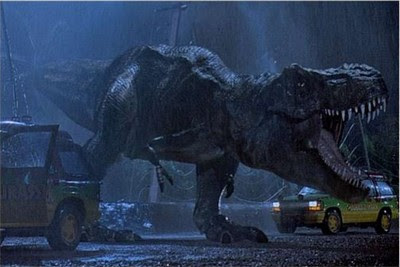
Steven Spielberg
(director), 
Dennis Muren (visual effects superviser), 
Industrial Light & Magic (production studio), 
Universal Pictures (studio), 
Still from Jurassic Park, 1993 
© 1993 Universal City Studios, Inc. 
and Amblin Entertainment, Inc., 
courtesy of Universal Studios Licensing LLC

The Los Angeles County Museum of Art (LACMA) presents Digital Witness: Revolutions in Design, Photography, and Film, which examines the impact of digital image manipulation tools from the 1980s to the present through the works of nearly 200 artists, designers, and makers. Assessing, for the first time, simultaneous developments and debates in the fields of photography, graphic design, and visual effects, the exhibition illuminates today's visual culture where digital editing tools are more accessible than ever before.

Over the last four decades, image-editing software has radically transformed our visual world. This relatively compressed period has taken us from the rise of early paint programs, to the development of both commercially packaged softwares and open-source alternatives, and now the ascension of Al image generators. The increasing ease with which images and text can be digitally generated and altered has enabled new forms of creative experimentation, while also introducing aesthetic and ethical issues across mass media, politics, and advertising. Digital Witness traces these developments with more than 150 photographs, posters, publications, videos, moving image files, film clips, and interactive software experiences. The exhibition charts the emergence of distinctive digital aesthetic strategies, examining how they have altered the patterns, flow, and stakes of visual communication.

Digital Witness: Exhibition Highlights

Organized in three thematic sections, Digital Witness raises questions such as: Where have artists advanced, exploited, or disrupted available means of digital creation and transmission? In what ways can software lead artists, and in what ways can artists shape software? As we are now several decades into the software revolution, can the historical context of "the digital" help us understand its future manifestations?

The exhibition's first section, Blur and Sharpen: Digital Realism, traces artists' efforts to emulate the three-dimensional world and hide evidence of digital interventions. Groundbreaking films from Jurassic Park (1993) to The Lord of the Rings: The Two Towers (2002) and beyond integrated computer graphics with live action and motion capture, embedding fantastical scenarios within otherwise familiar settings or building internally coherent worlds in 3D digital space. Meanwhile, amid initial resistance from traditional darkroom practitioners, photographers including Andreas Gursky and Loretta Lux explored the realm between fact and fiction, seamlessly refining or distorting reality in ways that tested viewers' perceptions and comfort.

Morph and Warp: Computer Aesthetics looks at creators who embraced the rough textures of technology, from April Greiman and John Maeda to Petra Cortwright and Todd Gray. Their work aestheticized glitches such as jagged edges and jerky movements, positing the digital world as its own entity rathert han an imitation of analog life. In some cases, this took a surrealistic form, with distorted shapes and colors that foregrounded technological possibilities and explored the extremes allowed by the new medium. In particular, motion graphics such as title sequences, kinetic typography, music videos, and advertisements were sites of experimentation.

The final section, Cut and Paste: Digital Collage, highlights artists like Keith Piper, Lucas Blalock, and Casey Kauffmann, who found creative potential in editing advances, taking analog art forms—collage in particular, with its potential for surreal juxtapositions—to digitally enabled extremes. In contrast, examples throughout the exhibition demonstrate how artists have resisted dominant commercial softwares, developing open-source alternatives such as Urs and Jürg Lehni's Scriptographer plug-in.

Publication: The exhibition is accompanied by a substantial, image-packed catalogue, co-published by LACMA and DelMonico Books/D.A.P., featuring Q&As with noted visual artists, filmmakers, and designers David Fincher, Copper Frances Giloth, April Greiman, MANUAL, LaJune McMillian, Rosa Menkman, Sert Monroy, Casey Reas, Thomas Ruff, Kyuha Shim, Raqi Syed, and Cesar Velazquez. The publication is edited with an introduction by Britt Salvesen and Staci Steinberger, and includes scholarly essays by Kim Beil, Hye Jean Chung, Carolyn L. Kane, Briar Levit, Staci Steinberger, and Anuradha Vikram. It was created as part of the PST ART: Art & Science Collide series.

This exhibition was organized by the Los Angeles County Museum of Art.

Digital Witness is presented as part of PST ART: Art & Science Collide, a landmark regional event exploring the intersections of art and science, both past and present. The exhibition is co-curated by Britt Salvesen, Department Head and Curator of the Wallis Annenberg Photography Department and Prints and Drawings, and Staci Steinberger, Curator of Decorative Arts and Design, at LACMA.

LACMA - Los Angeles County Museum of Art
5905 Wilshire Boulevard, Los Angeles, CA, 90036
BCAM, Levels 1 & 2

29/08/24

Ukrainian Journalist Mstyslav Chernov Awarded IBC2024 International Honour for Excellence

IBC2024 Awards International Honour for Excellence to Ukrainian Journalist Mstyslav Chernov

IBC today announces that the IBC2024 International Honour for Excellence (IHFE), its most prestigious award, will be conferred on Ukraine’s MSTYSLAV CHERNOV for his work as a video journalist and his groundbreaking film 20 DAYS IN MARIUPOL. The award recognises the resolve and skill as filmmaker demonstrated by Chernov in uncovering the unvarnished truth that he and his Associated Press (AP) team witnessed on the ground as they covered the siege of the Ukrainian city by Russian forces in early 2022. The award will be presented at the IBC Innovation Awards ceremony at 18.30 CEST on Sunday, 15 September at the RAI Amsterdam.

A multi-award-winning journalist and President of the Ukrainian Association of Professional Photographers (UAPF), Mstyslav Chernov documented the siege in Mariupol as one of the last remaining international media representatives in the city. Video materials from his work became the basis of 20 DAYS IN MARIUPOL, Mstyslav Chernov’s first feature film. Produced with the support of AP and the PBS investigative documentary series Frontline, the film offers a harrowing example of the importance of video in fighting back against news disinformation in an era of false reports and deep fakes.
Michael Crimp, IBC’s Chief Executive Officer, said: “People are at the heart of our industry, which exists to support those who want to speak to the world. In honouring Mstyslav Chernov with this year’s IHFE for his work as a war correspondent, video journalist and filmmaker, we are recognising the courage, creativity, skill and determination he has shown in capturing some of the most affecting stories we have seen in the last few years. At a time when it is critical to produce video that reveals the reality of conflicts around the world and challenges the fake news and disinformation being disseminated, Mstyslav and the teams he works with exemplify integrity and the best in our industry.”
Mstyslav Chernov has covered the Russian invasion in Ukraine, conflicts in Iraq, Syria, and Nagorno-Karabakh, and Afghanistan during the return of Taliban rule after US withdrawal. In covering the siege of Mariupol, video of the conflict was periodically sent to the AP editorial office from the only place there was still an online connection – under the stairs near the crushed grocery store – but much of the footage Mstyslav Chernov shot could not be sent online and was carried out by the AP team though the humanitarian corridor. 20 DAYS IN MARIUPOL draws on Chernov’s daily news dispatches and additional footage he shot to provide a vivid account of civilians caught in the siege and a window into what it’s like to report from a conflict zone.

Mstyslav Chernov and the team of journalists working with him – Evgeniy Maloletka, Vasilisa Stepanenko, and Lori Hinnant – were awarded the 2023 Pulitzer Prize in Public Service for their courageous reporting from the besieged city. The film itself – written, directed and narrated by Chernov – has received more than 20 awards, including the Oscar for Best Documentary Feature at this year’s Academy Awards, Best Documentary at the British Film and Television Academy (BAFTA) Awards, and the Audience Award for World Cinema Documentary at the Sundance Film Festival in 2023.

IBC

17/04/24

Contemporary Korean Art Exhibition @ Mia, Minneapolis - Minneapolis Institute of Art - The Shape of Time: Korean Art after 1989

The Shape of Time: Korean Art after 1989 
Minneapolis Institute of Art (Mia)
March 23 - June 23, 2024

Jae Woo Oh
Jae Woo Oh 
(South Korean, born 1983)
Let’s Do National Gymnastics!, 2011
Single channel video 
Collection of the artist

The Minneapolis Institute of Art (Mia) presents a new exhibition of contemporary Korean Art. The Shape of Time: Korean Art after 1989, organized by the Philadelphia Museum of Art, covers five themes: Dissonance, Reinvention, Coexistence, Being Seen, and Portraying Anxiety. The exhibition is on view in the museum’s Target Galleries.

The year 1989 marked a major shift in the world order, with Eastern European countries breaking away from the Soviet Union even as pro-democracy protests were crushed in China. It’s also the year the World Wide Web was invented, jumpstarting the modern era of interconnectivity. South Korea, in the wake of the 1988 Summer Olympics in Seoul, transitioned from a long-standing military dictatorship to a legitimate democracy. An international travel ban was lifted, creating opportunities for global engagement, powerful economic growth, and cultural exchange. South Korean artists began to connect in earnest to the global art scene.
“The works in this serve as a snapshot of an important moment in Korean history, and global history,” said Katie Luber, Nivin and Duncan MacMillan Director and President of Mia. “The diversity of feelings and experiences shared by these artists is profound. I hope that visitors will leave the exhibition with new insights into the ways this historical moment echoes today.”
Using a variety of mediums, including ceramics, painting, fiber, photography, lacquer, installation, metalwork, mixed media, embroidery, and video, these artists explore themes like conformity, displacement, gender and sexuality, coexistence, and dissonance, making universal connections that offer a deeper understanding of South Korea, its history, and its culture.

The Shape of Time: Korean Art after 1989 - Dissonance
Ongoing tensions with North Korea and the effects of unprecedented economic growth have long been a part of daily life for South Koreans. The artists in this section reflect on South Korea’s past and present, the foundations of Korean society, and the paradoxes of a divided Korea. Dissonance abounds in works such as Hayoun Kwon’s single-channel video 489 years (2016). The viewer occupies the role of a soldier undertaking a daylong patrol of the demilitarized zone (DMZ), a strip of land separating North and South Korea along the 38th parallel. The work’s title, 489 Years, references the amount of time experts anticipate it would take to clear the one million mines in the area. Yet in the 11-minute single-channel video, the DMZ appears lush and filled with wildlife, the destructive potential of the area hidden.

The Shape of Time: Korean Art after 1989  - Reinvention
In the 1990s, South Korean artists began re-engaging with traditional arts and culture, infusing long-established aesthetics with a contemporary sensibility. Some of them employ centuries-old hand processes, materials, and narratives. All of them re-examine the past, addressing notions of resilience and transformation that are at once specific to their experiences and transcend geographical boundaries. Suki Seokyeong KANG’s vibrantly woven mats from 2018 and 2019, made to be used in the Chunaengmu royal dance, are inspired by Hwamunseok, a handcrafted straw mat tradition dating to the Goryeo dynasty (918–1392). These large-scale, abstracted weavings—made with Hwanmunseok thread, painted steel, and leather scraps—feature vibrant colors and abstract patterns that bridge contemporary practice with historic craft traditions.

The Shape of Time: Korean Art after 1989 - Coexistence
As Korea participated in a new level of exchange, artists embraced the coexistence of new ideas and existing Korean values and artistic traditions, imbuing them with new meaning. Yoo Eui-jeong’s Treasures of Daily Life (2018) expresses this fusion of ideas in his series of recognizable corporate logos for companies including McDonald’s, Louis Vuitton, and Hello Kitty. Created in valuable materials such as ceramic, gold, and porcelain and presented as dishes served at a banquet, these cultural icons of today are presented as valuable treasures for the future.

The Shape of Time: Korean Art after 1989 - Being Seen
The artworks on view in this section reflect the reality of the present and express hope for the future. Challenging patriarchal power structures and cultural standards, the artists center experiences that are often marginalized, silenced, or erased. Ultimately, they celebrate their resilience and that of their communities. An Attack by Green Horns, by Sang-hee Yun, is a pair of lacquered and gold dagger-like spikes worn on the front torso and back shoulder, protruding like horns. Drawing on experiences from her childhood, Yun created these spikes as a form of protection for the wearer, simultaneously ornate and ominous.

The Shape of Time: Korean Art after 1989 - Portraying Anxiety
Responding to the tensions of being part of a collective and expressing individual identities, artists have turned to alternative ways of approaching, discussing, and challenging social mores. The works in this section raise questions about group participation and the acts of looking and being looked at, while touching on larger societal challenges in Korea and elsewhere. In Let’s do National Gymnastics, Oh Jaewoo fuses nostalgia and the messaging of collectivity and its continued impact on South Korean society. In this ten-minute, single-channel video, Oh evokes the compulsory exercise program prevalent in Korean schools between 1977 and 1999. The video is set to the militaristic beat of the Korean National Stretch Anthem in a commentary on the ubiquitous pressure to conform and the associated anxiety pervasive across Korean culture.

Works from Mia’s permanent collection are added to the exhibition in Minneapolis, including Do Ho Suh’s Some/One, a 2005 sculpture based on a coat of traditional armor. Composed from thousands of polished military dog tags, the work juxtaposes the collective (represented by the armored sculpture) with the individual (symbolized by the dog tags, each representing a single soldier). Also featured is a selection from Byron Kim’s ongoing Synecdoche portraiture project, currently comprised of more than 400 panels, each approximating the skin color of a person Kim has met.
“The artworks in this exhibition respond to South Korea’s complex history and culture, which have been marked by the division of a country, political upheaval, and economic growth, all within a few short decades,” said Leslie Ureña, Associate Curator of Global Contemporary Art. “The exhibition has gathered artists who have made dynamic works that are deeply imbued with their shared artistic and social contexts. They invite us to consider the experience of exploring the past, present, and potential future.”
“The Shape of Time: Korean Art after 1989” is organized by the Philadelphia Museum of Art.

MIA - MINNEAPOLIS INSTITUTE OF ART
2400 Third Avenue South, Minneapolis, Minnesota 55404

12/01/24

Mary Lucier @ Cristin Tierney Gallery, NYC - "Leaving Earth" Video Installation Exhibition

Mary Lucier: Leaving Earth 
Cristin Tierney Gallery, New York 
January 19 – March 2, 2024 

Mary Lucier
MARY LUCIER
Still from Leaving Earth, 2023
© Mary Lucier. Courtesy Cristin Tierney Gallery

Cristin Tierney Gallery presents Leaving Earth, an exhibition of new video work by MARY LUCIER. This is the artist’s first solo exhibition with the gallery.

Leaving Earth is a multi-channel video and sound installation inspired by excerpts from the final journal of Mary Lucier’s late husband, the painter Robert Berlind. In this journal, Berlind fearlessly documented his thoughts on his impending death from a terminal illness. His writings reflect his appreciation of life with a remarkable lack of anxiety about the inevitable end—more curiosity than dread.

The imagery in Mary Lucier’s work consists of sequences of protean video and still images filmed in both her domestic and working environments. Most were shot after Robert Berlind’s passing, reflecting the world as she experienced it during his final days and after. Berlind’s terse epigraphs appear throughout as white text on a black background, serving as evocative companions to the flow of images in Leaving Earth.
pictures already formed

more remembrance than presence.
Mary Lucier describes this nine-channel installation as one where "words, pictures, and sound become interchangeable, not serving as descriptions but as a rumination on reality and a form of coping." Unlike much of Mary Lucier’s earlier work, it does not follow a synchronous and sequential internal structure, instead allowing for random juxtapositions, repetitive thoughts, and the possibility of chaos to occur, reflecting the potential disarray in the dying man's mind. The pictorial narrative in Leaving Earth is underscored by Robert Berlind's description of his mental state:
a succession of discontinuous moments occur

then disappear

without the elemental structure of sequence


And yet . . . I forget to fear death
MARY LUCIER (b. 1944, Bucyrus, OH) has been noted for her contributions to the form of multi-monitor, multi-channel video installation since the early 1970s. Her work prior to her introduction to video was largely concerned with manipulation of the black and white image through a graphic performative process. She also produced several live performances with the feminist video collective Red White Yellow and Black (along with Shigeko Kubota, Cecilia Sandoval and Charlotte Warren) at the original Kitchen in 1972 and '73. Archival materials from this collective were also exhibited in 2023. Her latest multi-channel video installation Leaving Earth will be exhibited at the Catskill Art Space in the summer of 2024.

Mary Lucier's video installations have been shown in major museums and galleries around the world. Many now reside in important collections, including the Whitney Museum of American Art, NY; the Museum of Modern Art, NY; the Reina Sofia, Madrid; the Stedelijk Museum, Amsterdam; the San Francisco Museum of Modern Art; ZKM, Karlsruhe, Germany; the Milwaukee Art Museum; the Columbus Museum of Art, OH; and the National Academy of Design, NY, among others. She has also produced a significant body of single-channel works which have been screened in museums and festivals world-wide.  From the austere black and white experiments of the 1970's to recent studies of Japanese Buddhist ceremonies and Dakota Sioux dances, these works acknowledge the influence of both Avant Garde and documentary practices in American art and cinema.

Mary Lucier has been the recipient of many awards and fellowships, including the National Endowment for the Arts, the John Simon Guggenheim Memorial Foundation, the Rockefeller Foundation, Creative Capital, Anonymous Was a Woman, the Nancy Graves Foundation, USA Artists, the American Film Institute, the Jerome Foundation, the New York State council on the Arts, and the Japan-US Friendship Commission. Her teaching appointments have included the Distinguished Visiting Professor in Art and Art History at UC Davis; Skowhegan School of Painting and Sculpture; adjunct professor in the department of VES at Harvard University; and Visiting Professor in Video Art at University of Wisconsin, Milwaukee, among others. She lives and works in New York City and Cochecton, NY, where she has established a studio and archive for video art.

CRISTIN TIERNEY
219 Bowery, New York, NY 10002

13/10/22

Ye Linghan @ Donjon de Vez, France - From Disappearance to Disappearance

Ye Linghan
From Disappearance to Disappearance
Donjon de Vez, Vez, France
17 - 24 October 2022

The video work "Disappearance", "A Part in Narrative Film - 3", serves as an introduction to the exhibition, which allows us to see Ye Linghan's creation in different periods. "LUCY" means a new beginning. "LUCY" is the artist's most representative project, including a series of paintings that use Internet images as life objects. The works brought by this exhibition show a very different appearance, which is a kind of iteration and evolution. The artist sees them as important transformational works, a renewed visual language, a foreshadowing of the artist's future creations.
 
In his explicatory text, Serge Lemoine draws an enlightening parallel between the “Combine Paintings” of Robert Rauschenberg, which freely mixed collage, assemblage, use of composite materials, with Ye Linghan’s own creative process, during which he uses a computer to construct the different elements of his works, rearranges them until he is satisfied with the result, and then transposes them back manually to the canvas. Lemoine also likens Ye Linghan’s Lucy paintings to the Dada movement and to the works of George Grosz, who used a multitude of pen and ink lines together with cut-out images to depict the port of Hamburg.
 
Born in 1985 in Lishui, Zhejiang Province, Ye Linghan now lives and works in Shanghai. He has been widely exhibited at galleries and institutions including at How Art Museum, Shanghai, X Museum Triennial, Beijing, PowerLong Museum, Shanghai, chiK11 Art Museum, Shanghai, Yuan Art Museum, Beijing and Australian Cinematheque, Melbourne.

DONJON DE VEZ
3 bis rue de la Croix Rebours, 60117 Vez

HdM GALLERY
798 Art District, No.4 Jiuxianqiao Lu, Chaoyang District, 100015 Beijing
___________________


18/12/21

Sasha Huber @ The Power Plant, Toronto - YOU NAME IT

Sasha Huber: YOU NAME IT 
The Power Plant, Toronto
29 January - 1 May 2022 

Sasha Huber
Sasha Huber
Still of Rentyhorn, 2008
Video, 4:30 mins
Courtesy the artist and Museum of Contemporary Art Kiasma 
Photo: Siro Micheroli

Sasha Huber
Sasha Huber
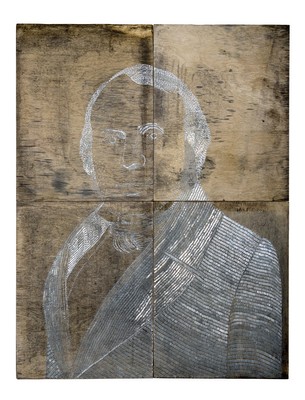
Shooting Back: Louis Agassiz, 2008
Metal staples shot into abandoned wood boards, 150 x 115 cm 
Courtesy the artist and Museum of Contemporary Art Kiasma
 
Swiss-Haitian-Finnish artist SASHA HUBER uses performance, photography, and film, among other media, to investigate colonial residues left in the environment. YOU NAME IT, Huber’s first solo show in North America, will feature over a decade’s worth of work prompted by the cultural and political activist campaign “Demounting Louis Agassiz,” which seeks to redress the racist legacy of the Swiss-born naturalist and glaciologist Louis Agassiz (1807–1873). Huber’s artworks challenge the terms by which we remember, asking not only who and what we memorialize, but also, and more importantly, how we do so. The exhibition is initiated, organized​, and circulated by The Power Plant Contemporary Art Gallery, Toronto, Canada​, in collaboration with Kunstinstituut Melly, Rotterdam, Netherlands; Autograph ABP, London, United Kingdom; and Turku Museum, Finland. 

Sasha Huber
Sasha Huber
Mother Throat, 2017
Video, 10:30 mins
Throat singing by Silla: Charlotte Qamaniq (Iglulik, NU) and
Cynthia Pitsiulak (Kimmirut, NU)
Supported by Arts Promotion Centre Finland, AVEK
Courtesy the artist

Sasha Huber
Sasha Huber 
Still of Louis Who? What you should know about Louis Agassiz, 2010
Video, 3:50 mins
Commissioned by the Capacete in Rio de Janeiro for the 29th São Paulo Biennale 2010
Photo: Calé. Courtesy the artist

Sasha Huber
Sasha Huber
Still of Karakia - The Resetting Ceremony, 2015
Video, 5:20 mins
Supported by AVEK, Arts Promotion Centre Finland, Te Whare Hēra Wellington International Artist Residency
Courtesy the artist
 
Sasha Huber is a Swiss-Haitian-Finnish artist who lives and works in Helsinki, Finland. Recent solo exhibitions include Artivist Lab, Prague (2020); Centro Helio Oiticica, Rio de Janeiro (2019); and Forum Box, Helsinki (2016). She has participated in international exhibitions, including the 56th Venice Biennale (2015); 19th Biennale of Sydney (2014); and 29th São Paulo Biennial (2010). Sasha Huber is completing her PhD at the Department of Art and Media at the Zurich University of the Arts, and she holds an MA from the University of Art and Design Helsinki. 

Curated by Noor Alé, Associate Curator.
 
THE POWER PLANT CONTEMPORARY ART GALLERY
231 Queens Quay West, Toronto, Ontario M5J 2G8