Showing posts with label Southbank Centre. Show all posts

23/11/25

Val Lee @ Hayward Gallery, London - 'The Presence of Solitude' Exhibition

Val Lee
The Presence of Solitude
Hayward Gallery, London
Through 11 January 2026

Val Lee - Buenos dias mujeres
Val Lee 
Buenos días mujeres (2019) 
Photo by Yollotl Alvarado, courtesy the artist 

Val Lee - Charting the Contours of Time
Val Lee 
Charting the Contours of Time (2023) 
Photo by Takuya Matsumi, courtesy the artist 

The Hayward Gallery, in partnership with the RC Foundation, Taiwan (R.O.C.) [*], presents Val Lee: The Presence of Solitude. This is the first solo exhibition in the UK by Taiwanese artist Val Lee and the fourth exhibition in the RC Foundation Project Space Exhibition Series, which showcases the next generation of emerging international artists.

Val Lee: The Presence of Solitude takes place in the HENI Project Space in the Southbank Centre’s Hayward Gallery – a space that offers the opportunity for audiences to see exhibitions from emerging international artists for free.

Val Lee - The Landless Events
Val Lee
The Landless Events (2022)
Photo by Chen Etang, courtesy the artist

Val Lee - The Landless Events
Val Lee
The Landless Events (2022)
Photo by Chen Etang, courtesy the artist

Bringing together film, photography and costume, the exhibition highlights Lee’s longstanding exploration of isolation and solitude. By creating disjointed and ambiguous narratives with unidentifiable figures, her work makes viewers feel as though time and meaning have been displaced. This feeling of alienation encourages us to think about how our personal experiences and collective memories are shaped by state and political systems.

The exhibition features new iterations of two existing works: Valley in the Minibus (2024) and The Sorrowful Football Team (2025). Valley in the Minibus explores the concept of ‘non-places’, defined by French anthropologist Marc Augé as transitory spaces that people pass through (such as airports, motorways, shopping centres) and become anonymous. Building on the original work and live event that took place over several weekends, a group of strangers travel through a winding landscape in a van with a creature-like masked and costumed figure. A new video commission introduces the same masked figure DJing completely alone in an anonymous space. Three full body, long haired costumes and veiled masks used in the work are on display as part of the installation. Present but disconnected from the audience, the presentation highlights the artist's interest in creating connections and intimacies through isolated experiences.

Val Lee - Valley of the Minibus
Val Lee
Valley of the Minibus (2025)
Photo by Pitzu Liu, courtesy the artist 

Val Lee - Valley of the Minibus
Val Lee
Valley of the Minibus (2025)
Photo by Pitzu Liu, courtesy the artist 

Val Lee - Valley of the Minibus
Val Lee
Valley of the Minibus (2025)
Photo by Pitzu Liu, courtesy the artist 

Reimagined for the exhibition as a slide projection, The Sorrowful Football Team (2025) depicts a blind football team playing a match in the snow in Northern Japan. Blind football is an organised sport designed for players who are blind or visually impaired. Here, Lee utilises it as a metaphor to reflect on the impact of political repression experienced under the White Terror rule in Taiwan between 1947-1987 as well as the possibility of finding light in solitary darkness.

Val Lee - The Sorrowful Football Team
Val Lee
The Sorrowful Football Team (2025) 
Courtesy the artist 

Val Lee - The Sorrowful Football Team
Val Lee
Valley of the Minibus (2025) 
Photo by Pitzu Liu, courtesy the artist 

Val Lee - The Sorrowful Football Team
Val Lee
Valley of the Minibus (2025) 
Photo by Pitzu Liu, courtesy the artist 

Val Lee - The Sorrowful Football Team
Val Lee
The Sorrowful Football Team (2025) 
Courtesy the artist 
Yung Ma, Senior Curator of the Hayward Gallery, says: “Straddling visual and live art, Val Lee has embraced different principles to forge an artistic language that invokes various experiences, past and present. While the exhibition explores the deeply felt presence of solitude in her recent works, it is ultimately a hopeful gesture about finding connections in the most unexpected places.”

Val Lee says: "Presenting this work at Hayward Gallery allows me to further explore ambiguous fields—where collectivity is not given, but quietly rehearsed in the blank spaces of perception. I’m glad to share this piece in London at Hayward Gallery - where form, time, and relation can stay in flux."
Previous artists who have exhibited in the HENI Project Space include Huang Po-Chih, Heecheon Kim, Amol K Patil, Thabiso Sekgala and Hicham Berrada. The exhibition marks the fourth iteration of The RC Foundation Project Space Exhibition Series and makes up an important part of the Southbank Centre’s vast array of free programming for all to enjoy.

Val Lee: The Presence of Solitude is curated by Hayward Gallery Senior Curator, Yung Ma, and Curatorial Assistant, Felix Choong. Additional support provided by the Ministry of Culture, Taiwan (R.O.C.).

Val Lee: The Presence of Solitude is presented alongside Gilbert & George 21ST CENTURY PICTURES at the Hayward Gallery, as well as Teresa Solar Abboud’s Mother Tongue: a monumental new public art commission, outside the gallery.

Artist Val Lee

Val Lee (b. 1981, Taipei) is a director and visual artist working across expanded cinema, performance, and moving image. Trained in Filmmaking and Sociology at SUNY, Lee founded the art collective Ghost Mountain Ghost Shovel in 2008. Their work constructs temporal scenarios that reframe space, spectatorship, and perception, often exploring systemic violence, war, and affective states through nonlinear, disorienting environments. Lee’s works have been shown internationally including the 13th Gwangju Biennale, Grand Palais, HKW Berlin, MEP, MOCA Taipei, and others, with performances at TFAM, Kyoto Art Center, and the Taiwan National Theater. Honours include the Taishin Arts Award in 2017 and support from the Asian Cultural Council and C-LAB.

RC Foundation, Taiwan (R.O.C.)

Founded in 1995 by Rong Chuan Chen, RC Foundation has been a visionary force in promoting Taiwanese contemporary art on the global stage. An active champion in fostering cultural and artistic exchanges, RC Foundation has been supporting artists, curators and independent art spaces from Taiwan through grants and partnerships, both locally and internationally. These long-term relationships have nurtured and enriched numerous artistic projects from different perspectives, generating invaluable connections between Taiwan's contemporary art practitioners and their global counterparts.

HAYWARD GALLERY
Southbank Centre, Belvedere Road, London

Val Lee: The Presence of Solitude
Hayward Gallery, London, 7 October 2025 - 11 January 2026

30/04/22

Louise Bourgeois @ Hayward Gallery, London - The Woven Child

Louise Bourgeois: The Woven Child
Hayward Gallery, London
Through 15 May 2022

The Hayward Gallery presents Louise Bourgeois: The Woven Child, the first major retrospective of this legendary artist to focus exclusively on the works that she made with fabrics and textiles during the final chapter of her storied career. These works, many of which have never been shown before in the UK, comprise one of the greatest late career chapters in the history of art.

The exhibition focuses on the mid-1990s until Louise Bourgeois’s death in 2010; a period during which the artist forged a body of work that re-articulated many of her lifelong concerns in newly provocative and profoundly enlivening ways, including her exploration of identity, sexuality, family relationships, reparation, and memory. In surveying this late body of work, Louise Bourgeois: The Woven Child explores what the artist, in her own words, called ‘the magic power of the needle … to repair the damage’ and to offer ‘a claim to forgiveness’.

Louise Bourgeois created an astonishingly inventive, and psychologically charged, range of sculptures using domestic textiles, including clothing, linens and tapestry fragments, often sourced from her own household and personal history. This departure from traditional sculptural materials represented a return to Louise Bourgeois’s roots; her connection to fabric began in her childhood, during which she helped in her family’s tapestry restoration atelier in France. Louise Bourgeois’s decision to create artworks from her clothes and household textiles was thus a means of transforming, as well as preserving, the past. She viewed the actions involved in fabricating these works – cutting, ripping, sewing, joining – in psychological and metaphorical terms, relating them to notions of reparation and to the trauma of separation or abandonment.

Featuring around 90 works, Louise Bourgeois: The Woven Child surveys the complete range of fabric artworks that Louise Bourgeois produced during her last two decades. The exhibition includes major installations, notably several of Louise Bourgeois’s monumental Cells, in which hanging configurations of old dresses, slips, and nightwear directly reference her personal history. The imposing installation Spider (1997), and the related Cell piece, Lady in Waiting (2003), incorporate fragments of antique tapestry. Louise Bourgeois understood the spider as both protector and predator, and associated it with her mother, a weaver and tapestry restorer. Its ability to weave a web from its own body was a metaphor that Bourgeois also used to describe her artistic process and is a particularly poignant image within this survey of her fabric work.

The exhibition includes a comprehensive range of figurative sculptures, many of which are missing limbs and heads or feature fantastical bodies that call to mind characters from unsettling fairy tales. Presented in vitrines, suspended from the ceiling, or displayed on plinths, Louise Bourgeois’s fabric figures – which largely portray female bodies – pointedly conjure states of abjection, abandonment, or entrapment. A significant selection of the artist's fabric heads are also showcased, revealing the wide range of expressions that she elaborated in these uncanny and impactful portraits. Also featured is a selection of Louise Bourgeois’s ‘progressions’: columns of stacked textile blocks or lozenges, organised in ascending and descending sequences. With these works, Louise Bourgeois returned to the vertical sculptural forms that dominated her early work in the 1940s and ‘50s, only now rendered in soft materials. Louise Bourgeois regularly revisited and revised motifs from earlier works throughout her career, a practice that reached a climax with a group of four major late works, made during the last five years of her life, in which combinations of different types of sculptures are displayed together in large vitrines. Collectively, they constitute a kind of summary statement of her late fabric art.

In addition to sculpture, the exhibition highlights a wide selection of Louise Bourgeois’s vibrant fabric drawings, books, prints and collages, including collages which feature large-scale clock faces that she produced during the final year of her life.

Philip Larratt-Smith, Curator at The Easton Foundation says: “Louise Bourgeois’s fabric work is a remarkable and unexpected final act. There is no falling off in the fertility of her imagination, no slackening of the impulses behind her astonishing range of formal invention. Taken as a whole, the fabric work is both a summing up and a recalibration of the forms, processes, motifs, and ideas that obsessed Bourgeois over a lifetime.”

Ralph Rugoff, Director at the Hayward Gallery, says: “We are thrilled to present this major retrospective of Louise Bourgeois’s rich and utterly compelling works made with textiles. While touching on many themes central to her earlier works, Louise Bourgeois’s carefully considered use of varied fabrics, including time-worn materials, imbues her late sculptures with a striking sense of intimacy, vulnerability and mortality. Over a decade after the artist’s death, these works continue to challenge us with questions that seem more compelling and urgent than ever.”

Louise Bourgeois: The Woven Child is curated by Hayward Gallery Director Ralph Rugoff, with Assistant Curator Katie Guggenheim and Curatorial Assistant Marie-Charlotte Carrier.

The exhibition will tour to Gropius Bau, Berlin from 22 July to 23 October 2022.

Louise Bourgeois: The Woven Child
Louise Bourgeois: 
The Woven Child Catalogue
Published by Hayward Gallery Publishing and Hatje Cantz
Paperback (full flaps), 208 pages, 280 x 240 mm 
136 colour illustrations
ISBN: 978-3-7757-5149-0
The exhibition is accompanied by a fully illustrated catalogue with newly commissioned essays by curator and scholar Lynne Cooke, novelist Rachel Cusk, curator Julienne-Franziska Lorz, and Hayward Gallery Director Ralph Rugoff. 
THE HAYWARD GALLERY
Southbank Centre, Belvedere Road, London SE1 8XX

21/01/22

The World We Live In: Art and the Urban Environment - UK Touring Exhibition

The World We Live In: Art and the Urban Environment
Leicester Museums & Art Galleries
5 February - 2 May 2022 
Norwich Castle Museum & Art Gallery
21 May - 4 September 2022 
Glynn Vivian Art Gallery
18 September 2022 - 1 January 2023

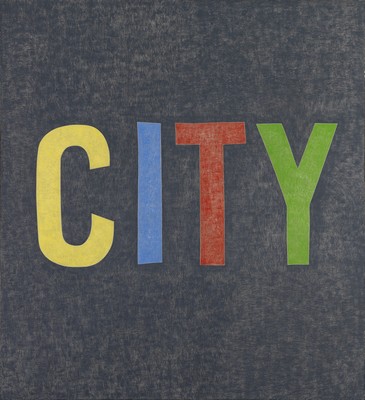
David Austen
David Austen 
City, 1999 
Oil on canvas, 167.5 x 152cm. 
Arts Council Collection, Southbank Centre, London 
© David Austen

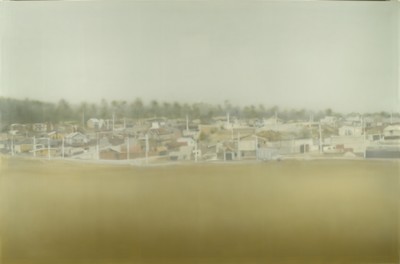
Rut Blees Luxemburg
Rut Blees Luxemburg  
Meet Me in Arcadia, 1996
C-print mounted on aluminium, 61 x 76cm. 
Arts Council Collection, Southbank Centre, London 
© Rut Blees Luxemburg 
 
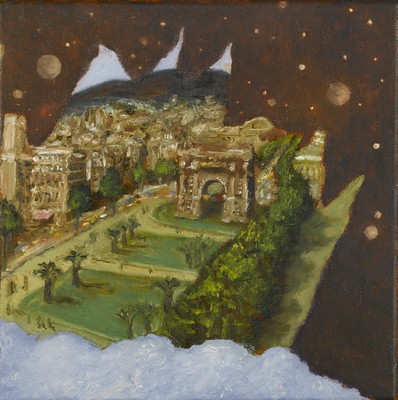
Suzanne Treister
Suzanne Treister 
Barcelona in Outer Space, 1986 
Oil on canvas, 25.4 x 25.5cm. 
Arts Council Collection, Southbank Centre, London 
© Suzanne Treister 
 
Arts Council Collection presents The World We Live In: Art and the Urban Environment, an exhibition of painting, sculpture, photography and film that explores urban life. Featuring 29 works created between 1950 and 2020, as well as photographs from the Collection’s rich archive of documentary photography, the exhibition launches at Leicester Museums & Art Galleries before touring to other venues across the UK.

Cities around the world have developed and diversified more rapidly in the last ten years than ever before and today over half of the world’s population lives in an urban environment. The many facets of urban life - architecture, migration, commuting, crowds, noise, lights - have long been a rich source of inspiration to artists. The World We Live In, which takes its title from an artwork by Carel Weight, brings together twentieth century and contemporary works to explore these issues, while offering a space to contemplate the role of the city, especially in light of events of the last two years.

Exploring themes from urban development – such as in works by Victor Pasmore and Toby Paterson – to migration and the relationship between inner cities and suburbia, the artists presented in this exhibition respond to a variety of places across the world. George Shaw’s The End of Time depicts the area of Coventry where he grew up, while Melanie Smith’s Parres shows the de-personalised outskirts of Mexico City, the place she has lived and worked in since 1989.

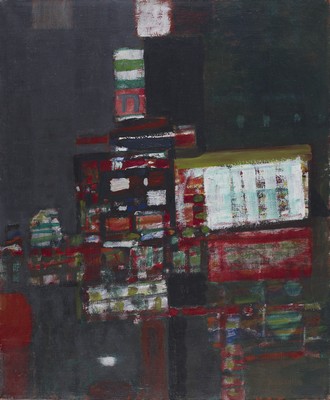
The sensory experience of living in urban environments is also addressed in the exhibition, with works such as Michael Andrews’ Lights II: The Ship Engulfed depicting glittering cityscapes and neon signs and Rut Blees Luxemburg’s Meet Me in Arcadia capturing the artificial lights from a block of East End London flats. A changing schedule of sound and video works, selected by each touring venue, includes Lawrence Abu Hamdan’s The All-Hearing, a film reflecting on the high levels of noise pollution in Cairo, Egypt.

Melanie Smith
Melanie Smith 
Parres (No. 2), 1995 
Acrylic enamel on acrylic sheet, 
mounted on aluminium, 130.5 x 200 x 4.2cm. 
Arts Council Collection, Southbank Centre, London 
© Melanie Smith
 
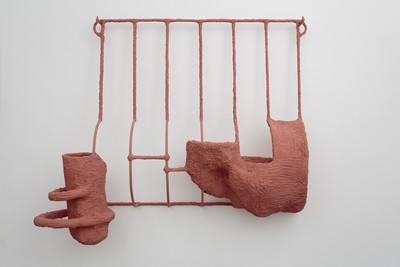
Olivia Bax
Olivia Bax
Grille (landscape), 2020
Steel, chicken wire, foam, newspaper, UV resistant PVA, 
household acrylic paint, plaster, 131 x 150 x 42cm. 
Arts Council Collection, Southbank Centre, London 
© Olivia Bax. Courtesy of the artist and Standpoint Gallery, London. 
Photo: Tim Bowditch.
 
Brian Robb
Brian Robb
 
Townscape, 1959 
Oil on canvas, 76.8 x 63.8cm. 
Arts Council Collection, Southbank Centre, London 
© Estate of Brian Robb

While some artists have sought inspiration from real life surroundings, others have drawn on failed utopias of the past and imagined structures for the future, opening up conversation about how cities have served and failed the needs of their inhabitants. Mark Lewis’s film Children’s Games, Heygate Estate, highlights the gap between utopian views and everyday realities as his camera glides around a complex of empty walkways in a now demolished South London estate.

Alongside the exhibition’s broad range of works, The World We Live In also includes some of the Arts Council Collection’s outstanding collection of documentary photographs from the 1960s and 1970s which present an unparalleled view of inner city life across the UK.

Deborah Smith, Director, Arts Council Collection, says: “We look forward to working with our touring partners on this exhibition in which artists bring many different ways of looking at our urban environment and, through art, raise questions and encourage people to keep interrogating the world we live in”.

Established in 1946 as a national collection for the UK, today the Arts Council Collection cares for over 8,000 works by close to 2,200 artists. The Collection is managed by the Southbank Centre on behalf of Arts Council England, and is committed to supporting artists from a wide range of backgrounds and disciplines, most often at an early stage of their career, in order to reflect the rich, diverse culture of the UK. It is a widely circulated national collection that can be seen in museums, galleries, schools, universities, hospitals and charitable associations across the UK and abroad.

ARTS COUNCIL COLLECTION