Showing posts with label AI. Show all posts

26/11/24

Art Basel launches new App. The AI-powered digital companion to Art Basel shows

Art Basel launches new App, the AI-powered digital companion to Art Basel shows

Art Basel announces the release of the new Art Basel App, a comprehensive digital companion designed to enhance visitors’ experience at Art Basel shows and create new and interactive opportunities for art discovery. Launching ahead of the 2024 edition of Art Basel Miami Beach, the new mobile app leverages digital innovation to provide a highly personalized and intuitive experience for first-time and returning visitors, bringing them closer to the artists and artworks on display and allowing them to uncover more of the unparalleled programming in and around the show. For the first time, Art Basel is partnering with Microsoft to offer an advanced suite of AI-powered app features – including the interactive Art Basel Companion and the Art Basel Lens, which marks the first application of Microsoft’s AI computer vision technology in a global art fair context.

Powered by Microsoft Copilot, the Art Basel Companion offers personalized recommendations about where to go and what to see at the show based on user preferences. Visitors will be able to interact with the Companion and obtain information about artists and gallery presentations at the show, cultural events and highlights around the city, as well as hotels and restaurants. The Art Basel Lens uses AI computer vision to allow visitors to scan artworks on view, learn more about the exhibiting gallery and artist in real time, and reshare the artworks with their social networks. The Art Basel Lens feature will launch as a pilot in Art Basel Miami Beach’s Nova and Survey sectors, dedicated to ultra-contemporary and historical presentations, respectively. Other enhanced app functionalities include personalized itinerary-planning and Calendar Synch, enabling visitors to RSVP to Art Basel events within the app and sync them directly to their personal calendars for a more seamless visitor experience, alongside new features for Art Basel VIP guests, who can unlock exclusive partner benefits and offers during the show all within the app environment.
Noah Horowitz, CEO, Art Basel, says: "The new Art Basel App reflects our mission to enhance and enrich the physical fair experience and create new paths for access and discovery, as well as seek out innovative ways to connect exhibitors with a new and engaged audience base. We are thrilled to partner with Microsoft to truly unlock the power of digital innovation to elevate our galleries and their artists and create expanded opportunities for meaningful interactions with art."
Steve Clayton, Vice President, Microsoft, says: "Art Basel and Microsoft share a common vision of empowering the art world through innovation. Our partnership is not just about technology; it’s about unlocking opportunities for deeper connections with artists and galleries – and providing unique insights and discoveries for attendees. We are excited to partner with Art Basel to bring cutting edge AI capabilities that help make their world-class art fairs more accessible and enjoyable for everyone.”
The new Art Basel App is now available to download in the Apple app store, supported initially on iOS. Android users can continue using the original version of the App.

15/10/24

Digital Witness: Revolutions in Design, Photography, and Film @ LACMA - Los Angeles County Museum of Art

Digital Witness  
Revolutions in Design, Photography, and Film
LACMA - Los Angeles County Museum of Art
November 24, 2024 - July 13, 2025

Melanie Willhide 
With the Exception of Blue, 2013, 
Los Angeles County Museum of Art, 
purchased with funds provided by LENS: Photography Council 
© Melanie Willhide, digital image courtesy of the artist 
and Von Lintel Gallery, Los Angeles 

April Greiman
 
Pacific Wave, 1987 
Los Angeles County Museum of Art, 
Decorative Arts and Design Council Acquisition Fund 
and Ralph M. Parsons Fund 
© April Greiman, digital image © Museum Associates/LACMA 

Steven Spielberg
(director), 
Dennis Muren (visual effects superviser), 
Industrial Light & Magic (production studio), 
Universal Pictures (studio), 
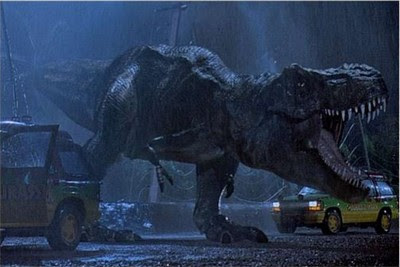
Still from Jurassic Park, 1993 
© 1993 Universal City Studios, Inc. 
and Amblin Entertainment, Inc., 
courtesy of Universal Studios Licensing LLC

The Los Angeles County Museum of Art (LACMA) presents Digital Witness: Revolutions in Design, Photography, and Film, which examines the impact of digital image manipulation tools from the 1980s to the present through the works of nearly 200 artists, designers, and makers. Assessing, for the first time, simultaneous developments and debates in the fields of photography, graphic design, and visual effects, the exhibition illuminates today's visual culture where digital editing tools are more accessible than ever before.

Over the last four decades, image-editing software has radically transformed our visual world. This relatively compressed period has taken us from the rise of early paint programs, to the development of both commercially packaged softwares and open-source alternatives, and now the ascension of Al image generators. The increasing ease with which images and text can be digitally generated and altered has enabled new forms of creative experimentation, while also introducing aesthetic and ethical issues across mass media, politics, and advertising. Digital Witness traces these developments with more than 150 photographs, posters, publications, videos, moving image files, film clips, and interactive software experiences. The exhibition charts the emergence of distinctive digital aesthetic strategies, examining how they have altered the patterns, flow, and stakes of visual communication.

Digital Witness: Exhibition Highlights

Organized in three thematic sections, Digital Witness raises questions such as: Where have artists advanced, exploited, or disrupted available means of digital creation and transmission? In what ways can software lead artists, and in what ways can artists shape software? As we are now several decades into the software revolution, can the historical context of "the digital" help us understand its future manifestations?

The exhibition's first section, Blur and Sharpen: Digital Realism, traces artists' efforts to emulate the three-dimensional world and hide evidence of digital interventions. Groundbreaking films from Jurassic Park (1993) to The Lord of the Rings: The Two Towers (2002) and beyond integrated computer graphics with live action and motion capture, embedding fantastical scenarios within otherwise familiar settings or building internally coherent worlds in 3D digital space. Meanwhile, amid initial resistance from traditional darkroom practitioners, photographers including Andreas Gursky and Loretta Lux explored the realm between fact and fiction, seamlessly refining or distorting reality in ways that tested viewers' perceptions and comfort.

Morph and Warp: Computer Aesthetics looks at creators who embraced the rough textures of technology, from April Greiman and John Maeda to Petra Cortwright and Todd Gray. Their work aestheticized glitches such as jagged edges and jerky movements, positing the digital world as its own entity rathert han an imitation of analog life. In some cases, this took a surrealistic form, with distorted shapes and colors that foregrounded technological possibilities and explored the extremes allowed by the new medium. In particular, motion graphics such as title sequences, kinetic typography, music videos, and advertisements were sites of experimentation.

The final section, Cut and Paste: Digital Collage, highlights artists like Keith Piper, Lucas Blalock, and Casey Kauffmann, who found creative potential in editing advances, taking analog art forms—collage in particular, with its potential for surreal juxtapositions—to digitally enabled extremes. In contrast, examples throughout the exhibition demonstrate how artists have resisted dominant commercial softwares, developing open-source alternatives such as Urs and Jürg Lehni's Scriptographer plug-in.

Publication: The exhibition is accompanied by a substantial, image-packed catalogue, co-published by LACMA and DelMonico Books/D.A.P., featuring Q&As with noted visual artists, filmmakers, and designers David Fincher, Copper Frances Giloth, April Greiman, MANUAL, LaJune McMillian, Rosa Menkman, Sert Monroy, Casey Reas, Thomas Ruff, Kyuha Shim, Raqi Syed, and Cesar Velazquez. The publication is edited with an introduction by Britt Salvesen and Staci Steinberger, and includes scholarly essays by Kim Beil, Hye Jean Chung, Carolyn L. Kane, Briar Levit, Staci Steinberger, and Anuradha Vikram. It was created as part of the PST ART: Art & Science Collide series.

This exhibition was organized by the Los Angeles County Museum of Art.

Digital Witness is presented as part of PST ART: Art & Science Collide, a landmark regional event exploring the intersections of art and science, both past and present. The exhibition is co-curated by Britt Salvesen, Department Head and Curator of the Wallis Annenberg Photography Department and Prints and Drawings, and Staci Steinberger, Curator of Decorative Arts and Design, at LACMA.

LACMA - Los Angeles County Museum of Art
5905 Wilshire Boulevard, Los Angeles, CA, 90036
BCAM, Levels 1 & 2

03/06/24

Artist Gioele Amoro @ Galerie Forsblom, Helsinki – "Painted Words: A Fusion of Art and AI" Exhibition

Gioele Amoro 
Painted Words: A Fusion of Art and AI
Galerie Forsblom, Helsinki 
June 7 – August 18, 2024

Gioele Amaro is a digital painter whose latest exhibition is a collaboration between human creativity and AI. Amaro’s second solo exhibition at Galerie Forsblom again pushes the boundaries of art, this time going even further by plunging into the world of trompe l’oeil and exploring the enigmatic allure of ethereal, shimmering surfaces that keep shifting and changing. Gioele Amaro’s new paintings furnish convincing evidence of the artist’s masterful command of both traditional painting techniques and new digital technology.

Gioele Amaro’s latest innovative paintings are the outcome of an intriguing process through which he seamlessly fuses his creative vision with the boundless capabilities of artificial intelligence. Working with AI algorithms, the artist has crafted commands and words to generate compositions that capture the essence of painting in all its resplendence. His AI-generated paintings are designed on a computer, printed on canvas, and finalized with a coat of varnish to bring out its brightness and depth. This results in a blurring of boundaries between the virtual and physical worlds, inviting viewers to reflect on the fundamental nature of perception and reality.

The exhibition immerses visitors in a universe where something extraordinary is born from the marriage of technology and creativity. Gioele Amaro’s paintings revel in subtle interplays of light and color, creating complex patterns that dance alluringly across the surface of the canvas. His paintings offer us a glimpse into a future where art knows no boundaries.

Gioele Amaro (b.1986) is an Italian artist who studied at La Villette in Paris and at the University of Art and Architecture Mediterranea in Reggio Calabria. Amaro has held numerous solo and group exhibitions in Europe and China. The artist divides his time between Paris and Milan.

GALERIE FORSBLOM
Yrjönkatu 22, 00120 Helsinki 

03/05/24

Harold Cohen: AARON @ Whitney Museum of American Art, New York

Harold Cohen: AARON
Whitney Museum of American Art, New York 
Through May 19, 2024

Harold Cohen
HAROLD COHEN
AARON KCAT, 2001 
Screenshot. Artificial intelligence software 
Dimensions variable 
Whitney Museum of American Art, New York
Purchase, with funds from the Digital Art Committee 2023.20
© Harold Cohen Trust

Harold Cohen
HAROLD COHEN
AARON KCAT, 2001 
Screenshot. Artificial intelligence software 
Dimensions variable 
Whitney Museum of American Art, New York
Purchase, with funds from the Digital Art Committee 2023.20
© Harold Cohen Trust

Harold Cohen
HAROLD COHEN
AARON KCAT, 2001 
Screenshot. Artificial intelligence software 
Dimensions variable 
Whitney Museum of American Art, New York
Purchase, with funds from the Digital Art Committee 2023.20
© Harold Cohen Trust

The Whitney Museum of American Art presents the exhibition Harold Cohen: AARON which examines the evolution of AARON, the first AI artmaking program, which was developed in the late 1960s by artist Harold Cohen. Beginning with AARON’s creation and early years, the exhibition explores the foundational stages of AI and its place in art history. In addition to featuring AARON’s drawings and paintings from the Whitney Museum’s collection, the show highlights the software as the central creative force behind the artworks and demonstrate AARON’s drawing process with pen plotters live in the galleries for the first time since the 1990s. The Whitney is the first and only museum to collect versions of the AARON software from different time periods. Providing an important historical perspective on current AI tools, AARON’s functionality is based on knowledge distilled into rules coded by the artist, which differs from today’s AI image creation tools like DALL-E, Midjourney, and Stable Diffusion, which generate their output from existing images on the basis of a user’s text prompts.
“Harold Cohen’s AARON has iconic status in digital art history, but the recent rise of AI artmaking tools has made it even more relevant. Cohen’s software provides us with a different perspective on image making with AI,” says Christiane Paul, Curator of Digital Art at the Whitney. “What makes AARON so remarkable is that Cohen tried to encode the artistic process and sensibility itself, creating an AI with knowledge of the world that tries to represent it in ever-new freehand line drawings and paintings. Watching AARON’s creations drawn live as they were half a century ago will be a unique experience for viewers.”
Harold Cohen considered creativity a result of dialogue between the program and programmer and viewed AARON as his equal collaborator. The artist built his own pen plotters and painting machines to realize AARON’s outputs in various ways throughout its evolution. In AARON’s early years, Harold Cohen manually added color to black-and-white drawings that AARON made with a pen plotter, generating novel images on paper based on its interpretation of Cohen’s coded commands. Modernized re-creations of Harold Cohen’s early drawing machines, constructed specifically for this exhibition, will be installed in the galleries and draw images from different iterations of the AARON software. There will also be large-scale projections of two versions of the AARON program—one creating figurative outputs, the other generating images of flora.

Harold Cohen
HAROLD COHEN
AARON KCAT, 2001 
Screenshot. Artificial intelligence software 
Dimensions variable 
Whitney Museum of American Art, New York
Purchase, with funds from the Digital Art Committee 2023.20
© Harold Cohen Trust

Harold Cohen
HAROLD COHEN
AARON KCAT, 2001 
Screenshot. Artificial intelligence software 
Dimensions variable 
Whitney Museum of American Art, New York
Purchase, with funds from the Digital Art Committee 2023.20
© Harold Cohen Trust

HAROLD COHEN (1928–2016) was a British artist whose innovations at the forefront of technology shaped the field of digital art. Harold Cohen’s artistic practice resulted in his famed creation AARON, the first artificial intelligence software designed to create art independently. After graduating from the Slade School of Fine Art, Harold Cohen had a successful career as a painter, representing the UK at the 1966 Venice Biennale and exhibiting at Documenta III, the Paris Biennale, and the Carnegie International. In 1968, Harold Cohen relocated to the United States as a visiting lecturer at the University of California, San Diego (UCSD), where he remained for almost three decades as a professor, chairman of the Visual Arts Department, and eventually, in 1992, director of the Center for Research in Computing and the Arts. During his time at UCSD, Harold Cohen developed AARON, an evolving artwork to which he would devote the rest of his life, exploring the possibilities of generative artificial intelligence for artmaking. Harold Cohen’s software attracted global attention and was exhibited at major institutions and venues, including the San Francisco Museum of Modern Art, Stedelijk Museum, and Documenta 6. After retiring from UCSD, Harold Cohen continued to work on AARON and produce new artworks in his studio in Encinitas, California. In 2014, Harold Cohen received the ACM SIGGRAPH Distinguished Artist Award for Lifetime Achievement in Digital Art.

Harold Cohen: AARON is organized by Christiane Paul, Curator of Digital Art, with David Lisbon, Curatorial Assistant. The exhibition is organized in collaboration with the Estate of Harold Cohen, which is represented by Gazelli Art House. Modernized re-creations of the plotters were fabricated by Bantam Tools, courtesy Bre Pettis.

WHITNEY MUSEUM OF AMERICAN ART, NEW YORK CITY

HAROLD COHEN: AARON - WHITNEY MUSEUM OF AMERICAN ART 
FEBRUARY 3 - MAY 19, 2024