Showing posts with label Alejandro Cartagena. Show all posts

26/06/25

Alejandro Cartagena Retrospective Exhibition @ SFMOMA - San Francisco Museum of Modern Art: "Alejandro Cartagena: Ground Rules"

Alejandro Cartagena: Ground Rules
SFMOMA, San Francisco 
November 22, 2025 – April 19, 2026

Alejandro Cartagena
Alejandro Cartagena
Carpoolers #21
from the series Carpoolers, 2011-12 
© Alejandro Cartagena, courtesy the artist

Alejandro Cartagena
Alejandro Cartagena 
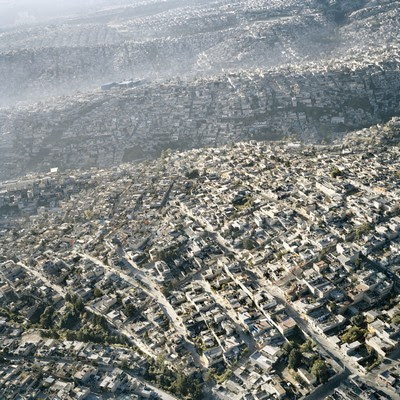
Fragmented Cities, Escobedo
from the series Suburbia Mexicana, 2005-10
© Alejandro Cartagena, courtesy the artist

Alejandro Cartagena

Alejandro Cartagena and Rubén Marcos 
Identidad Nuevo León #41
from the series Identidad Nuevo León, 2005-6 
© Alejandro Cartagena, courtesy the artist

The San Francisco Museum of Modern Art (SFMOMA) announces Alejandro Cartagena: Ground Rules, the artist’s first retrospective, on view from November 22, 2025, to April 19, 2026. Over two prolific decades, Alejandro Cartagena has produced an incredibly varied body of work that reflects on contemporary life in Mexico and its changing landscapes, which have been his home since the age of 13. From color documentary photography to collage, the appropriation of found photographs to Artificial Intelligence (AI)-generated works, Cartagena’s prodigious output is unified by his commitment to addressing Mexico’s most pressing social, economic and environmental issues.

Alejandro Cartagena: Ground Rules explores the artist’s practice as a “project photographer,” highlighting work from over 20 series. For each project, Cartagena conducts extensive research, then establishes a set of creative constraints around elements such as format, subject matter or location to guide him, often amassing hundreds of photographs around a topic. No photograph is more important than another; rather, his work allows meaning to emerge through accumulation, juxtaposition and variation. The exhibition traces recurring concerns across his career for the first time, including land use, the U.S.-Mexico border, climate change, increasing wealth disparities and the effects of rapid suburban sprawl, while also examining how Alejandro Cartagena uses archival sources, photobooks, large-scale installations and AI to expand what photography can be. Alejandro Cartagena: Ground Rules will be accompanied by an illustrated monograph published by Aperture that charts the artist’s full career, featuring newly commissioned texts.
“Photography changed our world two centuries ago; the way we see it, and the way we think about it has never been the same since we started using it,” said Alejandro Cartagena. “I want to be part of that history of how the medium transformed our understanding of social, political and environmental issues through images.”
“While Cartagena’s photographs are rooted in his observations of life in Mexico, part of their great power is their ability to open up broad conversations that transcend geography,” said Christopher Bedford, Helen and Charles Schwab Director of SFMOMA. “Cartagena’s work invites reflection and probing questions that serve to complicate our understanding of important social and environmental topics. I believe this exhibition will resonate deeply with our audiences.”
The exhibition opens with Alejandro Cartagena’s early photographic projects, where many of his central concerns, such as urban life, appropriation, and the U.S.-Mexico border, first come into focus. At the beginning of his career, Alejandro Cartagena trained his camera on himself and his fellow residents of Nuevo León, Mexico. His first large-scale project, Identidad Nuevo León (2005), was created in collaboration with fellow photographer Rubén Marcos. The two set up a mobile studio with a white backdrop and spent a year photographing 800 people in 25 municipalities in Nuevo León. Each sitter offers a distinct sense of style and presence. Around the same time, for his 2004-05 series Espacios Habitables (Living Spaces)Alejandro Cartagena returned to his birthplace, the Dominican Republic, and asked passersby to take his portrait as if he were a tourist in front of places from his youth. Blurry and taken from a low camera angle, these images gesture toward reconnecting with the past.

In 2009, Alejandro Cartagena began a trilogy of projects about the U.S.-Mexico border: Between Borders (2009–10), Americanos (2012–14) and Without Walls (2017). While some photographs portray the physical border itself, the series as a whole explores its broader cultural, economic and psychological impact. Cartagena pushes back against simplistic south-to-north migration narratives and questions the promise of the American dream, depicting the border not only as a territorial divide but as an invisible force shaping lives, perceptions and policies on both sides of this artificial barrier.

As the exhibition progresses, the environment and issues around land use emerge as central concerns for the artist. In his critically acclaimed, multiyear project Suburbia Mexicana (2005–10), the artist developed five subseries: Fragmented Cities, Lost Rivers, The Other Distance, Urban Wastelands and People of the Suburbs, which examine the complex relationship between urban centers and the suburbs haphazardly built around them. From poignant, sun-drenched landscapes of dried-up riverbeds to portraits in front of undulating rows of identical, box-like houses, Cartagena looks at how growth has altered the landscape and deeply impacted the lives of its residents.

For his popular series Carpoolers (2011–12), Alejandro Cartagena asked a deceptively simple question: what happens when suburban expansion outpaces public infrastructure? The answer plays out in his depiction of laborers who, without access to a direct bus line, commute in the flatbeds of pickup trucks from their homes in the suburbs to wealthy Mexican enclaves. Standing on a pedestrian overpass for three mornings a week for a year, Alejandro Cartagena photographed these workers from above. Meanwhile, the series Suburban Bus (2016) addresses similar questions but instead looks at those who do have access to a bus line. Over the course of three days and nights, the artist took the bus nonstop to retrace the route he would take daily between 1993 to 2004 on his way to work at his family’s restaurant in Juárez. Alejandro Cartagena places the viewer amongst the huddled passengers, some trying to rest as others stand and sway with the motion of the bus. At once breathtakingly beautiful and melancholic, the series captures the exhaustion and solitude of long-distance commuting.

In 2016, Alejandro Cartagena began experimenting with collage, starting with his own photographs and then moving to small, black-and-white vernacular photographs he gathered at Mexican flea markets and landfills. For his series Photo Structures (2018–19), he carefully excised figures from found pictures, leaving only the background. The resulting images reveal the formal patterns of photographic composition—the repeated poses, angles and backdrops—while also asking what is lost or gained when the ostensible subject disappears.

Continuing to push the limits of photography, Alejandro Cartagena founded Fellowship in 2021, a platform initially created to share NFT-based photography. The project quickly evolved into a broader space for the distribution, collection and exploration of digital media, including generative art, artificial intelligence and video. The exhibition will include a selection of his NFTs. In his most recent video series, We Are Things (2025), Alejandro Cartagena revisits his interest in archival imagery through a new lens—using an AI image generator trained on a personal archive. This latest work brings his experimentation full circle, blending the digital with the analog and linking his early collages of found photographs with cutting-edge technology.

The final section of the exhibition showcases Cartagena’s photobooks as central components of his practice. A prolific self-publisher, Alejndro Cartagena sees the photobook as the natural progression for a project photographer; the editing and sequencing of the work, for him, fundamentally affix meaning to the imagery.

Photographer Alejandro Cartagena

Born in Santo Domingo, Dominican Republic in 1977, Alejandro Cartagena lives and works in Monterrey, Mexico. Over the last two decades, his projects have employed landscape photography and portraiture as a means to examine social, urban and environmental issues. His work has been exhibited at more than 50 group and solo exhibitions, including the Centre de Cultura Contemporània de Barcelona (CCCB) in Barcelona and the Fondation Cartier pour l’Art Contemporain in Paris. His work is held in the permanent collections of the Coppel collection, the FEMSA Collection, the George Eastman House, The J. Paul Getty Museum, The Museum of Contemporary Photography in Chicago, The Museum of Fine Arts in Houston, the Portland Museum of Art, the San Francisco Museum of Modern Art, and the Santa Barbara Museum of Art, and The West Collection.

Alejandro Cartagena has received several awards including the international Photolucida Critical Mass Book Award, the Street Photography Award in London Photo Festival, the Lente Latino Award in Chile, the Premio IILA-FotoGrafia Award in Rome and the Salon de la Fotografia of Fototeca de Nuevo León in Mexico. He was shortlisted for the Deutsche Börse Photography Foundation Prize in 2021.

Publication : The exhibition will be accompanied by the first comprehensive, fully bilingual publication that charts the entire career of Alejandro Cartagena to date. Published by Aperture, Alejandro Cartagena: Ground Rules features 175 illustrations as well as contributions by Tatiana Bilbao, Álvaro Enrigue, Horacio Fernández, Charlotte Kent and Shana Lopes.

Alejandro Cartagena: Ground Rules is co-organized by the San Francisco Museum of Modern Art and Fundación MAPFRE, Madrid, where it will be on view from  June through August 2026.

The exhibition is curated by Shana Lopes, assistant curator of photography, with Alex Landry, curatorial assistant, photography.

SFMOMA - SAN FRANCISCO MUSEUM OF MODERN ART
151 Third Street, San Francisco, CA 94103 

08/04/23

Photography Exhibition: Civilization @ Saatchi Gallery, London - Civilization: The Way We Live Now

Civilization: The Way We Live Now 
Saatchi Gallery, London 
2 June - 17 September 2023 

Sheng-Wen Lo
Sheng-Wen Lo
Diergaarde Blijdorp Rotterdam, The Netherlands 
from the series White Bear, 2016 
© Sheng-Wen Lo

Alejandro Cartagena
Alejandro Cartagena
Mother at the Mexico – USA border wall, 
from the series Without Walls, 2017 
© Alejandro Cartagena

Lauren Greenfield
Lauren Greenfield
High school seniors (from left) 
Lili, 17, Nicole, 18, Lauren, 18, Luna, 18, and Sam, 17, 
put on their makeup in front of a two-way mirror for Lauren Greenfield's 
Beauty CULTure documentary, Los Angeles, 2011, 
from the "GENERATION WEALTH" project 
© Lauren Greenfield

Saatchi Gallery presents Civilization: The Way We Live Now, an international exhibition offering an unprecedented look at 150 contemporary photographers tracking the visual threads of humankind’s ever-changing, extraordinarily complex life across the globe.

Featuring many previously unseen images, this landmark exhibition acknowledges the diverse material and spiritual cultures that make up global “civilization” today. Exploring a wide range of subjects, from our great collective achievements to our ruinous collective failings, Civilization: The Way We Live Now highlights the complexity and contradictions of contemporary civilization.

Participating photographers practising across all five continents; from Reiner Riedler’s families cavorting at leisure parks, through Raimond Wouda’s high school subculture, Wang Qingsong’s parody of insane work habits, to Lauren Greenfield’s displays of ostentatious wealth, Edward Burtynsky’s study of fragile water resources, Pablo Lopez Luz’s views on a sprawling contemporary megapolis, Thomas Struth’s vision of past civilizational glories and Xing Danwen’s electronic wastelands, Civilization draws together powerful imagery into a new, unique and challenging discourse.

A collaboration between Saatchi Gallery and the Foundation for the Exhibition of Photography, with curators William A. Ewing and Holly Roussell, the highly-anticipated exhibition has toured in major museums across Korea, China, Australia, New Zealand, France and Italy and includes a new selection of works curated especially for this London edition at Saatchi Gallery. In addition to the photographers with decades of experience, Civilization features the work of many in mid-career, as well as emerging talents.

Pablo López Luz
Pablo López Luz 
Vista Aerea de la Ciudad de Mexico, XIII, 
from the series Terrazo, 2006 
© Pablo López Luz

Cyril Porchet
Cyril Porchet
Untitled from the series Crowd, 2014 
© Cyril Porchet

Jeffrey Milstein
Jeffrey Milstein
Newark 8 Terminal B, Newark, NJ, 
from the series Airports, 2016 
© Jeffrey Milstein

As curator William A. Ewing explains:
“Photographers are at work everywhere, photographing everything, using their eyes and their minds to seize telling moments in the rapid flux with sharp, vivid images. Photographers are our civilization’s eyes... Ironically, it may be that many of these photographs will last longer than the monuments and artefacts that they depict. London has always been a great centre for the celebration of photography from all corners of the globe, filled with collections, archives, museums and galleries deeply committed to the promotion of this vital art form. We curators have been privileged to benefit from many loans from these sources, and welcome Saatchi Gallery’s invitation to share the fruits of our research with a London audience.”
The exhibition is conceived as a journey through key aspects of civilization, via eight thematic chapters: HIVE, which features photographs dealing with the concept of the urban environment, a prerequisite of all civilizations; ALONE TOGETHER which looks at social relationships; FLOW, which takes its subject to the movement of peoples, good and ideas; PERSUASION, which looks at the strategies that politicians and merchandisers employ to influence our behaviour; CONTROL, which has to do with authority and power; RUPTURE, which looks at societal breakdown and conflict; ESCAPE, which shows people searching for release from the mundane; and NEXT? which hints at the new world taking shape in the 21st Century.

Wang Qingsong
Wang Qingsong 
Work, Work, Work, 2012 
© Wang Qingsong

Reiner Riedler
Reiner Riedler
Wild River, Florida, 
from the series Fake Holidays, 2005 
© Reiner Riedler

Olaf Otto Becker
Olaf Otto Becker
Point 660, 2, 08/2008 67°09’04’’N, 50°01’58’’W, Altitude 360M, 
from the series Above Zero, 2008 
© Olaf Otto Becker

The Concept in Detail

Civilization: The Way We Live Now focuses on our emerging global civilization, as it has taken shape over the early years of the 21st Century, and focuses specifically on collective behaviour and achievement, so often disguised in our time by the celebration of individuality. Civilization neither denies individualism, nor the reality of distinct cultures, rich in their own right and which may even oppose homogenizing global forces. However, our focus remains on what is shared collectively by large numbers of people, either directly as participants, or indirectly as consumers or passive observers.

This fast-emerging global civilization has made use of and absorbed the discoveries and inventions of many previous civilizations while adding a profusion of its own innovations. Our burgeoning sciences and new technologies have given us the capacity to extend human life (and destroy countless other forms) and engineer new life forms (and create huge risks, even to the possible destruction of our own species). It has the capacity to create utopias and dystopias—even, paradoxically, simultaneously. It is now projecting itself into deep space with the idea of eventually finding another home for our species.

A Portrait through Photography

Photography may also be seen in the light of a collective civilizational endeavour. Together, photographers are creating a multifaceted portrait of our time. They are busy everywhere on the surface of the globe, in every country and in every city, observing, recording, interpreting, questioning—not to mention fixing for posterity—the way we live now: where we live and how we live; how we work and how we play; how we move our bodies, our goods, and our ideas; how we collaborate and how we compete; how we make love and how we make war. We find photographers at work in banks, chambers of government, prisons, schools, and places of work of every description, each capturing some thread which goes to weave the rich texture of our civilization. The exhibition can therefore be seen as a show about civilization—or about photography—and ideally through these two lenses simultaneously.

Vincent Fournier
Vincent Fournier 
Ergol #1, S1B clean room, Arianespace, 
Guiana Space Center [CGS], Kourou, French Guiana, 2011 
© Vincent Fournier

Michael Najjar
Michael Najjar 
orbital ascent, 2016 
from the series outer space 
© Michael Najjar

Exhibiting Photographers

Max Aguilera-Hellweg, Andreia Alves de Oliveira, Evan Baden, Murray Ballard, Olivo Barbieri, Mandy Barker, Lisa Barnard, Olaf Otto Becker, Valérie Belin, Daniel Berehulak, Mathieu Bernard-Reymond, Peter Bialobrzeski, Florian Böhm, Michele Borzoni, Priscilla Briggs, Paul Bulteel, Edward Burtynsky, Alejandro Cartagena, Philippe Chancel, Che Onejoon, Olivier Christinat, Lynne Cohen, Lois Conner, Raphaël Dallaporta, Sian Davey, Susan Derges, Gerco de Ruijter, Richard de Tscharner, Sergey Dolzhenko, Natan Dvir, Roger Eberhard, Mitch Epstein, Andrew Esiebo, Adam Ferguson, Vincent Fournier, Andy Freeberg, Matthieu Gafsou, Andreas Gefeller, George Georgiou, Christoph Gielen, Ashley Gilbertson, Katy Grannan, Samuel Gratacap, Lauren Greenfield, Han Sungpil, Nick Hannes, Sean Hemmerle, Mishka Henner, South Ho Siu Nam, Candida Höfer, Dan Holdsworth, Hong Hao, Aimée Hoving, Pieter Hugo, Leila Jeffreys, Jo Choonman, Chris Jordan, Yeondoo Jung, Nadav Kander, KDK, Mike Kelley, Kim Taedong, Alfred Ko, Irene Kung, Benny Lam, Sonia Lenzi, Gjorgji Lichovski, Michael Light, Mauricio Lima, Sheng-Wen Lo, Pablo López Luz, Christian Lünig, Alex MacLean, David Maisel, Ann Mandelbaum, Edgar Martins, Jeffrey Milstein, Mintio, Richard Misrach, Andrew Moore, David Moore, Richard Mosse, Michael Najjar, Walter Niedermayr, Jason Sangik Noh, Noh Suntag, Simon Norfolk, Trent Parke, Cara Phillips, Robert Polidori, Sergey Ponomarev, Cyril Porchet, Mark Power, Giles Price, Yan Wang Preston, Reiner Riedler, Simon Roberts, Andrew Rowat, Victoria Sambunaris, Sato Shintaro, Dona Schwartz, Paul Shambroom, Chen Shaoxiong, Toshio Shibata, Corinne Silva, Alec Soth, Henrik Spohler, Will Steacy, Thomas Struth, Larry Sultan, Shigeru Takato, Eric Thayer, Danila Tkachenko, Eason Tsang Ka Wai, Andreas Tschersich, Amalia Ulman, Brian Ulrich, Penelope Umbrico, Johanna Urschel, Carlo Valsecchi, Reginald Van de Velde, Cássio Vasconcellos, Massimo Vitali, Robert Walker, Dougie Wallace, Richard Wallbank, Wang Qingsong, Patrick Weidmann, Thomas Weinberger, Damon Winter, Michael Wolf, Paolo Woods and Gabriele Galimberti, Raimond Wouda, Xing Danwen, Ahmad Zamroni, Luca Zanier, Zhang Xiao, Robert Zhao Renhui, Francesco Zizola.

CIVILIZATION: The Way We Live Now has been co-produced by the Foundation for the Exhibition of Photography, Minneapolis/Paris/Lausanne, and the National Museum of Modern and Contemporary Art of Korea, in collaboration with the Saatchi Gallery, London. Previous venues of the exhibition include the National Museum of Modern and Contemporary Art in Seoul, South Korea; UCCA Centre for Contemporary Art, Beijing, China; the National Gallery of Victoria, Melbourne, Australia; the Auckland Art Gallery, Auckland, New Zealand; the Museum of Civilisation (Mucem), Marseille, France and the Museo San Domenico, Forlì, Italy.

The exhibition is curated by William A. Ewing and Holly Roussell, assisted by Justine Chapalay. William A. Ewing is an author, lecturer, and curator of photography, and former director of the Musée de l’Elysée in Lausanne. Over the years his exhibitions have been seen in London at the Serpentine, Whitechapel, and Barbican Galleries, the Photographer’s Gallery, the Welcome Institute and Somerset House. Holly Roussell is a curator and museologist specialising in photography and contemporary art from East Asia. Currently, she is curator for the UCCA Center for Contemporary Art, Beijing. The project is directed by Todd Brandow, Executive Director, Foundation for the Exhibition of Photography, Minneapolis / Lausanne and Bartomeu Mari, Director, Museum of Modern and Contemporary Art, Seoul, Korea.

Exhibition Catalogue - The official Civilization book is published by Thames & Hudson and FEP Editions. In parallel with the exhibition, a major publication has been produced in a number of editions: British, American, Italian, French, German, Korean and Chinese. Hardbound and 500+ images.

SAATCHI GALLERY
Duke of York's HQ, King's Road, London, SW3 4RY