Showing posts with label Arne Glimcher. Show all posts

12/02/25

Louise Nevelson @ Pace Gallery, NYC - "Louise Nevelson: Shadow Dance" Exhibition

Louise Nevelson: Shadow Dance
Pace Gallery, New York
January 17 – March 1, 2025

Portrait of Louise Nevelson 
© The Estate of Pedro E. Guerrero

Celebrating its 62-year history with LOUISE NEVELSON (1899–1988), Pace presents Louise Nevelson: Shadow Dance, a major exhibition of Nevelson’s late works, curated by gallery founder Arne Glimcher, at its 540 West 25th Street location in New York. This show places Louise Nevelson’s iconic monochromatic sculptures in black and white in dialogue with her collages—including several rarely seen and never previously exhibited masterworks—made in the 1970s and 1980s.

Like Piet Mondrian’s, Nevelson’s compositions are based on a strict adherence to vertical and horizontal regularity. During the 1970s and 1980s, there was a significant development: Louise Nevelson incorporated the diagonal into her vocabulary. A new, angular energy surfaced in many of the works she produced during this period, breaking the rules by which she traditionally composed her work.

These late works shed new light on her evolving aesthetic, bringing into focus a series of remarkably productive years of her practice in which she experimented with a new vocabulary of robust, muscular, and often minimal forms while staying true to her lifelong investigations of materiality, shape, and shadow.

Rooted in the legacies of Cubism and Constructivism, Louise Nevelson’s artworks were widely celebrated during her lifetime for incorporating unexpected combinations of materials and forms. As part of her distinctive approach to abstraction, the artist often explored the myriad possibilities of collage—a technique she transposed into sculpture by means of compartmentalized elements and forms liberated from everyday meaning. Nevelson’s use of the collage aesthetic was formalist. Her art of scavenging and her affinity for the materiality of wood are linked to her personal life and her remarkable story.

Since Louise Nevelson’s death there has been a series of radical re-appraisals of her work, especially as new frameworks and dialogues in art history have emerged in recent years. The gallery’s presentation in New York coincides with a global upswell of interest in her work, which is underscored by a forthcoming retrospective of the artist organized by the Centre Pompidou-Metz in France, opening to the public this fall. In April, ahead of the Pompidou-Metz's show, solo exhibitions of Nevelson's work will open at the Whitney Museum of American Art in New York and at Pace's Seoul gallery.

Louise Nevelson’s Sculpture: 
Drag, Color, Join, Face 
By Julia Bryan- Wilson
Yale University Press, 2023

This past year, Louise Nevelson was honored in memoriam at the Art Students League’s annual gala in New York—the artist was an alumna of the institution—and in 2022, a sprawling exhibition of her work, Louise Nevelson: Persistence—curated by Julia Bryan-Wilson, Columbia University professor and author of Louise Nevelson’s Sculpture: Drag, Color, Join, Face (Yale University Press, 2023)—was presented as an official collateral event of the 59th Venice Biennale, and her work was also included in the main exhibition curated by Cecilia Alemani.

Pace presented its first solo show of work by Louise Nevelson in 1961 in Boston, and it has represented the artist—with whom the gallery’s Founder and Chairman Arne Glimcher maintained a decades-long friendship—since 1963. Early in their relationship, Nevelson took the young Glimcher under her wing, introducing him to all of the most important Abstract Expressionist artists and bringing him into the fold of the New York art world. Later, in the 1970s and 1980s, Arne Glimcher helped Louise Nevelson achieve a new level of international recognition, supporting her in the production of numerous large-scale public commissions around the United States and the world. Opening at the beginning of Pace’s 65th anniversary year, this Louise Nevelson exhibition reflects the artist’s enduring and deeply personal relationship with Arne Glimcher, and her indelible place in the gallery's history and its ethos today.

Louise Nevelson: Shadow Dance showcases two of Nevelson’s rare white-painted wood sculptures—Study for the Chapel of the Good Shepherd and the never-before-exhibited Dawn’s Light, both created circa 1975—among her signature black-painted wood sculptures, including the large-scale freestanding composition Cascade- Perpendiculars XXX (1980–1982). Louise Nevelson specifically spoke about the relationship of her black and white works to the perceptual thresholds of dawn and dusk, the liminal, transitional, and indiscernible moments between day and night. Harkening back to her famed large-scale, all-white sculptural installation Dawn’s Wedding Feast (1959)— which was presented at the Museum of Modern Art as a single installation before being split into separate parts— Dawn’s Light speaks to the ways that Nevelson’s later expressions were guided by the project of transformation and transfiguration that energized her practice for more than four decades.

The gallery’s presentation also features Artillery Landscape (ca.1985), a single sculpture consisting of a group of individual floor-based elements, which was exhibited for the first time as part of Louise Nevelson. Persistence in Venice in 2022. Never before seen in the United States, this sculptural installation comprises reclaimed wooden artillery boxes found, reconstructed, and painted black by Nevelson in the last few years of her life. The hinged box- like elements of Artillery Landscape refer back to Nevelson’s psychologically charged Dream House series of the early 1970s, yet the title of the work derives from the origin of the boxes themselves, scavenged and repurposed artillery containers for artillery. Of her interest in reclaimed materials, Louise Nevelson once said, “I wanted to show that wood picked up on the street can turn to gold.”

Highlights in the exhibition include three wall-mounted works from the Mirror Shadows series of magisterial wall reliefs, one of the last bodies of work that Louise Nevelson produced and among her most innovative. Alongside these important late sculptures, a selection of Nevelson’s collages attest to her intensely personal and private mode of expression, which she kept mostly secret during her lifetime. In the economy of Nevelson’s studio, the collage works emerged simultaneously with her monochromatic sculptures as extensions of the same creative gesture. Providing a new avenue for explorations of color, light, shadow, reflection, and line, these works incorporate combinations of metallic foil, cardboard, sandpaper, tape, wood, spray paint, printed paper, and newspaper. Tearing and re- combining traces of the past to produce a raw, unfiltered beauty, Louise Nevelson developed an aesthetic of fragmentation and reassembly in her collages that animated the spirit of all her work.

LOUISE NEVELSON

Louise Nevelson (b. 1899, Kiev; d. 1988, New York), a leading sculptor of the 20th century, pioneered site-specific and installation art. She is best known for her monumental sculptures composed of discarded furniture and wooden elements found near her New York City studio. Louise Nevelson arranged these elements into nested, box-like structures, she would then paint them in monochromatic black, white, or gold—transforming disparate elements into a unified structure. She also experimented with bronze, terracotta, and Plexiglas, eventually moving into the realm of collage, works on paper, and public art. With her compositions, Louise Nevelson explored the relational possibilities of sculpture, summing up the objectification of the external world into a personal landscape. Although her practice is situated in lineage with Cubism and Constructivism, her sense of space and interest in the transcendence of the object reveal an affinity with Abstract Expressionism.

Louise Nevelson has been the subject of over 70 one-artist exhibitions, including over ten traveling exhibitions, held at institutions worldwide including The Jewish Museum, New York (1965, 2007); Whitney Museum of American Art, New York (1967, 1970, 1980, 1987, 1998, 2018); Moderna Museet, Stockholm (1973, 2017); Solomon R. Guggenheim Museum, New York (1986); and Centre Georges Pompidou, Paris (1997). 

Recent exhibitions include Louise Nevelson In L.A.: Tamarind Workshop Lithographs From the 1960s, Los Angeles County Museum of Art (2015); Reflections: Louise Nevelson, 1967, Rose Art Museum, Waltham, Massachusetts (2017); The Fourth Dimension, San José Museum of Art, California (2017); The Face in the Moon, Whitney Museum of American Art, New York (2018); Louise Nevelson, Institute of Contemporary Art, Miami (2019–2020); Louise Nevelson: Sculptor of Shadows / Skyggernes Skulptør, Kunsten Museum of Modern Art, Aalborg, Denmark (2020–2021); Louise Nevelson: Dawn to Dusk, Farnsworth Art Museum, Rockland, Maine (2023–2024); and The World Outside: Louise Nevelson at Midcentury, Amon Carter Museum of American Art, Fort Worth, Texas (2023–2024). 

Louise Nevelson’s work is held in over 140 public collections worldwide including The Aldrich Museum of Contemporary Art, Ridgefield, Connecticut; The Art Institute of Chicago; Brooklyn Museum, New York; Dallas Museum of Art, Texas; Solomon R. Guggenheim Museum, New York; Los Angeles County Museum of Art; The Metropolitan Museum of Art, New York; and Tate, London, among many others.

PACE GALLERY, NEW YORK
540 West 25th Street, New York City

05/10/22

Wild Strawberries - Inaugural Exhibition @ 125 Newbury Gallery, New York - Featuring 17 artists

Wild Strawberries 
Inaugural Exhibition
125 Newbury, New York
September 30 – November 19, 2022

Paul Thek
Untitled (Hand with Ring), 1967 
Photo: Richard Gary 
© The Estate of George Paul Thek 
Courtesy Alexander and Bonin, New York 

Deana Lawson 
Portal, 2017 
Courtesy of the artist, 
David Kordansky Gallery, Los Angeles and New York, 
and Sikkema Jenkins & Co., New York 

Lucas Samaras
 
Untitled, 1964 
© Lucas Samaras, courtesy Pace Gallery  

Kiki Smith 
Virgin Mary, 1992 
© Kiki Smith, courtesy Pace Gallery

125 Newbury, the new project space spearheaded by Arne Glimcher, opens to the public with Wild Strawberries, an intergenerational show featuring 17 artists whose work traffics in the dreamlike exchange between threat and seduction. Inspired by Ingmar Bergman’s 1957 cinematic masterpiece, Wild Strawberries, the exhibition brings together sculpture, painting, photography, and film by a wide range of artists, including Lynda Benglis, Lee Bontecou, Julie Curtiss, Alex Da Corte, Doreen Lynette Garner, Robert Gober, David Hammons, Deana Lawson, Shahryar Nashat, Brandon Ndife, Kathleen Ryan, Lucas Samaras, Max Hooper Schneider, Kiki Smith, Paul Thek, Hannah Wilke, and Zhang Huan. The exhibition also includes excerpts from narrative and experimental films that reflect a similar sensibility, which have been selected in collaboration with filmmaker and scholar Vito Adriaensens.

Wild Strawberries cultivates a garden of widely divergent practices, which germinate and transform the body. Probing the power of sensation, the works investigate art’s capacity to stimulate pleasure and incite horror in the same gesture. The exhibition is grounded in the work of key figures of the post- 1960s generation who mobilized the aesthetics of bodily abjection toward fascinating, disturbing, and political ends. The nightmarish forms of Bontecou are juxtaposed with the exquisite formlessness of Benglis, and the corporeal poetry of Wilke contrasts with the cruel delights of Samaras and Thek. Engaging the viewer on a visceral level, these works are brought into dialogue with sculpture and photography from the 1980s and ’90s by Hammons, Smith, Gober, and Zhang in which the language of abjection has become infused with struggles of power, politics, race, and gender.

Oscillating between feelings of repulsion and attraction, Wild Strawberries traces this dialogue further in the work of an emerging cohort of contemporary artists, including Da Corte, Curtiss, Garner, Nashat, Ndife, Ryan, and Schneider. Their practices draw on earlier precedents while forging new cross-pollination between painting, sculpture, film, photography, and installation. 

Wild Strawberries Artist List:

Lynda Benglis (b. 1941)
Lee Bontecou (b. 1931)
Julie Curtiss (b. 1982)
Alex Da Corte (b. 1980)
Doreen Lynette Garner (b. 1986)
Robert Gober (b. 1954)
David Hammons (b. 1943)
Deana Lawson (b. 1979)
Shahryar Nashat (b. 1975)
Brandon Ndife (b. 1991)
Kathleen Ryan (b. 1984)
Lucas Samaras (b. 1936)
Max Hooper Schneider (b. 1982)
Kiki Smith (b. 1954)
Paul Thek (1933 – 1988)
Hannah Wilke (1940 – 1993)
Zhang Huan (b. 1966)

Gallery 125 Newbury, New York. A Project Space Helmed by Arne Glimcher

125 NEWBURY
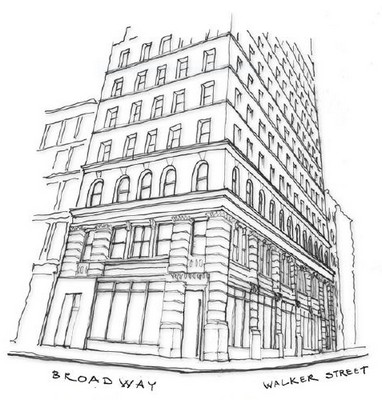
395 Broadway at Walker Street, New York City (Tribeca)

21/01/22

Gallery 125 Newbury, New York - A Project Space Helmed by Arne Glimcher

Gallery 125 Newbury, New York
A Project Space Helmed by Arne Glimcher

Talia Rosen, Arne Glimcher, Kathleen McDonnell, Oliver Shultz 
Photo: 2022 © Luca Pioltelli, courtesy Pace Gallery

Gallery 125 Newbury
Gallery 125 Newbury
Courtesy Pace Gallery

Pace Gallery announces the establishment of Gallery 125 Newbury, a new project space in New York helmed by Pace’s Founder and Chairman Arne Glimcher. Located at the corner of Broadway and Walker Street in New York’s Tribeca neighborhood, the enterprise is named for the address of Pace’s first-ever gallery space, which opened in Boston in 1960. Gallery 125 Newbury will operate in association with Pace, which is led by President and CEO Marc Glimcher. The new gallery is set to open in fall 2022.

Guided by Arne Glimcher’s six decades of pioneering exhibition-making, the enterprise, situated in a space formerly occupied by the Pearl River Market, will present up to five exhibitions per year with a focus on thematic group shows and emerging artists, including artists both within and beyond Pace’s program; Gallery 125 Newbury will eschew the traditional gallery model in favor of a more nimble and flexible structure focused on developing cutting-edge exhibitions with a global perspective.

Gallery 125 Newbury will serve as an expanded platform for Arne Glimcher’s curatorial vision, which he will develop in tandem with his ongoing work at Pace. Maintaining his current role with Pace and his office space at the gallery’s 540 West 25th Street location, Arne Glimcher will continue to organize selected exhibitions at Pace’s global locations, including forthcoming solo exhibitions of Robert Irwin, Richard Tuttle, and Sam Gilliam, and he and his team will also continue working closely with Pace’s other artists. The inauguration of Gallery 125 Newbury represents Arne Glimcher’s return to his roots in hands-on curatorial experimentation, where his interest has always been directed.
Arne Glimcher says: “When I started the Pace Gallery 60 years ago, it was a tiny little place on Newbury Street in Boston. I’m dazzled every day by what the gallery has become and our incredible artists, and I’m thrilled to continue to play a role in Marc’s vision. Gallery 125 Newbury is about expanding my own story at the same time, about going full circle, back to the little gallery I once had, back to being hands-on in every facet of making shows and working with artists and connecting with the public, which is the part of it that I really love.”
Marc Glimcher says: “I’m thrilled that Gallery 125 Newbury will extend the possibilities of Pace’s programming. My father has a strong history of making iconic exhibitions. Decades ago, he created the blueprints that commercial galleries still follow in presenting their artists’ work. Gallery 125 Newbury offers Arne a space to further explore his inimitable personal vision.”
Gallery 125 Newbury will be housed in a 3,900 square-foot space with 17-foot ceilings. Prior to the enterprise’s opening, the interior space will be fully renovated by architects Enrico Bonetti and Dominic Kozerski, of the firm Bonetti/Kozerski, which designed Pace’s eight-story gallery in New York’s Chelsea neighborhood. Keeping with the character of Tribeca, the space will retain some elements of the structure, including its original ceilings. 

The Gallery 125 Newbury team will include Kathleen McDonnell, Talia Rosen, and Oliver Shultz, who will continue to serve as members of Arne Glimcher’s existing team at Pace as well as directors of the new space.

ARNE GLINCHER is the founder and chairman of Pace Gallery, which he established in Boston in 1960. In the early years of the gallery, which opened its first New York space in 1963, Glimcher championed artists including Louise Nevelson, Agnes Martin, Robert Rauschenberg, Jean Dubuffet, Lucas Samaras, Chuck Close, and Claes Oldenburg, as well as pioneers of the Light and Space movement James Turrell and Robert Irwin. His decades-long relationships with these and other artists cemented the gallery’s position as a leading and boundary-pushing institution. Over the course of his career, Arne Glimcher has become one of the most prominent and prolific figures in the international art world, and Pace now occupies nine locations worldwide. Among the films Glimcher has directed are The Mambo Kings (1992), which received an Academy Award nomination, Just Cause (1995), and Picasso and Braque Go to the Movies (2008). He also produced Gorillas in the Mist (1988), which received five Academy Award nominations, and the documentary White Gold (2013). Arne Glimcher is chairman of the board of directors of the African Environmental Film Foundation, a nonprofit organization dedicated to the production and distribution of films about environmental issues in Africa for the people of Africa.

PACE

15/01/18

Louise Nevelson @ Pace Gallery, New York

Louise Nevelson: Black & White
Pace Gallery, New York
February 1 – March 3, 2018 


Pace Gallery presents an exhibition of works by LOUISE NEVELSON, marking the gallery’s twenty-seventh solo show for the artist since 1963. The exhibition brings together 20 of Louise Nevelson’s iconic black and white painted wood sculptures, wall reliefs, and installations from the late 1950s through the late 1980s. A full-color catalogue accompanies the exhibition.

A highlight of the exhibition is the monumental installation Dawn’s Presence – Three (1975–80), the artist’s only complete white environment held in private hands. A leading Abstract Expressionist who pioneered site-specific and installation art, Louise Nevelson is renowned for majestic monochromatic works, which are comprised of wooden materials found in the area surrounding her studio. She transformed these castaways by unifying and coating them in a new, monochromatic paint surface. Dawn’s Presence – Three stands at over ten feet tall by over ten feet wide and encompasses ten interrelated elements. It will be presented in the company of additional white sculptures from the same body of work – Dawn’s Staff (1969–1975) and Dawn’s Landscape XXXII (1975).

An architect of light and shadow, Louise Nevelson’s practice will be illuminated in Pace’s joint presentation of both black and white works together. The white sculptures metaphorically employ the light of dawn and expose all of their fragments by casting subtle shade, in stark contrast to Nevelson’s black sculptures, which absorb light and enfold their key elements in mystery. Among the black wall reliefs and standing wall sculptures featured in the exhibition, a particularly striking work will be the monumental installation Untitled (Sky Cathedral) (1964), encompassing 16 distinct elements and measuring nearly 11 feet tall and over 8 feet wide.
“It has been my privilege to work with Louise Nevelson and her estate over the last 55 years,” says Arne Glimcher, Pace Gallery Founder. “By joining the new Pace Gallery in 1963, Nevelson, who was already internationally renowned, established Pace as an important addition to the exciting New York gallery scene of the 60’s. We’re honored to continue to work closely with the estate today and present such incredible work to new audiences.”
PACE GALLERY
537 West 24th Street, New York, NY 10011
www.pacegallery.com


22/09/13

Jean Dubuffet, Pace Gallery, New York - Excursions en no man's space Exhibition

Jean Dubuffet 
Excursions en no man's space
Pace Gallery, New York
September 10 – October 26, 2013

Pace presents Excursions en no man’s space, a solo exhibition of Jean Dubuffet’s drawings made between 1975 and 1985. The exhibition is accompanied by a catalogue including an essay by Jean Dubuffet’s art dealer and long-time friend, Arne Glimcher. The gallery has presented work by Jean Dubuffet since 1968.

Excursions en no man’s space features 52 works, mostly black and white but concluding with the primaries: red, yellow and blue. They range in content from figurative to abstract and elemental forms. Made during the last ten years of his life and career, these drawings are “landscapes of the mind,” a space between being and fantasy. In Jean Dubuffet’s own words, these works are “excursions in no man’s space.”

In 1974, after 12 years spent on his Hourloupe cycle (the artist’s longest-running series), Dubuffet began new experiments, expanding his color palette and brushwork and revisiting techniques such as collage from earlier periods in his career. These late drawings are intimate in scale (ranging in size from 20 by 27 1/2 inches to 9 13/16 by 8 11/16 inches) compared to Dubuffet’s other late projects such as his expansive Théâtres de Mémoire [Theaters of Memory], yet embody the same structural approach.

Jean Dubuffet’s black and white drawings, in particular his Conjectures [April 16, 1975 – May 29, 1975], Memorations [September 2, 1978 – January 5, 1979] and Situations [April 23, 1978 – April 24, 1980] series contain cut-out figurative imagery collaged into their surrounding landscape. In some works, the ground appears as a patchwork of patterns, while other works show figures of people, cars and trees enmeshed in a network of furiously scrawled lines. In his essay Arne Glimcher writes, “One of the signatures of Jean Dubuffet’s practice is the annihilation of hierarchical values, reflected in his construction of an art that rebels against consensus societal valuations.”

The color drawings, Argument and Activation, made between 1983 and 1985, mirror the two final series of paintings for Jean Dubuffet, Mires [Kowloon] and Non-Lieux. In both series, the artist returns to a color palette and eliminates the reference imagery of cutout characters. Glimcher writes, “They are landscapes of the mind in which there is no harmony, no reason, no hierarchical values, and at least for Dubuffet the end of picture making...”

JEAN DUBUFFET (1901–1985) was one of the most influential painters of the twentieth century. A student of the Académie Julian in Paris, he left school in 1918 to pursue an independent form of art education. Like many of his generation in Europe in the wake of World War II, Dubuffet sought artistic authenticity outside of tradition, in the margins of society. He looked to the art of prisoners, psychics, the uneducated, and the insane to liberate his own creativity and coined the term “Art Brut,” a predecessor to outsider art of the late 1940s. In his lifetime, Jean Dubuffet was the subject of 12 major museum retrospectives including The Museum of Modern Art (1962), which traveled to The Art Institute of Chicago and the Los Angeles County Museum of Art; Tate Gallery, London (1966); Stedelijk Museum, Amsterdam (1966); Museum of Fine Arts, Dallas (1966), which traveled to the Walker Art Center, Minneapolis; Musée des Beaux-Arts, Montreal (1969-70); and the Solomon R. Guggenheim Museum (1973, 1981). In 1973, Dubuffet established a foundation to preserve and realize his monumental works. The foundation is located in Paris and in Périgny-sur-Yerres, where the Closerie Falbala, a monumental sculpture and the artist’s major work (designated a historic monument in 1998), is situated near the former sculpture studios that house the artist’s architectural models. The Villa Falbala, which Dubuffet built to shelter his Cabinet Logologique, stands at the center of this enormous walled simulacrum of a garden. Paintings and elements from the artist’s production of Coucou Bazar, performed in 1973 at the Solomon R. Guggenheim Museum, New York, are also on view in Périgny-sur-Yerres. Today, Jean Dubuffet’s work can be found in more than 60 public collections worldwide including the Hirshhorn Museum and Sculpture Garden, Washington D.C.; The Metropolitan Museum of Art, New York; Musée National d'Art Moderne, Centre Georges Pompidou, Paris; The Museum of Modern Art, New York; Solomon R. Guggenheim, New York; Stedelijk Museum, Amsterdam; and the Tate Gallery, London. Pace Gallery has represented Jean Dubuffet since 1968.

PACE GALLERY
32 East 57th Street, New York, NY 10022