Showing posts with label Marc Glimcher. Show all posts

02/07/25

Claes Oldenburg @ Pace Gallery, Tokyo - "いろいろ / This & That" Exhibition

Claes Oldenburg 
いろいろ / This & That
Pace Gallery, Tokyo
July 17 – August 23, 2025

Claes Oldenburg
Claes Oldenburg 
Geometric Mouse--Scale B, 1970-72 
© Claes Oldenburg, courtesy Pace Gallery

Claes Oldenburg
Claes Oldenburg
Miniature Soft Drum Set, 1969 
© Claes Oldenburg, courtesy Pace Gallery 

Pace presents This & That, an exhibition of work by American artist CLAES OLDENBURG, at its Tokyo gallery. Bringing together sculptures and prints that exist in series created by the artist between the 1960s and mid 2000s, this lively survey showcases the importance of multiplicity in Oldenburg’s practice, inviting visitors to immerse in the artist’s madcap world and uncover resonances and touchpoints to Japanese culture. Curated by Pace CEO Marc Glimcher and Maartje Oldenburg—daughter of Claes Oldenburg and his wife and longtime collaborator Coosje van Bruggen, and head of the artists’ estates—the exhibition is organized as part of the gallery’s 65th anniversary year celebration. It is also be Pace’s first major presentation of Oldenburg’s work since the gallery announced its global representation of the Claes Oldenburg estate, the Coosje van Bruggen estate, and the Oldenburg and van Bruggen estate, continuing its commitment to sharing the intertwining legacies and individual achievements of the two artists with its global
audience. 

The Japanese title of the gallery’s presentation is いろいろ (“Iroiro”), which roughly translates to “various,” “variety,” or “miscellany.” Suggesting a mixed-bag or a hodgepodge, “Iroiro” can also be written as 色々, which comprises a repetition of the Kanji character 色 (“Iro”). “Iro” literally means “color,” but it typically refers to the color or hue of things. It can also suggest an object’s general appearance, and even more metaphorically, can refer to the sensuality of a thing (as in the occasional English usage of the word “colorful”). “Iroiro” thus echoes Oldenburg’s almost passionate involvement with banal objects, the way he lovingly coaxed a vast array of ordinary, miscellaneous things from their humdrum existence in the normal course of life—the "this and that”—into subject-matter for serious artistic inquiry.

In a broad sense, Pace’s show sheds light on Oldenburg’s fascination with multiplicity, the act of artistic reproduction, and the mutability of imagery. Widely known for the monumental artworks he realized around the world with Coosje van Bruggen, he also created many domestically sized objects across a wide variety of media throughout his career. “The multiple object,” he once said, “was for me the sculptor’s solution to making a print.”

This exhibition in Tokyo is the first major presentation of Oldenburg’s work in the Japanese capital since 1996. The artist’s only other solo show in the city took place in 1973 at Minami Gallery. Notably, he debuted his large-scale Giant Ice Bag (1970) sculpture, which is animated by mechanical and hydraulic components, in the US Pavilion at Expo 70 in Osaka. Since 1995, Claes Oldenburg and Coosje van Bruggen’s large-scale sculpture Saw, Sawing has been on public view outside the Tokyo International Exhibition Center. Oldenburg’s sculptures Inverted Q (1977–88) and Tube Supported by Its Contents (1983) can be found in the collections of the Yokohama Museum of Art and the Utsunomiya Museum of Art, respectively.

Claes Oldenburg—who presented his first solo exhibition with Pace in 1964—was a leading voice of the Pop Art movement who, over the course of more than six decades, redefined the history of art with his sculptures, drawings, and colossal public monuments that transform everyday objects into idiosyncratic entities. He rose to prominence in New York in the late 1950s and early 1960s, when he was among the artists staging Happenings—a hybrid art form incorporating installation, performance, and other mediums—on the city’s Lower East Side. Collaborative and ephemeral, these environments included The Street (1960) and The Store (1961)—his first solo presentation with Pace featured works from The Store. Following his work with props in these Happenings, Claes Oldenburg began creating his iconic soft sculptures, which charted new frontiers in the medium, upending its traditional contents, forms, and materials.

Claes Oldenburg and Pace’s Founder and Chairman Arne Glimcher maintained a friendship for 60 years, working closely from the early years of the artist’s career up until his death in 2022. Since the 1960s, Pace has presented Oldenburg’s work in some 30 exhibitions and produced seven catalogues dedicated to his practice. The gallery also supported Oldenburg and van Bruggen’s creation of the large-scale sculptures Typewriter Eraser, Scale X (1998-99), which is part of the collection of the National Gallery of Art in Washington, D.C., Balzac Pétanque (2002), which is in the collection of the High Museum of Art in Atlanta, and Floating Peel (2002) at the Cantor Center for Visual Arts at Stanford University, among many other projects.

Claes Oldenburg
Claes Oldenburg
N.Y.C. Pretzel, 1994 
© Claes Oldenburg, courtesy Pace Gallery

Among the works in the gallery’s Tokyo show are some 60 multiples of Oldenburg’s painted cardboard sculpture N.Y.C. Pretzel (1994)—these works will be presented in a vending machine vitrine near the entrance of the gallery space. Other multiples in the exhibition include the artist’s cast plaster Wedding Souvenir (1966), his painted aluminium and brass Profiterole (1989–90), and his sewn canvas Mouse Bags (2007–17), all of which speak to his engagement with the quotidian, from the food we eat to pop cultural icons like Mickey Mouse.

In the way of larger-scale sculpture, This & That features Tied Trumpet (2004), a knotted bright yellow trumpet rendered in aluminum, plastic tubing, canvas, felt, and foam, and Miniature Soft Drum Set (1969), a set of nine sewn screen-printed elements on canvas. Another highlight is Knife Ship 1:12 (2008), an aluminum and mahogany wood reprisal of the monumental Knife Ship that Claes Oldenburg and Coosje van Bruggen presented as part of their legendary 1985 performance Il Corso del Coltello (The Corse of the Knife) in Venice, Italy—this storied, site-specific project, realized by the artists in collaboration with curator Germano Celant and architect Frank Gehry, centered around a boat in the shape of a Swiss-army knife, which was floated down the city’s canals.

Claes Oldenburg
Claes Oldenburg 
Alphabet in Form of a Good Humor Bar, 1970 
© Claes Oldenburg, courtesy Pace Gallery

A 1976 screenprint of the Knife Ship superimposed onto the image of the Guggenheim Museum in New York—an artwork that predates the performance—is also be included in This & That. Other prints on view at Pace in Tokyo will be Alphabet in Form of a Good Humor Bar (1970), which renders the alphabet in the shape of an ice cream bar; The Letter Q as Beach House, with Sailboat (1972), where Claes Oldenburg imagines the letter ‘Q’ as a towering waterfront home; and the artist’s Apple Core prints, each representative of one of the four seasons, from 1990.

Through his iterative and elastic process of translating imagery from one medium to another—and suggesting innumerable possible transformations as part of that process—Claes Oldenburg expanded the possibilities of art by inviting the viewer to look again. Taken together, the works in this exhibition reflect his uncanny ability to render the familiar strange, and to imbue magic and wonder into the most mundane of subject matter.

Maartje Oldenburg is the daughter of Claes Oldenburg and Coosje van Bruggen and is the head of the artists’ estates. A writer, editor, and lawyer, Maartje Oldenburg formally studied Japanese language, literature, and history for many years. She lived and worked in Japan in the 1990s.

Claes Oldenburg (b. 1929, Stockholm; d. 2022, New York) is renowned for his sculptures, drawings, and colossal monuments that transform familiar objects into states that imply animation and sometimes revolt. A leading voice of the Pop art movement, Oldenburg came to prominence in the New York art scene of the late 1950s and early 1960s. His seminal installations The Street (1960) and The Store (1961) launched his career, subverting artistic and institutional conventions while creating a backdrop for happenings and performances under the production name Ray Gun Theater. Initially conceiving of monumental works based on everyday items in drawings and collages, Claes Oldenburg installed his first realized outdoor public sculpture, Lipstick (Ascending) on Caterpillar Tracks (1969–74), during an antiwar protest at Yale University in 1969. He subsequently collaborated for over three decades with Coosje van Bruggen to create largescale projects across the world. Conflating notions of art and banality, and high-brow and low-brow, the investigation of objecthood spans Oldenburg’s earliest production to his work today.

PACE GALLERY TOKYO
1F; Azabudai Hills Garden Plaza-A
5-8-1 Toranomon, Minato-ku, Tokyo

21/01/22

Gallery 125 Newbury, New York - A Project Space Helmed by Arne Glimcher

Gallery 125 Newbury, New York
A Project Space Helmed by Arne Glimcher

Talia Rosen, Arne Glimcher, Kathleen McDonnell, Oliver Shultz 
Photo: 2022 © Luca Pioltelli, courtesy Pace Gallery

Gallery 125 Newbury
Gallery 125 Newbury
Courtesy Pace Gallery

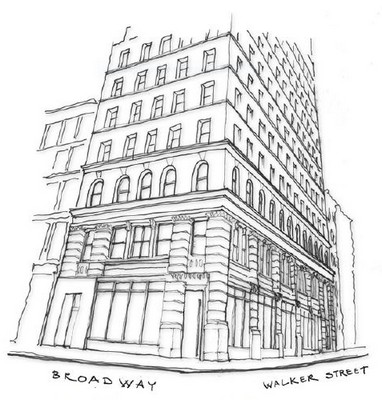
Pace Gallery announces the establishment of Gallery 125 Newbury, a new project space in New York helmed by Pace’s Founder and Chairman Arne Glimcher. Located at the corner of Broadway and Walker Street in New York’s Tribeca neighborhood, the enterprise is named for the address of Pace’s first-ever gallery space, which opened in Boston in 1960. Gallery 125 Newbury will operate in association with Pace, which is led by President and CEO Marc Glimcher. The new gallery is set to open in fall 2022.

Guided by Arne Glimcher’s six decades of pioneering exhibition-making, the enterprise, situated in a space formerly occupied by the Pearl River Market, will present up to five exhibitions per year with a focus on thematic group shows and emerging artists, including artists both within and beyond Pace’s program; Gallery 125 Newbury will eschew the traditional gallery model in favor of a more nimble and flexible structure focused on developing cutting-edge exhibitions with a global perspective.

Gallery 125 Newbury will serve as an expanded platform for Arne Glimcher’s curatorial vision, which he will develop in tandem with his ongoing work at Pace. Maintaining his current role with Pace and his office space at the gallery’s 540 West 25th Street location, Arne Glimcher will continue to organize selected exhibitions at Pace’s global locations, including forthcoming solo exhibitions of Robert Irwin, Richard Tuttle, and Sam Gilliam, and he and his team will also continue working closely with Pace’s other artists. The inauguration of Gallery 125 Newbury represents Arne Glimcher’s return to his roots in hands-on curatorial experimentation, where his interest has always been directed.
Arne Glimcher says: “When I started the Pace Gallery 60 years ago, it was a tiny little place on Newbury Street in Boston. I’m dazzled every day by what the gallery has become and our incredible artists, and I’m thrilled to continue to play a role in Marc’s vision. Gallery 125 Newbury is about expanding my own story at the same time, about going full circle, back to the little gallery I once had, back to being hands-on in every facet of making shows and working with artists and connecting with the public, which is the part of it that I really love.”
Marc Glimcher says: “I’m thrilled that Gallery 125 Newbury will extend the possibilities of Pace’s programming. My father has a strong history of making iconic exhibitions. Decades ago, he created the blueprints that commercial galleries still follow in presenting their artists’ work. Gallery 125 Newbury offers Arne a space to further explore his inimitable personal vision.”
Gallery 125 Newbury will be housed in a 3,900 square-foot space with 17-foot ceilings. Prior to the enterprise’s opening, the interior space will be fully renovated by architects Enrico Bonetti and Dominic Kozerski, of the firm Bonetti/Kozerski, which designed Pace’s eight-story gallery in New York’s Chelsea neighborhood. Keeping with the character of Tribeca, the space will retain some elements of the structure, including its original ceilings. 

The Gallery 125 Newbury team will include Kathleen McDonnell, Talia Rosen, and Oliver Shultz, who will continue to serve as members of Arne Glimcher’s existing team at Pace as well as directors of the new space.

ARNE GLINCHER is the founder and chairman of Pace Gallery, which he established in Boston in 1960. In the early years of the gallery, which opened its first New York space in 1963, Glimcher championed artists including Louise Nevelson, Agnes Martin, Robert Rauschenberg, Jean Dubuffet, Lucas Samaras, Chuck Close, and Claes Oldenburg, as well as pioneers of the Light and Space movement James Turrell and Robert Irwin. His decades-long relationships with these and other artists cemented the gallery’s position as a leading and boundary-pushing institution. Over the course of his career, Arne Glimcher has become one of the most prominent and prolific figures in the international art world, and Pace now occupies nine locations worldwide. Among the films Glimcher has directed are The Mambo Kings (1992), which received an Academy Award nomination, Just Cause (1995), and Picasso and Braque Go to the Movies (2008). He also produced Gorillas in the Mist (1988), which received five Academy Award nominations, and the documentary White Gold (2013). Arne Glimcher is chairman of the board of directors of the African Environmental Film Foundation, a nonprofit organization dedicated to the production and distribution of films about environmental issues in Africa for the people of Africa.

PACE

07/06/19

Pace Gallery's Inaugural Exhibitions at New Chelsea Gallery, NYC

Pace Announces Inaugural Exhibition
Program for New Flagship Chelsea Gallery Opening September 2019

PACE GALLERY'S NEW CHELSEA BUILDING
Architectural rendering of the southeast façade 
of 540 West 25th Street, New York
Courtesy of Bonetti / Kozerksi Architecture

Pace Gallery announces its inaugural season of programming for its new flagship gallery in New York City, located at 540 West 25th Street. After almost six decades of history in Manhattan, Pace will cement its commitment to Chelsea with a new global headquarters in the heart of the neighborhood. Open to the public on September 14, 2019, Pace will present a series of exhibitions throughout the new building, including: an exhibition dedicated to twentieth century master Alexander Calder occupying the first floor gallery; a show of new paintings by celebrated New York-based artist Loie Hollowell on the second floor; an installation of new work by David Hockney on the third floor; and a presentation charting the evolution of Fred Wilson’s chandelier sculptures installed on the seventh floor. The inaugural exhibition represents several firsts, including Loie Hollowell’s premiere exhibition with Pace in New York. Additional details on each exhibition, accompanying publications, and related programming will be announced over the course of the summer.
“For nearly six decades, Pace has celebrated and advanced the work of creative pioneers,” said Marc Glimcher, Pace Gallery President and CEO. “They are our inspiration, mission, and the source of our vision. Pace has designed and crafted every element of our new global headquarters to provide a vehicle for artists to tell their stories as richly as they deserve to be told and as dynamically as our communities deserve to experience them. It is an honor to inaugurate this gallery with the work of artists who have been so instrumental in creating the fabric of our program; representing both our vibrant history and our exciting future.”
Pace’s new global headquarters is being developed by Weinberg Properties and designed by Bonetti / Kozerski Architecture, in close collaboration with Marc Glimcher. Spanning eight stories and measuring approximately 75,000 square feet, Pace’s new building more than doubles its current exhibition space in New York and features five distinct galleries, including both indoor and outdoor spaces. Each gallery allows for a broad range of installation styles and artistic media, with features such as an entirely column-free design, high loading capacities, and flexible lighting plans creating extraordinarily nimble galleries that can support a diverse approach to exhibition programming.

Inaugural Exhibitions

First Floor:
Alexander Calder

In close collaboration with the Calder Foundation, New York, Pace will inaugurate the 3,600-square-foot first-floor gallery with a focused exhibition dedicated to Alexander Calder. The exhibition will examine the breadth of the artist’s practice beginning in the mid-1920s and leading up to his creation in 1931 of the mobile—an unprecedented form of kinetic sculpture that created a true rupture in the trajectory of art. From his gestural Animal Sketchings and massless wire portraits of the 1920s to his abstract oil paintings of 1930 and the swift progression to motorized objects and hanging mobiles, this exhibition will capture the remarkable transition from potential to actual energy in Calder’s work and underscore his relentless pursuit of the vitality and life force in art.

Second Floor:
Loie Hollowell

The artist’s premiere exhibition with Pace in New York will take place in the new building’s second floor gallery. The exhibition will showcase a series of new large-scale paintings that continue Loie Hollowell’s investigation of bodily landscapes and sacred iconography through allusions to the human form. Drawing inspiration from artists like Agnes Pelton, Georgie O’Keefe, and Judy Chicago, Hollowell’s works abstract the most intimate parts of the human body into primal shapes, such as the mandora and the lingam, in an examination of sexuality, conception, birth, and motherhood. In each work, the artist utilizes color and dimensionality—at times manipulating the canvas with three-dimensional forms—to amplify the phenomenological presence of her corporeal compositions.

Third Floor:
David Hockney

The third-floor gallery will be dedicated to an exhibition of new work by David Hockney. This exhibition will present a 24-panel panoramic drawing and four additional individual drawings. Capturing the arrival of spring in Normandy, these works emphasize Hockney’s ability to unite multiple spatial and temporal experiences of a place into a single image. Influenced by such disparate sources as traditional Chinese scroll painting, contemporary time-based art, and the medieval Bayeux Tapestry, produced in England and housed nearby in Normandy, these new works showcase Hockney’s continued experimentation with the representation of space.

Sixth Floor:
Alexander Calder, Joel Shapiro, and Tony Smith

Offering panoramic views of the Manhattan skyline, the entire sixth floor is devoted to a 4,800 square-foot outdoor exhibition space that can accommodate large-scale sculptural installations. Partially covered by the seventh floor, the design of this space creates the sense of an outdoor room. Exhibitions on the sixth floor will rotate two to three times per year, and for the inaugural installation, Pace will present three monumental outdoor sculptures by three generations of sculptors: Alexander Calder, Joel Shapiro, and Tony Smith. 

Seventh Floor:
Fred Wilson

The seventh-floor exhibition will showcase the evolution of Fred Wilson’s celebrated chandelier sculptures, which the artist began in 2003 when he represented the United States at the 50th Venice Biennale with Speak of Me as I Am. Since then, Wilson’s Murano glass chandeliers, with their evolving shifts in scale, materials, and complexity, have become vehicles for the artist’s meditations on blackness, death, and beauty. Installed hanging from the gallery’s 19-foot-high ceilings, the presentation will include five chandelier sculptures from the artist’s first to his most recent, conceived for the 15th Istanbul Biennial in Fall of 2017.

Looking Ahead to 2019 and 2020

Taking full advantage of the dynamic programming the new building will support, Pace is planning a robust series of exhibitions over the course of 2019 and 2020 and will launch a new interdisciplinary series of live and moving-image programming.

In the late fall of 2019, Pace will present exhibitions dedicated to Mary Corse on the first floor; Chinese painter Li Songsong on the second; and longstanding gallery artist Richard Tuttle on the third. Corse’s exhibition of new paintings will be her first with the gallery in New York since joining Pace in 2018.

Looking ahead to 2020—the 60th anniversary of the gallery—Pace’s new headquarters will host major exhibitions by a diverse range of the gallery’s artists, including debut New York shows for new additions to Pace, such as Lynda Benglis and Arlene Shechet, as well as exhibitions dedicated to pioneers of the twentieth and twenty-first centuries, such as Jean Dubuffet, Isamu Noguchi, and Robert Ryman.

Pace is a leading contemporary art gallery representing many of the most significant international artists and estates of the twentieth and twenty-first centuries. Under the leadership of President and CEO Marc Glimcher, Pace is a vital force within the art world and plays a critical role in shaping the history, creation, and engagement with modern and contemporary art. Since its founding by Arne Glimcher in 1960, Pace has developed a distinguished legacy for vibrant and dedicated relationships with renowned artists. As the gallery approaches the start of its seventh decade, Pace’s mission continues to be inspired by our drive to support the world’s most influential and innovative artists and to share their visionary work with people around the world.

Pace advances this mission through its dynamic global program, comprising ambitious exhibitions, artist projects, public installations, institutional collaborations, and curatorial research and writing. Today, Pace has nine locations worldwide: two galleries in New York; one in London; one in Geneva; one in Palo Alto, California; one in Beijing; two in Hong Kong; and one in Seoul. 

PACE GALLERY
www.pacegallery.com