Showing posts with label announcement. Show all posts

20/09/25

2025 Arizona Artist Awards winners announced by Phoenix Art Museum: Alice Leora Briggs, Shaunté Glover, Chris Ignacio, Jan Talmadge Davids

2025 Arizona Artist Awards winners 
Phoenix Art Museum
Upcoming Exhibition(s)

Alice Leora Briggs Artwork
Alice Leora Briggs 
STYX, in progress 
Sgraffito drawing on 18 wood panels prepared 
with kaolin clay, acrylic medium binder, India ink
six acrylic on wood panels 
Courtesy of the artist

Phoenix Art Museum (PhxArt) has announced the recipients of the 2025 Arizona Artist Awards. Alice Leora Briggs was named the recipient of the 2025 Scult Family Artist Award and Chris Ignacio and Jan Talmadge Davids were named the recipients of the 2025 Sally and Richard Lehmann Emerging Artist Awards (Lehmann Emerging Artist Awards). New this year is the Sette/Cohn Artist Award, established in 2024 to expand the Arizona Artist Awards program and deepen PhxArt’s support of local artists. Shaunté Glover was named the inaugural recipient. As part of the awards, each artist receives a lifetime Membership to Phoenix Art Museum as well as funds to support their artistic practice. Briggs, Ignacio, and Talmadge Davids will also have the opportunity to exhibit their work in solo and group exhibitions at the Museum premiering in summer 2026.
“We are thrilled to announce this year’s Scult, Lehmann, and Sette/Cohn Artist Awards recipients, in recognition of their artistic contributions to our state’s robust arts and culture landscape,” said Jeremy Mikolajczak, the Museum’s Sybil Harrington Director and CEO. “Each of these artists has built a dynamic, thoughtful practice that speaks to their own lived experiences, communities, and perspectives on identity, connection, and the larger human condition. We are honored to support their work as part of our ongoing commitment to amplifying the voices of Arizona-based artists through our annual Artist Awards program, and we are grateful to the Scult family, the Lehmann family, the Cohn family, Lisa Sette, and Artlink for their generosity and partnership in strengthening those efforts.” 

“I offer my heartfelt congratulations to Alice, Chris, Jan, and Shaunté as our newest cohort of Arizona Artist Awards recipients,” said Christian Ramírez, Cohn Assistant Curator of Contemporary Art and Director of Engagement at Phoenix Art Museum. “These artists have all built multifaceted practices, and their work stands as a testament to the strength of the artistic community here in Arizona. I look forward to working with Alice, Chris, and Jan as we begin planning for their forthcoming exhibitions, which will be designed to engage our community with their evocative works and wide-ranging perspectives, and I look forward to seeing how Shaunté utilizes this award opportunity to support her artistic growth.” 
Alice Leora Briggs: Scult Family Artist Award

Each year, Phoenix Art Museum recognizes a mid-career Arizona-based artist with the Scult Family Artist Award. Eligible candidates must have resided in Arizona for a minimum of four consecutive years and are nominated by a group of curators, museum directors, and other arts professionals from across the state. Their candidacy is evaluated based on their demonstration of artistic excellence, active creation and exhibition of new work, and career-spanning evolution. Following a robust review process, a jury of curators, art scholars, artists, and other experts and professionals in the field from across the country selects the recipient. The Scult Family Artist Award includes monetary support of $20,000 and an invitation to present a solo exhibition of new and past work at the Museum. The 2025 Scult Artist Award jury included Lana Meador, Associate Curator of Modern and Contemporary Art, San Antonio Museum of Art; Olivia Miller, Executive Director, Jordan Schnitzer Museum of Art at the University of Oregon; Ann Morton, 2019 Scult Family Artist Award recipient; Christian Ramírez, Cohn Assistant Curator of Contemporary Art and Director of Engagement, Phoenix Art Museum; and Jeff Scult.

Alice Leora Briggs Photo
Alice Leora Briggs 
Photo by the artist

The 2025 Arlene and Morton Scult Artist Award recipient is Alice Leora Briggs. Born in an oil boomtown in West Texas, Briggs grew up in Idaho’s Snake River Valley and is now based in Tucson, Arizona. Through her practice, she investigates human frailties through drawings, woodcuts, letterpress broadsides, site-specific installations, and books. Her work has been featured in more than 50 solo exhibitions and is represented in more than 35 public collections, including those of Phoenix Art Museum; Crystal Bridges Museum of American Art; Fine Arts Museums of San Francisco; Museum of Fine Arts Houston; Library of Congress; Oxford’s Bodleian Library; and Yale’s Beinecke Rare Book and Manuscript Library.  Her publications include Dreamland: The Way Out of Juárez (2010); an illuminated manuscript-police blotter created with writer Charles Bowden; Abecedario de Juárez: An Illustrated Lexicon (2022) produced with photojournalist Julián Cardona; and The Room, a portfolio of woodcuts created with U.S. poet laureate Mark Strand. Briggs was a Fulbright Scholar at the Academy of Fine Arts and Design in Bratislava, Slovakia, and received a Guggenheim Fellowship in 2020. She received her MFA from the University of Iowa and is represented by Evoke Contemporary in Santa Fe, New Mexico, and Etherton Gallery in Tucson, Arizona.  

Chris Ignacio and Jan Talmadge Davids: Lehmann Emerging Artist Awards

The Lehmann Emerging Artist Awards foster the creative practices and careers of emerging Arizona-based artists. Candidates must have resided in Arizona for a minimum of one year and are invited to apply through an annual open call hosted by Artlink, a non-profit organization that has supported and amplified Arizona artists and community-based art events and initiatives for more than 30 years. Recipients receive $10,000 in monetary support and the opportunity to present a joint exhibition at the Museum with fellow Lehmann awardees. The 2025 Lehmann Emerging Artist Awards jury was also assembled by Ramírez and included Ramírez; Lana Meador, Associate Curator of Modern and Contemporary Art, San Antonio Museum of Art; Olivia Miller, Executive Director, Jordan Schnitzer Museum of Art at the University of Oregon; Ann Morton, 2019 Scult Family Artist Award recipient; and Sally Lehmann. 

Chris-Ignacio Photo
Chris Ignacio
Photo by Sequoyah Wildwyn Dechter

The Museum has named Chris Ignacio and Jan Talmadge Davids as the recipients of the 2025 Lehmann Emerging Artist Awards. Based in Phoenix, Chris Ignacio is a Filipino-American puppeteer, producer, educator, and interdisciplinary artist whose work explores the intersection of voice, technology, and identity. He began his puppetry career in New York in 2012, training with experimental artists at La MaMa and working across theater, community arts, and livestream media. In 2023, he made his debut at the Metropolitan Opera as a puppeteer in Florencia en el Amazonas, directed by Mary Zimmerman. He has also premiered original puppetry works at New York theaters including La MaMa, The Tank, and The Brick, and has toured both nationally and abroad. In Phoenix, Ignacio has served as a media designer for major institutions such as Ballet Arizona, Arizona Broadway Theater, Arizona Opera, and Childsplay. His original projects, including those featured in exhibitions at Vision Gallery and Mesa Arts Center, center community collaboration, particularly with young people or people with limited arts exposure. He holds an MFA in Theatre/Interdisciplinary Digital Media from Arizona State University (ASU), where he now teaches motion capture and 3D animation. Ignacio also serves as creative producer for the T. Denny Sanford Harmony Institute at ASU. 

Jan Talmadge Davids Photo
Jan Talmadge Davids
Photo courtesy of the artist

Jan Talmadge Davids works in clay and mixed media to explore landscapes of her childhood and their local  ecologies and to articulate ideas of place-making. Through installation and material sensitivities, she invites the viewer to engage in the ideas of fragility and vulnerability. Talmadge Davids was born in Tucson, Arizona, spending her youth in the southeastern part of the state. She attended the University of Arizona, California State University at Long Beach, and then came from Los Angeles to pursue her MFA at the Herberger School of Art and Design, where she found the opportunity to reconcile her past with her present, which is embedded in the desert landscape. Her work has been shown at the Los Angeles Municipal Art Gallery; The Carolyn Campanga Klefeeld Contemporary Art Museum in Long Beach, CA; Tempe Center for the Arts; eye lounge; The Tucson Museum of Art; and Art d’Core Gala.

Shaunté Glover: Sette/Cohn Artist Award

Established in 2024, the Sette/Cohn Artist Award was created to expand PhxArt’s Arizona Artist Awards program.  The new $5,000 prize is awarded to an emerging Arizona artist selected from the Lehmann Emerging Artist Award application pool as part of a five-year initiative dedicated to supporting arts engagement and strengthening community partnerships. It is named in honor of Lisa Sette, who has supported and represented Arizona-based artists, both through her gallery and personally, for more than 40 years, and Lee and Mike Cohn, longtime Museum supporters who in 2023 provided the seed funding to launch the Phoenix Art Museum Education and Engagement Excellence Fund and have extended their generosity to support Arizona-based artists. The award’s recipient is selected by Christian Ramírez, Cohn Assistant Curator of Contemporary Art and Director of Engagement, Phoenix Art Museum; Olga Viso, Selig Family Chief Curator and Director of Curatorial Affairs, Phoenix Art Museum; Lee and Mike Cohn; and Lisa Sette. 

Shaunté Glover Photo
Shaunté Glover
Photo courtesy of the artist

The inaugural 2025 Sette/Cohn Artist Award recipient is Shaunté Glover. Glover is a multidisciplinary artist based in Phoenix, Arizona. Her creative journey spans photography, film, printmaking, and sculpture, exploring identity and representation to use art as a catalyst to increase visibility, strengthen community engagement, and amplify the voices of marginalized communities, particularly those of Black women. Rooted in her upbringing in South Phoenix, Glover’s work draws from memories of childhood, basketball, family, and everyday neighborhood life. She combines these influences into layered visual narratives that reflect lived experience and cultural nuance. 

PHOENIX ART MUSEUM
1625 North Central Avenue, Phoenix, AZ 85004 

24/07/25

Susannah Phillips @ Bookstein Projects, NYC - Exhibition of new paintings and works on paper

Susannah Phillips: New Work 
Bookstein Projects, New York
September 18 – October 31, 2025

Bookstein Projects announces an exhibition of new paintings and works on paper by Susannah Phillips. This is the artist’s eighth solo show with the gallery.

SUSANNAH PHILLIPS was born in 1952 in Boston, Massachusetts but was raised in London. She attended the Slade School of Fine Art in London (1970-74), studying under William Coldstream and Euan Uglow. Her paintings have been in exhibitions in London, New York, Montreal, Aspen, CO and Provincetown, MA, and are included in numerous private collections. In 2014 and 2017, she was awarded the Josef and Anni Albers Foundation Residency. The artist lives and works in New York City. 

Reception: Thursday, September 18th from 6:00 – 8:00 PM

BOOKSTEIN PROJECTS
39 East 78th Street, New York, NY 10075 

17/07/25

2025 CMCA Biennial Artists Exhibition - Center for Maine Contemporary Art, Rockland

2025 CMCA Biennial Artists Exhibition
Center for Maine Contemporary Art, Rockland
October 4, 2025 - January 12, 2026

2025 CMCA Biennial

The Center for Maine Contemporary Art (CMCA) announces that 29 artists have been selected to participate in its 2025 Biennial. The exhibition will be installed across all 5,500 square feet of the museum’s galleries and be on view from October 4, 2025 to January 12, 2026. CMCA’s Biennial is the longest-running statewide juried exhibition in Maine and highlights the latest developments in contemporary art by Maine-based and connected artists. The 29 artists were selected from an applicant pool of over 450 artists by distinguished jurors Tom Keyes, Keith Fox, and William Hathaway. A free opening reception will take place on Saturday, October 4 from 3-5 pm.

2025 CMCA Biennial Artists: Meg Alexander, Steve Bartlett, Jennifer Brou, Kristy Cavaretta, Thomas Connolly, Sarah Faragher, Gabriel Frey, Grace Hager, Sarah Haskell, Emma John, Mark Johnson, Alice Jones, Dustan Knight, Ben Levine, Kathryn Lynch, Janice Moore, James Mullen, Winslow Myers, Colin Page, Mallie Pratt, Alison Rector, LJ Roberts, David Row, Carol Shutt, Gail Spaien, Sarah Szwajkos, Kathy Weinberg, Ellen Weitkamp, David Wilson

CENTER FOR MAINE CONTEMPORARY ART
21 Winter Street, Rockland, Maine, 04841

22/03/25

Mario R. Rossero: New Director of The Andy Warhol Museum

Mario R. Rossero
New Director of The Andy Warhol Museum

Mario R. Rossero
Mario R. Rossero

Carnegie Museums of Pittsburgh announced that Mario R. Rossero has been named the new director of The Andy Warhol Museum and vice president of Carnegie Museums. Rossero is currently executive director of the National Art Education Association (NAEA), the leading professional membership organization for visual arts, design and media arts educators. Before joining NAEA, he served as senior vice president of education for the Kennedy Center in Washington, D.C., held a variety of leadership positions in Chicago Public Schools and served as the senior program officer for arts education at Pittsburgh Public Schools. A native of the Pittsburgh region, Mario R. Rossero began his career as an artist educator at The Warhol and an art teacher at Shaler Area School District. He will join the museum on March 31.
“This is really a full-circle moment for Mario and The Warhol, where Mario began his career just three years after the museum opened in 1994,” said Steven Knapp, president and CEO of Carnegie Museums. “While taking on increasingly complex leadership roles throughout his impressive career, Mario has maintained a sincere and infectious enthusiasm for the mission of the arts, which includes making innovation and creativity more accessible to all. In each of his roles, he has excelled as a collaborative leader and a community convener, and we’re delighted to welcome him back to Pittsburgh and The Warhol.”
While executive director of the NAEA, which has more than 15,000 members in the United States and 25+ foreign countries, Mario R. Rossero and his team won an $8.5 million U.S. Department of Education grant to transform arts education in the United States by partnering with music, dance and theater education associations to create collaborative arts learning communities across the country. In his role as senior vice president for education at the Kennedy Center, he led a team of 60 people and 35 programs that reached 1.4 million students and educators worldwide.

Mario R. Rossero joined the Kennedy Center after serving in a variety of leadership roles with Chicago Public Schools. As chief of core curriculum, he provided leadership and strategy to offer a robust education for all students, including in the fields of literacy, mathematics, science, social science, the arts and global citizenship. As director of arts education, he led the charge to increase access to all art forms, developing for the first time a district-wide Arts Education Plan that encompassed 700 schools and 400,000 students.
“I am thrilled to join The Warhol at this unique moment in time to build upon the museum’s history and look towards a future of increased community engagement and creative innovation, all rooted in Warhol’s art, life and legacy,” Mario R. Rossero said. “For me this is a homecoming, returning to an institution that played a pivotal role in my early career, shaping my approach and trajectory as an artist, educator and organizational leader. I am excited to share lessons learned from a national lens to invest in the Pittsburgh community and to leverage the opportunity that The Pop District provides for greater sustainability and furthering Warhol’s story and impact.

“The breadth of Warhol’s portfolio—as graphic designer, boundary-pushing artist, filmmaker, music producer and pop culture celebrity—paired with his personal story as a young steel city kid making his way to New York City and the international art world offers so many connections for audiences of all ages, identities and interests,” Mario R. Rossero added.
“On behalf of the NAEA Board of Directors, we congratulate Mario on his new role as the director of The Andy Warhol Museum,” said Wanda B. Knight, NAEA president. “We value his leadership, vision and commitment to the visual arts, design and media arts education community—especially during his successful tenure at NAEA. We are confident that he will continue to advocate for all artists, educators and learners in the next phase of his career.”
Mario R. Rossero received a BA in art & education from Washington and Jefferson College and an MSEd in supervision and administration in visual arts from a joint program between Bank Street College of Education and Parsons School of Design.

THE ANDY WARHOL MUSEUM
117 Sandusky Street, Pittsburgh, PA 15212

05/02/25

Prints and Paintings by Edvard Munch @ Harvard Art Museums: Gift from the Collection of Philip A. and Lynn G. Straus

The Harvard Art Museums announce an extraordinary gift from the collection of Philip A. and Lynn G. Straus: sixty-two prints and two paintings by the Norwegian Master Edvard Munch (1863–1944)
Edvard Munch Artworks
Left: Edvard Munch, Two Human Beings (The Lonely Ones), 1906–8. Oil on canvas. Busch-Reisinger Museum, The Philip and Lynn Straus Collection, 2023.551. Right: Edvard Munch, Two Human Beings (The Lonely Ones), 1899. Woodcut printed in orange, yellow, black, and dark greenish blue on tan wove paper. Fogg Museum, The Philip and Lynn Straus Collection, 2023.602. Photos © President and Fellows of Harvard College
The Harvard Art Museums announce an extraordinary gift from the collection of Philip A. and Lynn G. Straus; the gift comprises sixty-two prints and two paintings by Edvard Munch as well as one print by Jasper Johns. The bequest is a final act of generosity from the Strauses following a relationship with the museums that began in the 1980s and that includes multiple gifts of artworks over the years; the support of a 1990s-era expansion, renovation, and endowment of the museums’ conservation center; and the endowment of specific conservation and curatorial positions. The Spring 2025 exhibition Edvard Munch: Technically Speaking will feature many of the recently gifted works.

The works by Norwegian artist Edvard Munch (1863–1944) in the Strauses’ bequest join an important concentration of paintings and prints by the artist already at Harvard and build upon multiple past gifts and assisted purchases of Munch’s work by the couple—117 works altogether. The total number of works by the artist in the Harvard Art Museums collections is now 142 (8 paintings and 134 prints), constituting one of the largest and most significant collections of works by Munch in the United States.

Lynn G. and Philip A. Straus (Harvard Class of 1937) have been among the Harvard Art Museums’ most generous benefactors. Both were dedicated patrons of the arts and education, supporting libraries, museums, and institutions affiliated with early childhood education, civil rights, and human services. In 1969, the couple purchased their first print by Munch, Salome (1903), an acquisition that marked the start of their passion for the artist’s work. Following a commitment to a $7.5 million gift in 1994, the museums’ conservation center—the oldest fine arts conservation treatment, research, and training facility in the United States—was renamed the Straus Center for Conservation and Technical Studies. The couple have also supported vital conservation positions of staff who specialize in works on paper, as well as curatorial internship and fellowship positions in the museums’ prints and drawings departments. Philip, a New York investment advisor and portfolio manager, passed away in 2004, and their bequest comes to Harvard following Lynn’s passing in 2023. In total, the couple gifted or enabled purchases of 128 works to the Harvard Art Museums over their lifetimes, including works by Max Beckmann, Georges Braque, Alexander Calder, Timothy David Mayhew, and Emil Nolde.
“We are immensely grateful to Philip and Lynn Straus for their generosity and stewardship over these many years,” said Sarah Ganz Blythe, the Elizabeth and John Moors Cabot Director of the Harvard Art Museums. “Their enthusiasm for the work of Edvard Munch ensures generations of students and visitors can experience and study his prints and paintings here in Cambridge. Through their distinct style of collecting Munch’s prints—seeking out and acquiring multiple images of the same theme—they created a collection that affords deep insights into the artist’s practice and is therefore a perfect match for a university museum with a strong teaching and research mission.” Sarah Ganz Blythe continued: “Their support of the conservators and conservation scientists in the Straus Center has had a transformative impact on the numerous fellows who have trained there, as well as provided a facility where every object in our collections can be cared for and scientifically researched.”
The Strauses’ recent bequest includes Munch’s iconic painting Two Human Beings (The Lonely Ones) (1906–8) and Train Smoke (1910), both of which are now in the collection of the Busch-Reisinger Museum, one of the Harvard Art Museums’ three constituent museums. These paintings join Winter in Kragerø (1915) and Inger in a Red Dress (1896), previously given to the museum by Lynn in memory of Philip in 2012.

In Two Human Beings (The Lonely Ones), a man and woman stand side by side yet still feel isolated from one another, facing toward the sea and away from the viewer, each embedded in a colorfully sedimented landscape. Edvard Munch first painted this subject around 1892 and returned to it repeatedly in his printmaking and painting thereafter. Train Smoke, which depicts nature disrupted but also dynamically animated by the Industrial Revolution, is a landscape unlike those by Munch already in the collection. Both paintings demonstrate Munch’s experimentation with color and surface texture, through his varied use of thick impasto, diluted paint drips, and even areas of bare canvas, a hallmark of Munch’s artistic legacy.
“It is hard to overestimate the significance of Munch’s painting Two Human Beings (The Lonely Ones). Capturing the tension between proximity and distance—spatial as well as emotional—the work addresses the universal theme of the human condition,” said Lynette Roth, the Daimler Curator of the Busch-Reisinger Museum at the Harvard Art Museums. “The Strauses had generously loaned their painting for the inaugural installation of the renovated Harvard Art Museums building that opened in November 2014, and we are thrilled to be able to teach with and display it alongside the other significant paintings from their collection going forward.”
Over the course of 2024, both paintings have undergone cleaning and other treatments by Kate Smith, Senior Conservator of Paintings and Head of the Paintings Lab, and Ellen Davis, Associate Paintings Conservator, both in the museums’ Straus Center. Two Human Beings (The Lonely Ones) had been varnished at some point in its history, which is not consistent with Munch’s practice of leaving his canvases without a unified glossy surface. Train Smoke needed paint stabilization and cleaning to remove atmospheric grime. After careful study, removal of the varnish and grime from the paint surface, and treatment of small areas of paint loss, the paintings are now in closer alignment with their original appearance.

The 62 prints in the Strauses’ recent bequest have entered the collection of the Fogg Museum. The majority are highly prized impressions that Munch exhibited in his lifetime, and they speak to the aesthetic he preferred for the display of his prints: some of the impressions are cut to the image, and adhered to larger, heavy brown paper, which Munch signed and often dated. Also included are multiple states of single compositions. They showcase the range of techniques the artist used in his printmaking practice: drypoint, etching, lithography, mezzotint, and woodcut, and innovations through the addition of hand-applied color such as watercolor, crayon, and oil, or printing with woodblocks sawn into pieces.
“With this bequest, the Harvard Art Museums have become an important destination for the research of Munch’s prints,” said Elizabeth M. Rudy, the Carl A. Weyerhaeuser Curator of Prints at the Harvard Art Museums. “There are innumerable ways the collection offers opportunities for teaching, exhibition, and further study. Noteworthy for its groups of versions, states, and variations of single compositions, this collection offers wide-ranging insights into Munch’s innovative practice as a printmaker.”
Highlights from the Strauses’ recent gift of prints by Edvard Munch include:

• Six prints from the series Two Human Beings (The Lonely Ones), ranging in date from 1894 to 1917, join an impression that the couple previously gifted in 1991. Together, they showcase the various intriguing woodcut and etching techniques the artist utilized and also show how he manipulated his jigsaw woodblocks to print different parts of a single work in different colors. Closely related to this group is the gift of Young Woman on the Beach (1896), which is a rare example of the artist’s brief exploration of the mezzotint technique.

• Three versions of Vampire II, dated 1895–1902 and all either hand colored or printed in color, join a black lithographic state from 1895 that the couple previously assisted with purchasing. These prints show how Edvard Munch sometimes combined lithographs with hand coloring and also used woodblocks to add color.

• Four impressions of Madonna, dated 1895–1902, join a black lithographic state and a drypoint from 1894 that the couple previously assisted with purchasing. The lithographic prints show a range of examples of hand-applied color (drawn/painted) and printed color.

• One impression of the woodcut Woman’s Head against the Shore (1899) joins two other impressions from the same year, both previous gifts from the Strauses: Woman’s Head against the Shore (1899), printed in turquoise-green and pale and dark orange inks; and Woman’s Head against the Shore (1899), printed in red and three different colors of green ink. These prints show how Munch selectively printed his jigsaw woodblocks, omitting a piece from one of the blocks (the water) in two of the impressions.

• Four different self-portraits are the first such representations of the artist to enter the collection: Self-Portrait (1895), lithograph in crayon and tusche printed in black ink; Self-Portrait with Cigar (1908–9), lithograph printed in black ink; Self-Portrait (1911–12), woodcut; and Self-Portrait with a Bottle of Wine (1930), lithograph printed in black ink.

• There are also rare examples of prints that Edvard Munch printed himself with his small hand-crank press, including Melancholy II (1898), a woodcut (sawn in three pieces) printed in black, red, blue, and yellow inks.

The Jasper Johns print included in the bequest, Savarin (1982), is a lithograph and monotype; it depicts a Savarin-brand coffee can filled with paintbrushes of various sizes. The backdrop incorporates the artist’s signature “crosshatch” work of the 1970s, which is represented in other prints by Johns in the museums’ collections. The arm shown at the bottom of the print is a reference to the skeletal arm shown in Munch’s Self-Portrait from 1895—a connection the couple noted by hanging the two prints near each other in their own home.

HARVARD ART MUSEUMS
32 Quincy Street, Cambridge, MA 02138

Updated 06-03-2025

12/10/24

ACK - Art Collaboration Kyoto 2024. Directed by Yamashita Yukako @ Kyoto International Conference Center

ACK - Art Collaboration Kyoto 2024 
Directed by Yamashita Yukako
Kyoto International Conference Center
November 1 - 3, 2024

Courtesy Art Collaboration Kyoto


ACK main venue, 2023 
Photo by Moriya Yuk

Art Collaboration Kyoto - ACK - is an art fair held in Kyoto with collaboration at its core. One of the leading art fairs in Japan specializing in contemporary art, Art Collaboration Kyoto presents unique collaborations forged between Japanese and international galleries; government and private sectors; and fine arts and other cultural spheres in Kyoto. Hosted in the Kyoto International Conference Center, the fair consists of two sections: “Gallery Collaborations”, which pairs a local Japanese gallery with its international peer in a shared booth; and “Kyoto Meetings”, which features artists with distinct connections to Kyoto. Beyond the fair, special exhibitions and public programs are held in Kyoto City.

Art Collaboration Kyoto is organized by the ACK Executive Committee, which includes the Kyoto Prefecture; Association for the Promotion of Contemporary Art in Japan; Contemporary Art Dealers Association Nippon; Culture Vision Japan Foundation Inc.; Kyoto Chamber of Commerce and Industry; and the Kyoto Convention and Visitors Bureau.

Held annually since 2021, the fourth edition of Art Collaboration Kyoto (ACK) will continue with Yamashita Yukako as Program Director, and will be held in the Kyoto International Conference Center.

Yukako Yamashita
 
ACK Program Director 
Photo by Yoshimi Ryo
Yamashita Yukako said: I am very pleased to be able to continue as ACK Program Director in 2024.
With the trust ACK has gained over the past three years, I will maintain ACK’s identity as an art fair focused on Kyoto and collaboration, while bringing something fresh and surprising to all.
ACK is committed to creating something that can only be experienced here in Kyoto in this era, together with the power of art and culture. By hosting an international art fair, we aim to raise awareness of Kyoto as an important city in the global art world, in addition to enriching the art ecosystem in Japan and beyond. While continuing to pursue these goals, we will continue to work with galleries, artists, visitors, and all of ACK's partners with the aim of further strengthening ACK’s mission.
Together with you, I hope ACK and its community here in Kyoto can make a positive impact on the international art world and society through art.
Yukako Yamashita
Photo Courtesy of ACK

About Yukako Yamashita

Born in 1988 in Tokyo to a family that runs a tea ceremony utensils business in Kyoto, Yukako Yamashita completed an MA in Art Business at Sotheby’s Institute of Art in London, then joining Sotheby’s Japan where she oversaw the sales of contemporary art. From 2017 to 2022, Yukako Yamashita was the managing director of THE CLUB, a contemporary art gallery in Tokyo, Japan. She has served as a visiting professor at Kyoto University of Arts since 2020 and was appointed Program Director of Art Collaboration Kyoto and Kyoto City Growth Strategy Promotion Advisor in 2022.

ART COLLABORATION KYOTO

Kyoto International Conference Center
Takaragaike, Sakyo-ku, Kyoto City

02/08/22

Independent 20th Century 2022 Art Fair, New York

Independent 20th Century
Battery Maritime Building, New York
September 8 - 11, 2022

Battery Maritime Building
Courtesy of Etienne Frossard and Independent New York

Independent 20th Century focuses on artists who made a significant contribution to art history between the years 1900 and 2000, yet who were uncelebrated in their day. These artists are now being championed by a generation of gallerists who are reassessing the canon to make it more inclusive and representative of our times. 

The annual event will take place at the historic Battery Maritime Building at Cipriani South Street in downtown Manhattan on September 8-11, 2022, coinciding with the fall art fair calendar. More than 30 international gallerists with museum-quality programs will be present at Independent 20th Century.  It will be the second of two fairs to take place in the organization’s 13th year.  

Social movements such as #MeToo and Black Lives Matter, and unprecedented global scares such as the pandemic, have shaken the art world and given voice to a much more diverse community of artists with a completely different historical and creative ancestry. Independent 20th century will tell the stories of these artists, who were ahead of their time and whose stories have not yet been told, through a new fair framework, and thanks to gallerists who seek to redefine art history by revisiting the past — a past that looks much more like us. 

One of the most exciting generational, social and political shifts in the contemporary art market in recent years has been the emergence of a new wave of gallerists championing a diverse set of artistic propositions, whether by living artists or by their historical forebears. Independent is launching a mission-oriented fair to provide a platform for this reexamination — to question previous assumptions about art history, and present chapters in that history that went unnoticed, generating a debate about what art history and the canon should be.  

The approach taken by this new generation of gallerists, most of whom were born after 1970, has been an inspiration to us. They have consistently supported art that falls outside the dominant canon.  Independent 20th Century will deliver an inclusive and critical space for the reassessment of women artists, artists of color, and artists from geographical territories and communities outside the major cultural capitals of the world. 

For collectors, contemporary art is constantly being redefined to include works from a variety of periods, living artists and estates. At Independent Art Fair — founded in 2010 and recognized as a launchpad for emerging artists who have gone on to achieve international fame — more than 30 percent of the 2022 edition were devoted to previously unseen or unrecognized historical art. 

At the moment, there is not a single fair that extends the notion of Contemporary art beyond 1970 to include the entire 20th century, or that is predictive of this emerging and increasingly dominant phenomenon known as Contemporary art.  The time is right to create a focused experience for collectors who are interested in work from across this widening spectrum, and who value connections between geographies, zeitgeists, and avant-garde movements. 

Matthew Higgs, Independent’s founding curatorial advisor, notes: “The ongoing, and necessary reassessment of the art historical canon is perhaps the defining characteristic of the 21st Century art world.  Independent 20th Century will seek to amplify this narrative through its focused presentations by a cross-generational community of defiantly idiosyncratic artists.”

Independent 20th Century has been conceived in close collaboration with a core group of gallerists and curatorial advisors: Alma Luxembourg, of Luxembourg + Co., London; Joseph Nahmad, of Nahmad Contemporary, New York, Gió Marconi, of Gió Marconi, Milan and Vito Schnabel, of Vito Schnabel Gallery, New York /St. Moritz.  Founder, Elizabeth Dee states, “I am inspired to work closely with this new generation to reassess the work of artists of the 20th century. Together, we are creating a completely new space for this growing network of gallerists and collectors.” 

INDEPENDENT 20TH CENTURY
Battery Maritime Building at Cipriani South Street
10 South Street, New York, NY 10004

21/01/22

Gallery 125 Newbury, New York - A Project Space Helmed by Arne Glimcher

Gallery 125 Newbury, New York
A Project Space Helmed by Arne Glimcher

Talia Rosen, Arne Glimcher, Kathleen McDonnell, Oliver Shultz 
Photo: 2022 © Luca Pioltelli, courtesy Pace Gallery

Gallery 125 Newbury
Gallery 125 Newbury
Courtesy Pace Gallery

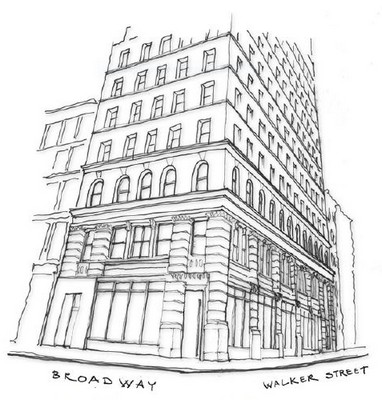
Pace Gallery announces the establishment of Gallery 125 Newbury, a new project space in New York helmed by Pace’s Founder and Chairman Arne Glimcher. Located at the corner of Broadway and Walker Street in New York’s Tribeca neighborhood, the enterprise is named for the address of Pace’s first-ever gallery space, which opened in Boston in 1960. Gallery 125 Newbury will operate in association with Pace, which is led by President and CEO Marc Glimcher. The new gallery is set to open in fall 2022.

Guided by Arne Glimcher’s six decades of pioneering exhibition-making, the enterprise, situated in a space formerly occupied by the Pearl River Market, will present up to five exhibitions per year with a focus on thematic group shows and emerging artists, including artists both within and beyond Pace’s program; Gallery 125 Newbury will eschew the traditional gallery model in favor of a more nimble and flexible structure focused on developing cutting-edge exhibitions with a global perspective.

Gallery 125 Newbury will serve as an expanded platform for Arne Glimcher’s curatorial vision, which he will develop in tandem with his ongoing work at Pace. Maintaining his current role with Pace and his office space at the gallery’s 540 West 25th Street location, Arne Glimcher will continue to organize selected exhibitions at Pace’s global locations, including forthcoming solo exhibitions of Robert Irwin, Richard Tuttle, and Sam Gilliam, and he and his team will also continue working closely with Pace’s other artists. The inauguration of Gallery 125 Newbury represents Arne Glimcher’s return to his roots in hands-on curatorial experimentation, where his interest has always been directed.
Arne Glimcher says: “When I started the Pace Gallery 60 years ago, it was a tiny little place on Newbury Street in Boston. I’m dazzled every day by what the gallery has become and our incredible artists, and I’m thrilled to continue to play a role in Marc’s vision. Gallery 125 Newbury is about expanding my own story at the same time, about going full circle, back to the little gallery I once had, back to being hands-on in every facet of making shows and working with artists and connecting with the public, which is the part of it that I really love.”
Marc Glimcher says: “I’m thrilled that Gallery 125 Newbury will extend the possibilities of Pace’s programming. My father has a strong history of making iconic exhibitions. Decades ago, he created the blueprints that commercial galleries still follow in presenting their artists’ work. Gallery 125 Newbury offers Arne a space to further explore his inimitable personal vision.”
Gallery 125 Newbury will be housed in a 3,900 square-foot space with 17-foot ceilings. Prior to the enterprise’s opening, the interior space will be fully renovated by architects Enrico Bonetti and Dominic Kozerski, of the firm Bonetti/Kozerski, which designed Pace’s eight-story gallery in New York’s Chelsea neighborhood. Keeping with the character of Tribeca, the space will retain some elements of the structure, including its original ceilings. 

The Gallery 125 Newbury team will include Kathleen McDonnell, Talia Rosen, and Oliver Shultz, who will continue to serve as members of Arne Glimcher’s existing team at Pace as well as directors of the new space.

ARNE GLINCHER is the founder and chairman of Pace Gallery, which he established in Boston in 1960. In the early years of the gallery, which opened its first New York space in 1963, Glimcher championed artists including Louise Nevelson, Agnes Martin, Robert Rauschenberg, Jean Dubuffet, Lucas Samaras, Chuck Close, and Claes Oldenburg, as well as pioneers of the Light and Space movement James Turrell and Robert Irwin. His decades-long relationships with these and other artists cemented the gallery’s position as a leading and boundary-pushing institution. Over the course of his career, Arne Glimcher has become one of the most prominent and prolific figures in the international art world, and Pace now occupies nine locations worldwide. Among the films Glimcher has directed are The Mambo Kings (1992), which received an Academy Award nomination, Just Cause (1995), and Picasso and Braque Go to the Movies (2008). He also produced Gorillas in the Mist (1988), which received five Academy Award nominations, and the documentary White Gold (2013). Arne Glimcher is chairman of the board of directors of the African Environmental Film Foundation, a nonprofit organization dedicated to the production and distribution of films about environmental issues in Africa for the people of Africa.

PACE

08/12/21

The Marvel Comics Library - Taschen and Marvel Collaboration - Inaugural volume: Spider-Man. Vol. 1. 1962–1964

The Marvel Comics Library
Spider-Man. Vol. 1, 1962–1964
Taschen, 2021

The Marvel Comics Library - Spider-Man. vol 1, 1962-1964
The Marvel Comics Library
Spider-Man. Vol. 1, 1962–1964
© 2021 MARVEL / TASCHEN

‘The Marvel Comics Library’, an exclusive, long-term collaboration between TASCHEN and Marvel, was announced yesterday. Over the next decade, Marvel’s rarest classic comics, including Spider-Man, Avengers and Captain America will be reproduced in their original glory, in extra-large format. The library offers collectors a once-in-a-lifetime opportunity to lay their hands on the world’s most desirable comics.

The inaugural volume of ‘The Marvel Comics Library’, Spider-Man. Vol. 1. 1962–1964, features the first 21 stories of everybody’s favorite web slinger, meticulously honoring the original vision of Spider-Man creators Stan Lee and Steve Ditko. An in-depth historical essay by Marvel editor Ralph Macchio, an introduction by uber-collector David Mandel, original art boards, rare photographs, and other neverbefore-seen gems make this book the ultimate tribute to the teen who redefined what it meant to be a hero, right ahead of Spider-Man’s 60th birthday.

The Marvel Comics Library Spider-Man. Vol. 1, 1962–1964
The Marvel Comics Library
Spider-Man. Vol. 1, 1962–1964
© 2021 MARVEL / TASCHEN

TASCHEN’s extra-large format, close in size to the original artworks, reveal startling new details in the work of Marvel’s most acclaimed artists. For each title in the series, the most pristine pedigreed comics have been cracked open for reproduction in close collaboration with Marvel and the Certified Guaranty Company. Rather than recolor the original production artwork (as has been done in previous decades’ reprints of classic comics), TASCHEN has attempted to create an ideal representation of these books as they were produced at the time of publication. Beginning with high grade, top-quality comics sourced with the assistance of the CGC, super-high-resolution photographs of each page were made as printed more than half a century ago, using modern retouching techniques to correct problems with the era’s inexpensive, imperfect printing. This included improved and balanced ink densities and color matching, proper registration of the four-color printing and correction of thick/thin lines resulting from the flexible plates “smudging.” The end result is a finished product — as if hot off a world-class printing press produced without economic or time-pressure constraints – tailored for readers, fans, artists and collectors alike.

Each volume features an essay by a comic book historian alongside hundreds of photos and artifacts. The books use three different paper stocks, including an uncoated and woodfree paper exclusively developed for this series that simulates the feel of the original comics.

The Marvel Comics Library - Spider-Man. vol 1, 1962-1964
The Marvel Comics Library
Spider-Man. Vol. 1, 1962–1964
© 2021 MARVEL / TASCHEN

The first 5,000 copies of Spider-Man. Vol. 1 is numbered and released as a ‘Famous First Edition’. The book is also available as a Collector’s Edition, limited to 1,000 copies featuring an aluminum print cover tipped into a leatherette-bound spine, foil embossing, and housed in a slipcase. Each book is individually numbered. The inaugural purchase of the Collector’s Edition entitles the collector to preemptively secure the same identical edition number for all forthcoming Collector’s Edition titles in ‘The Marvel Comic Library’.

The next titles in ‘The Marvel Comics Library’ series will be Avengers. Vol. 1. 1963–1965, Fantastic Four. Vol. 1. 1961–1963 and Captain America, all scheduled for release in 2022 and 2023.

TASCHEN

26/09/21

Jordan Carter Curator Dia Art Foundation

Jordan Carter
Curator at Dia Art Foundation

Dia Art Foundation announced (September 21, 2021) the appointment of JORDAN CARTER to the position of Curator. With a specialization in Fluxus and global Conceptual art of the 1960s and ’70s, Jordan Carter will play a key role in Dia’s commissions, exhibitions, acquisitions, and public programming across its eleven sites. Jordan Carter comes to Dia from the Art Institute of Chicago, where he held the position of Associate Curator of Modern and Contemporary Art. He will begin his new role in December 2021.
“Jordan Carter brings with him broad expertise in the period of art history that sits at the core of Dia’s collection. His curatorial interests also offer a vital expansion of this period and its enduring influence on contemporary art, that will be key to Dia’s programming in the coming years. We are elated to welcome Jordan to the Dia team,” said Jessica Morgan, Dia’s Nathalie de Gunzburg director.

“I am thrilled to join Dia Art Foundation and to collaborate on a program that honors the institution’s history while advancing its role as a vibrant and essential hub of radical hospitality—hosting artists, publics, and risk in ways that let the outside in,” said Jordan Carter. “I look forward to contributing to Dia’s mission of championing and expanding the histories and legacies of Minimal and Conceptual art of the 1960s and ’70s, and engaging living artists in sustained and meaningful ways that extend these stakes and dialogues into the twenty-first century.”
CURATOR JORDAN CARTER

Jordan Carter comes to Dia following a tenure of over four years at the Art Institute of Chicago, where most recently he held the position of Associate Curator of Modern and Contemporary Art. In his time at the Art Institute of Chicago, Jordan Carter curated and co-curated numerous exhibitions including Mounira Al Solh: I strongly believe in our right to be frivolous (2018); Ellen Gallagher: Are We Obsidian? (2018–19); Benjamin Patterson: When Elephants Fight, It Is the Frogs That Suffer—A Sonic Graffiti (2019); and Richard Hunt: Scholar’s Rock or Stone of Hope or Love of Bronze (2020–21). Jordan Carter is co-organizing upcoming exhibitions at the Art Institute of Chicago of the work of stanley brouwn and Shahryar Nashat. Jordan Carter is also co-curator of the exhibition Ray Johnson c/o, forthcoming at the Art Institute of Chicago. This exhibition marks the first major institutional presentation of the artist’s work since Ray Johnson: Correspondences, a 1999 retrospective at the Whitney Museum of American Art, organized by Donna De Salvo, currently Senior Adjunct Curator at Dia.

From 2015–17, Jordan Carter was a Curatorial Fellow at the Walker Art Center. Prior to his time at the Walker, he was the twelve-month Fluxus Collection Intern at the Museum of Modern Art (MoMA), New York, where he researched, catalogued, and organized displays of MoMA’s Fluxus collection. Jordan Carter has also held curatorial and research positions at the Studio Museum in Harlem and Centre Pompidou in Paris. He holds a BA from Brown University, Providence, Rhode Island, and an MA from the Courtauld Institute of Art, London, where he focused on Fluxus and global Conceptual art.

DIA ART FOUNDATION

19/01/12

Santiago Sierra Retrospective London Lisson Gallery. A major exhibition

Santiago Sierra: Dedicaced to the Workers and Unemployed 
Lisson Gallery, London
February 1st - March 3, 2012


Lisson Gallery presents a major retrospective of video work and new work by controversial artist Santiago Sierra (born 1966). The exhibition includes a timetabled cycle of performance based films shown alongside documents, photographs and a curated selection of Santiago Sierra’s shorter and less linear video works. 

New works include the recently completed No Global Tour - a film documenting the manufacture and transportation through various world cities of a monumental sculpture in the form of the word "No". Conceived to be understood in as many contexts as possible; and unchanging in form and immediate meaning, the “No” gradually assumes a complex semantic load during a journey full of eventualities, accidents and unexpected events.  A monumental “No” sculpture situated in the sculpture yard accompanies the film’s pared down minimalism presenting a powerful portrait of a humanity that is able to assert itself everywhere and at all times by forcefully saying: “No". Death Counter, a piece comprised of an LED display counting annual number of human deaths worldwide since the beginning of the year will be mounted outside the gallery.

Addressing situations of exploitation and marginalisation Santiago Sierra’s provocative works often spark controversy; especially those in which underprivileged individuals are paid for performing degrading or uncomfortable actions. Drug addicted prostitutes have received the price of a shot of heroin in exchange for having their backs tattooed 160cm Line Tattooed On 4 People (2000) - and homeless women paid the price of a night in a hostel in exchange for standing for long periods with their faces to the wall of a museum - Group Of People Facing A Wall (2002).

Santiago Sierra forces us to question the commodification of human life, exposing and challenging the structures of power that operate in our society. The essence of these works is often in the tension generated and sustained between the event or its documentation and the spectator. Sierra has created a body of work that rescues and renews the expressive power of minimalism and conceptualism, with a political charge that encourages reflection on the classical problems of Western modern and contemporary art while denouncing our current situation.

Santiago Sierra ‘In Conversation’ with Hans Ulrich Obrist
Tuesday 31 January 2012 from 12.30 to 13.30
29 Bell Street, London, NW1 5BY, UK
Free admission. Booking is essential  

_____________________


Enjoy Contemporary Art!

21/09/02

2002 Praemium Imperiale Laureates Announcement

2002 Praemium Imperiale Laureates

The recipients of the 14th Praemium Imperiale are:

Painting: SIGMAR POLKE
Sculpture:  GIULIANO VANGI
Architecture: NORMAN FOSTER
Music: DIETRICH FISCHER-DIESKAU
Theatre/film: JEAN-LUC GODARD

The artists are recognized and awarded for their achievements, for the impact they have had internationally on the arts, and for their role in enriching the global community. The five recipients each receive 15 million yen (c. $125,000), and a diploma and medal presented by honorary patron of the Japan Art Association Prince Hitachi in an awards ceremony in Tokyo. The awards ceremony will be held on October 23rd, 2002.

The Praemium Imperiale is an annual award given by the Japan Art Association for global achievement in the arts. Since its foundation in 1989, it has become a mark of the highest international distinction. The 2002 laureates join a roster of 67 artists, including David Hockney, Willem de Kooning, Robert Rauschenberg, Christo and Jean-Claude, Anthony Caro, Frank Gehry, Renzo Piano, Leonard Bernstein, Mstislav Rostropovich, Ravi Shankar, Ingmar Bergman, Akira Kurosawa, Peter Brook.

2002 PRAEMIUM IMPERIALE LAUREATES
Painting :SIGMAR POLKE
Sigmar Polke was born in Oels/Schlesien, Poland in 1941 and studied art at the Staatliche Kunstakademie in Düsseldorf under Joseph Beuys between 1961 and 1967. Polke first gained notoriety in 1963 alongside fellow student Gerhard Richter with their exhibition “Capital Realism.” Polke’s work with old prints, news photos, and comic characters has always set his work apart, politically and emotionally, both from American and British Pop Art, and from his German contemporaries.

Sculpture:GIULIANO VANGI
Giuliano Vangi was born near Florence in 1931. He began his career concentrating on abstract studies and working with crystal and metals such as iron and steel, but moved to figurative expression when he returned to Italy in 1962 after four years in Brazil. His subject is always the human figure, and aside from stone, wood, and metal, he is just as likely to use glass and pottery, gems and gold - or any other natural material. He is currently collaborating with architect Renzo Piano(Praemium Imperiale laureate 1995) on a new work for the Church of St. Padre Pio. Robert Rauschenberg(Praemium Imperiale laureate 1998) and Arnaldo Pomodoro(Praemium Imperiale laureate 1990) are also taking part in this project.

Architecture:NORMAN FOSTER
Norman Foster was born in Manchester in 1935. After graduating from Manchester University School of Architecture and City Planning in 1961, he completed a Master’s Degree in Architecture at Yale University. His architecture is universally admired for its conceptual and structural brilliance and “high-tech” beauty - a special union of technology and aesthetics that has been polished and perfected over a lifetime. His works combine advanced technology, an ingenious geometry, attention to detail, and sensitivity to ecological considerations. Recent commissions, especially the Sackler Galleries and the Great Court of the British Museum, both in London, and the new German Parliament at the Reichstag in Berlin, add a new quality to his work. Although uncompromisingly modern in character, they demonstrate a great respect for the past.

Music:DIETRICH FISCHER-DIESKAU
Dietrich Fischer-Dieskau was born in Berlin in 1925. For most of his career, he divided his time fairly equally between opera and concerts. He sang Verdi and Puccini roles as readily as Mozart, Strauss and Wagner, and sang in many contemporary operas as well. Although probably most well known for his performances of traditional lieder, Fischer-Dieskau's dedicated commitment to contemporary music is noteworthy. He participated in the first performances of works by Benjamin Britten, Samuel Barber, Hans Werner Henze, Ernst Krenek, Witold Lutoslawski, Siegfried Matthus, Winfried Zillig, Gottfried von Einem. The precisely articulated accuracy of his performances, in which text and music are presented as equal partners, established standards that endure today. He is considered one of the most influential musicians of the 20th century.

Theatre/film:JEAN-LUC GODARD
Jean-Luc Godard was born in Paris in 1930, and grew up in Switzerland. He returned to Paris in the late 1940’s to study and during this period he met Andre Bazin, Francois Truffaut, and others who would be central to the French Nouvelle Vague movement of the 1960s. He is widely recognized as one of the filmmakers who has most influenced the modern art and language of the medium. Breathless(a bout de souffle)(1959), Godard’s first full-length film was to become an epoch-making point in motion picture history. Godard continues to explore new techniques in film and video. Godard’s works, from Breathless through his most recent, Eloge de l’Amour(2001), challenge his contemporaries and also have an immense influence on artists working in many different fields.

ANNOUNCEMENT IN PARIS
The main announcement took place, with all of the new Praemium Imperiale laureates present, at the Chateau de Versailles. Mr. Raymond Barre hosted the event on behalf of the Japan Art Association. Mr. Barre serves, along with Messers.Umberto Agnelli, Edward Heath, William Luers, Yasuhiro Nakasone, and Richard von Weizsäcker, on an advisory panel to the Japan Art Association. Japan Art Association executives and advisors attended the Paris announcement.

The Japan Art Association, Tokyo

16/09/01

2001 Praemium Imperiale Laureates Announcement

2001 Praemium Imperiale Laureates

The recipients of the 13th Praemium Imperiale are:

Painting: Lee Ufan
Sculpture: Marta Pan
Architecture: Jean Nouvel
Music: Ornette Coleman
Theatre/Film: Arthur Miller

The artists are recognized and awarded for their achievements, for the impact they have had internationally on the arts, and for their role in enriching the global community. The five recipients each receive 15 million yen (c. $125,000), and a diploma and medal presented by governor of the Japan Art Association Prince Hitachi in an awards ceremony in Tokyo. The awards ceremony will be held on October 25.

The Praemium Imperiale is an annual award given by the Japan Art Association for global achievement in the arts. Since its foundation in 1989, it has become a mark of the highest international distinction. The 2001 laureates join a roster of 61 artists, including David Hockney, Willem de Kooning, Robert Rauschenberg, Christo and Jeanne-Claude, Anthony Caro, Frank Gehry, Renzo Piano, Leonard Bernstein, Mstislav Rostropovich, Ravi Shankar, Ingmar Bergman, Akira Kurosawa, Peter Brook.

2001 Praemium Imperiale Laureates
Painting: Lee Ufan
Japan-based Korean Lee Ufan has been a presence on the international art scene since the early 1970s. Profoundly rooted in philosophy of the East and West, his works offer his response to the basic problems of western art in the latter half of the 20th century. Lee's questioning of artistic methods and materials classes him among a large group of contemporaries; but his elementary forms and reduced processes and colors, his handling of time and space, connect him above all with Minimal Art and Conceptual Art. The genesis of his work is embedded in long meditative phases and profound concentration.

Sculpture: Marta Pan
Marta Pan has devoted her professional life to a pursuit of geometric simplicity, and to exploration of the themes of equilibrium and continuity. Her site-specific sculptures were pioneering in their attention to the overall landscape, to subtly changing light, and movements of water and wind. They were typically placed in natural environments and sculpture parks, but in recent years are found increasingly in urban settings as her interest shifts to urban scenery, and to the creation of public space environments. She has been very active outside of France, and her encounter with Japan, starting in 1969 with Floating Sculpture for the Hakone Open-Air Museum, was something like a mystical union. She now has about 25 major pieces in Japan that are appreciated for their abstract serenity and harmony with nature that perhaps recalls the essence of the traditional Japanese garden.

Architecture: Jean Nouvel
Jean Nouvel is recognized for the clarity, elegance that characterizes his work. Nouvel has created a stylistic language separate from that of modernism and post-modernism, and buildings that go beyond cultural constraints. He places great importance on harmonizing a building with its site and surroundings. Another theme unifying all of his projects is the beautiful interplay of transparency, opacity, shadow, and light. Perhaps the most well known example of this is his Institute du Monde Arab in Paris. Nouvel is considered one of the founders of the high-tech school of architecture. He uses materials such as aluminum, glass, stainless steel and concrete, but he adopts a softer, perhaps more poetic approach than his British colleagues. Nouvel's current projects include the new corporate headquarters for Dentsu Corporation at a site overlooking Tokyo Bay.

Music: Ornette Coleman
Most people think of Ornette Coleman as the revolutionary saxophonist who created "free jazz," but his explorations of the musical possibilities extend much beyond that and reveal a personal musical vocabulary free from prevailing conventions of harmonic, rhythmic, and melodic structures. Coleman's innovations, later to be known as "harmolodics," pointed out a new direction, and also established his place among a group of major 20th Century American composers such as Charlie Parker, Harry Partch, Charles Ives and John Cage. He describes Harmolodics as a system that allows every person to express their own emotions and ideas regardless of their languages, instruments, or role.

Theatre/Film: Arthur Miller
Arthur Miller has enriched the stage for over five decades. With his Death of a Salesman in 1949, Miller reached a universal audience and set a standard that marked him as a playwright for his time and for all time. The fate of the individual in society, the tragedy of the common man who loses his integrity due to social and economic pressures, the moral and political issues of our time, including the right to speak and think freely - these are the themes that have occupied Miller throughout his career. Arthur Miller continues to be a major force in world theater.
The Japan Art Association, Tokyo

03/03/01

Canon produces 20-millionth EF lens

Canon produces 20-millionth EF lens

Canon announced that it has reached a new lens-production milestone with cumulative production of the company's EF lenses passing the 20-million mark.

Production of interchangeable EF lenses for Canon EOS-series AF (autofocus) SLR cameras began in 1987 at the company's Utsunomiya Plant in Japan. Canon produced its 10-millionth EF lens in August 1995 and, a mere five and a half years later, reached the 20-million plateau. This achievement reflects users' high level of satisfaction with the performance and quality realized by EF lenses, as well as the service offered through Canon's marketing operations.

Canon's proprietary EF (electro-focus) lens, which combines a large-diameter fully electronic lens mount and an internal autofocus motor, was born in 1987. In November of that year, Canon introduced the industry's first [1] Ultrasonic Motor (USM)-powered lens: the EF 300mm f/2.8L USM. In September 1989 the EF 50mm f/1.0L USM, featuring the world's largest aperture [1] of f/1.0, was launched and in September 1995 the EF 75-300mm f/4-5.6 IS USM, equipped with the world's first [1] Image Stabilizer to correct for the effect of camera shake, made its debut. Canon's EF lens lineup, through the introduction of the latest innovative technologies, has consistently been recognized as the state of the art in the industry.

In September 2000 Canon announced the development of the world's first Multi-Layer Diffractive Optical Element for camera lenses and intends to soon launch a commercial version of the compact, lightweight, high image-quality EF 400mm f/4 DO IS USM lens, which incorporates the element.

Canon's current EF lens lineup comprises 54 [2] models, the most comprehensive selection [3] in the industry. Canon EF lenses span the gamut from ultra-wide 14mm to super-telephoto 1200mm lenses and include standard and super-telephoto zoom models, large-aperture lenses, and TS-E lenses, which are equipped with a special tilt-shift mechanism that permits the manipulation of image perspective and distortion. Canon EF lenses have garnered high praise from a wide user base, from professional and advanced amateur photographers to novice photo enthusiasts, and earned Canon the top share in the interchangeable lens market.

Also, as the each EF lens is compatible with Canon's EOS D-series of digital SLR cameras, both film and digital camera users can benefit from the exceptional quality, performance and versatility realized by the EF lens lineup.

Canon, through continual innovations in every area of production technology, including optical design and electronics, intends to continue its efforts to deliver attractive products in response to user needs, opening up new directions in the future of photographic expression.

[1] For 35mm AF SLR cameras
[2] Including EF lens extenders
[3] As of February 27, 2001

TOKYO, February 27, 2001

17/10/98

Canon EOS IX7 APS SLR Camera

Canon EOS IX7 APS SLR Camera

Continuing its commitment to the Advanced Photo System format (APS), Canon has introduced the stylish EOS IX7, a second single lens reflex (SLR) camera that incorporates the benefits of the full range of EOS EF lenses plus the creative possibilities of the Advanced Photo System.

As stunning in design as the EOS IX, the EOS IX7 is Canon's smallest and lightest SLR camera, easy to use and highly portable, weighing just 360g. It incorporates a complete set of IX functions - mid-roll film change, IX data exchange, drop-in loading and print format selection - alongside new features such as print quantity setting and a versatile title printing function.

The EOS IX7 combines these functions with Canon's EOS features including nine AE modes, three point autofocusing with six zone evaluative metering, automatic or manual focus point selection, focus point indicator, built-in TTL automatic light adjustment and a built-in retractable flash with TTL automatic exposure compensation.

As with the EOS IX, Canon's first Advanced Photo System SLR, the EOS IX7 uses the EF lens mount system, so it can be used with all EF lenses and accessories that are available for 35mm EOS cameras.

Two new lenses have also been launched at this time, with compact lightweight design specifically for the EOS IX7. The EF 22-55mm f/4-5.6 USM lens features a replica aspherical lens for ultra-wide-angle coverage up to 22mm and a focal length equivalent to 28mm to 69mm in 35mm format. Whilst the EF 55-200mm f/4.5-5.6 USM lens provides a high magnification zoom ratio alongside a standard range (equivalent to 69mm to 250mm in 35mm format). Both lenses retain compatibility with the EOS series of 35mm format cameras.

Canon EOS IX7 - Ultra Compact
Weighing just 360g, the EOS IX7 is 18% lighter and slightly narrower than the EOS IX. This makes the camera ideal for those demanding a portable and attractive SLR camera.

Canon EOS IX7 - Advanced Photo System Features
In addition to all the IX features available on the EOS IX, Canon has added two new functions to the EOS IX7; print quantity and title selection.

A print quantity setting enables users to select the number of prints of each shots (from 0 to 9) either before or after taking the picture. Using this feature, the number of extra prints of a picture can be recorded immediately so the photographer does not have to remember how many are required.

The title selection feature gives users the option to select from up to 100 titles from 12 languages for a single frame, sequence of pictures or whole film. Titles are printed on the back of the picture.

Canon EOS IX7 - Focusing
A three point auto focus system enables the camera to focus on off-centre subjects. The focus point can be selected automatically or manually. Focus mode (One Shot or Al-Focus) is set automatically. A focus point indicator in the lower margin of the LCD viewfinder and on the external LCD panel enables the photographer to check on which part of the image the camera is focusing.

Canon EOS IX7 - Exposure Control
Metering, compensation and exposure control are identical to that of the EOS IX, except that the maximum shutter speed range is from 30 to 1/2000 of a second and the x-sync speed 1/125 seconds.

Nine AE modes give users the option of a variety of automatic exposure options for flexibility as well as full manual operation.

Canon EOS IX7 - Flash
A built-in retractable TTL auto pop-up flash includes a red-eye reduction function, has a zoom reflector giving coverage for lenses as wide as 22mm, has guide number of 10m at ISO 100 and is compatible with the E-TTL flash system.

Canon EOS IX7 - Film Loading
In addition to easy drop-in loading, the EOS IX7 features a cartridge cover safety lock.

The EOS IX7 with EF22-55mm USM lens is available from April at a price of £400 in UK.

CANON UK
www.canon.co.uk