Showing posts with label women. Show all posts

21/07/25

Women, Football & Photography @ f³ – freiraum für fotografie, Berlin - "SHE CAN KICK IT! Women's Football and Photography" Exhibition

SHE CAN KICK IT!
Women's Football and Photography
f3 – freiraum für fotografie, Berlin
Through September 7, 2025 

Dewey Nicks
Dewey Nicks
Marta Vieira da Silva for The New York Times, 2009
© Dewey Nicks

Hy Money
Hy Money
1970s, England. Photographed by Hy Money
© Hy Money / Topfoto

Harriet Duffy
Harriet Duffy
From the series Football Came Home, 2022
© Harriet Duffy

An exhibition with works by: Caterina Barjau, Günther Bauer, Christophe Berlet, Thomas Böcker, Harriet Duffy, Laura Freigang, Johanna-Maria Fritz, Kai Heuser, Elliot James Kennedy, Alice Mann, Susan Meiselas, Hy Money, Dewey Nicks, Anja Niedringhaus, Cait Oppermann, David Ramos, Dana Rösiger, Josefine Seifert, Daniel Silva Yoshisato, Dorothea Tuch, Alexa Vachon, Viridiana, Anna Ziegler.

Hardly any sport is as emotionally charged as football—especially women's football. It has been ridiculed, it has been banned. Even the German Football Association (DFB) wanted to protect women from this “rough sport” and, in 1955, prohibited its affiliated clubs from offering women's football, stating: “In the struggle for the ball, feminine grace is lost.” It wasn't until 1970 that the association lifted the ban. Today, women’s football is celebrated—almost everywhere in the world. Players like Megan Rapinoe from the USA have become icons, fighting for equality and against the sexualization of women's bodies. They are role models for girls and effective ambassadors for advertising. Yet, there are still major disparities compared to the men's game—whether in opportunities to play or in compensation.

In honor of the UEFA Women's EURO 2025 in Switzerland, SHE CAN KICK IT! brings women's football into visual focus: from artistic photo series by renowned photographers such as Susan Meiselas, a member of the prestigious Magnum Photos agency, to personal snapshots from national team player Laura Freigang. The exhibition explores the complex history of women's football and highlights the many challenges surrounding the topic.

Anja Niedringhaus
Anja Niedringhaus
Germany's Kerstin Garefrekes (18), Annike Krahn (5) 
fight for the ball with Brazil's Tania (4) and Renata Costa (5) 
during their final match at
the 2007 FIFA Women's World Cup soccer tournament 
in Shanghai, China, Sunday, Sept. 30, 2007 
© AP Photo/Anja Niedringhaus

Anja Niedringhaus, world-renowned for her images from war and crisis zones, photographed the jubilant women’s national football team led by captain Birgit Prinz at the FIFA Women’s World Cup 2007. Her images capture the tension, focus, and will to win felt by both teams. 

Susan Meiselas
Susan Meiselas
Stretch exercise before training session, 
National female soccer team, San Diego, California, 1998 
© Susan Meiselas / Magnum Photos

In 1998, Susan Meiselas documented the training of the U.S. women’s national team in San Diego, creating a series of touching behind-the-scenes photos. Stars like Brandi Chastain and Briana Scurry, whose names are now spoken with reverence by young players, appear in these intimate settings. 

Elliot James Kennedy
Leah Williamson for British GQ, 2022
© Elliot James Kennedy

Dorothea Tuch
Dorothea Tuch
Türkiyemspor, Berlin, 2025
© Dorothea Tuch

Laura Freigang
Laura Freigang
Selfportrait, Paris, 2024
© Laura Freigang

A glimpse into the life of a current national player is offered by Laura Freigang of Eintracht Frankfurt. She always has her Leica camera with her—on the team bus, at training, or at the after-show party. Young, unconventional, and with a distinctive style, she documents her own life and that of her teammates. 

Cait Oppermann
Cait Oppermann
Megan Rapinoe for TIME 100, 2020
© Cait Oppermann

The photographs by Cait Oppermann, who shot the U.S. women’s soccer team for the TIME Magazine cover in 2019, mark a turning point in the players’ public image—from ridiculed outsiders to international icons and role models. 

For the anniversary issue of 11 Freunde magazine in 2025, Anna Ziegler portrayed the feminist and antifascist fan club Nutria Bande, which supports women’s football in Frankfurt. Personal stories from the Global South are told through the series by award-winning 

Daniel Silva Yoshisato
From the series Women Soccer Player from the Sky, 2004

Johanna-Maria Fritz
Johanna-Maria Fritz
From the series Testimony for Change, Sudan, 2021
© Johanna-Maria Fritz / Agentur Ostkreuz / ARTCO Gallery

Alexa Vachon
Alexa Vachon
Juhi, from the Series Wundergirl, 2017
© Alexa Vachon

German photographer Johanna-Maria Fritz, who accompanied a team in Sudan, and Alexa Vachon, who visited girls in India at home: despite social pressure, they remain devoted to their passion for football and proudly pose in their jerseys.

The world’s first women’s football team, the British Ladies, was founded in 1894 by Nettie Honeyball. Today, over 130 years later, women’s football has entered the public consciousness—yet as an emancipatory act, it remains as vital and relevant as ever.

The exhbition was curated by Nadine Barth and Katharina Mouratidi.

f³ – freiraum für fotografie
Prinzessinnenstrasse 30, 10969 Berlin

SHE CAN KICK IT! Women's Football and Photography
f³ – freiraum für fotografie, Berlin, June 27 — September 7, 2025

30/04/22

Francis Picabia @ Michael Werner Gallery, NYC - Women: Works on Paper 1902-1950

Francis Picabia
Women: Works on Paper, 1902-1950
Michael Werner Gallery, New York
27 April - 18 June 2022
We should mistrust
picturesque people
we should mistrust
old master painting
we should even mistrust painting
painted without mistrust
- Francis Picabia (1879-1953)
Michael Werner Gallery, New York, presents Francis Picabia – Women: Works on Paper 1902-1950, an exhibition of over 40 works on paper spanning 50 years of the iconoclastic French artist’s career.

Gaining notoriety as a leader in the Dada movement only to later reject the movement, Francis Picabia’s contemporary Marcel Duchamp described the artist’s work as a “kaleidoscopic series of art experiences.” Always a step ahead of his peers, Francis Picabia produced an extraordinarily diverse body of work that deeply impacted countless generations of artists.

Art critic Dave Hickey writes, “more engaged with making works of art than with constructing an oeuvre or articulating an ideology, Picabia wore out styles like a baby wears out shoes.” Regularly shifting styles, the artist’s interest in rendering the figure remained steadfast. Culling imagery from sources as diverse as ancient Roman sculpture and paintings by Ingres to contemporary magazine photographs and Hollywood studio portraits, this exhibition explores Francis Picabia’s images of women, a classical subject the artist continually reinterpreted over his career.

A catalogue accompanies the exhibition.

MICHAEL WERNER GALLERY
4 East 77th Street, New York, NY 10075

09/12/21

Labyrinth of Forms: Women and Abstraction, 1930–1950 @ Whitney Museum of American Art, New York

Labyrinth of Forms: Women and Abstraction, 1930–1950
Whitney Museum of American Art, New York
Through March 2022

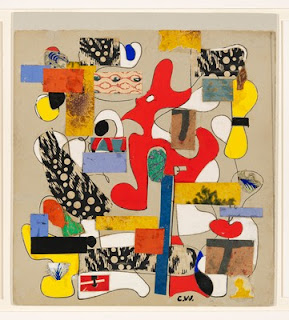
Charmion von Wiegand (1896-1983) 
Untitled, c. 1942
Collaged paper, opaque watercolor and pen and ink on paper, 
8 1/2 × 8 1/16 in. (21.6 × 20.5 cm) 
Whitney Museum of American Art, New York; 
gift of Alice and Leo Yamin 91.84.5. 
© Estate of Charmion von Wiegand; 
Courtesy of Michael Rosenfeld Gallery LLC, New York, NY

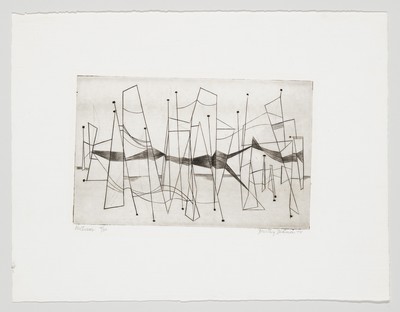
Dorothy Dehner
Dorothy Dehner (1901-1994) 
Nocturne, 1954
Engraving: sheet,
 9 9/16 × 12 9/16 in. (24.3 × 31.9 cm); 
plate, 4 7/8 × 7 7/8 in. (12.4 × 20 cm). 
Whitney Museum of American Art, New York; 
gift of Judith Bettelheim in memory of Mildred Constantine 
and Dorothy Dehner 2010.109. 
© Dorothy Dehner Foundation Museum of American Art

The Whitney Museum of American Art presents Labyrinth of Forms: Women and Abstraction, 1930–1950, an exhibition of works drawn primarily from the Museum’s collection that celebrates the innovative abstract art made by women in the first half of the twentieth century. The exhibition features over thirty works by twenty-seven artists. Labyrinth of Forms seeks to highlight the achievements of these groundbreaking artists and explores how works on paper, in particular, were important sites for experimentation and innovation. The exhibition is curated by Sarah Humphreville, Senior Curatorial Assistant.

Labyrinth of Forms, a title drawn from an Alice Trumbull Mason work in the exhibition, alludes to the sense of discovery that drove these artists to establish a visual language reflecting the advances of the twentieth century. Women played important roles in propelling the formal, technical, and conceptual evolution of abstract art in the United States. While a few of these artists, including Lee Krasner and Louise Nevelson, have been duly recognized, most remain overlooked despite their prominence within this burgeoning movement.
“Labyrinth of Forms is an exciting opportunity to reevaluate the history of abstraction in the United States. The exhibition sheds light on the vital impact artists of the 1930s and 1940s had on the evolution and reception of abstract art in this country, the integral role of drawings and prints in its development, and, of course, the essential contributions that women made. It also gives the Whitney’s audiences the chance to see works from the collection that have rarely, if ever, been exhibited before,” said Sarah Humphreville.
Abstraction flourished in the U.S. during this period in part because of increased exposure to European avant-garde art through modern art courses and new exhibition venues. Nevertheless, abstract artists were vastly outnumbered by realist practitioners, maligned by critics, and largely ignored by museums and galleries. In the face of these obstacles, American abstractionists forged a network of overlapping communities, organizations, and creative spaces, which allowed them to support one another, exchange ideas, and exhibit their work. Women were key figures in these groups and often took on leadership and organizational roles, wrote and gave lectures, and advanced methods of making, particularly in print media.

Labyrinth of Forms reveals the striking variety of interests, styles, and media that these artists embraced. The exhibition includes drawings, woodcuts, intaglios, lithographs, and collages. In a number of cases, artists combined approaches, as Katherine Dreier did in her Variation #4, from 40 Variations (1934). In this joyful, geometric work inspired by sailing and Beethoven’s music, Dreier applied bright watercolor hues over a lithograph base. Charmion von Wiegand similarly applied brilliant tones and collaged passages to her drawing Untitled (1942). The work originated as an automatic drawing, a technique introduced by the European Surrealists. Lee Krasner is represented in Labyrinth of Forms with Still Life (1938), an oil-on-paper drawing that uses ordinary, real-world objects as a springboard for an abstract composition. Krasner studied with Hans Hofmann from 1937-38; this drawing is informed by his lessons on the importance of negative space but is decidedly more radically abstract than the work her teacher created at the time. Like Krasner, the other women in this exhibition were innovators. In showcasing their works and reinvigorating their histories, Labyrinth of Forms challenges the dominant narrative of abstraction and brings to light the contributions of these previously excluded voices.

EXHIBITED ARTISTS 

Rosalind Bengelsdorf (1916; New York, NY - 1979; New York, NY)
Dorr Bothwell (1902; San Francisco, CA - 2000; Fort Bragg, CA)
Minna Citron (1896; Newark, NJ - 1991; New York, NY)
Teresa D’Amico Fourpome (1914; São Paulo, Brazil - 1965; São Paulo, Brazil)
Elaine de Kooning (1918; Brooklyn, NY - 1989; Southampton, NY)
Dorothy Dehner (1901; Cleveland, OH - 1994; New York, NY)
Katherine Dreier (1877; Brooklyn, NY - 1952; Brooklyn, NY)
Elise (1902; Philadelphia, PA - 1963; Los Angeles, CA)
Perle Fine (1905; Boston, MA - 1988; East Hampton, NY)
Sue Fuller (1914; Pittsburgh, PA - 2006; Southampton, NY)
Gertrude Greene (1904; Brooklyn, NY - 1956; New York, NY)
Terry Haass (1923; Český Těšín, Czech Republic - 2016; Paris, France)
Ray Kaiser (1912; Sacramento, CA - 1988; Los Angeles, CA)
Marie Kennedy (Active 1930s - 1940s)
Lee Krasner (1908; Brooklyn, NY - 1984; New York, NY)
Blanche Lazzell (1878; Maidsville, WV 1956; Morgantown, WV)
Agnes Lyall (1908; Summit, NJ - 2013; Lake Hill, NY)
Alice Trumbull Mason (1904; Litchfield, CT - 1971; New York, NY)
Norma Morgan (1928; New Haven, CT - 2017; New Britain, CT)
Louise Nevelson (1899; Kiev, Ukraine - 1988; New York, NY)
Barbara Olmsted (1915; Spirit Lake, IA - 2013; Silverton, OR)
Irene Rice Pereira (1902; Chelsea, MA - 1971; Marbella, Spain)
Anne Ryan (1889; Hoboken, NJ - 1954; Morristown, NJ)
Esphyr Slobodkina (1908; Chelyabinsk, Russia - 2002; Glen Head, NY)
Hedda Sterne (1910; Bucharest, Romania - 2011; New York, NY)
June Wayne (1918; Chicago, IL - 2011; Los Angeles, CA)
Charmion von Wiegand (1896; Chicago, IL - 1983; New York, NY)

WHITNEY MUSEUM OF AMERICAN ART
99 Gansevoort Street, New York City

27/11/21

On the Basis of Art: 150 Years of Women at Yale @ Yale University Art Gallery, New Haven

On the Basis of Art: 150 Years of Women at Yale
Yale University Art Gallery, New Haven
Through January 9, 2022

Irene Weir
Irene Weir
(B.F.A. 1906) 
The Blacksmith, Chinon, France, ca. 1923
Watercolor on paper
Yale University Art Gallery, Gift of Irene Weir, B.F.A. 1906 

Njideka Akunyili Crosby
(M.F.A. 2011)
The Rest of Her Remains, 2010 
Charcoal, acrylic, ink, collage, and Xerox transfers on paper 
Yale University Art Gallery, Purchased with a gift
from the Arthur and Constance Zeckendorf Foundation
Courtesy the artist, Victoria Miro, and David Zwirner

Yale University Art Gallery celebrates the work of Yale-educated women artists in a new exhibition.

On the Basis of Art: 150 Years of Women at Yale celebrates the vital contributions of generations of Yale-trained women artists to the national and international art scene. Through an exploration of their work, the exhibition charts the history of women at the Yale School of Art (formerly Yale School of the Fine Arts) and traces the ways in which they challenged boundaries of time and circumstance and forged avenues of opportunity— attaining gallery and museum representation, developing relationships with dedicated collectors, and securing professorships and teaching posts in a male-dominated art world. On view at the Yale University Art Gallery from September 10, 2021, through January 9, 2022, the exhibition commemorates two recent milestones: the 50th anniversary of coeducation at Yale College and the 150th anniversary of Yale University’s admittance of its first female students who, flaunting historical precedent, were welcomed to study at the School of the Fine Arts upon its opening in 1869.

On the Basis of Art showcases more than 75 artists working in a broad range of media, including painting, sculpture, drawing, print, photography, textile, and video. Objects are drawn exclusively from the Gallery’s collection and span more than 15 decades as well as a wide range of stylistic approaches—from realism to abstraction to figuration—revealing how these modern and contemporary women artists have brought their life experiences and individual styles to their careers.

“We are thrilled to join the University in celebrating and commemorating the contributions and accomplishments of women at Yale,” says Stephanie Wiles, the Henry J. Heinz II Director of the Gallery. “It’s an honor to present this exhibition and the accompanying catalogue, which together offer deep insight about women artist-graduates of Yale. These women brought an unwavering determination, bold experimentation, and a spirit of risk-taking to their practice, qualities that were critical to their success in the international art world.”

Wangechi Mutu
Wangechi Mutu
(M.F.A. 2000) 
Sentinel I, 2018 
Paper pulp, wood glue, concrete, wood, glass beads, stone, 
rose quartz, gourd, and jewelry 
Yale University Art Gallery, Janet and Simeon Braguin Fund
© Wangechi Mutu

Sylvia Plimack Mangold
(B.F.A. 1961)
Opposite Corners, 1973 
Acrylic on canvas
Yale University Art Gallery, Susan Morse Hilles Fund 
© Sylvia Plimack Mangold, courtesy Alexander and Bonin, New York

On the Basis of Art is curated by Elisabeth Hodermarsky, the Sutphin Family Curator of Prints and Drawings, with the assistance of Judy Ditner, the Richard Benson Associate Curator of Photography and Digital Media; John Stuart Gordon, the Benjamin Attmore Hewitt Curator of American Decorative Arts; Keely Orgeman, the Seymour H. Knox, Jr., Associate Curator of Modern and Contemporary Art; Sydney Skelton Simon, the Bradley Assistant Curator of Academic Affairs; and Molleen Theodore, Associate Curator of Programs.
“It is inspiring to highlight the extraordinary and varied work of these talented female-identifying artists,” shares Elisabeth Hodermarsky. “Although this diverse group of artists spans multiple generations, there are cross-connections in their work that engage history, feminist movements, and legacies of influence. The exhibition is the first of its kind, telling the history of the visual arts at Yale from a female perspective.” Accordingly, the exhibition is organized into six thematic sections that mix time periods and media, allowing visitors to observe these dialogues across generations.
The first section, Carving a Presence, demonstrates the persistence of the genre of portraiture and includes works by Irene Weir (B.A. 1906), Audrey Flack (B.F.A. 1952), and Njideka Akunyili Crosby (M.F.A. 2011). Sculpting Space and Place features two- and three-dimensional objects by Eva Hesse (B.F.A. 1959), Sylvia Plimack Mangold (B.F.A. 1961), Howardena Pindell (M.F.A. 1967), and others whose oeuvres consider space, perception, surface, and depth. Threading Myth, Legend, and Ritual highlights artists such as Rina Banerjee (M.F.A. 1995) and Natalie Frank (B.A. 2002), who engage tradition and storytelling in their practice. With works by artists like Lois Conner (M.F.A. 1981)and Victoria Sambunaris (M.F.A. 1999), Modeling Nature, Tracing the Human Footprint presents the different ways in which artists have depicted the natural world and have examined humankind’s relationship with nature—as both nurturer/steward and user/abuser. Drawing Identity reveals how artists, such as Wangechi Mutu (M.F.A. 2000), Mickalene Thomas (M.F.A. 2002), and Angela Strassheim (M.F.A. 2003), have challenged societal labels and offered thoughtful and powerful critiques of cultural systems. Finally, Casting History, Etching Memory explores how Maya Lin (B.A. 1981, M.ARCH. 1986), An-My Lê (M.F.A. 1993), Mary Reid Kelley (M.F.A. 2009), and others have memorialized or reflected on our past.

On the Basis of Art: 150 Years of Women at Yale
308 pages/10 x 10 3/4 inches/187 color and 52 black-and-white illustrations
Distributed by Yale University Press/Paper over board/ISBN 978-0-300-25424-2
A comprehensive catalogue accompanies the exhibition. It features an introduction by Elisabeth Hodermarsky and essays by Helen A. Cooper (PH.D. 1986), the Holcombe T. Green Curator Emeritus of American Paintings and Sculpture at the Gallery; Linda Konheim Kramer (B.F.A. 1963),former curator at the Brooklyn Museum and former Executive Director of the Nancy Graves Foundation; and Marta Kuzma, the Stavros Niarchos Foundation Dean of the Yale School of Art, the first woman to hold that role. It also includes catalogue entries on every artist in the exhibition and timelines that detail important milestones for women—at Yale, in the arts, and in the country.
YALE UNIVERSITY ART GALLERY
1111 Chapel Street, New Haven, Connecticut 

17/05/19

Shall Not Be Denied: Women Fight for the Vote @ Library of Congress, Washington DC

Shall Not Be Denied: Women Fight for the Vote
Library of Congress, Washington DC
June 4 - September 2020

Shall Not Be Denied: Women Fight for the Vote
© Library of Congress, Washington DC

Handwritten letters, speeches, photographs and scrapbooks, created by American suffragists who persisted for more than 70 years to win voting rights for women, are featured in a new exhibition at the Library of Congress. “Shall Not Be Denied: Women Fight for the Vote” tells the story of the largest reform movement in American history with documents and artifacts from the women who changed political history 100 years ago.

Drawing from the personal collections of Susan B. Anthony, Elizabeth Cady Stanton, Lucy Stone, Mary Church Terrell, Carrie Chapman Catt, Harriet Stanton Blatch and others, along with the records of the National American Woman Suffrage Association and National Woman’s Party – all donated to the national library years ago – the exhibition explores women’s long struggle for equality. “Shall Not Be Denied” will trace the movement from before the first women’s rights convention at Seneca Falls, New York, in 1848, through the divergent political strategies and internal divisions the suffragists overcame, the parades and pickets they orchestrated for voting rights, and the legacy of the 19th Amendment that was finally ratified in 1920.

“As institutions in Washington and across the country mark the centennial of women’s suffrage, now is a great time to learn more about women’s history. At the Library of Congress, we are so thrilled to share this new exhibition at this moment of national reflection,” said Librarian of Congress Carla Hayden. “Through the personal collections of many extraordinary women who helped shape this country, you will get a more intimate view into the struggles, the rivalries and ultimately the triumphs of this 70-year movement.”  

The exhibition is part of a yearlong initiative in 2019 inviting visitors to Explore America’s Changemakers. It will explore the stories of dozens of diverse women who shaped the suffrage movement and made history.

Highlights of the exhibition include marquee records, images, music, merchandise, cartoons and ephemera of the movement. Key items include:  

- Abigail Adams’s letter from 1799 refusing to consign women to an inferior status;

- A rare printed version of the “Declaration of Sentiments,” a listing of demands Elizabeth Cady Stanton read to more than 300 at Seneca Falls, and the proceedings of a larger national women’s rights meeting two years later in Worcester, Massachusetts, that drew more than 1,000 suffrage supporters;

- A sculpture of Susan B. Anthony (portrait bust) that she hoped would one day be displayed in the Library of Congress, now on loan for the first time from the Belmont-Paul Women’s Equality National Monument;

- An original broadside of the Declaration of Rights for Women that suffragists distributed in Philadelphia in 1876, disrupting the nation’s centennial celebration when Anthony presented the declaration on stage to acting Vice President Thomas Ferry;

- A draft manuscript of Stanton’s controversial and best-selling “The Woman’s Bible” that paired Biblical text with feminist commentary;

- Suffrage sheet music and merchandise used to “sell” the idea of suffrage;

- Images and film footage of political activity on the streets, including the first national parade for suffrage in 1913 in Washington, D.C., which exposed racial divides in the movement and was disrupted by an unruly mob;

- Banners, pins and a cap and cape worn by suffragists during parades and demonstrations;

- Photographs of early picketing at the White House and documentation of suffragists’ subsequent arrests, imprisonment and force feeding;

- Carrie Chapman Catt’s Ratification Notebook with notes on her strategy to win ratification of the 19th Amendment in each state; and

- An interactive display on suffragists who helped win the vote state by state.

“Shall Not Be Denied” is part of the national commemoration of the 100th anniversary of women’s suffrage, marking major milestones in 2019 and 2020. The exhibition opens on the 100th anniversary of the U.S. Senate’s passage of the suffrage amendment that would become the 19th Amendment once it was ratified by three-quarters of the states on Aug. 26, 1920.

An online crowdsourcing campaign to transcribe documents within the Library’s unique suffrage-related collections to make them more searchable and accessible will be ongoing during the exhibition. For more information go to the By the People website: crowd.loc.gov.

“Shall Not Be Denied: Women Fight for the Vote” is made possible by the Library of Congress James Madison Council, with additional support from 1st Financial Bank USA, Democracy Fund, Thomas V. Girardi, AARP, the Barbara Lee Family Foundation Fund at the Boston Foundation, HISTORY® and Roger and Julie Baskes.

The Library is inviting visitors to Explore America’s Changemakers through a series of exhibitions, events and programs. Exhibitions drawing from the Library’s collections will also explore Rosa Parks’ groundbreaking role in civil rights history and artists’ responses to major issues of the day. Other events throughout 2019 will explore changemakers through music, performances and public programs. 

LIBRARY OF CONGRESS
101 Independence Ave., SE - Washington, D.C. 20540
www.loc.gov

25/03/18

Martha H. Kennedy, Drawn to Purpose: American Women Illustrators and Cartoonists, 2018

Drawn to Purpose: American Women Illustrators and Cartoonists
University Press of Mississippi in association with the Library of Congress
March 2018

Martha H. Kennedy
Drawn to Purpose: American Women Illustrators and Cartoonists
Foreword by Carla Hayden
Published by University Press of Mississippi 
in association with the Library of Congress
Book cover courtesy of the Library of Congress

A new book presents a survey of the often-neglected artistic achievements of women in cartooning and illustration, featuring more than 250 color illustrations, comic strips and political cartoons, including original art from the collections of the Library of Congress. In “Drawn to Purpose: American Women Illustrators and Cartoonists,” Martha H. Kennedy, curator of popular and applied graphic art, presents a comprehensive look at the trailblazing artists whose work was long overlooked in the male-dominated field from the late 19th century into the 21st century.

“Drawn to Purpose” was published in March 2018 by University Press of Mississippi in association with the Library of Congress. It is the first overarching survey of these art forms by women in the Library’s collection. The book accompanies the Library’s exhibition “Drawn to Purpose” featuring original works by women cartoonists and illustrators.

“‘Drawn to Purpose’ brings together a remarkable sampling of book illustrations, posters, industrial design, courtroom sketches, comic strips, political cartoons and art for magazines and newspapers produced by women over a 150-year span,” Librarian of Congress Carla Hayden wrote in the forward for the book. “As a kid who read everything, I pored over the illustrations just as much as the accompanying words. Images can make reading more meaningful and more memorable.”

In 1915, portrait painter Cecelia Beaux predicted it would be at least 1,000 years before the term “women in art” would sound as strange as the term “men in art.” Indeed, Martha H. Kennedy’s book tracks the incremental progress and societal pressures that kept all but the most resilient women from advancing in the arts. It’s also a story of women artists who were moved by their creative drive, by commerce or by necessity to create art that fulfills a purpose.

Celebrated artists and works featured in the book and exhibition include New Yorker cartoonist Roz Chast, Lynn Johnston’s comic strip “For Better or For Worse,” innovative artists including Lynda Barry and Hilary Price, those who broke barriers of race or sexual orientation to become voices for underrepresented communities including Barbara Brandon-Croft and Alison Bechdel, and rising stars such as Jillian Tamaki.

The book explores several themes and artistic platforms: 
- The Golden Age of Illustration
- Early Cartoonists
- New Voices and New Narratives in Comics
- Illustrations for Industry 
- Editorial Illustrators
- Magazine Covers 
- Cartoons, and Political Cartoonists and Caricaturists.

LIBRARY OF CONGRESS SHOP
10 First Street S.E., Washington DC
www.loc.gov/visit/shopping/

15/02/18

Women Look at Women @ Richard Saltoun Gallery, London - Curated by Paola Ugolini

WOMEN LOOK AT WOMEN
Curated by Paola Ugolini
Richard Saltoun Gallery, London
15 February – 31 March 2018

WOMEN LOOK AT WOMEN explores feminine identity through the work of thirteen internationally renowned women artists. In this inaugural exhibition at Richard Saltoun’s new gallery in Dover Street, each of the works on show reflects a different aspect of the relationship women have with their own bodies and how they judge and respond to the physicality of other women.

FEATURED ARTISTS

Eleanor ANTIN (b. 1935, Bronx, NY) lives and works in San Diego, CA. A pioneer of conceptual and performance art movements of the 1970s, Antin has worked across photography and staged performances to confront issues of identity, social structures and the role of women.

Renate BERTLMANN (b. 1943, Vienna) lives and works in Vienna, Austria. In the 1970s she was considered too radical to be included in museum exhibitions. 40 years later, Bertlmann, who won the 2017 Austrian State Art Prize, has achieved iconic status to become an inspiration to feminist artists all over the world. Her work focuses on representations of sex, love and relationships.

Elisabetta CATALANO (b. 1944, Rome – d. 2015, Rome). An actress turned photographer, Catalano was described by Alberto Arbasino as a “genius of portraiture masked as a beautiful woman”. Her black and white photographs bring out the inner beauty of the stars and artists that were her trademark subjects.

Helen CHADWICK (b. 1953, Croydon, Surrey – d. 1996, London). A leader of the feminist art movement in 80s and 90s Britain and an inspiration to generations of young artists, including many of the YBAs, Chadwick’s provocative sculptures and installations often use visceral materials to create works of great aesthetic beauty.

Rose ENGLISH (b. 1950, Hereford, UK) lives and works between Denmark and London. English sets up elaborately choreographed productions featuring musicians, dancers, circus performers, magicians and horses to satirize British sensibilities and conventions.

VALIE EXPORT (b. 1940, Linz, Austria) lives and works in Vienna, Austria. Now recognised as one of the most vital feminist artists of the last century, VALIE EXPORT achieved notoriety for her guerrilla performances in the 60s such as Genital Panic where she used her body to provoke a reaction to her political, feminist approach to art.

Rose FINN-KELCEY (b. 1945, London – d. 2014, London). One of the most inventive artists of her generation, Finn-Kelcey’s artistic language spanned all media and scale, using installation and sculpture, and even land art to voice her socio-political messages.

Alexis HUNTER (b. 1948, Auckland, New Zealand – d. 2014, London). An important figure of the feminist art movement in Britain; as an artist and activist, Hunter weaponised photography to reject gender stereotypes and exploitative images from media and advertising.

Friedl KUBELKA (b. 1946, London) lives and works in Vienna, Austria. One of Austria’s major filmmakers and photographers, associated with the Viennese Actionist movement, Kubelka's photographic works focus on the body, autobiography, and identity.

Annegret SOLTAU (b. 1946, Luneburg, Germany) lives and works in Darmstadt, Germany. During the 1970s Soltau held performances where she would bind herself and audience members in black thread, concealing their faces and confronting issues surrounding the body, female identity, censorship and silencing.

Jo SPENCE (b. 1934, London – d. 1992, London). One of Britain’s most important feminist artists, Spence used the camera to redefine the traditional role of women, class and politics, her personal battles with ageing, weight and ultimately, cancer.

Francesca WOODMAN (b. 1958, Denver, Colorado – d. 1981, New York). From age thirteen until her suicide at age 22, Woodman created work using her body as both subject and object. Her adoption of new photographic techniques assured her status as one of the most ground-breaking artists in the history of feminist photography.

Marie YATES (b. 1940, Manchester, UK) lives and works in Crete, Greece. Yates has been making art for over 50 years. Her radical conceptual works address issues of representation, language, sexual difference and fantasy.

Highlights:

In 1974 Eleanor Antin staged a performance in the Californian surfer town Solana Beach, dressed in drag as her fictional character The King of Solana Beach. Wearing a full beard, her gender-binding alias tests preconceptions of male and female roles throughout history. In Men from The King of Solana Beach (1974) we even see “His Majesty” taking a trip to [the men’s] bathroom.

Renate Bertlmann’s Transformations (1969/2013) comprises 53 staged self-portraits, where Bertlmann transforms into different female character types; the free spirit, the demure girl, the mad eccentric, and so forth. Posing for the camera, she performs “femininity” in its many guises, playing a game of seduction with her viewer, whilst staying in full control.

Exhibited at The Venice Biennale in 1984, Ego Geometria Sum (1982-83) maps Helen Chadwick’s history from birth to age thirty. Sculptures reminiscent of mathematic structures or children’s building blocks, layered with surreal tableaux of familiar objects and her naked body, become time capsules; leading us through the artists past.

Friedl Kubelka’s work, Pin Ups (1973-4), are intimately staged self-portraits taken during lone night stays in Parisian no-tell motels. Dressed to provoke, she takes full control of her orchestrated identity, multi-casting herself as a subject of discussion, object of desire, and image maker and choosing how she wants to be presented, on both sides of the lens.

RICHARD SALTOUN
41 Dover Street, London W1S 4NS
www.richardsaltoun.com

23/08/13

Beauty Revealed: Images of Women in Qing Dynasty Chinese Painting at BAM/PFA, Berkeley, California

Beauty Revealed: Images of Women in Qing Dynasty Chinese Painting 
University of California, Berkeley Art Museum and Pacific Film Archive - BAM / PFA 
September 25 - December 22, 2013 

Beauty About to Bathe, China, 18th century 
Hanging scroll, ink and colors on silk; 61 x 34 ¼ in. 
Private collection: Ferdinand M. Bertholet, Amsterdam 
Photo courstesy BAM / PFA 

Featuring nearly thirty works, Beauty Revealed: Images of Women in Qing Dynasty Chinese Painting is the first to bring together a genre of Chinese painting known as meiren hua, or paintings of beautiful women. Situating the works within the social and economic contexts of the High Qing period (midseventeenth to the late eighteenth century), the exhibition challenges the prevailing opinion that these subjects are high status women—either members of the court or other privileged women. By reading the visual codes embedded in the images, Beauty Revealed instead makes the case that these women are courtesans.

Borrowing seldom-before-utilized techniques from the West, including one-point perspective and heavy opaque colors, the artists, many of them unknown professional painters who painted on demand and for a fee, pursue a realism not previously seen in Chinese painting. Rather than the willowy beauty shown in a garden setting or surrounded by family among luxurious furnishings typical of earlier periods, these paintings generally feature a single, near life-size figure, often in a brazenly unladylike posture. Their garments tend to be low cut and transparent, and their bound feet exposed. 

For example, the direct gaze of the woman in Putting out the Lamp, addressed to the (presumably male) intended viewer, offers a suggestive undercurrent of greater intimacy, one of the hallmarks of this genre. Other codes of accessibility include the woman’s relaxed posture with right leg drawn up under left, the open sleeves that reveal her arms, and the highly stylized extension of her right hand in a controlled gesture reaching to snuff out the light. Her expression engages the audience in a way never before seen in Chinese figure painting. 

Putting Out the Lamp, China, late 18th century (detail) 
Hanging scroll, ink and colors on paper; 65 x 24-5/8 in. 
University of California, Berkeley Art Museum and Pacific Film Archive
Gift of James Cahill and Hsingyuan Tsao 
Photo courstesy BAM / PFA 

The backdrops further draw viewers into the women’s world, conveying significant information about their wealth, taste, learning, and accomplishments. The women are depicted surrounded by everyday objects packed with erotic symbolism. The art has an immediate impact, inviting viewers to enter and enjoy another world, one perhaps longed for and unattainable. 

In addition to several paintings from BAM/PFA’s own collection, Beauty Revealed features loans from institutions and private collections from around the US and Europe. It is organized into distinct sections that explore the intimate life of women within the garden, home, bath, and brothel. Curated by Senior Curator for Asian Art Julia M. White in collaboration with UC Berkeley Professor Emeritus James Cahill, the exhibition is accompanied by an exquisitely illustrated catalog with essays by Cahill, White, and noted historian Sarah Handler. The catalog entries are by Chen Fongfong, with contributions by Nancy Berliner and White. Published by UC Berkeley Art Museum and Pacific Film Archive. Distributed by D.A.P. , 126 pages; 67 color illustrations.

Colloquium, November 22, 2013: In tribute to James Cahill's fundamental insights regarding Chinese experiments with perspectival representation during the late-imperial period, the Institute for East  Asian Studies will host a symposium on perspective in Chinese painting to accompany Beauty Revealed. Participants will include Eugene Wang, Abby Aldrich Rockefeller Professor of Asian Art, History of Art & Architecture, Harvard University; Richard Vinograd, Christensen Fund Professor in Asian Art, Department of Art & Art History at Stanford University; and Nancy Berliner, Curator of Chinese Art, Museum of Fine Arts, Boston. 

University of California, Berkeley Art Museum and Pacific Film Archive - BAM / PFA
Museum's website: bampfa.berkeley.edu

03/05/11

CPA 1900 - Flirt d'Arlequin - Petite histoire en images

CPA 1900 - Après Les Fiancés, voici une autre série de cartes postales anciennes c. 1900 ayant voyagé en février 1904. Dans cette série les photographies sont colorisées. Les photos mettent en scène un Flirt d'Arlequin. Ces cartes ont été éditées par A.N., Paris (elles portent le numéro 249). Ce flirt est joué par deux femmes. Les images ne sont pas ici accompagnées de texte (voir message précédent). 

1900 French postcards about a romance titled "Flirt d'Arlequin" (from my private collection). For other vintage pictures, you can see the previous post.

CPA 1900

CPA 1900

CPA 1900

CPA 1900

CPA 1900

26/11/00

Women and Modernity: In and Around German Expressionism, LACMA, Los Angeles - Selections from the Robert Gore Rifkind Center for German Expressionist Studies and Los Angeles Public and Private Collections

Women and Modernity: In and Around German ExpressionismSelections from the Robert Gore Rifkind Center for German Expressionist Studies and Los Angeles Public and Private Collections
LACMA, Los Angeles
November 24, 2000 – April 8, 2001

The Los Angeles County Museum of Art (LACMA) presents Women and Modernity: In and Around German Expressionism—Selections from the Robert Gore Rifkind Center for German Expressionist Studies and Los Angeles Public and Private Collections, an exhibition that explores the changing role of women at the turn of the last century through approximately 70 works including painting, sculpture, woodcuts, lithographs, and drawings. This exhibition examines the shift in German Expressionist art as women left the cocoon of private residences, salons, and balls and emerged on the streets of the modern city, where many now held jobs and pursued careers.

The exhibition is divided into four main sections: 

The first focus of the exhibition is The Modern City, which portrays women in the burgeoning new metropolises. This changing role is seen in Two Women (1911–1912 ) by Ernst Ludwig Kirchner (Germany, 1880–1938). The subjects of this painting have angled forms that reflect the jagged shapes of the city around them, lending an unsettling note to a commonplace outing. Women in the city were also portrayed as spectators or performers in the theater, as in Ernst Ludwig Kirchner' s woodcuts Theaterloge (Theater box, 1909) and Tänzerin mit gehobenem Rock (Dancer with lifted skirt, 1910).

The second section, Nudes, demonstrates how nature and women were rendered using new styles and approaches. Representative of the Brücke artists’ collective style is the color woodcut by Ernst Ludwig Kirchner, Bathers Tossing Reeds (1910), as well as works created by Erich Heckel and Max Pechstein between 1910 and 1912. These portrayals of women surrounded by nature feature different poses than those of earlier depictions and stand in sharp contrast to the urban women in section one. Works in this section also show how the artists studied and imitated the nudes of Old Masters, which often emphasized the beauty of the female form. In works such as Untitled (Seated woman) (1914) by Egon Schiele (Austria, 1890–1918), the female body is portrayed as beautiful. This section also includes two erotic etchings of disrobing women by Lene Schneider Kainer, an artist largely forgotten by history.

The third section is Photographic Portraits. Faces in German Expressionist prints are often reduced to minimal features, the face of a nude often delineated only by its contours. Photographic portraits in this section provide the missing features and facial expressions and they further explore the differences between women as subjects and women as artists. For example, Lotte Jacobi’s Self-portrait (c. 1930) is a record of a woman who proudly presents herself as a professional photographer. Her hand holds the camera release; the cable visibly connects her to the tool of her trade.

The last section, Women Portray Women, focuses on the works of three women artists: Gabriele Münter (Germany, 1877–1962), Käthe Kollwitz (Germany, 1867–1945), and Paula Modersohn-Becker (Germany, 1876–1907). Although these artists encountered various degrees of success in their time, each participated in and uniquely inflected the artistic vocabularies of modernity.

This exhibition was organized by the Los Angeles County Museum of Art.

LACMA - Los Angeles County Museum of Art
5905 Wilshire Blvd., Los Angeles, CA 90036
www.lacma.org