26/08/25
Turner and Constable: Rivals and Originals @ Tate Britain, London
05/03/25
J.M.W. Turner: Romance and Reality @ Yale Center for British Art, New Haven
“We are thrilled to welcome visitors back to the museum to reconnect with our extraordinary collections,” said Martina Droth, Paul Mellon Director. “Turner is an artist whose groundbreaking works continue to inspire. His work has long been a cornerstone of our collection and we are excited to show our returning and new visitors the full range of our Turner holdings.”“The reopening of the museum on the eve of the 250th anniversary of Turner’s birth offers a timely opportunity to commemorate the unmatched range of one of Britain’s most innovative artists,” said Lucinda Lax, Curator of Paintings and Sculpture at the YCBA. “Turner revolutionized the genre of landscape painting in ways that continue to captivate contemporary audiences. This exhibition provides a wide-ranging overview of his transformative practice, beginning with his early meticulously rendered topographical views and ending with the evocative impressions of the natural world from his later years.”
25/11/21
Turner's Modern World @ Kimbell Art Museum, Fort Worth
“The Kimbell is thrilled to host such major paintings and watercolors by J.M.W. Turner, a towering figure in the history of European art,” said Eric M. Lee, director of the Kimbell Art Museum. “He is renowned as a landscape painter with an astonishing range of mood and atmosphere. In his work, Turner often drew from history, but he was also fully engaged with modernity and a keen observer of current events—from the Napoleonic Wars to the Industrial Revolution—which provided the subject matter for some of his most dramatic compositions.”
“Turner’s Modern World reveals an artist who was determined—to use a phrase we hear often now—‘to be relevant.’ As we look at art from two centuries ago, it is important to remember, as one artist put it, that ‘all art has been contemporary,’” notes George T.M. Shackelford, deputy director and curator for the exhibition at the Kimbell. “Turner’s concern for and depiction of the issues facing British society in his lifetime should strike contemporary audiences as profoundly modern—and profoundly relevant.”
08/03/11
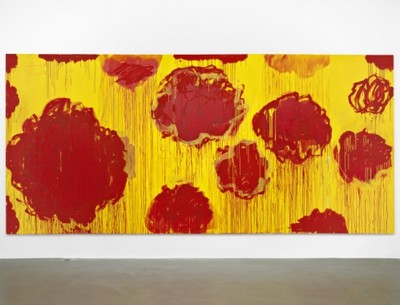
Turner, Monet, Twombly: Later Paintings at Moderna Museet, Stockholm, Staatsgalerie Stuttgart, Tate Liverpool, 2011-2012
This exhibition will be on view this year and in 2012 at:
Moderna Museet, Stockholm, 8 October 2011 - 15 January 2012
Staatsgalerie Stuttgart, 11 February 2012 - 28 May 2012
Tate Liverpool, 22 June - 28 October 2012
![]() |
| CY TWONBLY |
"All three artists have been considered radical in their time and met with negative comment when pushing the boundaries of the conventions of painting. Their late work has a looseness and an intensity that comes from the confidence of age, when notions of finish and completion are modified", says Jeremy Lewison, curator of the exhibition, formerly Director of Collections at Tate and now working as an independent curator.
30/06/10
Monet, Pissarro et Gauguin à Rouen - Exposition au Musée des Beaux Arts de Rouen
Le rôle joué par Rouen dans l’histoire de l’art à la fin du XIXe siècle est considérable. Si la ville n’a cessé d’attirer les artistes depuis la Renaissance, la fascination qu’elle exerce atteint son apogée à l’époque impressionniste, alors que se mêlent les prestiges de son essor industriel, de son site spectaculaire et de son patrimoine architectural intact. Cette ville que Camille Pissarro trouve « aussi belle que Venise » devient dès lors un lieu emblématique de la peinture moderne.
Une centaine de chefs-d’oeuvre de Claude Monet, Paul Gauguin, Camille Pissarro et d’autres grands peintres de la fin du XIXe siècle, sont réunis pour explorer l’un des derniers grands thèmes de l’histoire de l’impressionnisme qui n’ait pas fait l’objet d’une exposition : la cité normande comme laboratoire de la nouvelle peinture, entre agitation urbaine et ruralité, vieilles pierres et industrie galopante, le tout vibrant des reflets de la Seine.
Une destination pour les peintres voyageurs du XIXe siècle
Bénéficiant d’une situation privilégiée sur la Seine, entre Paris et la côte normande, Rouen est une ville prisée par les paysagistes dès le début du XIXe siècle. L’exemple donné par le peintre anglais Richard Parkes Bonington, dont le style résolument moderne s’exprime dans des œuvres aux qualités atmosphériques saisissantes, a profondément changé l’appréhension du paysage par les peintres français. Ayant parcouru la Normandie à ses côtés, Paul Huet, initiateur du paysage romantique, offre des vues de la campagne rouennaise en rupture avec le courant classique, tandis que Jean-Baptiste Camille Corot privilégie lui aussi le travail sur le motif et sur la lumière. Considéré par beaucoup comme « le premier des impressionnistes », Johan Barthold Jongkind livre également des vues de Rouen marquées par un sens aigu de la lumière et une recherche manifeste de l’effet pur. C’est néanmoins avec Joseph Mallord William Turner que Rouen devient un motif d’étude à part entière, ce dont témoigne un grand nombre d’esquisses et d’aquarelles. Non seulement les oeuvres qu’il réalisa sur les bords de la Seine lui valurent ensuite l’admiration de Claude Monet et Camille Pissarro, mais on note aussi que les Cathédrales de Monet ne sont pas sans évoquer les vues de cet illustre prédécesseur.
Une ville sur l’eau : reflets impressionnistes
Installée dans une boucle de la Seine, Rouen offrait aux peintres de nombreux motifs à explorer. La Seine, d’abord, devient le motif même de nombreuses toiles ; à l’image de Claude Monet lors de son premier séjour en 1872 ou de Camille Pissarro en 1883, l’attention des peintres se porte principalement sur le fleuve, animé parfois des tours de la cathédrale gothique et de grands voiliers. La Seine se prête en outre à des études d’atmosphère particulièrement prisées par les peintres de la mouvance impressionniste ; Armand Guillaumin devait développer à Rouen un art du paysage teinté d’un certain romantisme, manifeste notamment dans les représentations enneigées des rives du fleuve. C’est ensuite l’effervescence du port que les peintres mettent à l’honneur dans leurs toiles. Claude Monet et Camille Pissarro certes, mais encore Albert Lebourg, se sont attachés à rendre compte de l’industrialisation de la ville. Enfin cette silhouette même de « ville aux cent clochers » se prêtait particulièrement bien aux variations impressionnistes ; quelques sites de la ville, particulièrement pittoresques, à l’image de la Rue de l’Épicerie, ont plus particulièrement retenu l’attention des artistes.
Une ville au coeur de la campagne normande
La campagne rouennaise offrait également aux peintres de nombreux motifs propres à stimuler leurs recherches esthétiques d’un nouveau genre. Parmi d’autres, Charles Angrand fut l’un de ces peintres de plein air qui mirent la lumière au cœur de leurs œuvres. De façon plus significative encore, la parenthèse rouennaise de Paul Gauguin, en 1884, est à l’origine d’une trentaine de tableaux, parmi lesquels une majorité de paysages. Dans ces vues peintes au rythme des saisons, de janvier à novembre, Paul Gauguin réalise des œuvres impressionnistes denses et équilibrées, dans lesquelles se lisent les influences conjointes de Paul Cézanne et de Camille Pissarro. De même, Alfred Sisley, qui séjourne chez François Depeaux en 1894, met à profit la proximité immédiate de l’eau et d’une végétation luxuriante pour traduire dans une gamme très diversifée d’effets colorés la richesse de la nature normande.
Rouen, objet de séries d’oeuvres
La série des Cathédrales de Rouen par Claude Monet constitue l’un des sommets de l’impressionnisme. Mené en deux campagnes distinctes dont les détails sont bien connus, ce travail est une étape majeure dans la disparition du motif, certes toujours identifié mais dissout dans l’étude atmosphérique. Chaque jour, le peintre, qui mène plusieurs toiles de front, se trouve confronté à d’importantes difficultés, inhérentes au motif lui-même, cette dentelle de pierre gothique animée de jeux de lumière en perpétuel mouvement. Ce sont incontestablement ces œuvres, dont la juxtaposition est saisissante, qui ont fait de Rouen un motif significatif de modernité et un jalon important de l’histoire de l’art.
C’est à Rouen, en 1896, que Camille Pissarro lança ses premières vraies séries de paysages urbains. L’influence picturale de Claude Monet joua probablement un rôle dans le choix de Rouen, que Camille Pissarro arpenta en 1895 juste après la présentation de la série des Cathédrales à la Galerie Durand-Ruel. A son tour, il produit en tout trente-huit vues de la ville en 1896, dix-neuf en 1898, caractérisées par une large touche et une rapidité d’exécution inédite. Pour la première fois, toutes les oeuvres de la série sont centrées autour de la Seine, sujet éminemment pictural autant que poétique.
Un attachement durable des artistes à Rouen
La permanence des motifs impressionnistes caractérise un large pan de la production picturale des années 1890-1920. Qu’il s’agisse de Charles Angrand, de Paul Signac ou de Raoul Dufy, nombreux sont les peintres à s’installer à Rouen, pour une période plus ou moins longue, mais toujours pour s’approprier à leur tour un site peint par d’illustres aînés. Le fleuve, les ponts qui le traversent et le port qui l’anime, ainsi que la ville et ses clochers, restent au début du XXe siècle des sources d’inspiration fécondes. On peut lier à cet attachement le développement spectaculaire de « l’école de Rouen » : les « mousquetaires » (Charles Angrand, Charles Frechon, Joseph Delattre, Léon-Jules Lemaître), ont produit dès les années 1880 un certain nombre d’authentiques chefs-d’œuvre, et la génération suivante apporte d’autres grandes figures, dominées par Robert Antoine Pinchon qui, après une période fauve au tournant du siècle, prolongent le rayonnement de l’impressionnisme au-delà de la première guerre mondiale.
Musée des Beaux-Arts de Rouen
4 juin - 26 septembre 2010
27/09/08
William Turner Watercolours from The Courtauld - Paths to Fame, The Courtauld Gallery, London
Nine magnificent watercolours, recently bequeathed by the late Dorothy Scharf, are among a collection of thirty outstanding works by Joseph Mallord William Turner (1775-1851) held at The Courtauld Gallery. The Courtauld’s collection includes work from across the artist’s career, ranging from an important early view of the Avon Gorge, Bristol, made when Turner was just sixteen years old, to examples of the monumental highly finished watercolours of his maturity and the celebrated expressive late works. Paths to Fame: Turner Watercolours from The Courtauld, on view from 30 October 2008 to 25 January 2009, will be the first opportunity to enjoy this superb collection in its entirety.
Throughout his life Turner orchestrated his career with fame in mind. Intensely ambitious, he travelled the length and breadth of Britain and the Continent in search of inspirational and marketable views. Following in his footsteps, the exhibition traces the evolution of his extraordinarily inventive and entrepreneurial approach to the making of landscape in watercolour. The exhibition stresses the vital contribution of patronage and print publication and the role of collectors and friends, most notably the influential art critic John Ruskin, as champions and promoters of his work.
The son of a Covent Garden barber, Joseph Mallord William Turner spent his early years acquiring the traditional skills of architectural draughtsmanship, learning also from earlier topographical watercolourists such as Paul Sandby and Edward Dayes. He showed precocious talent, entering the Royal Academy Schools in 1789 at the age of thirteen and having a watercolour accepted for the prestigious annual exhibition only two years later. He was elected an Associate at twenty-four, the youngest age allowed, becoming a full Academician in 1802. The Academy was then housed in the Strand block of Somerset House, now home to The Courtauld Gallery.
Focusing on Turner’s early career, the opening section of the exhibition explores the ways in which he set about achieving success. When only sixteen he embarked on the first of his many sketching tours around the country. An avid self-promoter, Turner was quick to recognize the value of prints for disseminating his art to the widest possible audience, and from the 1790s his career revolved around travelling, painting and publishing. Accurately rendered topographical watercolours such as Chepstow Castle (fig.1), produced as a model for an engraving (the second print to be made after his work) for the popular Copper-Plate Magazine, show a technical mastery that was to earn him a fortune as a mature artist. A later section of the exhibition is dedicated to his watercolour designs for book illustrations, most notably Colchester, Essex (fig.2), made in preparation for an engraving for Picturesque Views in England and Wales (1827-38), the largest and most ambitious series of engravings ever produced from Turner’s designs.
On his first visit to the Continent in 1802, made possible by the brief peace between Britain and France, Turner headed for Switzerland, attracted by the stupendous Alpine scenery and aware that such awe-inspiring views of mountains, lakes and rivers were increasingly sought after by the art-buying public. From the end of the Napoleonic Wars in 1815 he took to travelling annually through France, Germany, Switzerland and Italy, filling sketchbooks with visual records that he later used as reference material for watercolour and oil painting subjects. The superb view of Rome from San Pietro in Montorio (fig.3) was painted for Turner’s close friend and major patron Walter Fawkes in c.1820. This work celebrates the artist’s first visit to Italy in 1819 and reflects his response to its beauty, grandeur and light.
Turner’s habit of rearranging the landscape for a more dramatic effect is evident from the exaggeratedly steep mountain slopes he depicted in Mont Blanc from above Courmayeur (fig.6). The atmospheric image of On Lake Lucerne looking towards Fluelen (fig.7), on the other hand, presents a radically different approach to landscape – a poetic vision that intensified in the 1840s when, dogged with ill health in the last decade of his life, Turner became increasingly conscious of his mortality. By this time, light and colour and the transitory effects of weather were his prime concern, most vividly evoked in the semi-abstract images of sand, sea and sky displayed in the final section of the exhibition.
In his later years Turner paid frequent visits to the Kent coastal resort of Margate, attracted by the wide expanse of sea and ever-changing sky. Works such as Heaped Thundercloud over Sea and Land, Storm on Margate Sands and Margate Pier (fig.9), exemplify Turner’s response to the drama of nature observed on the Kent coast. One of the highlights of the exhibition, this group of watercolours once formed part of the same sketchbook that was later acquired by the artist and critic John Ruskin from Sophia Caroline Booth, Turner’s landlady and companion. These late works are characterised by a powerfully expressive experimentation which pushed the boundaries of watercolour technique. Ruskin described Margate Pier as a ‘study of storm and sunshine...entirely magnificent…’ He was equally enthralled by Dawn after the Wreck (fig.8), writing ‘some little vessel – a collier probably – has gone down in the night, all hands lost: a single dog has come ashore. Utterly exhausted, its limbs failing under it, and sinking into the sand, it stands howling and shivering.’ Ruskin’s passion for Turner’s late watercolours and his sentimental interpretation of their subject matter helped to perpetuate Turner’s fame as England’s greatest painter in watercolours.
The works from The Courtauld Gallery will be supplemented by closely related loans from Tate and private collections, enabling viewers to trace the development of certain compositions, including the celebrated panoramic view of the Crook of Lune (fig.5), from early sketches and exploratory ‘colour beginnings’ (fig.4) to finished watercolours and, in some cases, published prints.
The exhibition is being sponsored by The Bank of New York Mellon.