Showing posts with label Hiroshi Sugimoto. Show all posts

19/10/23

Hiroshi Sugimoto @ Fraenkel Gallery, San Francisco

Hiroshi Sugimoto
Fraenkel Gallery, San Francisco
October 26 – December 22, 2023

Hiroshi Sugimoto
HIROSHI SUGIMOTO
Brush Impression 0897 (Fire), 2023
Gelatin silver print, 48-3/8 x 41 inches (framed) [122.9 x 104.1 cm]
© Hiroshi Sugimoto, courtesy of Fraenkel Gallery

Hiroshi Sugimoto
HIROSHI SUGIMOTO
Tateiwa, 2022
Pigment print on Japanese rice paper, 
mounted to folding screen, 71-1/4 x 279 inches (overall)
© Hiroshi Sugimoto, courtesy of Fraenkel Gallery

Fraenkel Gallery presents the U.S. debut of two important new bodies of work by HIROSHI SUGIMOTO. In both series, the artist incorporates photographic techniques and materials into classical Japanese art forms, producing works that draw from the country’s spiritual history. Two immense folding screens, known as byobu, feature photographs of Japanese landmarks of sacred significance, delicately printed onto rice paper. The graphically striking series Brush Impression presents cameraless, one-of-a-kind calligraphic photographs made by painting Japanese characters onto light sensitive paper using photographic chemicals. Hiroshi Sugimoto’s ever-evolving artistic career has spanned nearly five decades, and this exhibition is his sixteenth with the gallery since 1991. Concurrently, the Hayward Gallery in London presents a major retrospective of the artist’s work, on view since October 11, 2023, until January 7, 2024.

Two large folding screens anchor the exhibition. Representing revered locations, these works feature photographic pigment prints made on traditional Japanese Washi paper. An eight-paneled screen, nearly 24 feet long, depicts a view of Tateiwa Rock, a volcanic formation in Kyoto Prefecture that has featured in folkloric legend. An 18-foot, six-paneled screen depicts wisteria vines in bloom at the Kasuga-Taisha Shinto shrine in the ancient city of Nara, where the exhibition Hiroshi Sugimoto – The Descent of the Kasuga Spirit, curated by Sugimoto, took place earlier this year. This screen was included in the exhibition, which paired Shinto and Buddhist antiques, some from the artist’s personal collection, alongside contemporary artworks.

In Brush Impression, Hiroshi Sugimoto creates kanji, the form of Japanese language based on Chinese pictograms, and hiragana, phonetic characters used in Japanese. Rather than using ink, Hiroshi Sugimoto paints with darkroom chemicals on silver gelatin paper to produce black and white or subtlety warm-toned works, which range in size up to nearly 40 by 30 inches. The study of calligraphy has long been an interest of Hiroshi Sugimoto’s—each unique piece records the movement of his large brush across the surface of the paper, producing gestural shapes as well as splashes, bubbles, and traces of bristles. The kanji characters he selects represent words for elemental forces such as fire and water, and the meaning of each word is heightened and reinforced by the expressive qualities of each piece. An orange glow suffuses Brush Impression 0810 (Moon), suggesting the rich color of a blood moon, while erratic splatters and drips surround the character for madness. Brush Impressions (IROHA Song), a set of 48 smaller works written in hiragana, transcribes an eleventh century Japanese poem. Famous in part for its pangramic inclusion of each symbol that makes up this form of the language, the poem has served as a sort of alphabet.

HIROSHI SUGIMOTO was born in Japan in 1948. Starting in the 1970s, he worked primarily in photography, eventually adding performing arts production and architecture to his multidisciplinary practice. In 2023, his 69-foot sculpture Point of Infinity was installed on San Francisco’s Yerba Buena Island, commissioned by the Treasure Island Arts Program in partnership with the San Francisco Arts Commission. The exhibition Hiroshi Sugimoto Honkadori Azumakudari is on view at the Shoto Museum of Art in Tokyo until November 12, 2023. Hiroshi Sugimoto’s work is held in the collections of the Metropolitan Museum of Art, New York; Museum of Modern Art, New York; National Gallery of Art, Washington, DC; San Francisco Museum of Modern Art; and Tate Gallery, London, among countless others. His work has been the subject of numerous monographs. In 2009, he founded the Odawara Art Foundation, dedicated to traditional Japanese and international contemporary performing arts. Hiroshi Sugimoto is the recipient of the National Arts Club Medal of Honor in Photography; The Royal Photographic Society’s Centenary Medal; Isamu Noguchi Award; Officier de L’ordre des Arts et des Lettres; Praemium Imperiale Award for Painting; PHotoEspaña Prize; and the Hasselblad Foundation International Award in Photography, among others.

FRAENKEL GALLERY
49 Geary Street, San Francisco, CA 94108

01/10/23

Photography History @ Phillips' Photographs Auction including HIGH VOLTAGE: Contemporary Photographs from the Collection of Fred and Laura Bidwell

Phillips' Photographs Auction
Phillips New York
11 October 2023 10am & 2pm EDT

William Eggleston
William Eggleston
Memphis, circa 1969
Estimate $250,000 - 350,000
Photograph Courtesy Phillips

Phillips’ 11 October Photographs auction will present an exceptional selection of work across the history of the medium, including the special single-owner sequence HIGH VOLTAGE: Contemporary Photographs from the Collection of Fred and Laura Bidwell. Offering over 300 lots, the sale features some of the most desirable classic photographers, such as William Eggleston, Ansel Adams, Richard Avedon, Dorothea Lange, Edward Steichen, and many others, as well as numerous contemporary practitioners, among them Hiroshi Sugimoto, Laurie Simmons, Zanele Muholi, Gillian Wearing, and Anne Collier. Also on view will be Inside the Photograph: Further Selections from the Peter C. Bunnell Collection, Phillips’ final online sale from the collection of this esteemed curator and photographic historian which opens for bidding on 10 October.
Vanessa Hallett, Deputy Chairwoman, Americas and Worldwide Head of Photographs said, “The wide range of works in this sale allow us the opportunity to see that the creative continuum of photography remains unbroken, and that truly expressive and creative work is present throughout the medium’s timeline. Collectors will have ample opportunity to compete for stellar works, whether their collecting focus is contemporary, Modern, or 19th century. We look forward once again to welcoming photography lovers to our pre-sale exhibition and our live auction.”
Leading the auction is William Eggleston’s iconic Memphis, 1969, his classic study of a tricycle that was the cover illustration for his seminal 1976 monograph William Eggleston’s Guide.  Presented here as a rare dye-transfer print, Memphis monumentalizes its subject, and is exemplary of William Eggleston’s unique ability to utilize color to portray the American cultural landscape. 

Ansel Adams
Ansel Adams
Moonrise, Hernandez, New Mexico, 1941
Estimate $100,000 - 150,000
Photograph Courtesy Phillips

Ansel Adams’s classic study of the Western American landscape, Moonrise, Hernandez, New Mexico, 1941, presents an especially nuanced example of this famous image. Printed in the early 1960s, this is one of the comparatively few examples of Moonrise made before the 1970s and shows Ansel Adams working at the peak of his abilities as a printer.

Edward Steichen
Edward Steichen
Radio City and Rockefeller Center, 1933
Estimate $80,000 - 120,000
Photograph Courtesy Phillips

Edward Steichen’s likely unique mural-sized multiple-exposure Radio City and Rockefeller Center, 1933, captures the soaring architecture of New York City in a dynamic abstract composition. This monumental photograph is a rare survivor from the brief period in the 1930s when Edward Steichen experimented with printing his images in increasingly larger sizes for a number of exhibition projects. Measuring roughly 50 by 40 inches, Edward Steichen’s mural is charged with the unique energy of the city.

Richard Avedon
Richard Avedon
Bob Dylan, Singer, New York, New York, 2.10.65, 1965
Estimate $20,000 - 30,000
Photograph Courtesy Phillips

Diane Arbus and Richard Avedon, two of the great portrait photographers of the 20th century, are well represented in the auction. A lifetime print of Diane Arbus’s Boy with a straw hat waiting to march in a pro-war parade, N.Y.C., 1967, is one of the photographer’s best known images and was featured on the cover of Artforum magazine in 1971. Taken at a demonstration on the streets of New York City, Diane Arbus’s incisive portrait shows a young man whose visible support of the Vietnam War was in contrast to the overall ethos of his generation. Richard Avedon’s portrait of Bob Dylan, Singer, New York, New York, 2.10.65, 1965, shows the musician as a cosmopolitan sophisticate posing along Manhattan’s Fifth Avenue. The sale also includes Richard Avedon’s elegant fashion studies, Suzy Parker, Evening dress by Dior, Paris studio, August, 1956, and Carmen, Homage to Munkácsi, Coat by Cardin, Place François-Premier, Paris, August, 1957, as well as several other portraits.

Irving Penn
Irving Penn
Four Lipsticks (New York), 1987
Estimate $40,000 - 60,000
Photograph Courtesy Phillips

Irving Penn’s masterful color work includes his excellent cosmetic still life Four Lipsticks (New York), 1987, as well as Contact Lens, New York, 1981, and Red Lips, New York, 2005, all of which show Irving Penn’s elegant and sometimes mischievous approach to photographing fashion and beauty.

Dorothea Lange
Dorothea Lange
Migratory Cotton Picker, Eloy, Arizona, 1940
Estimate $40,000 - 60,000
Photograph Courtesy Phillips

The sale also boasts a strong selection of work from the 1930s and 1940s including Dorothea Lange’s classic The Road West, New Mexico, 1938, depicting the measureless expanse of highway traversed by American migrants as they made the arduous journey from the dustbowl to California. Dorothea Lange’s Migratory Cotton Picker, Eloy, Arizona, 1940, is a penetrating portrait of one such worker, and Mission District Firetrap, San Francisco, 1936, illustrates her ability to create tightly composed images that transcend their documentary purpose. Also featured are several early works by Walker Evans, Alma Lavenson, and Berenice Abbott.
Hiroshi Sugimoto
Hiroshi Sugimoto
Opticks 161, 2018
Estimate $100,000 - 150,000
Photograph Courtesy Phillips

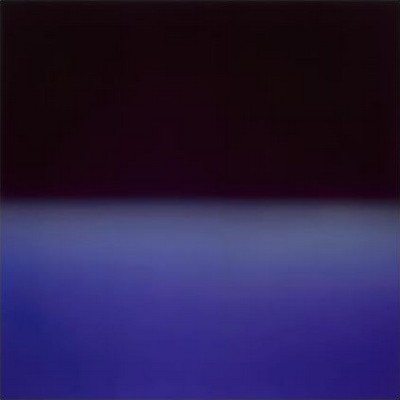
Hiroshi Sugimoto’s Opticks 161, 2018, grew out of the photographer’s deep interest in the science of light. To make this image, Sugimoto transformed his studio into a camera obscura; as the sun rose and set outside, pure light, in all its infinite colors, was cast from a prism onto a customized mirror and then captured by Hiroshi Sugimoto’s lens, creating the stunningly saturated image offered here. This body of work debuted in 2020, and this is the first print from the project to be offered at auction.

Robert Mapplethorpe
Robert Mapplethorpe
Hyacinth, 1987
Estimate $20,000 - 30,000
Photograph Courtesy Phillips

Peter Beard
Peter Beard
Ele Portfolio, 1965-1984
Estimate $80,000 - 120,000
Photograph Courtesy Phillips

Laurie Simmons
Laurie Simmons
Walking Purse, 1989
Estimate $50,000 - 70,000
Photograph Courtesy Phillips

The October auction features a range of work by Robert Mapplethorpe including Hyacinth, 1987, a large-format photogravure on silk that makes elegant use of its materials, as does his Tulips, a platinum print also from 1987. Peter Beard’s Ele Portfolio, published in 2008, contains 15 of the photographer’s most seminal photographs of African elephants, a subject central to his body of work. Laurie Simmons’s Walking Purse, 1989, is one of the definitive images of her career and embodies the conceptual photographer’s multi-layered commentary on consumerism in popular culture.

An-My Lê
An-My Lê
Manning the Rail, USS Tortuga, Java Sea, 2010
Estimate $15,000 - 25,000
Photograph Courtesy Phillips

Significant contemporary offerings include An-My Lê’s Manning the Rail, USS Tortuga, Java Sea, 2010, from the photographer’s extended pictorial investigation into the effects of American’s foreign policy, as well as work by Gillian Wearing, Sohei Nishino, Ryan McGinley, Wolfgang Tillmans, and Erwin Olaf.

Phillips’ 11 October Photographs auction includes the special single-owner sequence HIGH VOLTAGE: Contemporary Photographs from the Collection of Fred and Laura Bidwell to be featured in a dedicated section within the auction. The offering includes 40 works showcasing the diversity of contemporary photography with artists such as Kehinde Wiley, Dawoud Bey, Zanele Muholi, Hank Willis Thomas, Andrew Moore, Lee Friedlander, Paul Mpagi Sepuya, and many others. Collectors and philanthropists, Fred and Laura Bidwell founded the Transformer Station in the Hingetown neighborhood of Cleveland, Ohio, that has become a premier exhibition space for contemporary photography and art. High Voltage offers a glimpse into the Bidwells’ collection and exhibition program at the Transformer Station. The Bidwells gifted the Transformer Station to the Cleveland Museum of Art earlier this year. Proceeds from the works in Phillips’ auction will support the Bidwells’ active philanthropic endeavors.

Andrew Moore
Andrew Moore
The Rouge, Dearborn, Michigan from Detroit Disassembled, 2008
Estimate: $25,000 - 35,000
Photograph Courtesy Phillips

Lee Friedlander
Lee Friedlander
New York City, 1966
Estimate: $4,000 - 6,000
Photograph Courtesy Phillips
Fred Bidwell said, “Laura and I are excited to show a slice of our collection and give an opportunity for other collectors to be a part of the lifecycle of these incredible photographs that we’ve loved throughout the years. Photography has never lost its fascination for the two of us with its unique ability to capture a moment of reality and time. Our collecting journey was always about the things we loved, that lightning strike moment when you see something that resonates so clearly within you. That energy is felt throughout these works, the tension between the material and the conceptual being felt in each piece, and it is our hope that this energy can go on to capture the minds of others as they did for us.”
Hiroshi Sugimoto
Hiroshi Sugimoto
HIGH VOLTAGE: Contemporary Photographs from the
Collection of Fred and Laura Bidwell
Lightning Fields 128, 2009
Estimate $40,000 - 60,000
Photograph Courtesy Phillips

Central to the collection is Hiroshi Sugimoto’s monumental Lightning Fields 128, which transforms raw electrical energy into photographic form. The series has its origins in the photographer’s fascination with 18th and 19th century experiments with electricity and reflects Sugimoto’s deep knowledge of photographic history and technique. The Lightning Fields photographs are made without a camera in the darkroom, and electricity is both the source of illumination and the ‘object’ whose form is captured photographically. Rendered here in a bravura large-format print, the image delivers a distinct visual charge and, as such, was foundational at the Bidwells’ Transformer Station exhibition space.

Zanele Muholi
Zanele Muholi
Bona, Charlottesville (9781), 
from Somnyama Ngonyama, 2015
Estimate $20,000 - 30,000
Photograph Courtesy Phillips

Zanele Muholi’s Bona, Charlottesville (9781) is a key example from their Somnyama Ngonyama (Hail the Dark Lioness) series. In this celebrated body of work, Zanele Muholi occupies the role of both subject and image-maker in a way that is distinctly their own, challenging stereotypes and provoking the viewer to reconsider expectations about beauty and societal roles. A major survey of Zanele Muholi’s work is planned for 2024-25 at the Tate Modern.

Hank Willis Thomas
Hank Willis Thomas
Baron of the Crossroads, 2012
Estimate $25,000 - 35,000
Photograph Courtesy Phillips

Baron of the Crossroads, from Hank Willis Thomas’s signature Crossroads series, explores the complexities and ambiguities of race. The image features fellow artist Sanford Biggers in the character of Elegba, the Yoruba deity, trickster, and protector of travels and crossroads. In Hank Willis Thomas’s rendering, the Baron is both black and white simultaneously—neither wholly one or the other, and seemingly possessing the attributes of darkness and light. With his use of a selectively-filtering film laminate called Lumisty, Hank Willis Thomas intensifies the experience of looking at the work which shifts as the viewer changes position. Earlier this month Hank Willis Thomas was awarded the prestigious 2023 United States Department of State Medal of Arts.

Dawoud Bey
Dawoud Bey
Untitled #25 (Lake Erie and Sky) from
Night Coming Tenderly, Black, 2017
Estimate $20,000 - 30,000
Photograph Courtesy Phillips

Dawoud Bey’s evocative study of Lake Erie enshrouded by darkness is from the photographer’s 2017 Night Coming Tenderly, Black series, a project commissioned by FRONT International and headed by Fred Bidwell. Shot exclusively in Cleveland and Hudson, Ohio, Dawoud Bey recreates the experience of fugitive slaves as they made their way along the Underground Railroad to freedom in Canada prior to the Civil War. Lake Erie would have been the last obstacle that many escaped slaves encountered.

Matthew Brandt
Matthew Brandt
Big Bear, CA A2, 2012
Estimate: $8,000 - 12,000
Photograph Courtesy Phillips

Todd Hido
Todd Hido
Excerpts From Silver Meadows, circa 2013 
Estimate $12,000 - 18,000
Photograph Courtesy Phillips

The Bidwells’ have long been intrigued by photographic works that are unique, and this theme is prevalent throughout the lots on offer. This includes fellow Ohioan, Todd Hido’s unique assemblage, Excerpts from Silver Meadows (exhibited at Transformer station in 2014), and works by Adam Fuss, Richard Learoyd, Chris McCaw, Alison Rossiter, Matthew Brandt, Christopher Bucklow, and multi-disciplinary artist Wilmer Wilson IV. Wilson’s Rate Who Rate You, 2016, will be his auction debut. Whether unique or editioned, each work from the Bidwell collection is arresting, appealing and High Voltage – speaking to the couple’s personal background in advertising, their impactful vision, and dedicated focus on living artists.

Hendrik Kerstens
Hendrik Kerstens
Shopping Bag, 2008
Estimate: $20,000 - 30,000
Photograph Courtesy Phillips

Paul Mpagi Sepuya
Paul Mpagi Sepuya
Darkroom Mirror Study, or Aperture (0X5A3449), 2017
Estimate: $7,000 - 9,000
Photograph Courtesy Phillips

Following the sale on 11 October, a select offering from the Bidwell Collection will also be included in the April 2024 Photographs auction.

Fred Bidwell serves as Executive Director for FRONT International. Launched in 2018, FRONT International: Cleveland Triennial for Contemporary Art is a free, public, contemporary art exhibition comprising artist commissions, performances, films, and public programs that takes place across Cleveland, Akron, and Oberlin every three years. The third edition of FRONT will take place in 2025.
Sarah Krueger, Head of Photographs, New York, said, "Phillips is honored to work with Fred and Laura Bidwell. Through their important work with Transformer Station and FRONT International, they have pushed the boundaries of photography in the public sphere, enriching the cultural landscape and providing access to the best of contemporary photographic practice in the Midwest and beyond. The Bidwells’ vision and support have enabled the photography community to flourish, fostering creativity and innovation. Their enduring passion for this extraordinary medium leaves an indelible mark, inspiring future generations of photographers and enthusiasts."
PHILLIPS NEW YORK 
432 Park Avenue, New York, NY 10022

10/07/20

Hiroshi Sugimoto @ Fraenkel Gallery, San Francisco - Opticks

Hiroshi Sugimoto: Opticks
Fraenkel Gallery, San Francisco
Through August 15, 2020 - By appointment only

HIROSHI SUGIMOTO
Opticks 156, 2018
Chromogenic print
© Hiroshi Sugimoto, Courtesy Fraenkel Gallery

Fraenkel Gallery presents HIROSHI SUGIMOTO: Opticks, an exhibition of new large-scale photographs on view for the first time in the U.S. The images depict the color of light Hiroshi Sugimoto observed through a prism in his Tokyo studio. Using Polaroid film, he recorded sections of the rainbow spectrum projected into a darkened chamber, paying particular attention to the spaces and gaps between hues. The resulting works, each measuring approximately 5’ framed, are vivid, near-sculptural renderings of pure light. 

Hiroshi Sugimoto describes his process, which began before sunrise and depended on the clarity of the winter light: “First thing, I would check for hints of light dawning above the eastern horizon. If the day promised fair weather, next I would sight the ‘morning star’ shining to the upper right of the nascent dawn. Depending on how bright Venus appeared, I could judge the clarity of the air that day—Tokyo is clear almost every day in winter thanks to the prevailing seasonal west-high east-low pressure patterns. Only then did I ready my old Polaroid camera and start warming up a film pack from the long winter night chill,” he writes. In his studio, he used a mirror outfitted with a special micro-adjusting tilting mechanism, and projected light from the prism onto the mirror. By adjusting the mirror’s angle, he could separate individual colors of light. “I could split red into an infinity of reds,” he explains.

In his work, Hiroshi Sugimoto has explored the ways photography can be used to record traces of invisible but elemental forces. His philosophical approach asks questions about the human experience of these phenomena. Inspired by the writings and research of Sir Isaac Newton and Johann Wolfgang von Goethe on the science and experience of light, the works in Opticks examine the infinite nature and dual status of color as a physical phenomena and an emotional force. Hiroshi Sugimoto titled Opticks after Newton’s 1704 book of the same name, which presented his groundbreaking experiments with prisms and light. More than 100 years later, in 1810, Goethe published Zur Farbenlehre (Theory of Colors), a study of the physical basis of colors and human responses to them, which found Newton’s “impersonal scientific exposition wanting on artistic grounds,” Hiroshi Sugimoto writes.

Looking at light through his own prism, he notes:
I too had my doubts about Newton’s seven-colour spectrum: yes, I could see his red-orange-yellow-green-blue-indigo-violet schema, but I could just as easily discern many more different colours in-between, nameless hues of red-to-orange and yellow-to-green. Why must science always cut up the whole into little pieces when it identifies specific attributes? The world is filled with countless colours, so why did natural science insist on just seven? I seem to get a truer sense of the world from those disregarded intracolours. Does not art serve to retrieve what falls through the cracks, now that scientific knowledge no longer needs a God?
The exhibition also includes a sculptural rendering of a mathematical model from Hiroshi Sugimoto’s series of conceptual forms, along with work from other series.

HIROSHI SUGIMOTO was born in Japan in 1948. Starting in the 1970s, he worked primarily in photography, eventually adding performing arts production and architecture to his multidisciplinary practice. His work investigates themes of time, empiricism and metaphysics. Hiroshi Sugimoto’s work is held in the collections of the Metropolitan Museum of Art, New York; Museum of Modern Art, New York; National Gallery of Art, Washington, DC; San Francisco Museum of Modern Art; and Tate Gallery, London; among many others. His work has been the subject of numerous monographs. In 2017, he founded the Odawara Art Foundation, dedicated to traditional Japanese and international contemporary performing arts. Hiroshi Sugimoto is the recipient of the National Arts Club Medal of Honor in Photography; The Royal Photographic Society’s Centenary Medal; Isamu Noguchi Award; Officier de L’ordre des Arts et des Lettres; Praemium Imperiale Award for Painting; PHotoEspaña Prize; and the Hasselblad Foundation International Award in Photography, among others.

FRAENKEL GALLERY
49 Geary Street, 4th Floor, San Francisco, CA 94108
Currently open by appointment only
fraenkelgallery.com

06/11/12

Modern & Contemporary Photography Auction, Grisebach, Berlin


Modern and Contemporary Photography Auction at Villa Grisebach, Berlin
November 28, 2012

Photographs from pioneers like Karl Blossfeldt and Eugène Atget to contemporary artists like Daido Moriyama, Andres Serrano and Hiroshi Sugimoto span the offerings of 185 lots to be sold at Grisebach’s Modern and Contemporary Photography Auction on Wednesday, November 28 in Berlin.


KARL BLOSSFELDT 
Equisetum Hiemale, Winterschatel-Halm, 1900-1910
Gelatin silver-contact print, 1915-1925, 12,8 x 18 cm
(c) Courtesy Villa Grisebach Auktionen, Berlin


In the early years of photography the brothers Paul and Prosper Henry made use of the new technology to gaze at the stars. Their telescopic pictures of “Cassiopée” and “Gémeaux” in albumen prints of 1886 and 1887 unite science with poetry (each € 4,000/6,000). In contrast, Karl Blossfeldt (Schielo 1865-1932 Berlin) worked with extreme close-ups, his photographs of plants became famous. A contact print of “Equisetum Hiemale, Winterschachtelhalm,” 1915-1925, formerly in the Blossfeldt estate, will be offered at an estimate of € 18,000/22,000. Another extremely rare print is the experimental “Fußgängervor Karren (Studie zum ‘Ein-Fuß-Gänger’)”, ca. 1950, a vintage from the estate of Otto Steinert (Sarrebruck 1915-1978 Essen) (€ 20,000/25,000).


ALEXANDER RODCHENKO (Saint Petersburg 1891 - 1956 Moscow)
MUSEUM SERIES PORTFOLIO NUMBER 2: PORTRAITS, 1924–1937 
28 Gelatin silver prints, 1997 by A. Lavrentiev and Yuri Plaksin. 
From 15,4 x 22,5 cm to 24,4 x 18,4 cm 
(c) Alexander Rodchenko, A. Lavrentiev, Yuri Plaksin
Courtesy Villa Grisebach Auktionen, Berlin


Additional highlights of modern photography include vintages by Margaret Bourke-White, “A.T. & T. long line towers,” 1938 (€ 6,000/8,000), André Kertész’s “Têtes Lumineuses,” created in ca. 1929 in the circles of the Paris Surrealists (€ 12,000/15,000) and Friedrich Vordemberge-Gildewart (Osnabrück 1899 - 1962 Ulm) “Photo-montage No.7,” 1928/1929 (€ 6,000/8,000). Others are Harold Edgerton’s movement study of a tennis player, 1939 (€ 8,000/10,000), Irving Penn’s “Still Life with Grape and Moth, N.Y.,” 1976/1977 (€ 10,000/15,000), "Dunes. Oceano," 1936 by Edward Weston (Highland Park, Illinois 1886-1958 Wildcat Hill) (€ 18,000/22,000), Josef Sudek’s “Steinerner Traum,” 1953 (€ 5,000/7,000) and a still life by Jaroslav Rössler from the 1930s (€ 7,000/9,000).


EDWARD WESTON

DUNES. OCEANO, 1936
Gelatin silver print, 1940s, 19 x 23,9 cm
(c) Edward Weston -  Courtesy Villa Grisebach Auktionen, Berlin

The leading lots in the contemporary photography selection are two impressive prints, characteristically reworked with animal blood, by Peter Beard, “Cheetah Cubs” (€ 20,000/30,000) and “Kenya Elephant” (€ 30,000/40,000), Andreas Gursky’s “Singapore II” (€ 15,000/20,000), Robert Mapplethorpe’s “Self Portrait (with Make-up)” (€ 12,000/15,000), 13 C-prints from Thomas Ruff’s “Interieurs” (€ 15,000/20,000), as well as works by Philip-Lorca di Corcia, Axel Hütte, Jürgen Klauke, Annie Leibovitz, Daido Moriyama, Martin Parr, Andres Serrano and many others. 


HIROSHI SUGIMOTO
Los Altos Drive-in, from the serie Theathers, 1993
Gelatin silver print, 42,2 x 54 cm (47,9 x 57,7 cm)
(c) Hiroshi Sugimoto - Courtesy Villa Grisebach Auktionen, Berlin

The photographer Hiroshi Sugimoto (b. 1948 Tokyo) will be represented by four works, two from the “Theaters” series (each € 15,000/20,000), and “Farnsworth House” and “Chapel of Notre Dame du Haut” from the “Architecture” series (each € 10,000/15,000). Hiroshi Sugimoto’s large-format “S.C. Johnson Building” (€ 50,000/70,000) will be offered on Thursday, November 29 in Grisebach’s “Selected Works” auction.

Villa Grisebach Auktionen 
Fasanenstraße 25 • D-10719 Berlin
Website: www.villa-grisebach.de

08/02/11

Rodin - Sugimoto, Gagossian Gallery Paris

RODIN – SUGIMOTO
Gagosian Gallery Paris 
11 février - 25 mars 2011

HIROSHI SUGIMOTO
 Hiroshi Sugimoto, Stylized Sculpture 117, designer: Cristobal Balenciaga, 2007 
Gelatin silver print 58 3/4 x 47 inches (framed 71 3/4 x 60 inches) 
Edition of 5 SUGIM 2007. 0012 
© Hiroshi Sugimoto, Courtesy Gagosian Gallery

AUGUSTE RODIN
Auguste Rodin, Les Trois Ombres, 1881-86 : Bronze 
75 1/2 x 75 1/2 x 42 inches | 191.8 x 191.8 x 106.7 cm 
cast 4/8 RODIN 1898.0002 © Courtesy Gagosian Gallery

Pour sa seconde exposition à Paris, Gagosian Gallery Paris présente l'exposition Rodin - Sugimoto.

Auguste Rodin introduit la sculpture publique monumentale dans l’ère moderne. Issu d’un enseignement académique traditionnel, idéalisant les sujets de la sculpture classique et de la Renaissance, son engagement artistique s’est toutefois tourné vers la réalité de la nature. Sa capacité déroutante à donner vie à des matières inanimées, avec mouvement et sensibilité, révèle les singularités et les profondeurs psychologiques des sujets humains qu’il sculpte. Agile dans la retranscription des formes et audacieux dans le modelage, toujours à la poursuite du reflet de la lumière à la surface de ses sculptures, il est l’un des précurseurs de la sculpture moderne.

Trois sculptures monumentales, retraçant les trente dernières années de l’oeuvre de Rodin, symbolisent, dans cette exposition, la force et la vigueur de son approche artistique. Celle-ci reflète, par des surfaces détaillées et texturées, la qualité de la chair tout en suggérant l’émotion à travers le jeu de l’ombre et de la lumière.

Les Trois Ombres (c. 1880), provenant de la collection privée d’Iris Cantor, constitue une étude de groupe introspective dans laquelle le personnage d’Adam La Porte de l’Enfer est décuplée dans des perspectives différentes. Monument à Victor Hugo (1897), prêt de la très renommée Fondation Iris et B. Gerald Cantor, est une méditation ambigüe sur l’artiste et sa muse, une composition de personnages enlacés qui dépeint le grand artiste plongé dans ses pensées profondes. La Muse de Whistler (1908), prêt du musée Rodin, était à l’origine destinée à honorer la commande en hommage à le peintre American James Abbott McNeill Whistler, ce dernier ayant émis le souhait à Rodin de ne pas être physiquement représenté - raison pour laquelle l’artiste privilégiera l’image de la muse.
Représentée tel un fragment classique, la femme aux bras absents tente l’ascension d’un sommet, allégorie du défi de la création artistique.

Les sculptures de Rodin sont présentées ici en parallèle avec une série de photographies d’Hiroshi Sugimoto; une association inattendue et sans précédent. Sugimoto est l’un des photographes vivants les plus admirés. Il façonne le temps tel un sculpteur son argile, et explore ainsi les images sculptées dans l’ombre et la lumière, en relation avec l’évolution de l’histoire. Pour sa série Stylized Sculpture (2007), il a choisi des habits emblématiques de couturiers célèbres issus de la collection de l’Institut du Costume de Tokyo: la robe T de Vionnet – d’une modernité précoce, la robe taille de guêpe de Balenciaga, la géométrie stricte de la pièce d’Yves Saint Laurent ou encore le jupon à voile d’Issey Miyake. Chaque tenue représente, à sa façon, un moment charnière de l’histoire de la mode du 20ème siècle; le regard immuable de la caméra cristallisant leur dynamique corporelle.

Les vêtements, immortalisés dans une ambiance de clair-obscur, sur des mannequins dépourvus de tête, sont ainsi délestés de leur lien inhérent au corps humain, de ses associations et émotions. Les photographies retranscrivent la pure qualité formelle du vêtement en contraste avec sa forme, son volume ou encore sa surface. Sugimoto capture l’abstrait, la nature sculpturale intrinsèque à l’histoire du vêtement – une histoire aussi ancienne que l’humanité – et dépeint ainsi l’éternité au delà de l’évanescence.

L’exposition sera accompagnée d’un catalogue et d’un texte rédigé par l’historien d’art Kenneth Wayne.

AUGUSTE RODIN est né à Paris en 1840. En 1854, Rodin s’inscrit à l’Ecole Impériale de Dessin (la “petite” école), une école publique pour l’artisanat et le design. Dès l’âge de 17 ans il remporte deux prix de dessin et de modelage, pourtant il ne parvient pas à intégrer la prestigieuse école des Beaux Arts, qui le refuse trois fois. Il commençe à avoir recours aux modèles vivants en 1863. En 1870, il part à Bruxelles où il restera 6 ans. En 1877, il expose Le Vainqueur (dorénavant nommé L’âge de Bronze) au Cercle artistique et littéraire de Bruxelles, puis au Salon des artistes français de Paris. Sa statue donne une telle impression de vie, qu'on l'accuse d'avoir fait un moulage sur un modèle vivant. En 1880, le Ministère des Beaux Arts lui commande La Porte de l’Enfer, sa première sculpture monumentale. Au début des années 1880, il expose de nombreuses sculptures présentées de manière indépendante. En 1900, l’oeuvre de Rodin atteint son apogée et des projets ambitieux tel Monument à Victor Hugo sont réalisés. En 1908, il s’installe à Meudon où il restera jusqu’à sa mort en 1917. L’oeuvre de Rodin a été exposée récemment en 2009 au musée d’Orsay sous le titre Oublier Rodin ? La sculpture à Paris, 1905-1914, ainsi qu’au Musée Rodin dans l’exposition Matisse & Rodin de manière permanente.

HIROSHI SUGIMOTO est né à Tokyo en 1948. En 1970, il déménage à Los Angeles où il étudie la photographie au Art Center College of Design. Son oeuvre a été exposée à travers le monde dans des musées, institutions et galeries prestigieuses tels le Metropolitan Museum of Art, New York (1995), Deutsche Guggenheim, Berlin (2000), Kunsthaus Bregenz, Autriche (2002), Serpentine Gallery, Londres (2003), et à la Fondation Cartier de l’art contemporain, Paris (2004). Une exposition majeure de son travail a été présentée au Mori Art Museum de Tokyo en 2005, puis au Hirshhorn Museum and Sculpture Garden, Washington D.C. et Fort Worth Art Museum, Texas (2006). En 2007, une rétrospective européenne itinérante est inaugurée au K20 Kustsammlung Nordhein-Westfalen, Düsseldorf (2007), puis est présentée au Museum der Moderne, Salzburg, à la Neue Nationalgalerie, Berlin et au Kunstmuseum, Lucerne en Suisse (2008). Hiroshi Sugimoto vit et travaille à New York et à Tokyo.

GAGOSIAN GALLERY PARIS 
4 rue de Ponthieu, 75008 Paris - France

05/10/10

Fleeting Glimpse Photography exhibition at Roanoke and Richmond, Virginia: Eleanor D. Wilson Museum and Virginia Museum of Fine Arts

Photography exhibition - The Fleeting Glimpse:
Selections in Modern and Contemporary Photography
from the Virginia Museum of Fine Arts

Eleanor D. Wilson Museum, Roanoke, VA
Through December 4, 2010

Virginia Museum of Fine Arts, Richmond, VA
January 15 - April 3, 2011

LEE FRIEDLANDER, Shadow - New York City, 1968

LEE FRIEDLANDER, Shadow - New York City, 1968. Silver Print, Virginia Museum of Fine Arts, Richmond. The John Barton Payne Fund. Photo: Travis Fullerton, © Virginia Museum of Fine Arts. Image © Lee Friedlander, courtesy Fraenkel Gallery, San Francisco. Recent photographs of Lee Friedlander from America from Car is on view at the Whitney Museum of American Art in New York. And a retrospective of Lee Frielandler work from 1960 to 2010 will be on view at the Fraenkel Gallery.

The Eleanor D. Wilson Museum at Hollins University in partnership with the Virginia Museum of Fine Arts presents The Fleeting Glimpse: Selections in Modern and Contemporary Photography from the Virginia Museum of Fine Arts featuring 35 works by 27 artists using the photographic medium to transform common found occurrences in nature and humanity into unusual encounters and strange juxtapositions.

The Fleeting Glimpse is the first major focus on the Virginia Museum of Fine Arts (VMFA)’s renowned photography collection and marks the first partnership collection-sharing program with the largest museum in the commonwealth. The Fleeting Glimpse is co-curated by Christine Carr, artist and assistant professor of art at Hollins University and Wilson Museum Director Amy Moorefield. The exhibition roster encompasses a group of provocative legends of the camera, both modern and contemporary, and features the work of artists including Berenice Abbott, Diane Arbus, Blythe Bohnen, Judy Dater, Jen Davis, John Divola, Robert Doisneau, Martin Dorbaum, David A. Douglas, Roy DeCarava, Lee Friedlander, Ralph Gibson, Emmet William Gowin, John N. Heroy Jr., Richard Kent Hough, Connie Imboden, Alen MacWeeney, Sally Mann, Ralph Eugene Meatyard, Ray K. Metzker, Joseph Mills, Brian H. Peterson, Hiroshi Sugimoto, Ruth Thorne-Thomsen, Jerry N. Uelsmann, Garry Winogrand, and Willie Anne Wright. 

HIROSHI SUGIMOTO, Byrd Theatre, 1993

HIROSHI SUGIMOTO, Byrd Theatre, 1993. Gelatin Silver Print, Virginia Museum of Fine Arts, Richmond. Gift of the Collector’s Circle. Photo: Travis Fullerton, ©  Virginia Museum of Fine Arts. Image © Hiroshi Sugimoto, courtesy Fraenkel Gallery, San Francisco.


Through exploitation of a variety of photographic techniques including digital (Dorbaum), straightforward (Arbus), long exposure (Divola), vignette (Gowin) and pinhole process (Wright), the artists all share commonalities in the pursuit of a visually fragmented narrative in highly experimental work. The viewer has a “fleeting glimpse” of an implied alternative reality through the artists’ deliberate and sometimes happenstance staging and organization of chance elements. Using the camera, a number of the artists (Sugimoto, Dorbaum) create illusionary portals in their compositions psychologically pulling the viewer into their realms. Other works (Arbus, Doiseau, Imboden) propel the viewer away through the sitters’ carefully staged gazes controlled by the artist’s surface manipulations transforming their features into fractured and dissociated objects.  All entice the viewer with implied psychosomatic drama through bizarre subject matter and compositions inviting further examination.

The approachable medium of photography allows visitors to the exhibition the first “glimpse” of never before seen significant works by extremely well known leading photographers.

The exhibition is accompanied by a full color CATALOGUE with essays by both curators as well as Emily Smith, VMFA Curatorial Fellow.

Organized by the Eleanor D. Wilson Museum  at Hollins University in partnership with the Virginia Museum of Fine Arts. After its inaugural viewing at the Eleanor D. Wilson Museum at Hollins University, The Fleeting Glimpse will be on view at the Virginia Museum of Fine Arts.

Funding for The Fleeting Glimpse comes in part from the City of Roanoke through the Roanoke Arts Commission as well as support from the Virginia Museum of Fine Arts.

Eleanor D. Wilson Museum, Hollins University, Roanoke, Virginia 
09/16 – 12/4, 2010
www.hollins.edu/museum

Virginia Museum of Fine Arts, Richmond, Virginia
www.vmfa.museum

02/10/07

Bénédicte Hébert, Annelies Strba, Hiroshi Sugimoto. Collection Frac Basse-Normandie. Exposition à l'IUFM de Saint-Lô - des illusions

des illusions
Bénédicte Hébert, Annelies Strba, Hiroshi Sugimoto
Collection Frac Basse-Normandie
IUFM de Saint-Lô
1 - 25 octobre 2007 

Les oeuvres réunies dans des illusions sont telle une fabrique d’images qui cherche à représenter le passage du temps, le rendre incertain ou irréel. Les oeuvres jouent sur l’illusion, l’instabilité visuelle et narrative. Elles traduisent, pour chacune, des passages et des temporalités différentes : passage de la peinture à la photographie puis à la vidéo en référence au cinéma ; photographie empreinte de peinture et de narration cinématographique, enfin le temps du cinéma pris dans celui de la photographie. Les champs s’entrecroisent, les artistes explorent ce que Raymond Bellour nomme « L’entre-images » (Raymond Bellour, L’entre-images, photo-cinéma-vidéo, Paris, Éditions de la Différence, 2002).

Dans la vidéo Le Louvre en 1 mn 26 secondes (2000), Bénédicte Hébert (1967) convie le spectateur à une visite éclair des collections du Louvre. Emportées et montées en boucle dans le flux mouvant de la vidéo, les oeuvres photographiées défilent à une vitesse qui perturbe le regard et le temps nécessaire à leur contemplation. La rapidité à laquelle se succèdent les images instaure une temporalité autre que celle propre à une histoire de la peinture construite dans le temps, et ici ramenée au devenir image de l’oeuvre et de sa diffusion. Bénédicte Hébert ouvre les portes d’un musée où il n’existerait ni cloisonnement entre les différentes périodes artistiques ni hiérarchie entre les oeuvres, chacune se voyant attribuer le même temps d’exposition et plaçant le spectateur dans l’incapacité de les discerner. Enfin cette course virtuelle dans ce prestigieux musée rend hommage au film Bande à part de Jean-Luc Godard (1964) dans lequel les protagonistes se livrent à une visite du Louvre en 9 mn et 43 secondes chrono. Référence inévitable à un metteur en scène qui questionne la représentation de la peinture dans le cinéma.

Annelies Strba (1947) photographie sa famille, son décor quotidien, ses voyages, images qu’elle réunie sous le titre générique Shades of Times (1974-1997). Empreintes d’une histoire de la représentation dans l’art et se réclamant de la peinture de Balthus, ses photographies semblent atemporelles ou d’un temps indéterminé. Usant de la surexposition, du flou, elles traduisent le temps qui s’écoule et l’expression d’une volonté de sublimer le quotidien en exaltant son humilité : la beauté du presque rien, des petites choses, des instants fugaces. Sortant de l’intime, elle voyage et photographie des paysages, architectures extérieures voulant inscrire sa propre histoire dans celles des autres. Hiroshima mon amour (1994) est une photographie prise au cours d’un de ses voyages au Japon. Dans cette ville, épicentre de la bombe atomique, elle photographie un couple d’amoureux sur un banc à côté d’une moto rutilante. L’aspect clair, surexposé de la photographie comme voilée, installe le doute quant à sa contemporanéité et fait remonter le désastre vécu dans cette ville. S’installe également, comme dans l’ensemble des photographies de l’artiste, un va-et-vient entre douceur et aigreur, chaud et froid. Une contradiction de sentiments qui n’est pas sans faire écho au film d’Alain Resnais Hiroshima mon amour (1959) construit sur une juxtaposition d’histoires présentes et passées ainsi qu’une histoire d’amour vouée à l’échec dans le contexte de cette ville sacrifiée.

Depuis la fin des années soixante dix, Hiroshi Sugimoto (1948) déploie dans des séries photographiques une réflexion centrée sur des sujets susceptibles d’expérimenter la photographie dans sa capacité à traduire le passage du temps. En 1978, une première série Theater offre une typologie de l’architecture théâtrale et baroque des salles de cinéma des années vingt et trente dans le middle-west américain qu’il poursuit en 1993 avec une série consacrée aux Drive-in, véritables archétypes du cinéma et mode de vie américain. Hiroshi Sugimoto fixe l’appareil photographique face à l’écran, le temps d’exposition étant égal au temps de projection du film. La pellicule n’enregistre du mouvement des images que l’accumulation du flux de lumière. La photographie révèle un écran blanc dont la source lumineuse met en exergue l’environnement extérieur à l’écran. Il s’agit pour Hiroshi Sugimoto d’exposer le temps, son immatérialité dans le passage des images. Il recourt à une technique qui traverse l’histoire de la photographie, celle du temps de pose qui, à l’origine, permettait dans sa longueur d’impressionner une image sur la plaque photographique et aujourd’hui à contrario de réduire à une image vide une multitude d’images qui construisent une histoire. À l’instar du Louvre en 1mn 26 de Bénédicte Hébert, l’information est là, mais le spectateur ne peut la déchiffrer.

FRAC BASSE-NORMANDIE
9 rue Vaubenard, 14000 Caen

07/12/03

Hiroshi Sugimoto, Fraenkel Gallery, San Francisco - Architecture

Hiroshi Sugimoto: Architecture
Fraenkel Gallery, San Francisco
December 4, 2003 - January 31, 2004

Profoundly beautiful and powerfully evocative, the recent body of work entitled Architecture by internationally-acclaimed Japanese photographer Hiroshi Sugimoto is presented at Fraenkel Gallery, San Francisco. This series of large-scale black-and-white photographs dissolves the lines between time, memory, and history in icons of modernist architecture as disparate as the United Nations Headquarters by Wallace K. Harrison, Luis Barraagan’s Satellite Towers, the Saint Benedict Chapel by Peter Zumthor and Minoru Yamazaki’s World Trade Center.

Hiroshi Sugimoto has two recurring obsessions: history and time. He has described this new body of work as "architecture after the end of the world." Hiroshi Sugimoto is known for taking years to work on his series of long-exposure photographs on themes ranging from museum dioramas, movie theaters, seascapes, and historical wax figures. The new architectural images run counter to the traditional sense of a photograph as capturing a moment in time.

The architectural icons in his most recent series represent the fifth major theme that Sugimoto has explored in depth. With this series Hiroshi Sugimoto has essentially broken all the rules of architectural photography. Photographing great landmarks of modernist architecture around the world, Sugimoto has deliberately taken the images out of focus and at unusual angles, isolating the recognizable forms. The blurred forms evoke the passage of time, muting the architectural details and leaving the essence of the building; suggestive of the way in which our memories preserve images.

Hiroshi Sugimoto: Architecture was recently seen at the Museum of Contemporary Art, Chicago, and is accompanied by a major publication and essays by Francesco Bonami, John Yau, and Marco Di Michelis.

FRAENKEL GALLERY
49 Geary Street, San Francisco, CA 94108

21/02/03

Hiroshi Sugimoto: Architecture, MCA, Chicago

Hiroshi Sugimoto: Architecture
Museum of Contemporary art - MCA, Chicago
February 22 - June 2, 2003

Profoundly beautiful and powerfully evocative, the new body of work Architecture by internationally-acclaimed Japanese photographer HIROSHI SUGIMOTO is presented at the Museum of Contemporary Art (MCA), Chicago. This series of breathtaking black-and-white photographs dissolves the lines between time, memory, and history in icons of modernist architecture that include the Eiffel Tower, the Guggenheim Bilbao, and Corbusier's Notre-Dame-du-Haut in Ronchamp.

Hiroshi Sugimoto was first commissioned to photograph great works of architecture in 1997 for the MCA exhibition At the End of the Century: One Hundred Years of Architecture (1999). The Hiroshi Sugimoto: Architecture exhibition represents the first time the series are shown together. Manilow Senior Curator Francesco Bonami explains the conceptual nature of the work, "Sugimoto has two recurring obsessions: history and time. He once described this work as 'architecture after the end of the world,' which is interesting when you consider how he uses time – in long exposures -- to literally blur reality and question architecture and its history."

Hiroshi Sugimoto is known for taking years to work through a series of long-exposure works on themes ranging from museum dioramas, movie theaters, seascapes, and historical wax figures. The new architectural series runs counter to the traditional sense of a photograph as capturing a moment in time. By sometimes leaving the lens open for hours Hiroshi Sugimoto captures the essence, rather than the specifics, of his subject.

Hiroshi Sugimoto established his reputation for working in series in 1976 with a group of photographs of natural history museum dioramas that questioned what is real and what is reconstructed. For his following series, Hiroshi Sugimoto chose the interior of movie theaters built in the 1920s and 1930s. By using a time exposure the length of the film, the result was an illuminated but blank white rectangle that paid homage to the Minimalists.

His series of seascapes occupied him for over 20 years. Taken primarily at night, they exhibit a more spiritual relationship to time. Divided into simply "water and air," the seascapes inspire a zen-like sense of contemplation and timelessness with their sublime transitions between sea and sky. The seascapes were followed by a series of photographs of life-size historical figures in wax museums. These frozen portraits have a distinct sense of artificiality, reinforced by the varied time periods being brought together in one space.

The architectural icons in his most recent series Hiroshi Sugimoto: Architecture represent the fifth major theme that Sugimoto has explored in depth. With this series, Hiroshi Sugimoto has essentially broken all the rules of architectural photography. Photographing great landmarks of modernist architecture around the world, Hiroshi Sugimoto has deliberately taken the images out of focus and at unusual angles, isolating the recognizable forms. The blurred forms evoke the passage of time, muting the architectural details and leaving the essence of the building; suggestive of the way in which our memories preserve images.

The unique installation at the MCA parallels the architectural space of the work. Each of the 30 five by six foot photographs is mounted on a dark gray monolithic wall (15 in each gallery space) with the photographs faced away from the entrance so the viewer must experience the entire space before encountering the actual work.

Hiroshi Sugimoto: Architecture is accompanied by a beautiful catalogue with full-page illustrations and essays by Francesco Bonami, John Yau, and Marco Di Michelis. 

After the exhibition concludes at the MCA, it will travel to the Williamson Gallery at the Art Center College of Design in Pasadena, California, from November 15, 2003, to February 8, 2004.

MCA - MUSEUM OF CONTEMPORARY ART, CHICAGO
220 East Chicago Avenue, Chicago, IL 60611

18/03/01

Hiroshi Sugimoto: Hasselblad Award in Photography 2001

Hiroshi Sugimoto receives the Hasselblad Foundation International Award in Photography 2001

The Erna and Victor Hasselblad Foundation has selected Japanese photographer Hiroshi Sugimoto as the winner of the 2001 Hasselblad Foundation International Award in Photography. The prize, consisting of SEK 500,000 and a gold medal, will be awarded at a ceremony held in Göteborg, Sweden on October 20, 2001. A new exhibition of Hiroshi Sugimoto’s work, curated and organized by the Hasselblad Center, will be opened in conjunction with the ceremony.

The Foundation’s decision to award the 2001 prize to Hiroshi Sugimoto was motivated with the following statement:
“Hiroshi Sugimoto is one of the most respected photographers of our time. In his main photographic themes - the interrelated disciplines of Art, History, Science and Religion - Sugimoto combines Eastern meditative ideas with Western cultural motifs. In the past 25 years Sugimoto has reached audiences around the world with his distinctive, carefully composed series in black and white. Inspired by Renaissance paintings and early 19th century photography, and using a large format camera, Sugimoto achieves a wide range of tones in a body of work that reflects his great love of detail, his outstanding technical mastery and - above all - his fascination with the paradoxes of time”.
The Jury for the 2001 Award, which submitted the proposal to the Board of Directors of the Foundation, consisted of: Mr. Hasse Persson, (chairman) photographer, Hyssna, Sweden, Mr. Régis Durand, curator, Paris, France, Professor Tuija Lindström, Göteborg, Sweden, Mr. Shimizu Toshio, curator, Tokyo, Japan and Ms. Hripsimé Visser, curator, Amsterdam, Holland.

Hiroshi Sugimoto was born in Tokyo, Japan in 1948. He received his education at St. Paul’s University in Tokyo. In 1970 he left Japan to study photography at the Art Center of Design in Los Angeles, California. This was at a time when Minimalism and Conceptual Art - both of which influenced Sugimoto's work - reigned. As his own technique developed, Hiroshi Sugimoto came to conceive of subjects in such conceptual depth that they have continued to merit his attention ever since. Taking photographs for his Dioramas, since 1976, in a number of natural history museums, Sugimoto has concentrated on illusionistic three-dimensional displays, designed for the benefit of children and adults - to bring life to the evolutionary years.

For the Theaters (begun in 1978) Hiroshi Sugimoto spent several months in American movie houses built in the 1920s and the 1930s as well as in the drive-in theaters that opened later. Keeping the shutter of his camera open throughout the whole movie Sugimoto at the same time recorded both the screens and the architectural surroundings. The resulting photographs show the screen as a bright, white gateway to infinity.

Hiroshi Sugimoto’s third focus of interest has been his Seascapes, dating from 1980 and onwards. In photograph after photograph Sugimoto has captured seascapes all over the world. Whether photographing the Caribbean, the Baltic Sea or the Dead Sea the horizon line precisely bisects the image, dividing two basic elements - water and air - into two optically equal but not identical halves.

In his seascapes Hiroshi Sugimoto creates images of great spiritual value. His photographs of the sea show a time existing beyond our own sense of time. The sealine has not changed for millions of years. What we see today in photographs is the same view our forefathers saw millions of years ago - and coming generations will see thousands of years from now.

As mentioned in the Foundation’s citation, Sugimoto has been able to communicate his imagery to audiences all over the world. His photographs of famous people in the Wax museum 1 and 2-series, that Sugimoto began in 1976 are, of course, easy to relate to from a Western standpoint. Here he travels between centuries, photographing Napoleon Bonaparte on his deathbed (1821) and Sophia Loren in a 1960s movie in super-realistic scenes that look particularly lifelike in Sugimoto’s black and white photographs.

In his Architecture-series, begun in 1997, Sugimoto re-interprets eminently familiar buildings, subverting his signature of clarity, deliberately blurring the images to create a different kind of precision. Out of the fog, the buildings rise like beautiful objects occupying the landscape. The blur slows time down and evokes the more subtle nature of architecture. It seems as if the photographer has gone backwards in time to recreate the visionary stages of these world-famous architectural masterpieces.

Hiroshi Sugimoto’s latest series, Portraits, from 1999, presents life-size photographs of mostly historical personalities - Henry VIII and each of his wives, Benjamin Franklin, Vladimir Lenin, Sir Winston Churchill, Emperor Hirohito and recent political figures such as Yasser Arafat and Fidel Castro - photographed in wax museums. They are all isolated against a black background and dramatically lit, creating hauntingly beautiful images. The series which also includes a 25-foot photograph of a wax version of Leonardo Da Vinci’s The Last Supper, emulates the grand tradition of portraiture and recalls the wax figures’ sources in famous paintings by David, Van Dyck, Vermeer and others.

Time is what fascinates Hiroshi Sugimoto the most, and Time Exposed (Thames and Hudson, 1995) is also the name of his first book. His most recent book, Portraits, was published in 2000 by the Guggenheim Museum.

Hiroshi Sugimoto travels most of the year looking for new motifs for his ongoing series of photographs. When he is not on the road, he shares his time between New York and Tokyo.

ERNA AND VICTOR HASSELBLAD FOUNDATION
Ekmansgatan 8, SE-412 56 Göteborg, Sweden
www.hasselbladfoundation.org