Showing posts with label Missouri. Show all posts

13/04/25

Dominic Chambers: For You: All the Color in the World @ Walls Off Washington at Saint Louis University

Dominic Chambers
For You: All the Color in the World
Walls Off Washington at Saint Louis University
On permanent view

Dominic Chambers Photograph
DOMINIC CHAMBERS 
outside SLU's Searls Hall
Photo by Bobby Best, courtesy of Kranzberg Arts Foundation

Dominic Chambers Artwork
DOMINIC CHAMBERS
For You: All the Color in the World
Photo by Bobby Best, courtesy of Kranzberg Arts Foundation

The Kranzberg Arts Foundation (KAF), in collaboration with Saint Louis University and the St. Louis Literary Award program, announced a new mural by acclaimed artist DOMINIC CHAMBERS

This mural, on the Walls Off Washington at Saint Louis University’s Searls Hall, explores the legacy of the Underground Railroad and highlights its significance in Missouri and the St. Louis region.

This initiative is closely tied to the 2025 St. Louis Literary Award, which honors Pulitzer Prize-winning author Colson Whitehead. Whitehead’s novel, The Underground Railroad, inspires the mural, creating a robust dialogue between literature, history and public art. The collaboration underscores a commitment to aligning the arts, education and historical reflection, fostering meaningful engagement with the local community.

The project aims to illuminate St. Louis’ historical connections to the Underground Railroad and offer a space for collective reflection and learning. Through a dynamic partnership with Saint Louis University, educators, students and the public will have opportunities to engage with the mural and related programming, including discussions on art, history and literature.

Born in St. Louis and residing and working in New Haven, Conn., DOMINIC CHAMBERS creates vibrant paintings that simultaneously engage art historical models, such as color-field painting and gestural abstraction, and contemporary concerns around race, identity, and the necessity for leisure and reflection. A writer himself, Dominic Chambers is often inspired by literature ­and has cited Magical Realism, alongside writings by W.E.B. Du Bois, Ralph Ellison, and James Baldwin, as significantly influential to his practice. Dominic Chambers received his B.F.A from Milwaukee Institute of Art and Design, Milwaukee, WI in 2016, and his M.F.A. from Yale University School of Art in 2019. In 2023, he was the subject of a solo exhibition at the Contemporary Art Museum St. Louis. 
"We are honored and overjoyed to welcome Dominic Chambers home to St. Louis for this significant public art project," said Gina Grafos, Chief Curator and Director of Visual & Literary Art at Kranzberg Arts Foundation. "Dominic’s work eloquently intertwines history, memory, and storytelling to create a dialogue that resonates deeply with our region. His new mural, 'For You: All the Color in the World,' draws on multifarious art historical influences and the transformative concept of the veil—a metaphor that invites us to reimagine the inner landscape of our shared experiences. His return is not only a celebration of his extraordinary artistic practice but also a powerful tribute to the vibrant narratives that shape our past and inspire our future. We could not imagine a more fitting artist to bring this vision to life."
The Walls Off Washington mural initiative, a project of the Kranzberg Arts Foundation, continues to serve as a platform for large-scale, thought-provoking works that reflect St. Louis's cultural and historical fabric. 

KRANZBERG ARTS FOUDATION
St. Louis, Missouri

SAINT LOUIS UNIVERSITY
St. Louis, Missouri

THE WALLS OFF WASHINGTON
St. Louis, Missouri

07/01/24

Hangama Amiri @ Kemper Museum of Contemporary Art, Kansas City - "A Homage to Home" Exhibition

Hangama Amiri: A Homage to Home
Kemper Museum of Contemporary Art, Kansas City
January 25 – August 11, 2024

Hangama Amiri
Hangama Amiri
(Afghan-Canadian, born 1989) 
Departure, 2022 
Muslin, cotton, polyester, clear vinyl, iridescent paper, 
faux leather, chiffon, and found fabric, 68 ½ x 85 inches. 
Courtesy of the artist and T293, Rome. 
© Hangama Amiri. Photo: Jason Mandella.

Afghan Canadian artist Hangama Amiri combines painting and printmaking techniques with textiles, weaving together stories based on memories of her homeland and diasporic experience. Hangama Amiri fled Kabul with her family in 1996 when she was seven years old. Moving through numerous countries over several years, they immigrated to Canada in 2005 when Hangama Amiri was a teenager. Large-scaled with frayed edges, Hangama Amiri’s textile works are made from layering fabrics, piecing and sewing them together, so the fragments collectively characterize her home from a distance. Hangama Amiri’s work is centered on the lives of women. She often builds interiors that capture her protagonists within domestic and entrepreneurial spaces and amplify a collective struggle for women’s rights in Afghanistan and around the world. 

Hangama Amiri: A Homage to Home is organized by Amy Smith-Stewart, chief curator, The Aldrich Contemporary Art Museum, where it debuted in February 2023.

KEMPER MUSEUM OF CONTEMPORARY ART
4420 Warwick Boulevard, Kansas City, MO 64111

05/12/23

Kay WalkingStick and Jaune Quick-to-See Smith @ Saint Louis Art Museum

Saint Louis Art Museum purchases works by Native American women artists: Kay WalkingStick and Jaune Quick-to-See Smith

The Saint Louis Art Museum has acquired works by Jaune Quick-to-See Smith and Kay WalkingStick, deepening the museum’s commitment to Native artists with the addition of three critical pieces to the collection.

The acquisitions address gaps in the museum’s collection of works by contemporary Native American artists and leave a significant legacy at the museum for the recent exhibition “Action/Abstraction Redefined: Modern Native Art, 1940s-1970s,” an important presentation of modern Native art and the first exhibition of this size at SLAM.

Kay WalkingStick
Kay WalkingStick, American and Cherokee, born 1935 
“Personal Icon”, 1975; 
Acrylic, wax, and ink on canvas; 42 x 48 inches; 
Saint Louis Art Museum, The Siteman Contemporary Art Fund, and funds given by Barbara and Andy Taylor, the Werner Family, John and Susan Horseman, Christine Taylor-Broughton and Lee Broughton, Nancy and Kenneth Kranzberg, Pam and Greg Trapp, Mr. and Mrs. Gary Wolff, Dottie and Kent Kreh, Dwyer Brown and Nancy Reynolds, Suzy Besnia and Vic Richey, Clare M. Davis and David S. Obedin, Yvette Drury Dubinsky and John Paul Dubinsky, in memory of Pauline E. Ashton, and Kiku Obata; 
© Kay WalkingStick

“We are in a moment of heightened visibility for Native artists across the country but especially in St. Louis,” said Min Jung Kim, the museum’s Barbara B. Taylor Director. “Adding these works to our collection is a way to continue to shed light on these vital artists, whose art speaks to both personal histories and wider cultural concerns. These acquisitions are also essential to the continued diversification of both our collection and our programming, ensuring that we provide our community with opportunities to see and experience the fullest view of human creativity from many different cultural and aesthetic traditions.”

One of the works—WalkingStick’s “Personal Icon”—was recently featured in the final gallery of the museum’s summer 2023 exhibition, “Action/Abstraction Redefined.” “Personal Icon” is among the last major works available from a pivotal era in her career. During the mid-1970s, WalkingStick turned away from figuration and experimented with different media while also investigating Native history for the first time. The 1975 painting repeats a low, swelling arc against a gridded frame of red encaustic; these experimental forms and materials shaped her practice subsequently.

Jaune Quick-to-See Smith
, Enrolled Salish, Confederated Salish and Kootenai Nation, MT, born 1940; 
“State Names Map: Cahokia”, and “Trade Canoe: Osage Orange”, 2023; 
Saint Louis Art Museum, The Siteman Contemporary Art Fund, and funds given by Barbara and Andy Taylor,The Werner Family, John and Susan Horseman, Christine Taylor-Broughton and Lee Broughton, Nancy and Kenneth Kranzberg, Pam and Greg Trapp, Mr. and Mrs. Gary Wolff, Dottie and Kent Kreh, Dwyer Brown and Nancy Reynolds, Suzy Besnia and Vic Richey, Clare M. Davis and David S. Obedin, Yvette Drury and John Paul Dubinsky, Judith Weiss Levy, Mr. and Mrs. Charles A. Lowenhaupt, and Mary Ann and Andy Srenco; 
© Jaune Quick-To-See Smith, Courtesy of the artist and Garth Greenan Gallery, New York; 
Image courtesy of Counterpublic, Photograph by Jon Gitchoff
Using collage and gestural painting, Quick-to-See Smith’s “State Names Map: Cahokia” reconfigures the United States map, using text with only those state names based on Indigenous words. In “Trade Canoe: Osage Orange,” the artist created the frame of a canoe using wood from an Osage Orange tree, and inside the canoe are cast-resin objects—mirrors, guns, liquor and a beaver—that highlight the destructive qualities of European trade goods on Indigenous peoples.

Both “State Names Map: Cahokia” and “Trade Canoe: Osage Orange” are new works that were featured in Counterpublic, a triennial civic exhibition that showcased contemporary art in locations across St. Louis from April through July. Nearly one-quarter of the artists in the 2023 Counterpublic cited Native heritage.

Quick-to-See Smith’s work has appeared in more than 90 solo exhibitions across the country, most recently “Jaune Quick-to-See Smith: Memory Map” at the Whitney Museum of American Art in New York. SLAM’s collection includes the mixed media painting “I See Red: Migration” and a suite of prints produced at Washington University’s Island Press including “Celebrate 40,000 Years of American Art.”

SAINT LOUIS ART MUSEUM
One Fine Arts Drive, Forest Park, St. Louis, Missouri 63110

Julie Blackmon @ Kemper Museum of Contemporary Art, Kansas City - "A Life in Frame" Exhibition

Julie Blackmon: A Life in Frame
Kemper Museum of Contemporary Art, Kansas City
September 14, 2023 - January 7, 2024

Kemper Museum of Contemporary Art presents “Julie Blackmon: A Life in Frame,” an exhibition that focuses on the last decade of the artist’s photography. Julie Blackmon’s subject is the conflation of art and life—particularly everyday life in Springfield, Missouri. The works on view show scenes depicting family, community, and landscape deeply rooted in her Midwestern heritage.  

Julie Blackmon uses her surroundings to engage broader ideas of social and political issues, gender issues and family dynamics, and art historical references. While Julie Blackmon’s work celebrates the visual vernacular of an area of the country that many dismiss as culturally unremarkable, she positions it in conversation with a wide range of artistic references–including 17th century Dutch painters, 19th century Missouri-based artist George Caleb Bingham, and contemporary photographers like Diane Arbus. She applies these genres’ techniques to create uniquely playful and critical examinations of the modern family, feminism, and other social and political issues.

The 20 works on view demonstrate these conceptual and aesthetic themes that the artist has engaged over the past decade, as well as the deep collecting history of Julie Blackmon’s work in the Midwest. While her work is known and collected nationally – two of her works were recently acquired by the National Gallery of Art in Washington, D.C. – many of the works on view come from local collections, emphasizing the close relationship with Julie Blackmon and her work in the region. Kemper Museum of Contemporary Art was the first museum to collect Julie Blackmon’s work when it acquired four of the artist’s photographs in 2008. 
"The day my Chicago gallery called me to announce that Kemper Museum had acquired my work was an important moment early on, when I was first getting serious in my photography career,” said Julie Blackmon. “It felt like validation. But even better have been the years that followed. Many people have told me about encountering my work there, what it meant to them, and how they connected with it. It was the first time I got that kind of feedback.  It was just really motivating to get that kind of feedback."
JULIE BLACKMON (American, born 1966) is a contemporary photographer who has centered her life and career in Springfield, Missouri, and uses her surroundings to engage global ideas. Her photographs are inspired by being a part of a large family in what she calls “a generic town in the middle of the U.S.” While her scenes feature the artist’s family and are inspired by the realities of everyday life, her works are conceptual, fictitious, and highly directed, to commenting on broader themes in contemporary life. Julie Blackmon’s photographs are in many institutional collections, including The National Gallery of Art, Washington, Art Gallery, Seattle, WA; Kemper Museum of Contemporary Art, Kansas City, MO; Nelson-Atkins Museum of Art, Kansas City, MO; Microsoft Art Collection, Redmond, WA; Museum of Contemporary Photography, Chicago, IL; Museum of Fine Arts, Houston, TX; Toledo Museum of Art, Toledo, OH; Portland Art Museum, Portland, OR; Museum of Contemporary Photography, Chicago, IL; North Carolina Museum of Art, Raleigh, NC; The West Collection, Oaks, PA; and Walt Disney Corporation. Her work has been included in exhibitions at the Fotografiska Museum in New York, NY; Chautauqua Institution, Chautauqua, NY; Houston Center of Photography, Houston, TX; the Hood Museum of Art in Dartmouth, N.H., and many other institutions.

The exhibition is organized by Kemper Museum of Contemporary Art.

KEMPER MUSEUM OF CONTEMPORARY ART
4420 Warwick Boulevard, Kansas City, MO 64111

04/06/23

Virginia Jaramillo Retrospective Exhibition @ Kemper Museum of Contemporary Art, Kansas City - Virginia Jaramillo: Principle of Equivalence

Virginia Jaramillo: Principle of Equivalence
Kemper Museum of Contemporary Art, Kansas City
June 2 – August 27, 2023

Kemper Museum of Contemporary Art presents Virginia Jaramillo: Principle of Equivalence, the first retrospective exhibition by New York-based artist Virginia Jaramillo (Mexican American, born 1939). 

Virginia Jaramillo has been at the heart of influential movements in American post-war abstraction for decades. She was born in El Paso, TX, raised in Los Angeles, CA, and moved to New York City in 1966 after a year in Paris. When she settled in Soho at 109 Spring Street in the late-1960s, Virginia Jaramillo’s neighbors were artists Frederick James Brown, Mark di Suvero, Donald Judd, and Joan Semmel, alongside other influential New York artists, musicians, and writers. Throughout the 1970s and 80s, she participated in artist organizations and groups including the New York Feminist Art Institute and the 120 Wooster Street Collective. During this period, her work was included in group exhibitions at institutions such as the Whitney Museum of American Art; the Mexican Museum in San Francisco, CA; and the California Museum of African American Art in Los Angeles, CA, among others. Notable examples include The De Luxe Show in 1971 in Houston, TX (considered the first racially integrated exhibition in the U.S. to gain national attention) and Women Artists of the 80’s, in 1984 at A.I.R. Gallery, New York, NY.

The significance of Virginia Jaramillo’s work has been affirmed in recent groundbreaking group exhibitions including Now Dig This!: Art and Black Los Angeles 1960–1980 (Hammer Museum, 2011); We Wanted a Revolution: Black Radical Women, 1965–85 (Brooklyn Museum, 2017); and Women in Abstraction (Centre Pompidou, 2021); yet there has not been a comprehensive presentation of the 84-year-old artist’s practice and impact before Principle of Equivalence.

Throughout her career, Virginia Jaramillo has explored earthly and metaphysical realms through abstract paintings and handmade paper works with such diverse interests as physics, the cosmos, mythology, ancient cultures, and modernist design philosophies. This exhibition presents more than 70 exceptional paintings and handmade paper works, including her breakthrough Curvilinear series and large-scale linen fiber work, Anonymous Site #1-603 (1990) from Kemper Museum’s Permanent Collection.
“This exhibition is a milestone in the artist’s career and serves as a reminder to look with intention toward those who have made important—if historically excluded—contributions to the history of American abstraction,” said Erin Dziedzic, director of curatorial affairs for Kemper Museum. “Tracing the impact of Jaramillo’s practice, the exhibition will feature early examples that pushed the depth of the painted surface to its very limits, innovations in the centuries-old practice of handmade papermaking, and recent large-scale paintings in which Jaramillo abstracts the architectural ruins of spiritual sites.”
Virginia Jaramillo: Principle of Equivalence is organized by Kemper Museum of Contemporary Art in Kansas City, Missouri and curated by Erin Dziedzic, director of curatorial affairs. 

A full-color catalogue in conjunction with this exhibition is distributed by Yale University Press.

KEMPER MUSEUM OF CONTEMPORARY ART
4420 Warwick Boulevard, Kansas City, MO 64111

12/01/22

Impressionism and Beyond @ Saint Louis Art Museum

Impressionism and Beyond
Saint Louis Art Museum
February 1 - July 31, 2022
“Due to a surge of COVID positive cases among our staff and the rapid spread of the Omicron variant, the Museum is closed to the public. At this time, we anticipate reopening to the public on Tuesday, February 1"
Edgar Degas
EDGAR DEGAS
French, 1834–1917
"Ballet Dancers in the Wings", c.1890–1900
Pastel; 28 x 26 inches
Saint Louis Art Museum, Museum Purchase 24:1935

Odilon Redon
ODILON REDON
French, 1840–1916 
"Eyes in the Forest", 1882
Charcoal on pale brown paper; 
framed: 23 x 19 1/2 x 1 1/2 inches 
Saint Louis Art Museum 
Gift of Mr. and Mrs. Morton D. May 234:1959

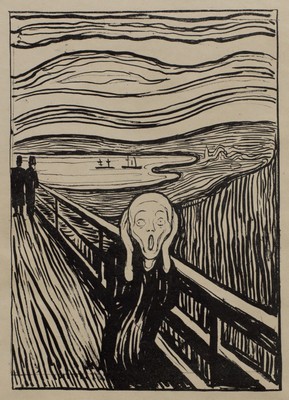
The Saint Louis Art Museum presents “Impressionism and Beyond,” an exhibition of works on paper drawn exclusively from the museum collections.

Through 59 European drawings, pastels and prints dating from the 1850s to the 1930s, “Impressionism and Beyond” highlights the many conversations occurring in the art world between tradition and innovation, representation and abstraction, and the artist’s studio and the art market.

During this period, European life underwent dramatic social, political and psychological changes, which contributed to significant artistic developments. Artists responded to this fluid environment in many ways—visualizing modern life as it was, but also viewing the world through an imaginative lens.

The exhibition reveals that, at this same moment, new attitudes about artistic practice and expressions of modernity elevated drawing and printmaking to prominence among the avant-garde.

In France, which dominated progressive trends, the Impressionists broke with traditional academic modes of representation through formal experimentation and innovative print and drawing techniques. Mary Cassatt, for example, elevated color printmaking to new heights through her adaptation of the Japanese aesthetic that was taking Paris by storm in the 1890s, while her Impressionist colleague Edgar Degas sought multiple avenues for experimentation in print. Degas and other Impressionists also developed inventive drawing styles that allowed them to capture movement and intense effects of color and light in their works.

Edvard Munch
EDVARD MUNCH
Norwegian, 1863–1944 
"The Scream", 1895
Lithograph; image: 13 3/4 x 27 1/4 inches, 
sheet: 23 1/2 x 16 3/8 inches
Saint Louis Art Museum 
Private Collection 2019.348

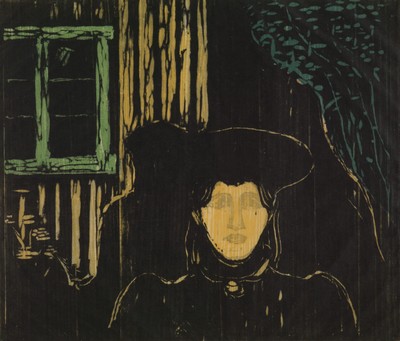
Edvard Munch
EDVARD MUNCH
Norwegian, 1863–1944
"Moonlight", 1896; printed c. 1906
Color woodcut on Japan paper; 
image: 15 13/16 x 18 9/16 inches, 
sheet: 18 7/8 x 23 5/16 inches
Saint Louis Art Museum
Gift of General and Mrs. Leif J. Sverdrup 338:1952

This experimental impulse in turn provided a launchpad for later generations to push formal and technical innovations even further. Paul Cézanne’s early-20th-century watercolors transformed natural environments into abstract washes of color, while Odilon Redon focused on the expressive power of black to create images that blurred the lines between fantasy and reality. Edvard Munch rethought the ancient medium of woodcut printmaking, cutting his blocks into pieces like a jigsaw puzzle to print in multiple colors.

“Impressionism and Beyond” explores several themes that guided artists in their examinations of modernity. Subjects of modern urban life such as the domestic interior and the modern woman of fashion abound during this period. Meanwhile, experimental treatments of figures and landscapes highlight news ways artists viewed the world around them, sometimes giving way to quirky, even frightening, visions.

“Impressionism and Beyond” is curated by Abigail Yoder, research assistant, and Elizabeth Wyckoff, curator of prints, drawings and photographs.

SAINT LOUIS ART MUSEUM
One Fine Arts Drive, Forest Park, Saint Louis, Missouri 63110

01/09/21

Damon Davis @ Saint Louis Art Museum

Damon Davis 
Saint Louis Art Museum 
September 17, 2021 - March 27, 2022 

Damon Davis
DAMON DAVIS, American, born 1985
Published by Wildwood Press, Saint Louis, Missouri
"All Hands On Deck #3", 2015
Lithograph; sheet (irregular): 32 x 58 3/16 inches
Saint Louis Art Museum, 
The Sidney S. and Sadie Cohen Print Purchase Fund 9:2016.3
© Damon Davis, courtesy Saint Louis Art Museum

Damon Davis’ “All Hands On Deck” is a powerful artwork that addresses social justice and the call for change. The Saint Louis multi-disciplinary artist conceived the original photographs of hands held up high during the months-long protests following the August 2014 shooting death of Michael Brown, Jr. in Ferguson.

The Saint Louis Art Museum displays six of the large-scale photolithographs in a special installation. A seventh work from the series will be on view in the exhibition “Art Along the Rivers: A Bicentennial Celebration,” which opens in October 2021.

Damon Davis and his fellow protesters pasted the images onto boarded-up storefronts along West Florissant Avenue, where they shared space with many other rapidly improvised textual and visual statements. Images of the storefronts were broadcast around the world. In the words of the artist:

“The project in itself was a protest to change the physical space of the street in the aftermath of the murder of Michael Brown. The boarded-up buildings created a narrative of destruction before anything had even happened, and that fed into the media’s biased portrayal of the protesters. It was a way to weaponize art to create a counternarrative centered on the unity and love I saw every time I went out to protest. It sought to raise the morale of the protest community to continue the long fight.”

Damon Davis photographed a diverse array of individuals who were involved in the Ferguson protest movement. Recalling the protesters’ chant “Hands up don’t shoot” that was echoed throughout the protests—they were photographed with their “hands up.” That signal of surrender, however, is transformed in Davis’s photographs into one of resistance, fortitude and community.

Damon Davis’ documentary film about the Ferguson protest movement, “Whose Streets?,” debuted at the Sundance Film Festival in 2017 and received broad critical attention. Among his many other accomplishments, he is 2011 graduate of the St. Louis Regional Arts Commission’s Community Arts Training Institute, and in 2020, he was named a Citizen Artist Fellow at Kennedy Center in Washington.

The installation is curated by Elizabeth Wyckoff, curator of prints, drawings and photographs; and Hannah Klemm, associate curator of modern and contemporary art.

SAINT LOUIS ART MUSEUM
One Fine Arts Drive, Forest Park, St. Louis, Missouri 63110-1380

16/09/18

Lola Alvarez Bravo: Picturing Mexico @ Pulitzer Arts Foundation, Saint-Louis

Lola Álvarez Bravo: Picturing Mexico
Pulitzer Arts Foundation, Saint-Louis
September 14, 2018 – February 16, 2019

Lola Alvarez Bravo
LOLA ALVAREZ BRAVO 
La Visitación, ca. 1934, printed 1971 
Gelatin silver photograph. 9 ¼ x 6 ¾ inches (23.5 x 17.2 cm) 
Brooklyn Museum, purchased with funds given 
by the Horace W. Goldsmith Foundation, 
Adrian Gill and Coler Foundation, 1995.125. 
© 1995 Center for Creative Photography, The University of Arizona Foundation

The Pulitzer Arts Foundation explores the career of pioneering Mexican photographer Lola Álvarez Bravo (1903 – 1993) with an exhibition of images that she considered to be her personal photography. Lola Álvarez Bravo: Picturing Mexico presents nearly 50 photographs and photomontages spanning Álvarez Bravo’s five-decade career. Together, these illuminate the ways in which her modernist aesthetic, with meticulous attention to pattern, light, and composition, contributed to her depictions of Mexico’s diverse inhabitants and landscapes as she traveled the country documenting life in the years following the Mexican Revolution (ca. 1910–1920).

Born in 1903 in Jalisco, Mexico, Lola Álvarez Bravo began taking photographs in 1925, when she moved from Mexico City to Oaxaca with her husband, Manuel Álvarez Bravo, who would become one of the most prominent photographers of the period. In 1927, the couple moved to Mexico City, where Lola Álvarez Bravo would work as a curator, an educator, and a gallerist, coming into contact with many of the most prominent figures in Mexico’s modernist avant-garde, from painters David Alfaro Siqueiros, Frida Kahlo, and Diego Rivera, to photographers Tina Modotti, Paul Strand, and Henri Cartier-Bresson, as well as numerous writers and intellectuals.

Shortly after the Álvarez Bravos separated in 1934, Lola began a professional practice as a photojournalist. As a female photographer, she occupied a rare and often stigmatized position, and she once described herself as “the only woman that ran around the streets with a camera, at sports events and the Independence Day parades, and all the reporters made fun of me.”

Lola Alvarez Bravo
LOLA ALVAREZ BRAVO
Unos suben y otros bajan, ca. 1940
Gelatin silver print. 9 1/4 x 6 15/16 inches (23.5 x 17.6 cm) 
Center for Creative Photography, University of Arizona: 
Lola Álvarez Bravo Archive 93.6.97. 
© 1995 Center for Creative Photography, The University of Arizona Foundation

Lola Álvarez Bravo: Picturing Mexico comprises work that Lola Álvarez Bravo considered her “personal” photography, what she described as “images that affected me deeply, like electricity, and made me press the camera shutter.” Highlighting several intersecting themes that informed the photographer’s practice, the exhibition focuses on both her subjects and the impact of modernism on the way she portrayed them.

The presentation begins with a group of portraits of friends, collaborators, and professional contacts—the images for which Lola Álvarez Bravo is best-known outside of Mexico. Included here is a portrait of Frida Kahlo seated on the bed in her home studio, and one of Henri Cartier-Bresson photographing an as-yet unfinished mural by David Alfaro Siqueros. Other images remove the sitter from the evidence of their daily lives and professions. Artist Isabel Villaseñor, for example, is shown standing in front of a rock formation that occupies the entire background. A raking shadow covers her arm, seeming to merge it with the background and creating an interplay between light and dark, and between landscape and the human figure.

Picturing Mexico continues with images of labor, a recurring theme for Lola Álvarez Bravo, as it was for many during the post-revolutionary years. One of the images here, Las Lavanderas, or Washerwomen, dating from around 1940, shows a group of women on the shore of a body of water, photographed from above as they focus on their work. The shadows that stretch across the sand are clearly those of a human-made structure, perhaps a pier on which the artist is perched. Landscape and architecture thus converge in the waterfront scene where, again, we also see a play of light and dark. Caught mid-motion, the women and children add a note of humanity and a kind of poetry to the scene, as they form a counterpoint to the rectilinearity of the cast shadow. Moreover, their faces are obscured, so that it takes a moment to understand what they are doing in the space of this complex composition. This uncertainty distinguishes Lola Álvarez Bravo’s work from the highly ordered and legible depictions typical of most of the contemporaneous art produced in the service of nation-building.

Lola Alvarez Bravo
LOLA ALVAREZ BRAVO
Untitled , 1954 
Gelatin silver print. 9 5/16 x 7 11/16 inches (23.7 x 19.5 cm)
Center for Creative Photography, University of Arizona: 
Lola Álvarez Bravo Archive 93.6.70. 
© 1995 Center for Creative Photography, The University of Arizona Foundation

The next group of works shows Lola Álvarez Bravo addressing the rapid changes in the architecture and landscape of post-Revolutionary Mexico, not only with images of modern buildings, such as architect Felix Candela’s Church of our Lady of the Miraculous Medal, a modernist icon located in Mexico City, but also with photographs of traditional structures and building methods. In Bajareque, of ca. 1938, Lola Álvarez Bravo depicts an example of the eponymous construction method, which dates to the pre-Hispanic period, in keeping with the post-Revolutionary focus of art that addresses Mexico’s working class and indigenous communities. Yet she comes in so close that the frame is filled edge-to-edge with tightly bound layers of twine, on the left, and earth, on the right. In doing so she at once highlights the technique’s intricate handwork and creates an abstract composition.

Lola Alvarez Bravo
LOLA ALVAREZ BRAVO
Sexo vegetal, ca. 1948 
Gelatin silver print 7 3/8 x 9 1/8 inches (18.8 x 23.1 cm) 
Center for Creative Photography, University of Arizona: 
Lola Álvarez Bravo Archive 93.6.69 
© 1995 Center for Creative Photography, The University of Arizona Foundation

Lola Álvarez Bravo’s engagement with modernism is addressed directly in a group of four images. In one of these, Sexo Vegetal (Plant Sex), of ca. 1948, she points her lens directly into the center of a tightly cropped maguey plant, a species of agave, recalling the images of Edward Weston and Tina Modotti in which calla lilies, peppers, shells, and gourds are transformed into sensual forms resembling the corporeal. Those earlier evocations of the body are manifest in Sexo Vegetal, where fleshy splayed leaves open around a central flowering spear, standing in for male and female sex organs. Yet this work contains evidence that Lola Álvarez Bravo chafed against the modernist opposition to photographic alteration, as she transformed the image by rotating it 90 degrees from its original orientation. In doing this, she creates a pattern of shadow that appears to emanate, impossibly, from a source below the plant, endowing the image with a sense of the uncanny that conjures Surrealism.

Lola Álvarez Bravo was one of Mexico’s first artists to produce photomontage, shown in the following section. Most of these were more explicitly political than her photography, addressing the changing architectural environment as well as conditions of labor, industrialization, and technology. In Hilados del Norte II (Northern Yarns II), of ca. 1948, one of two photomontages on view, she blends images of automobile manufacturing with the urban landscape. Unlike the celebrated photomontages of the Dada movement, Lola Álvarez Bravo used her own photographs rather than found images in this body of work, and she arranged them to create the illusion of depth, rather than embracing the inherent flatness of the medium.

Lola Álvarez Bravo: Picturing Mexico concludes with a group of six images that evoke photography’s unique relationship to the acts of seeing and being seen. In these, the photographer, who once referred to the camera as a “third eye,” uses doors, windows, and other portals as framing devices. In some images, such as the 1950 Saliendo de la Opera (Leaving the Opera), depicting three men hauling a prop horse as they exit Mexico City’s Palacio de Bellas Artes, she captured her subjects in moments of transition. At other times, her camera catches a subject's direct gaze, as seen in Los gorrones (The Scroungers), of around 1955, an image of young boys idling on a staircase in which some of them look at the photographer while the others seem unaware of her presence, absorbed by their own act of looking.

Lola Álvarez Bravo: Picturing Mexico is accompanied by a fully illustrated catalogue, published by Yale University Press, with essays by Stephanie Weissberg and Karen Cordero Reiman, art historian, curator, and Professor Emerita at the Universidad Iberoamericana, Mexico City.

Lola Álvarez Bravo: Picturing Mexico has been curated by Pulitzer Arts Foundation Assistant Curator Stephanie Weissberg. The Pulitzer is the exhibition’s only venue.

PULITZER ARTS FOUNDATION
3716 Washington Blvd, Saint Louis, MO 63108
pulitzerarts.org

28/01/18

Belkis Ayón @ Kemper Museum of Contemporary Art, Kansas City - Nkame: A Retrospective of Cuban Printmaker Belkis Ayón (1967–1999)

Nkame: A Retrospective of Cuban Printmaker Belkis Ayón (1967–1999) 
Kemper Museum of Contemporary Art, Kansas City 
January 25 - April 29, 2018 

Kemper Museum of Contemporary Art presents Nkame: A Retrospective of Cuban Printmaker Belkis Ayón (1967–1999). This landmark retrospective is the first in the United States dedicated to the work of Belkis Ayón—the late Cuban visual artist who mined the founding myth of the Afro-Cuban fraternal society, Abakuá, to create an independent and powerful visual iconography.

From the Curator’s Statement:
“Cuban artist Belkis Ayón (1967–1999) died at age thirty-two, leaving behind a body of work of considerable importance for the history of contemporary printmaking. Her death remains a painful mystery for the national and international art community that had witnessed with admiration her successful rise to the most demanding artistic circles of the 1990s. Sixteen years after her death, the artist’s estate presents art lovers and researchers the first retrospective exhibition of the artist in the United States—Nkame—which gathers a wide selection of her graphic production from 1986 to 1999.”
Belkis Ayón, who was born in Havana, Cuba, in 1967, became interested in the Abakuá and their mysterious traditions in 1985, while pursuing art in high school. She was primarily drawn to the figure of Sikán, who according to legend, originally discovered the magic of Abakuá by accidentally trapping a fish who subsequently spoke to her, sharing a secret knowledge – but since women were banned from knowing the organization’s deepest secrets, Sikán was sworn to secrecy. The princess, however, gave in to temptation and divulged this forbidden knowledge to her fiancée; as a result, her life was sacrificed. In Ayón’s works, Sikán is brought back to life, and the myth and mystery surrounding this figure is brought to light, transformed through Ayon’s exceptional collographic prints.

A distinguishing feature of Belkis Ayón’s artwork is her signature use of collography, a difficult and labor-intensive printmaking process whereby materials in a variety of textures and absorbencies are collaged onto a cardboard matrix, applied to a plate that is inked, and then run through a printing press.
“Belkis Ayon’s large-scale prints are captivating in story and technique. We have an opportunity, through her vision, to create a dialogue with mythology, history, culture, and geography while appreciating her printmaking virtuosity,” says Erin Dziedzic, director of curatorial affairs at Kemper Museum.

 Curator: Cristina Vives

Kemper Museum of Contemporary Art 
4420 Warwick Boulevard, Kansas City, MO 64111

08/11/10

MOAK 2010 4-State regional exhibit - Springfield Art Museum

MOAK 2010 4-State Regional Exhibition
Springfield Art Museum, Missouri
November 20, 2010 - January 2, 2011

The exhibition intends to recognize and encourage artists 18 years of age and older working in all media who reside in the four-state region of Missouri, Oklahoma, Arkansas and Kansas.

MOAK was inaugurated in 1990 as MOAK Crafts. In 1992, the show was broadened to include all media and was renamed MOAK 4-State Regional Exhibition. In 1996, the Friends of the Springfield Art Museum became the exhibit organizer and sponsor. From 2002 onward, the Museum has been both organizer and sponsor of the exhibition. The exhibit is held biennially, alternating with Prints U.S.A. Judges for the exhibition are selected on a rotating basis from one of the four states. A number of cash and Museum purchase awards are available for each exhibition.

Juror for MOAK 2010 was Julia Kirt, Executive Director of the Oklahoma Visual Arts Coalition in Oklahoma City, Oklahoma. Kirt holds an MA in Art History from the University of Oklahoma. She received the “Emerging Leadership Award” from the Americans for the Arts in 2008. Also an active curator, Kirt has taught art business courses at the University of Oklahoma and served as the 2008 Leader in Residence for the Art Department at the University of Central Oklahoma.

Kirt noted that “Amidst the variety of artwork, artists shared an appreciation for form, color and technique. Artists included a multiplicity of content from biting political commentary to the representation of simple enjoyment of nature.”

MOAK 2010 4-State Regional Exhibition contains work in a variety of media including painting, prints, photography, sculpture, ceramics and jewelry. 176 artists entered 337 works for the competition. 98 works were selected by 70 artists for inclusion in the exhibition.

Top awards went to Springfield artist HUGH C. YORTY for Still Life (12 Rue de Bac), 2009, an oil on canvas.

Works by 50 Missouri artists, 10 Oklahoma artists, 5 Arkansas artists and 5 Kansas artists are included in the exhibition. Eighteen artists from Springfield had works selected for the exhibition. Springfield artists are Jimmie Allen, Gregory Benne, Jeff Broekhoven, Wm. Todd Buehlig, Mary L. Hamilton, Joy Hyde, Lecia Joy, Adrienne Murray, Hue Parnell, Marla Rush Parnell, Sarah Perkins, James K. Radke, Sharon Warren, Bruce West, Joseph Blaine Whisenhunt, Sarah F. Woken, Hugh C. Yorty and Teresa Young.

Opening Reception: 19 November, 5:00 - 7:00 p.m., will be hosted by the Friends of the Springfield Art Museum.

Springfield Art Museum
1111 East Brookside Drive
Springfield, MO 65807

www.springfieldmo.gov/art

Ongoing Events at the Springfield Art Museum

Selections from the Gifts of SAMUEL O. KING, October 2 - November 14, 2010

Between the Lines: The Katagami Sculpture of JENNIFER FALCK LINSSEN, September 18 - November 14, 2010

JOHN STEUART CURRY: Scenes from an American Life, September 18 - November 14, 2010

Previous 2010 Exhibitions at the Springfield Art Museum

YVONNE JACQUETTE: The Complete Woodcuts, 1987 - 2009, August 13 - September 26, 2010

Watercolor U.S.A. 2010, June 13, 2010 - August 8, 2010

ROBERT KIPNISS: Works on Paper and Canvas, Gifts from the JAMES F. WHITE Collection, April 24 - June 6, 2010

Springfield All School Exhibit, March 13 - April 19, 2010

JACOB LAWRENCE: Prints, 1963 - 2000,  A Comprehensive Survey, January 16 - February 28, 2010

05/01/09

Route 66 Abandoned The Photography of Edward J Mance

" The decommissioning of Route 66 has had a negative impact on many parts along its path, in some cases, a devastating impact.
Mel Shaker and I set out to photographically document abandoned structures along the old route. The structures were abandoned sometime around the route's decommissioning in 1985.
While we thought we would see a fair number of such structures, nothing could have prepared us for the sheer quantity of them, nor for the devastating degrees of disrepair we would find. Likewise, we never imagined the open access we would have to these abandoned buildings.
We set 3 guiding principles for our visits throughout this journey. We walked onto the property only if a no trespassing sign was not posted. We walked into the buildings only if the doors were not locked. And, we would not move any object away from where we found it.
Factories, gas stations, auto repair facilities, restaurants and diners, stores, schools, homes, farms and even churches -- the decommissioning spared no type.
Every evening, after a day's shoot, we started our dinners by staring at each other in amazement. What happened to the lives of those impacted by the bypassing of the new Interstates? It was as if time stood still. Accounting records still stored in filing cabinets, records dating back decades. Desks, tables, chairs, calendars, cash registers and so much more, all still inside.
And tires. With very few exceptions, each structure had old tires in it. Odd.
Join us in this adventure of over 2,000 miles from Chicago to Los Angeles along the route known by many as The Mother Road – in our adventure of Route 66 Abandoned. "
Edward J. Mance & Melissa Shaker January 2, 2009 Palo Alto, California, USA
For additional photos of the journey, go to:
About the author
Born in Canada, Edward Mance picked up his first camera at age 13. Like his closest friends, he started by shooting endless roles of black and white film, then spent hours perfecting the final prints. But, as with most creative endeavors, photography would have to take a back seat to career and family. He has since moved to the US, settling in Palo Alto, California. An avid traveler, he was captivated by the enduring intrigue of Route 66. He wanted to capture the truth, a truth… the evidence of abandonment of so many structures once filled with the lives of their occupants. But he wanted to add a human element to his photo shoot as well. The light came on for him when he met and conspired with Melissa Shaker. So he brought Mel into the picture to help tell the story of this once thriving national artery. What follows is a small sample of the collection of photographs taken during their journey from Chicago to Los Angeles.
  • Publish Date: January 4, 2009
  • Dimensions: Large Format Landscape - 84 pgs
  • Hardcover, Dust Jacket: $125.00
  • Hardcover, ImageWrap: $125.00
  • Category: History
  • Tags: California, Arizona, Texas, Kansas, Oklahoma, Missouri

13/07/03

Greg Rose: Paradise Redux, Kemper Museum of Contemporary Art, Kansas City

Greg Rose: Paradise Redux 
Kemper Museum of Contemporary Art, Kansas City 
July 11 – October 5, 2003 

Greg Rose
GREG ROSE 
Paradise, 2003 
Oil and alkyd paints on canvas on wood panel, 60 x 96 inches 
Courtesy of the artist and Hosfelt Gallery, San Francisco, CA 
Photo: Gene Ogami

The exhibition Greg Rose: Paradise Redux brings together five large-scale paintings in which Rose finds a balance between contemporary art and traditional Asian aesthetics. The resulting paintings are both soothing and unnerving. The exhibition Greg Rose: Paradise Redux is on view at the Kemper Museum of Contemporary Art where Greg Rose is an artist in residence. 
 
Los Angeles-based artist Greg Rose makes landscape paintings that combine the flat, psychedelic-colored style of southern California painting with traditional Asian landscape painting. In Greg Rose’s works, viewers will see elements of ikebana, Japanese flower arranging, as well as mysterious Chinese landscape elements. His intensified phosphorescent hues and disquieting color combinations complicate any easy reading of his images. Rose’s paintings are places of reinvention, cultural blending, and promise.

Greg Rose: Paradise Redux is the artist’s first museum exhibition. It features five monumental paintings and a Chinese Ming Dynasty bench.

KEMPER MUSEUM OF CONTEMPORARY ART
4420 Warwick Boulevard, Kansas City, MO 64111

Updated Post

08/06/03

Wayne Thiebaud: Fifty Years of Painting, Kemper Museum of Contemporary Art, Kansas City

Wayne Thiebaud: Fifty Years of Painting 
Kemper Museum of Contemporary Art, Kansas City 
June 6 – August 31, 2003 

For more than fifty years, California artist Wayne Thiebaud has enjoyed a prodigious career. Highlighting the work of this profoundly influential and inventive painter of landscapes, cityscapes, still lifes, and portraits, the exhibition Wayne Thiebaud: Fifty Years of Painting presents more than forty works from the past five decades. It also demonstrates Wayne Thiebaud’s contributions to American popular culture and art history

The exhibition has been drawn mainly from Thiebaud’s family collection along with works from Midwestern public and private collections. “This exhibition gives rare insight into what an artist decides to keep in his collection,” said exhibition curator Dana Self, curator of the Kemper Museum of Contemporary Art. The exhibition’s forty canvases include Thiebaud’s signature still lifes, portraits, cityscapes, and landscapes from the early 1950s to today. 

Wayne Thiebaud has painted bountiful arrangements since the 1960s. Renowned for his images of cakes, pies, gumballs, and other confections, Wayne Thiebaud also explores color, lighting, and arrangement of mass-produced, commercial objects, including shoes, toys, flowers, and cosmetics. His still-life paintings celebrate the shapes and colors of what most of us perceive as ordinary, like the playful stack of bow ties in "Bow Tie Tree" (1969) or the culinary delights in "Cakes & Pies" (1994–95). Wayne Thiebaud experiments with his arrangements. Sometimes he makes one object monumental, and at other times, he places dozens of items in orderly rows.

Since the early 1970s, the rolling streets of San Francisco and its surrounding communities have captured Wayne Thiebaud’s attention. He has translated them into dynamic cityscapes, including "Intersection" (1973), one of his first cityscapes, and his recent "Valley Streets" (2003). Wayne Thiebaud exaggerates the steep hills and skyscrapers by featuring extreme perspectives of the city. This same exaggerated view is reiterated in Wayne Thiebaud’s fertile California landscapes. Visitors may study the plunging cliffs and sweeping landscapes of northern California in works such as "Heart Ridge" (1969) and "Green River Lands" (1998). 

Wayne Thiebaud also works with portraits like his contemporaries Alex Katz and Philip Pearlstein. He paints monumental portraits of family members and friends in settings where there no backgrounds and other forms of context. While the portraits are seemingly spare, viewers still find his dynamic palette of blues, yellows, reds, and pinks.

Wayne Thiebaud first began his career as a cartoonist and layout designer for Rexall Drug Company in the late 1940s. He began teaching in 1951 at Sacramento Junior College (now Sacramento City College). For nearly three decades, Thiebaud taught at the University of California, Davis, along with well-known California artists William Wiley, Manuel Neri, and Robert Arneson. Like his students, Wayne Thiebaud experiments. As a teacher and artist, Wayne Thiebaud draws influence from art history, including Dutch painter Jan Vermeer, French painters Jean-Baptiste-Siméon Chardin and Edgar Degas, and American painter Edward Hopper. With more than fifty years of creativity, Thiebaud inspires future generations of artists. 

A catalogue for the exhibition Wayne Thiebaud: Fifty Years of Painting features color plates of works in the exhibition as well as an interview with Wayne Thiebaud. 

KEMPER MUSEUM OF CONTEMPORARY ART
4420 Warwick Boulevard, Kansas City, MO 64111

11/04/03

Russell Crotty: Globe Drawings, Kemper Museum of Contemporary Art, Kansas City

Russell Crotty: Globe Drawings
Kemper Museum of Contemporary Art, Kansas City
April 11 – July 6, 2003

California-based artist Russell Crotty combines his passion for astronomy with his art. The results are intricately drawn images of the nighttime sky, including star clusters, constellations, and planets, which he mounts on spheres. The exhibition Russell Crotty: Globe Drawings features several new works. Russell Crotty is an artist in residence at the Kemper Museum. 

Russell Crotty lives on 130 acres in the Santa Monica Mountains, where he built the Solstice Peak Observatory. From there, he studies nocturnal skies with a ten-inch f/8 Newtonian reflector telescope, taking extensive notes on his observations of different celestial bodies. From these studies, Russell Crotty makes his final drawings in his studio. He then transfers the drawings onto globes that he suspends from the ceiling. 

Unlike scientific satellite photographs, Russel Crotty’s images of planets and constellations are impressions of what he see through his telesclope. Since it takes thousands of years for light to travel to Earth from distant stars, what we see is in many ways a memory. He says, “On that ladder alone up there I actually feel creeped out. I feel like I’m looking at something I shouldn’t be looking at. That light, there’s something sacred about it. It’s traveled so far. It’s amazing, like eavesdropping.” (Artforum, September 2001) 

KEMPER MUSEUM OF CONTEMPORARY ART
4420 Warwick Boulevard, Kansas City, MO 64111