Showing posts with label ON. Show all posts

13/09/25

Kent Chan, Alvin Luong, Solveig Qu Suess @ Art Museum at the University of Toronto - "Dwelling Under Distant Suns" Exhibition Curated by Yantong Li

Dwelling Under Distant Suns
Kent Chan, Alvin Luong, Solveig Qu Suess
Curated by Yantong Li 
Art Museum at the University of Toronto
September 4 – December 20, 2025

Kent Chan, Future Tropics, 2023-24
Kent Chan
Future Tropics, 2023–24 
Film still composite 
Two-channel video 
© Kent Chan. Image courtesy of the artist

Alvin Luong, Endowment, 2024
Alvin Luong 
Film still of Endowment, 2024 
Video, 11:05 min 
© Alvin Luong. Courtesy of the artist

Solveig Qu Suess
Solveig Qu Suess 
Film still of Holding Rivers, Becoming Mountains. Video, 2025
© Solveig Qu Suess. Courtesy of the artist

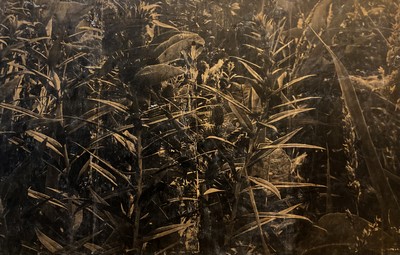
The Art Museum at the University of Toronto presents the exhibition Dwelling Under Distant Suns, curated by Master of Visual Studies in Curatorial Studies graduate student Yantong Li, which addresses environmental precarity by highlighting the struggle to make visible the increasingly unpredictable landscape.

Works by Kent Chan, Alvin Luong, and Solveig Qu Suess

Dwelling Under Distant Suns grapples with the challenge of representing our planet’s growing climate crisis, especially environmental dangers that feel distant or out of sight. The artists in the exhibition turn to speculative storytelling and myth-making to bring a sense of immediacy to these realities, while interrogating the way we currently consume media about environmental precarity with a focus solely on the spectacular and dramatic, with little patience for things that require more time and attention.
“On a recent trip back home to Yunnan, I was struck by the fact that I could no longer see snow and ice on the peaks of the Cangshan Mountain, which has maintained frozen terrain for decades,” says Yantong Li. “An unstable climate has made the mountainous environment precarious, with native vegetation in gradual decline and water cycles becoming unpredictable. This sight was a direct visualization of climate-induced catastrophe — sensed only in longue durée — and I wanted to locate methodologies to represent these disparate sites across time and space. I included film-based works in this exhibition because representations of catastrophe across digital media have wreaked havoc on our attention span, rendering viewers as passive voyeurs. All the film works in the exhibition require lengthy sit-ins, denying immediate consumption but also extending an invitation to viewers to engage in a dialogue, with the only prerequisite being the willingness to sit with it.”

Alvin Luong,  Cyanide Debt, 2025
Alvin Luong 
Cyanide Debt, 2025
Video still
© Alvin Luong. Courtesy of the artist

The exhibition features a new commissioned film by Alvin Luong, Cyanide Debt (2025), which restages and reimagines a mass cyanide poisoning in Bangkok as the artist creates a weak solution of cyanide using cassava, Thailand’s primary agricultural export. 


Solveig Qu Suess
Solveig Qu Suess 
Film still of Holding Rivers, Becoming Mountains 
Video, 2025
© Solveig Qu Suess. Courtesy of the artist

Solveig Qu Suess
Solveig Qu Suess 
Film still of Holding Rivers, Becoming Mountains 
Video, 2025
© Solveig Qu Suess. Courtesy of the artist

Solveig Qu Suess also uses archival materials that complicate our understanding of historical events by meditating on the downstream politics of hydroelectric development affecting the Mekong River. 


Kent Chan
Kent Chan
Film still of Future Tropics, 2023–24
Two-channel video 
© Kent Chan. Image courtesy of the artist

Kent Chan, Solar Orders
Kent Chan
Film still of Solar Orders, 2024
Two-channel video, 17’41
© Kent Chan

In Kent Chan’s work, the artist pushes observations of tropical expansion due to the climate crisis to extreme ends, arriving upon a fictional scenario of a future global tropic that blurs geographies, histories, and cultures.

ART MUSEUM AT THE UNIVERSITY OF TORONTO
Justina M. Barnicke Gallery
7 Hart House Circle, Toronto, Ontario M5S 3H3

22/12/21

Sandra Brewster @ The Power Plant, Toronto - Dense

Sandra Brewster: Dense 
The Power Plant, Toronto 
29 January - 1 May 2022

Sandra Brewster
Sandra Brewster 
Roots 1 (detail), 2021
Photo-based transfer on pressure treated wood, 36x48 in.

Sandra Brewster
Sandra Brewster
 
Roots 2 (detail), 2021
Photo-based transfer on pressure treated wood, 36x48 in.

Sandra Brewster
Sandra Brewster 
Roots 2 (detail), 2021
Photo-based transfer on pressure treated wood, 36x48 in.
 
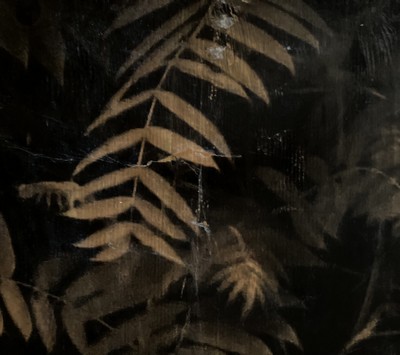
Toronto-based Canadian artist Sandra Brewster has been invited to create a new site-specific installation at The Power Plant. Brewster will transform the light-flooded Clerestory into an arboreal landscape soaring across both sides of the space. Sandra Brewster’s photo-based gel transfers, installed directly onto the gallery’s walls, will envelop visitors in a lush atmosphere. The scratches and ridges in her weathered images reference profound identity shifts that Caribbean immigrants experience when arriving in Canada, the complex and layered experiences of whom Brewster has been consistently exploring throughout her practice. Outside the gallery, Sandra Brewster presents a new interactive sculpture commissioned by ArtworxTO A Place To Put Your Things, a swing set with a seat in the form of a couple’s kiss.

Sandra Brewster is a Canadian artist, born in Toronto where she is presently based.  Sandra Brewster has shown her work in solo exhibitions at the Art Gallery of Ontario, Toronto (2019); Or Gallery, Vancouver (2019); and Never Apart Gallery, Montreal (2017). She has participated in group exhibitions at the Montreal Museum of Fine Arts (2019); Mercer Union, Toronto (2018); Eastern Edge Gallery, St. John’s, (2016); and Allegheny Art Galleries, Meadville (2015). Her exhibition It’s all a blur… received the Gattuso Prize for outstanding featured exhibition of CONTACT Photography Festival 2017. In 2018, Sandra Brewster was the recipient of the Artist Prize from Toronto Friends of the Visual Arts, and she was an Artist-in-Residence at the Art Gallery of Ontario. Sandra Brewster holds a Masters of Visual Studies from the University of Toronto, and a BFA from York University, Toronto. 

Curated by Joséphine Denis, TD Curator of Education and Outreach Fellow, 2021-2023

THE POWER PLANT CONTEMPORARY ART GALLERY
231 Queens Quay West, Toronto, Ontario M5J 2G8

18/12/21

Sasha Huber @ The Power Plant, Toronto - YOU NAME IT

Sasha Huber: YOU NAME IT 
The Power Plant, Toronto
29 January - 1 May 2022 

Sasha Huber
Sasha Huber
Still of Rentyhorn, 2008
Video, 4:30 mins
Courtesy the artist and Museum of Contemporary Art Kiasma 
Photo: Siro Micheroli

Sasha Huber
Sasha Huber
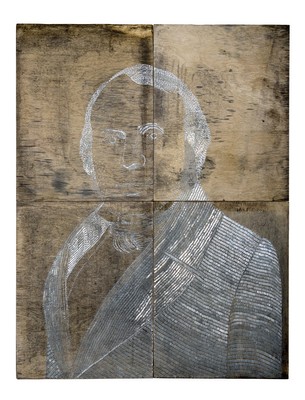
Shooting Back: Louis Agassiz, 2008
Metal staples shot into abandoned wood boards, 150 x 115 cm 
Courtesy the artist and Museum of Contemporary Art Kiasma
 
Swiss-Haitian-Finnish artist SASHA HUBER uses performance, photography, and film, among other media, to investigate colonial residues left in the environment. YOU NAME IT, Huber’s first solo show in North America, will feature over a decade’s worth of work prompted by the cultural and political activist campaign “Demounting Louis Agassiz,” which seeks to redress the racist legacy of the Swiss-born naturalist and glaciologist Louis Agassiz (1807–1873). Huber’s artworks challenge the terms by which we remember, asking not only who and what we memorialize, but also, and more importantly, how we do so. The exhibition is initiated, organized​, and circulated by The Power Plant Contemporary Art Gallery, Toronto, Canada​, in collaboration with Kunstinstituut Melly, Rotterdam, Netherlands; Autograph ABP, London, United Kingdom; and Turku Museum, Finland. 

Sasha Huber
Sasha Huber
Mother Throat, 2017
Video, 10:30 mins
Throat singing by Silla: Charlotte Qamaniq (Iglulik, NU) and
Cynthia Pitsiulak (Kimmirut, NU)
Supported by Arts Promotion Centre Finland, AVEK
Courtesy the artist

Sasha Huber
Sasha Huber 
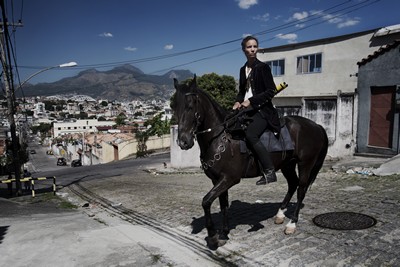
Still of Louis Who? What you should know about Louis Agassiz, 2010
Video, 3:50 mins
Commissioned by the Capacete in Rio de Janeiro for the 29th São Paulo Biennale 2010
Photo: Calé. Courtesy the artist

Sasha Huber
Sasha Huber
Still of Karakia - The Resetting Ceremony, 2015
Video, 5:20 mins
Supported by AVEK, Arts Promotion Centre Finland, Te Whare Hēra Wellington International Artist Residency
Courtesy the artist
 
Sasha Huber is a Swiss-Haitian-Finnish artist who lives and works in Helsinki, Finland. Recent solo exhibitions include Artivist Lab, Prague (2020); Centro Helio Oiticica, Rio de Janeiro (2019); and Forum Box, Helsinki (2016). She has participated in international exhibitions, including the 56th Venice Biennale (2015); 19th Biennale of Sydney (2014); and 29th São Paulo Biennial (2010). Sasha Huber is completing her PhD at the Department of Art and Media at the Zurich University of the Arts, and she holds an MA from the University of Art and Design Helsinki. 

Curated by Noor Alé, Associate Curator.
 
THE POWER PLANT CONTEMPORARY ART GALLERY
231 Queens Quay West, Toronto, Ontario M5J 2G8

17/12/21

Wendy Ewald @ Stephen Bulger Gallery, Toronto - The Pictures Woke the People Up: Canada, Colombia and American Alphabets

Wendy Ewald
The Pictures Woke the People Up: Canada, Colombia and American Alphabets
Stephen Bulger Gallery, Toronto
Through 15 January 2022

The Stephen Bulger Gallery presents “The Pictures Woke the People Up: Canada, Colombia and American Alphabets”, their first solo exhibition with acclaimed photographer WENDY EWALD which announces the gallery's representation of her work. For over fifty years, Wendy Ewald has collaborated on art projects with children, families, women, and teachers in Labrador, Colombia, India, South Africa, Saudi Arabia, Holland, Mexico, Morocco, the United Kingdom, and the United States.

Working as a photographer and teacher, Wendy Ewald’s projects emphasize a method of collaboration that challenges the distinctions between photographer and subject. Adopting a variety of approaches, she creates projects based on a reciprocal vs. hierarchical approach. Her goal is to provide the vision of her subjects rather than merely make images of them. Through her documentary investigations of places and communities, Ewald probes questions of identity and cultural differences. In her work with children and women, she encourages them to use cameras to record themselves, their families, and their communities, and to articulate their fantasies and dreams.

This exhibition presents a selection of work from various stages of her career. During Wendy Ewald’s college years, starting in 1969, she worked with Indigenous children in Sheshatshiu, Labrador and in Eskɨnuopitijk, New Brunswick. She observed that her photography was restrained partially by a reticence to disturb her subjects. Her students’ approached their work in a more dynamic fashion. While photographing the same scene as 14-year-old Merton Ward, she was struck by the difference.  Her photographs were clear renderings of the evidence before her, whereas his portrayed life on the reservation was more expressive. She successfully applied to the Polaroid Foundation for cameras and film for her students, which enabled her to work there for four summers. We will exhibit vintage prints from that period, a film, as well as colour work made during visits to the region 39 years later.     

After working in the Appalachian Mountains in the 70s, Wendy Ewald travelled to Latin America to create work within another rural community. She was awarded a Fulbright Scholarship in 1982 to photograph and teach photography in a Colombian village. She hoped that by working outside her native language she would be forced to rely on her visual skills. She was also introduced to Alicia Vásquez, a single mother living with three young sons in an invasion barrio in Bogota. Over time, she shared her life story with Ewald who brought her books of classical literature. Her mother María and other members of the family told their stories which prompted Ewald to illustrate the family’s memoir. Alicia was uncomfortable around a camera. Photographs made by Ewald and the children she taught in the village of Ráquira are interwoven with transcribed and edited stories of the Vásquez family. Our exhibition displays an excerpt from the book of this work, MAGIC EYES: Scenes From An Andean Girlhood.

In 1991, Wendy Ewald became a senior research associate at Duke University’s Center for Documentary Studies and founded the Literacy through Photography program for Durham Public Schools in North Carolina. During this time, she became aware of the language barrier amongst immigrant and local communities. She recognized the prevalence of cultural descriptors in North American children’s alphabet primers (i.e ‘C’ is for ‘Car’) and collaborated with children from different backgrounds to create primers of their own. She asked students to think of words for each letter of the English and Spanish alphabets and assign them visual signs specific to their culture. Wendy Ewald photographed the signs, objects, or scenes selected. When the large-format negatives were developed, the children altered them with Sharpies, adding the letter and word they illustrated. Our exhibition will include alphabets from several communities.

Wendy Ewald has received many honors, including a MacArthur Fellowship, a Guggenheim Fellowship, and grants from the National Endowment for the Arts, The Andy Warhol Foundation, the Rauschenberg Foundation, and the Fulbright Commission. She was also a senior fellow at the Vera List Center for Art and Politics at the New School from 2000-2002. She has had solo exhibitions at the International Center of Photography, New York, the Center for Creative Photography, Tucson, the George Eastman House, Rochester, Nederlands Fotomuseum, Rotterdam, the Fotomuseum, Wintherthur, Switzerland, the Corcoran Gallery of American Art, Washington, DC, and The Queens Museum, New York, among others. Ewald’s work was included in the 1997 Whitney Biennial. She has published fourteen books, her fifth, a retrospective documenting her projects entitled Secret Games, was published by Scalo in 2000. Two books were published in 2005. A third, To The Promised Land was published in 2006 to accompany an outdoor installation in Margate, England, with “new starts” and refugees commissioned by ArtAngel. She was an artist in residence at Amherst College for eleven years where she taught the course, Collaborative Art: The practice and theory of working with communities. This Is Where I Live, which maps Israel/Palestine through 14 different communities, was published by MACK in 2015 in conjunction with a traveling exhibition, “This Place”. America, Border, Culture, Dreamer a collaboration with young immigrants to the US was published by Little Brown in Fall 2018 to accompany a public art installation in Philadelphia. Her film for PBS, Portraits and Dreams, was released in 2020 accompanied by an expanded update of the original book published in 1985. Wendy Ewald’s project for “Towards a Common Cause: Art, Social Change, and the MacArthur Fellows Program at 40” continues until December 19, 2021, throughout Chicago, presented by the Smart Museum. The book The Devil is Leaving his Cave, will be published by MACK Books in 2022. From November 8 ­– 28, 2021, Wendy Ewald and artist Zak Hajjaoui have collaborated on a billboard that will be on display at the corner of Richmond Street East and Parliament Street, Toronto, as part of For Freedoms North American “Billboards” exhibition. For Freedoms is an artist-led organization that models and increases creative civic engagement, discourse, and direct action.


Wendy Ewald
Wendy Ewald, Katherine Hyde, Lisa Lord
Literacy and Justice through Photography
© Teachers' College Press

Wendy Ewald
Wendy Ewald, Alexandra Lightfoot
I Wanna Take Me a Picture
© Beacon Press
In addition to her artistic practice, Wendy Ewald has published two books for teachers and families, I Wanna Take Me a Picture and Literacy and Justice through Photography. She has been collaborating with partners in Tanzania for the past ten years to create photographic teaching materials for the national primary and secondary school curriculums. In 2021 she developed a course in teaching and learning through images for Humanities and Education students at the University of Dodoma, Tanzania.
STEPHEN BULGER GALLERY
1356 Dundas Street West, Toronto, ON M6JIY2

29/04/18

Erwin Blumenfeld @ Corkin Gallery, Toronto - From Dada To Vogue

Erwin Blumenfeld: From Dada To Vogue
Corkin Gallery, Toronto
April 26 - October 14, 2018

Corkin Gallery presents From Dada to Vogue, an exhibition of rare early collages and photographs by Erwin Blumenfeld.

As a young artist in interwar Europe, Erwin Blumenfeld was at the forefront of modernist image-making. His Dadaist collages, produced between 1919 and 1933, are variously sly, satirical and politically astute. Blumenfeld’s subversive spirit is evident as much in their content as in their form: with crayons, pastel, pen and ink; newspaper cutouts; cigarette wrappers; and even calling cards at this employ, the artist confronts the profound social upheaval of his moment.

In the early 1930s, Erwin Blumenfeld became increasingly involved with photography. His unconventional approach to the medium captured the attention of noted image-makers; a meeting with Cecil Beaton proved to be a turning point in his artistic career. “Here at last,” wrote Beaton, “is a fresh and clear mind… (Blumenfeld’s) pictures are not of Vogue quality, for they are much more serious, too provoking, and better than fashion.”

This experimental character defines the pivotal nature of Erwin Blumenfeld’s European output. Visceral and challenging, his early collages and photographs constitute a sobering exploration of the human spirit.

Previously unseen in Canada, the collages and photographs on view in From Dada to Vogue expand our understanding of Erwin Blumenfeld’s position in the history of Modernism. He was not only one of the last century’s most influential photographers; he was one of its great artists.

Erwin Blumenfeld (b. 1897, Berlin; d. 1969, Rome) brought a radical, avant-garde vision to his work in portraiture, nudes, fashion and advertising, redefining the potential of his medium. Until 1939, he worked in Berlin, Amsterdam and Paris, and was a key proponent of Dutch Dada. After two years in a French internment camp, Erwin Blumenfeld immigrated to New York. There, he shot fashion spreads and hundreds of covers for the Condé Nast family of publications, shaping the look of 1940s and ‘50s America. 

CORKIN GALLERY
7 Tank House Lane, Distillery District, Toronto, ON M5A 3C4
www.corkingallery.com

07/01/18

Peter Barron @ Evans Contemporary, Peterborough - The Garden of Earthly Delights

Peter Barron: The Garden of Earthly Delights
Evans Contemporary, Peterborough
January 5 - 27, 2018

Evans Contemporary presents The Garden of Earthly Delights, an exhibition of powerful new paintings by Peterborough artist, PETER BARRON.

Peter Barron’s recent work presents colourful, and explosive images of tangled landscapes where figures seemingly materialize magically from the pigmented environment. Both edgy and sinister, Barron’s incongruous, abstracted figures populate a landscape of vivid colour, tangled brushstrokes, and colliding paint. Vivid in their palate and subject matter, the artist leads the viewer into this ominous, yet beautiful environment.

Peter Barron’s works are painted in acrylic and oil on canvas and panel. The artist takes his cues from the traditions of expressionism and can be compared to the work of German artists Georges Rouault, Max Beckmann, Otto Dix, Erich Heckel, and Ernst Ludwig Kirchner.

PETER BARRON

​Originally from the Welland, Ontario area, Peter Barron arrived in Peterborough in the early seventies for work as a school art teacher. Immediately setting up a studio, he met the artists that were building the city’s burgeoning art scene and immersed himself in what would become the beginnings of the parallel gallery movement. Surrounding himself with an ensemble of artists like Dorothy Caldwell, David Bierk, Joe Stable, Harold Town, Dennis Tourbin, and Erik Loder, Barron began his career as a prolific and powerful painter, and printmaker.

​For almost fifty years, Peter Barron has maintained a studio practice in Peterborough, Ontario. His paintings have been exhibited extensively in Ontario, and throughout the city’s galleries. His printed work has shown at print fairs, and biennials in Russia, Seoul (South Korea), Trois Rivières (Quebec), Montreal, Ottawa, Sofia (Bulgaria), Finland, Connecticut (USA) and has been artist in residence at Pouch Cove Artist Residency in Newfoundland.

​Peter Barron has maintained a painting studio in downtown Peterborough since the early 1970’s. He continues to paint daily in a third floor studio in the arts district’s historic Commerce Building.

EVANS CONTEMPORARY
#2 Bankers Common - Peterborough, ON - K9H 3L7 – Canada
www.evanscontemporary.com

27/05/11

Robert Bourdeau, Stephen Bulger Gallery, Toronto - The Station Point

Robert Bourdeau: The Station Point 
Stephen Bulger Gallery, Toronto
Through June 11, 2011

Exhibition of work by artist ROBERT BOURDEAU  is on view in Toronto at Stephen Bulger Gallery. THE STATION POINT presents a survey of Robert Bourdeau's work in conjunction with the release of a major monograph co-published by the Stephen Bulger Gallery Press and the Magenta Foundation. This exhibition also marks the first time in his career that Robert Bourdeau has shown enlargements of his large format negatives.

Robert Bourdeau (b. Kingston, On, 1931) spent several years photographing before being drawn into a deeper understanding of the medium by his discovery of Aperture Magazine. This led to a crucial encounter with Minor White in 1958, and a spiritual, decade-long friendship. The tie with the school that emerged from Camera Work was further enhanced by Robert Bourdeau's friendship with Paul Strand in the late 1960s and 1970s.

Taken over the past four decades throughout Europe and North America, these large format photographs are of age old landscapes, historical treasures of architecture nestled in the countryside and inactive industrial sites reclaimed by nature. Robert Bourdeau is deeply interested in how certain structures lose their identity and take on other feelings and ambiguities, and at other times become guardians or sentinels of physical and emotional space.  He is also fascinated by the dark mysticism of mediaeval architecture and by brooding landscapes; the exactness of his photography disclosing the hidden geometry of nature.

Working with a large-format view camera, Robert Bourdeau favours long exposures. Most of his photographs are contact printed, either from an 11 x 14 inch or an 8 x 10 inch negative, a method that allows for a minimal loss of definition in reproduction. Robert Bourdeau has exhibited internationally since 1967.  His work is in the collections of the Centre Georges Pompidou, Paris; the Smithsonian Institution, Washington, DC; the Museum of Contemporary Art, Chicago, Illinois;  University of Chicago, Chicago, Illinois; The Renaissance Society, Chicago, Illinois;  Museum of Fine Arts, Houston, Texas;  Museum of Fine Arts, Boston, Massachusetts; George Eastman House, Rochester, New York; National Gallery of Canada, Ottawa, Ontario; Canadian Centre for Architecture, Montreal, Quebec; Vancouver Art Gallery, Vancouver, B.C. and the Art Gallery of Ontario, Toronto, Ontario.

STEPHEN BULGER GALLERY, TORONTO

03/07/05

Daniel Richter, National Gallery of Canada, Ottawa - Pink Flag – White Horse - A Touring Exhibition

Daniel Richter
Pink Flag – White Horse 
National Gallery of Canada, Ottawa
25 June – 10 September 2005

The National Gallery of Canada presents German artist DANIEL RICHTER’s electrifying, large-scale paintings in the new exhibition Daniel Richter: Pink Flag - White Horse, in the Contemporary Galleries.
 
The Berlin-based painter, who built his reputation with abstract works, has attracted an increasing amount of critical attention in the past few years for his massive representational paintings, 9 of which are featured in Daniel Richter: Pink Flag - White Horse.

Daniel Richter draws inspiration from found images that include reproductions of artworks, book covers, film stills, newspaper clippings, comics and album covers. With his brush, this material is transformed into spectacular compositions that explode with violence, fear, political struggle, urban alienation and social transformation.
“The paintings in Daniel Richter: Pink Flag - White Horse are both unsettling and beautiful,” says Pierre Théberge, Director of the National Gallery of Canada. “Together, they represent a unique and significant contribution to 21st century art that is just now being discovered by a broader North American audience.”
Born in Germany in 1962, Daniel Richter has participated in numerous European exhibitions. 

This is his first touring exhibition in North America. Daniel Richter: Pink Flag - White Horse is the result of a collaboration between Wayne Baerwaldt, former director of the Power Plant in Toronto; Kitty Scott, Curator of Contemporary Art at the National Gallery of Canada; and Scott Watson, Director and Curator of the Morris and Helen Belkin Art Gallery in Vancouver.

The exhibition, which also includes a display of ephemera from the artist’s studio, is accompanied by a colour catalogue with an introduction by the curators.

NATIONAL GALLERY OF CANADA
380 Sussex Drive, Ottawa, Ontario, Canada, K1N 9N4

30/06/05

Daniel Richter, Musée des beaux-arts du Canada, Ottawa - Exposition "Daniel Richter. Drapeau rose – Cheval blanc"

Daniel Richter
Drapeau rose – Cheval blanc
Musée des beaux-arts du Canada, Ottawa
25 juin - 10 septembre 2005

Le Musée des beaux-arts du Canada présente les peintures électrisantes de grande taille de l’artiste allemand DANIEL RICHTER dans le cadre d’une nouvelle exposition Daniel Richter. Drapeau rose – Cheval blanc, présentée dans les salles d’art contemporain.
 
Etabli à Berlin, cet artiste, déjà connu pour ses oeuvres abstraites, attire l’attention des critiques depuis quelques années grâce à ses toiles massives d’art représentatif; neuf d’entre elles font d’ailleurs partie de l’exposition Daniel Richter. Drapeau rose – Cheval blanc.

Daniel Richter s’inspire d’images qui lui tombent sous la main : reproductions, couvertures de livre, photos de film, coupures de presse, bandes des-sinées, couvertures d’album, etc. Ses coups de pinceau transforment ce matériel en créations spectaculaires qui expriment de façon frappante la violence, la peur, les luttes politiques, l’aliénation urbaine et les changements sociaux.
« Les peintures présentées dans l’exposition Daniel Richter. Drapeau rose – Cheval blanc sont à la fois troublantes et superbes », selon Pierre Théberge, directeur du Musée des beaux-arts du Canada. « Regroupées ainsi, elles contribuent de façon unique et considérable à l’art du XXIe siècle, qui commence tout juste à se faire connaître d’un public nord-américain plus étendu. »
Né en Allemagne en 1962, Daniel Richter a participé à de nombreuses expositions tenues en Europe. Cette année, il présente ses œuvres pour la première fois dans une exposition itinérante en Amérique du Nord. Daniel Richter. Drapeau rose – Cheval blanc est née d’une collaboration entre Wayne Baerwaldt, ancien directeur de la Power Plant Contemporary Art Gallery de Toronto; Kitty Scott, conservatrice en art contemporain au Musée des beaux-arts du Canada; et Scott Watson, directeur et conservateur à la Morris and Helen Belkin Art Gallery de Vancouver.

L’exposition, qui comprend un volet sur les documents éphémères provenant du studio de l’artiste, est accompagnée d’un catalogue couleur en anglais dans lequel le visiteur trouvera une introduction rédigée par les commissaires de l'exposition.

L’exposition Daniel Richter. Drapeau rose – Cheval blanc est coorganisée par la Power Plant Contemporary Art Gallery de Toronto, le Musée des beaux-arts du Canada à Ottawa et la Morris and Helen Belkin Art Gallery de Vancouver.

Musée des beaux-arts du Canada
380, promenade Sussex, Ottawa (Ontario), Canada K1N 9N4

22/09/02

Ken Lum. Le travail de l'image, Musée canadien de la photographie contemporaine, Ottawa

Ken Lum. Le travail de l'image 
Musée canadien de la photographie contemporaine, Ottawa
21 septembre 2002 - 12 janvier 2003

Le Musée canadien de la photographie contemporaine (MCPC) présente une exposition rétrospective du travail photographique des vingt dernières années de Ken Lum. Originaire de Vancouver, Ken Lum est l'un des artistes canadiens les plus connus sur la scène internationale.

Ken Lum. Le travail de l'image comprend des oeuvres tirées de différentes collections publiques et privées de partout au pays et de l'étranger. De plus, cette exposition inclut une bannière de la grandeur d'un géant panneau d'affichage, " On est jamais bien que chez soi ", qui orne le mur externe du MCPC. Cette bannière interpelle le public d'une manière provocante à participer au débat face aux notions du " chez soi " et aux questions de l'appartenance.

Depuis ses débuts, à la fin des années 1970, Ken Lum recourt librement à diverses techniques comme la vidéo, les installations sculpturales, la peinture et la photographie. Tout au long de sa carrière, il a juxtaposé texte et photographie, démarche qui a donné naissance à ses oeuvres les plus importantes.

Ken Lum s'interroge sur le lien qui unit les beaux-arts et la culture populaire. Parfois humoristiques, souvent provocants, ses fascinants portraits sont accompagnés de mots qui semblent traduire les sentiments intimes et personnels des sujets mais qui sont présentés dans un style commercial rappelant des logos.

L'artiste privilégie la question d'identité. Si la nouvelle population immigrante du Canada lui procure l'essentiel du contenu de son oeuvre, c'est parce qu'il s'intéresse aux lieux de rencontre des langues et des cultures. Ne manquez surtout pas cette exposition qui nous présente le monde selon Ken Lum.

Ken Lum
KEN LUM
Le travail de l'image, 2002

Un catalogue illustré accompagne l'exposition. Celui-ci est produit par le Musée des beaux-arts du Canada (MBAC). Il regroupe un avant-propos de Pierre Théberge, directeur du MBAC, un avant-propos et des remerciements de Martha Hanna, directrice du MCPC, des essais de Kitty Scott, conservatrice en art contemporain au MBAC, et de Jeff Derkson, poète, une liste d'oeuvres et de l'information biographique et bibliographique.

MCPC - MUSÉE CANADIEN DE LA PHOTOGRAPHIE CONTEMPORAINE
1, Canal Rideau, Ottawa K1N 9N6
www.cmcp.gallery.ca

23/06/02

Robert Frank. HOLD STILL - Keep going. Oeuvres photographiques et cinématographiques, Musée canadien de la photographie contemporaine, Ottawa

Robert Frank. HOLD STILL - Keep going. Oeuvres photographiques et cinématographiques
Musée canadien de la photographie contemporaine, Ottawa
22 juin - 12 septembre 2002

Le Musée canadien de la photographie contemporaine (MCPC) propose d'explorer les oeuvres fascinantes du photographe et cinéaste Robert Frank. Avec l'exposition itinérante Robert Frank. HOLD STILL - Keep going. Oeuvres photographiques et cinématographiques, le MCPC est le seul musée en Amérique du Nord où est présentée cette exposition de l'un des photographes les plus importants et les plus influents du XXe siècle.

L'exposition HOLD STILL - Keep going est consacrée au travail de Robert Frank, un artiste qui a non seulement exercé une influence marquante sur la pratique photographique depuis la Deuxième Guerre mondiale, mais qui a largement contribué à la reconnaissance artistique et culturelle du cinéma et de la photographie. Cette exposition regroupe des images individuelles ou en séquences réalisées au début de sa carrière, des projets de livres photographiques, des films, des vidéos et des montages images-textes.

La photographie
Né à Zurich en 1924, Robert Frank s'installe à New York en 1947, et depuis 1970, partage son temps entre New York et Mabou, au Cap-Breton (N.-É.). Plusieurs de ses photographies traitent en fait du Cap-Breton et de la vie qu'il y mène. Robert Frank est le premier photographe européen à obtenir, en 1955, une bourse de la fondation Guggenheim. Il utilise celle-ci pour sillonner les États-Unis et prendre quelque 20 000 images sur tous les aspects de la vie américaine, dont 83 sont publiées à Paris, en 1958, par Robert Delpire, sous le titre Les Américains.

Les oeuvres photographiques de Robert Frank mettent en scène le concept de linéarité narrative et la fonction du photographe comme porteur de " vérité ". Robert Frank ne se borne pas à présenter une photographie par elle-même comme un commentaire sur le monde. Il fait plutôt surgir des images au sein d'autres images pour façonner un commentaire qui a plusieurs valeurs sur la réalité.

Le cinéma 
En 1959, Frank réalise Pull My Daisy, film marquant de la beat generation, et le cinéma le fascinera durant toute sa carrière. Il conjugue approches documentaires et éléments fictifs et subjectifs pour créer des œuvres intenses où les réalités publiques et privées s'entremêlent. " J'étais très intéressé par le passage de la photographie à la vidéo ", a confié Robert Frank à Ute Eskildsen, directrice de la collection de photographies et vice-présidente du Museum Folkwang, d'Essen, en Allemagne. " Le film me donnait l'occasion d'apprendre à communiquer. C'était probablement le plus important pour moi, sur le plan personnel. Et puis, le film nous aide à parler dans la vraie vie aussi ".

L'exposition HOLD STILL - keep going présente la vision complexe d'un artiste dont le travail souligne le pouvoir de la photographie et du cinéma à commenter et contester notre manière de percevoir la réalité, les présupposés qui en découlent et nos rapports à elle. Le regardeur participe ainsi à une interaction créatrice, teintée de curiosité, de l'image et du sujet, de l'image et des images, et des mots dans les images.

Robert Frank. HOLD STILL - Keep going. Oeuvres photographiques et cinématographiques est organisée par le Museum Folkwang, d'Essen, en Allemagne, en collaboration avec le Museo nacional centro de arte Reina Sofía, de Madrid, en Espagne. 

MCPC - MUSÉE CANADIEN DE LA PHOTOGRAPHIE CONTEMPORAINE
1, Canal Rideau, Ottawa K1N 9N6
www.cmcp.gallery.ca

21/04/02

Mariana Yampolsky, Musée canadien de la photographie contemporaine, Ottawa - Image - Mémoire

Mariana Yampolsky. Image - Mémoire
Musée canadien de la photographie contemporaine, Ottawa
17 avril - 13 juin 2002

Le Musée canadien de la photographie contemporaine (MCPC) propose de découvrir l'oeuvre de l'artiste Mariana Yampolsky, une figure hautement respectée de la photographie au Mexique. Mariana Yampolsky. Image - Mémoire met en scène une vision profonde et tendre de la richesse du peuple mexicain et de sa culture.

L'exposition Mariana Yampolsky. Image - Mémoire nous donne à contempler quelque 90 photographies empreintes d'une intimité et d'une intensité émotive saisissantes. Le travail de Mariana Yampolsky se définit en effet comme une anthropologie du sentiment et de la mémoire qui vise principalement la réorganisation de l'expérience du passé afin qu'elle puisse servir dans l'avenir. Pour cette artiste, l'acte photographique correspond à la transmission des connaissances des communautés aux spectateurs et à l'éveil de la mémoire comme métaphore de la vie. Depuis, ses débuts, Mariana Yampolsky s'intéresse à deux sujets principaux : les urgentes préoccupations des paysans pauvres et autres personnes démunies du Mexique et l'architecture. L'exposition démontre l'engagement de Mariana Yampolskly envers la photographie en tant que moyen de communication.

L'exposition Mariana Yampolsky. Image - Mémoire est organisée et mise en tournée par le Centro de la Imagen, Consejo nacional para la Cultura y las Artes, Mexico. Sa présentation au MCPC s'inscrit dans le cadre d'un échange culturel avec le Mexique. Un catalogue est publié à l'occasion de cette exposition.

MCPC - MUSÉE CANADIEN DE LA PHOTOGRAPHIE CONTEMPORAINE
1, Canal Rideau, Ottawa K1N 9N6
www.cmcp.gallery.ca

14/04/02

Malak, Musée canadien de la photographie contemporaine, Ottawa

Malak
Musée canadien de la photographie contemporaine, Ottawa
13 avril - 13 juin 2002

Le nom de Malak a été intimement lié à la représentation photographique d'Ottawa pendant près de 60 ans. Cette renommée a éclipsé, dans une certaine mesure, les autres volets du travail de ce grand photographe. Le Musée canadien de la photographie contemporaine présente donc une sélection des meilleures oeuvres de Malak comprenant ses célèbres représentations de la région d'Ottawa, mais aussi, ses travaux de photographie commerciale et de journalisme d'illustration. Une chance de redécouvrir la vie et la carrière de cet artiste canadien apprécié de tous. 

Regroupant 40 photographies, c'est un tour d'horizon du meilleur de cette production regroupée sous trois grands thèmes qu'offre l'exposition Malak, soit les travaux de commande en noir et blanc produits au cours des années 1940 et 1950, un choix de photographies des édifices du Parlement et de la capitale nationale canadienne, et le groupe de paysages canadiens.

Au début de sa carrière, Malak oeuvre dans les domaines de la photographie commerciale et du reportage d'illustration. Il réalise à cette époque plusieurs missions sur l'effort de guerre et la défense nationale pour le compte du gouvernement canadien. Rapidement, ses reportages sont régulièrement publiés par les quotidiens et magazines illustrés, tels le Star Weekly, Saturday Night, le Montreal Standard et Maclean's Magazine.

Très tôt dans la carrière de Malak, la capitale anadienne s'est imposée comme sujet de prédilection. Les édifices du Parlement retiennent particulièrement sa faveur. Il les photographiera sous toutes les lumières, à toutes les saisons, sous tous les angles, et selon tous les points de vue imaginables. Un autre sujet auquel le nom de Malak est associé : les tulipes. En 1946, il photographie les premières tulipes sur la colline parlementaire. Depuis, et ce jusqu'à la fin de sa vie, à chaque printemps, Malak reprenait assidûment du service, photographiant les innombrables variétés de tulipes d'une infinité de couleurs et de formes. Aucun doute, Malak a largement contribué à créer l'image de marque d'Ottawa et de ses multiples attraits.

Au fil des ans, la passion de Malak pour les paysages de son pays d'adoption, il est en effet originaire de l'Arménie, n'a fait que grandir. De dire qu'il a sillonné le Canada d'un océan à l'autre est un euphémisme. De la même façon qu'il a photographié la capitale nationale de toutes les manières imaginables, Malak n'a eu de cesse de chanter les beautés des paysages canadiens.

L'exposition Malak permet donc au visiteur de revoir les œuvres qui ont marqué la carrière de ce grand photographe, mais plus encore, elle offre la possibilité de découvrir un autre aspect de son talent que peu de gens connaissent.

MCPC - MUSÉE CANADIEN DE LA PHOTOGRAPHIE CONTEMPORAINE
1, Canal Rideau, Ottawa K1N 9N6
www.cmcp.gallery.ca

28/04/01

Diana Thorneycroft. Le corps, leçons et camouflage, Musée canadien de la photographie contemporaine, Ottawa

Diana Thorneycroft. Le corps, leçons et camouflage
Musée canadien de la photographie contemporaine, Ottawa
25 avril - 8 juillet 2001

Le Musée canadien de la photographie contemporaine présente une exposition de Diana Thorneycroft, considérée comme l'une des artistes les plus captivantes à se faire connaître en Amérique du Nord ces derniers dix ans. Diana Thorneycroft crée des photographies énigmatiques, souvent troublantes, qui explorent mémoire et sexualité, ainsi que les forces familiales et socioculturelles qui façonnent notre identité et notre compréhension du monde.

L'exposition comprend une quarantaine de photos noir et blanc puisées aux grands projets réalisés par l'artiste depuis le fin des années 1980. Le corps en particulier s'inscrit au coeur du travail de Diana Thorneycroft. Il devient ce fond où représenter les souvenirs d'événements passés, jouer les fantasmes, explorer les effets de malaises physiques.

Les images complexes de Diana Thorneycroft, qui ne manquent jamais de susciter commentaires et réactions, invitent à la réflexion et à l'analyse rigoureuse. Par des montages, des masques, des jouets et beaucoup d'autres accessoires, l'artiste brouille les démarcations « normales » entre enfance et âge adulte, masculin et féminin, et présente des portraits de soi-même multiples et plurivalents. Souvent, elle crée des décors et s'y représente, son corps assujetti et vulnérable, site simultané de la jouissance et de la souffrance.

Diana Thorneycroft. Le corps, leçons et camouflage a été conçue par le critique Robert Enright, organisée par l'Art Gallery of Southwestern du Manitoba et mise en tournée par le Musée des beaux-arts de Winnipeg avec l'appui généreux du Conseil des Arts du Canada, le Conseil des arts du Manitoba et Canadian Cargo.

Le CMPC précise que certaines images de l'exposition pourraient troubler les jeunes enfants.

MCPC - MUSÉE CANADIEN DE LA PHOTOGRAPHIE CONTEMPORAINE
1, Canal Rideau, Ottawa K1N 9N6
www.cmcp.gallery.ca

Larry Towell, Musée canadien de la photographie contemporaine, Ottawa

Larry Towell. Projets 1985-2000
Musée canadien de la photographie contemporaine, Ottawa
25 avril - 8 juillet 2001

Le Musée canadien de la photographie contemporaine présente une exposition qui propose 80 oeuvres du photojournaliste de réputation internationale, Larry Towell. Larry Towell. Projets 1985-2000 parcourt la carrière du photographe et s'attarde à trois grands sujets d'actualité : le Salvador, la Palestine et la communauté des Mennonites. 

Le travail de Larry Towell est remarquable non seulement pour ses qualités techniques, mais aussi pour la profondeur avec laquelle le photojournaliste aborde ses sujets. Au lieu de documenter l'histoire « officielle », Larry Towell saisit les gens ordinaires emportés par les tourments de l'histoire. S'il les capte dans l'instant, il les situe aussi dans la continuité des événements. Dans ses photographie des soulèvements au Salvador, de l'Intifada en Palestine ou de la lente disparition de la communauté mennonite, sa compassion pour les gens est bien visible. Sa position n'est pas idéologique, elle découle de son travail sur le terrain, surgissant de sa fréquentation assidue des gens dans leur quotidien, souvent pendant des années.

Larry Towell est le premier Canadien en 1988 à devenir membre de la prestigieuse agence Magnum Photos créée par Henri Cartier-Bresson, Robert Capa, David Seymour et George Rodger après la Deuxième Guerre mondiale pour défendre une forme de photojournalisme qui témoigne vraiment des événements d'une époque. Larry Towell a vu ses reportages photographiques primés publiés dans les plus grands journaux et magazines, notamment Life, Esquire, Rolling Stone, New York Times Magazine et The Globe and Mail. Il a publié huit livres salués par la critique au Canada, aux Etats-Unis et en Europe.

MCPC - MUSÉE CANADIEN DE LA PHOTOGRAPHIE CONTEMPORAINE
1, Canal Rideau, Ottawa K1N 9N6
www.cmcp.gallery.ca

21/05/00

Stan Douglas, Musée canadien de la photographie contemporaine, Ottawa - Le Détroit

Stan Douglas : Le Détroit
Musée canadien de la photographie contemporaine, Ottawa
19 mai - 17 septembre 2000

Le Musée canadien de la photographie contemporaine (MCPC) présente Stan Douglas : Le Détroit, une exposition de photographies de l'un des artistes les plus connus du Canada

Dans cette exposition, Stan Douglas capte résidences et commerces abandonnés de Detroit en 28 grandes photos couleur. Loin de représenter la ruine de l'urbanisme moderne, ces images évoquent plutôt l'oubli constant de l'histoire et la puissance régénératrice de la nature.

Fruit de plusieurs années de recherche et de documentation dans la ville et son voisinage, Stan Douglas : Le Détroit révèle la fascination profonde qu'exerce sur Stan Douglas l'échec des utopies. L'artiste s'est intéressé, tout au long de sa carrière, à des épisodes historiques précis liés au colonialisme, au développement urbain et à la mémoire culturelle. Résident de Vancouver, Stan Douglas jouit d'une réputation internationale. Son travail a fait l'objet d'importantes expositions collectives et individuelles, dont la rétrospective que lui a consacrée la Vancouver Art Gallery, actuellement en tournée mondiale, et lui a valu plusieurs prix prestigieux ainsi que de nombreuses publications.

Stan Douglas : Le Détroit a été organisée par Helga Pakassaar, conservatrice de l'art contemporaine à l'Art Gallery of Windsor. 

MCPC - MUSÉE CANADIEN DE LA PHOTOGRAPHIE CONTEMPORAINE
1, Canal Rideau, Ottawa K1N 9N6
www.cmcp.gallery.ca

05/02/00

Martha Henrickson, Jane Corkin Gallery, Toronto - View from a Train

Martha Henrickson: View from a Train
Jane Corkin Gallery, Toronto
February 3 - 26, 2000

Jane Corkin Gallery presents MARTHA HENRICKSON’s new body of work, view from a train.

Fascinated by train travel from an early age, Martha Henrickson (b. USA, 1942, Canadian) made her first trip across Canada by train in 1968. Over the last thirty years, she has examined the landscape from the windows of many trains, which has given her a humility before it. These photographs are an experience of her meditative journey rather than a pure record of the landscape.

Her large-scale colour images are subtly abstract. Equally subtle are the reminders of Martha Henrickson’s transit: trees blurred by motion, an aisle light tracing rectangular shapes in the sky over the Rockies. Her black and white images are delicate, highlighting wave crests, mountaintops, ski tracks in the snow, rock formations, and rivers. In this body of work, the windows and tracks of the train frame the landscape as she sees it. The aluminum mounts, which are an integral part of each photograph, echo the machines that have made this view possible.

Martha Henrickson’s awe before her chosen subject is a quiet gratitude, tempered with the awareness of the landscape’s vulnerability.

With this exhibition, view from a train, Martha Henrickson gives us her eye on her home, a reminder that the landscape endures, we are but travellers on it, and technology gives us another part of the picture.

JANE CORKIN GALLERY
179 John Street, Suite 302, Toronto, ON, M5T 1X4
www.janecorkin.com

23/01/00

La photographe Reva Brooks, Musée canadien de la photographie contemporaine, Ottawa

La photographe Reva Brooks
Musée canadien de la photographie contemporaine, Ottawa
21 janvier - 14 mai 2000

Le Musée canadien de la photographie contemporaine présente une installation de photographies de Reva Brooks qui explore les multiples états d'âme, les coutumes ancestrales et les croyances spirituelles profondes du peuple mexicain.

L'exposition La photographe Reva Brooks comprend 27 épreuves noir et blanc tirées du remarquable corpus de l'artiste, qui a fait sa réputation au Mexique et aux États-Unis. L'exposition offre à la population canadienne l'occasion d'apprécier l'oeuvre de Reva Brooks ainsi que sa foi inébranlable dans le potentiel expressif de la photographie.

Reva Brooks est née à Toronto en 1913. En 1947, elle quitte le Canada avec son mari Leonard Brooks pour s'établir à San Miguel de Allende au Mexique. Elle commence alors à capter la vie autour de sa nouvelle maison avec un appareil reflex d'occasion à double lentille. En quelques années seulement, elle produit un corpus impressionnant. Ses portraits empreints de sensibilité témoignent de la tradition humaniste en photographie qui cherche dans la personne l'expression de l'universel.

En 1950, Edward Steichen achète deux de ses oeuvres pour le Museum of Modern Art (MOMA) de New York. Deux ans plus tard, ses photos font la page couverture du prestigieux magazine Aperture et, en 1955, Brooks participe à la fameuse exposition Family of Man au MOMA. Au début des années 1950, Edward Weston l'invite à son domaine de Carmel en Californie où elle a l'occasion d'échanger avec quelques-unes des sommités de la photographie dont Weston, son fils Brett et Ansel Adams. Depuis, son travail a fait l'objet de nombreuses expositions et on trouve ses photographies dans plusieurs collections publiques et particulières.

Si le Mexique demeure son foyer et sa muse depuis 52 ans, l'artiste a toujours maintenu des liens étroits avec ses racines canadiennes. En 1992, Reva et Leonard Brooks, lui-même peintre et musicien, établissent la Leonard and Reva Brooks Foundation à l'Université Queen's de Kingston.

L'exposition est parrainée par les Friends of the Brooks, à l'appui de la Leonard and Reva Brooks Foundation. Sa présentation au MCPC coïncidera avec l'exposition L'art moderne mexicain, 1900-1950 à l'affiche du Musée des beaux-arts du Canada. Par la suite, elle deviendra l'une des expositions itinérantes du MCPC et, à ce titre, circulera dans tout le Canada.

MCPC - MUSÉE CANADIEN DE LA PHOTOGRAPHIE CONTEMPORAINE
1, Canal Rideau, Ottawa K1N 9N6
www.cmcp.gallery.ca

Robin Collyer, Musée canadien de la photographie contemporaine, Ottawa

Robin Collyer. Photographies
Musée canadien de la photographie contemporaine, Ottawa
21 janvier - 14 mai 2000

Le Musée canadien de la photographie contemporaine met en lumière la riche carrière photographique de Robin Collyer, un artiste réputé sur la scène internationale pour sa sculpture. Robin Collyer. Photographies est la première grande rétrospective des oeuvres photographiques de cet artiste de Toronto.

C'est lorsqu'il représente le Canada à la prestigieuse Biennale de Venise de 1993 que Robin Collyer voit sa sculpture atteindre une renommée internationale. La présente exposition permet d'apprécier la pratique photographique que Robin Collyer poursuivit tout au long de sa carrière. Couvrant près de trente ans, l'exposition Robin Collyer. Photographies réunit plus de quarante oeuvres, notamment les premières photos noir et blanc de l'artiste, des paysages urbains et ruraux, des images retouchées par ordinateur et cette remarquable série de photographies commandée à Robin Collyer et représentant des silos de la région d'Orléans en France.

Robin Collyer nous offre dans ses photos des visions discrètes, souvent pleines d'humour, du monde moderne. Ses oeuvres nous invitent à regarder attentivement notre environnement quotidien pour saisir les subtiles ambiguïtés et les juxtapositions ironiques qui surgissent autour de nous. Robin Collyer réussit à aborder simultanément les grandes questions de l'art contemporain et un ensemble de préoccupations sociales telles l'architecture et la planification urbaine, les communications de masse, la politique et l'actualité.

Depuis le début de sa carrière, Robin Collyer se passionne pour la relation entre le texte et l'image. Il y révèle comment une simple légende peut susciter diverses réactions ou hypothèses chez le public. Dans ses récentes oeuvres numériques, Robin Collyer fait jouer sa sensibilité au langage dans un champ qui domine le paysage urbain, c'est-à-dire la publicité. Grâce à la manipulation numérique, il obtient des effets surprenants en éliminant textes et logos des enseignes et produits de consommation.

D'autres oeuvres témoignent de l'interaction ironique des mondes naturel et humain. Robin Collyer nous montre des images d'une nature vierge où bouteilles de bière brisées et voitures abandonnées marquent la présence de l'homme. Dans sa série Silos, bâtiments domestiques et industriels se confondent; l'austérité de l'architecture rudimentaire des silos se retrouve aussi dans les maisons environnantes.

L'exposition Robin Collyer. Photographies est organisée par la galerie d'art de l'Université York. Elle a d'abord été présentée à l'occasion du festival de photographie de Toronto, Contact 99, en mai 1999. 

MCPC - MUSÉE CANADIEN DE LA PHOTOGRAPHIE CONTEMPORAINE
1, Canal Rideau, Ottawa K1N 9N6
www.cmcp.gallery.ca

10/07/99

Lori Newdick, Jane Corkin Gallery, Toronto - Heroine

Lori Newdick: Heroine
Jane Corkin Gallery, Toronto
July 8 - September 11, 1999

Lori Newdick (b. 1968) exhibits her latest body of work Heroine at Jane Corkin Gallery, her first commercial gallery exhibition. Currently enrolled in the MFA program at Guelph, Lori Newdick won the 1999 Ontario College of Art and Design Medal for Excellence in Photography.

Taking her cue from the French feminist Hélène Cixous, who wrote "Woman must write herself", Lori Newdick explores issues of personal identity. Heroine is a social commentary on preconceived notions about lesbians and others who don't fit in the mainstream.

The 30" x 40" pieces in Heroine are each comprised of three panels. The left panels are book covers from 1950s pulp fiction, with titles like Queer Affair and We Walk through Lesbos' Groves. These book covers are reminders of past attitudes towards lesbians. On the right panels are black and white self-portraits providing a visual counterbalance for the richly-coloured book covers. The central panels use a necktie as icon.

The sum of the parts, however, carries greater significance. The tripartite construction explores the construction of identities. Although Lori Newdick states that Hollywood has made gay culture and visible minorities appear palatable for the mainstream, she suggests that attitudes toward lesbians have not changed much during the last 50 years. Exposing herself to the lens both strips Lori Newdick of her anonymity and puts forth an image of a female for which there are few examples. Lori Newdick wonders where that leaves her, as a lesbian, as a woman: what is expected and what is acceptable. What propels the work is the desire to define oneself. Heroine uncovers the obstacles to that expression and leaves the question of "How?" unanswered, for each viewer to consider.

JANE CORKIN GALLERY
179 John Street, Toronto, ON, M5T 1X4
www.janecorkin.com